 en
en


 Tiếng Việt
  中文 (中国)
  한국어
한국어  Русский


 04/12/2025
 399 views
1. Overview of Tram Gian Pagoda
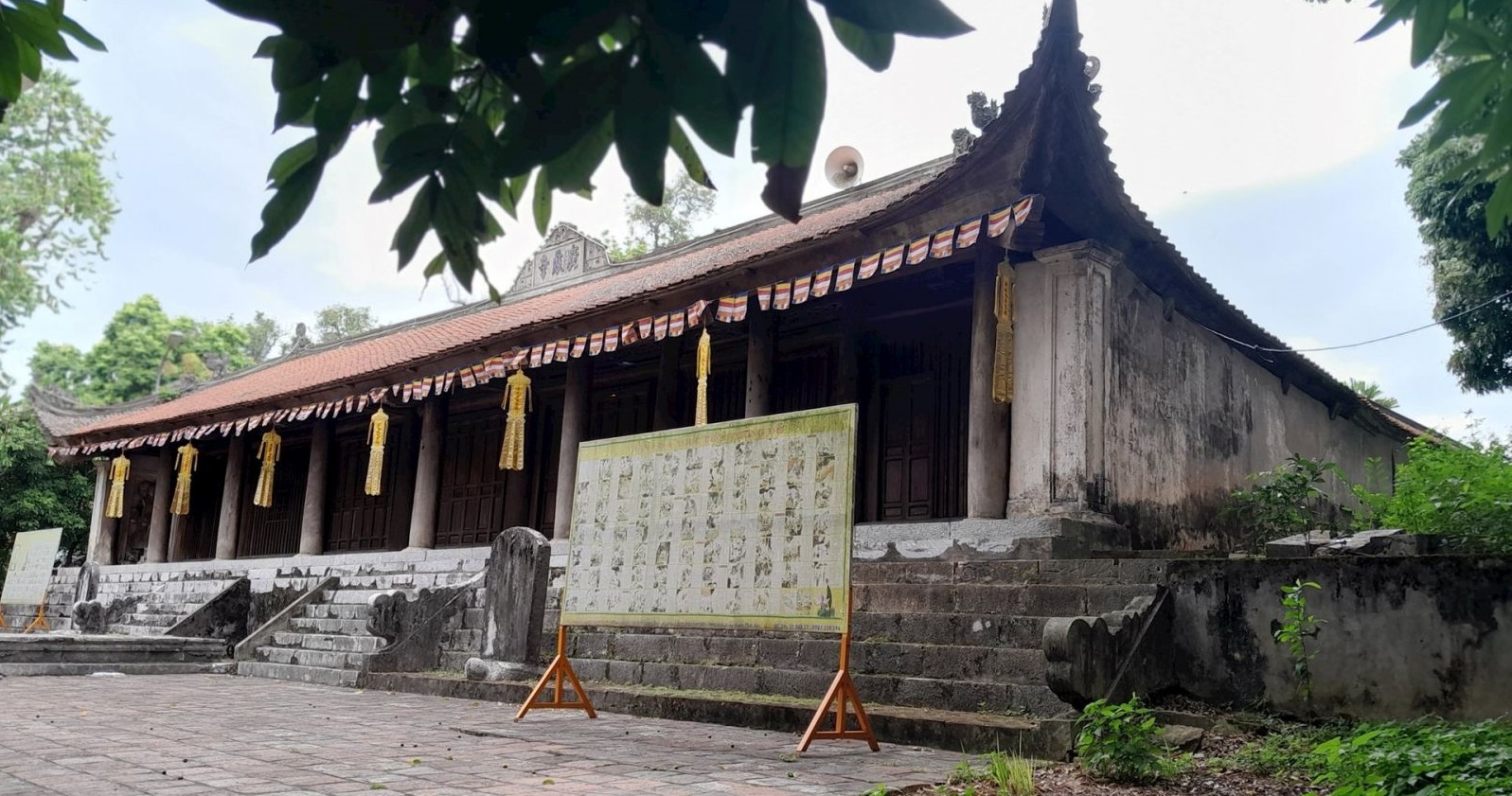
Nestled on a tranquil hill about fifty meters high, Tram Gian Pagoda in Chuong My Ward (formerly Tien Phuong Commune, Chuong My District), Hanoi, stands as a remarkable blend of history, spirituality, and traditional Vietnamese architecture. Officially named Quang Nghiem Pagoda and sometimes referred to as Tien Lu Pagoda, this centuries-old sanctuary is celebrated as one of the “four great scenic temples of Doai region – the land to the west of the ancient Thang Long Citadel (Hanoi),” alongside the famed Tram, Thay, and Tay Phuong temples.
Generations of locals have cherished this site as a symbol of faith and resilience, preserving its intricate wooden structures and serene courtyards. Every year, hundreds of thousands visit this national historical relic to pray, meditate, and admire its unique artistry—a living museum of Vietnam’s rich past.
Visitors are greeted by impressive carvings and tiled roofs at Tram Gian Pagoda (Source: Collected)
Read more about Hanoi attractions and plan your perfect trip
2. History & legend about Tram Gian Pagoda in Hanoi
Founded in 1185 during the reign of Emperor Ly Cao Tong, Tram Gian Pagoda carries over eight centuries of spiritual significance. Originally named Quang Nghiem, it grew from a modest sanctuary into a grand complex through multiple restorations.
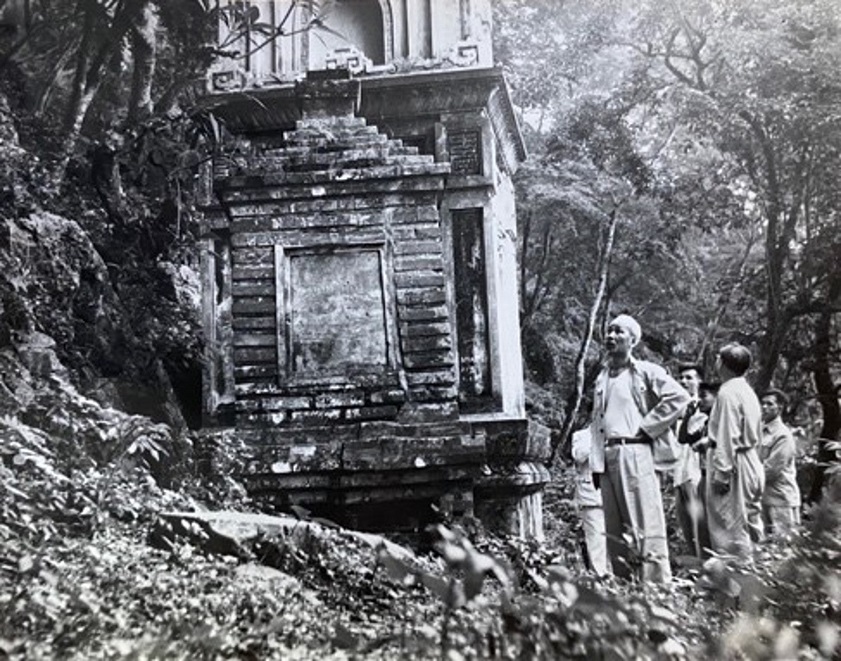
Legends tell of Venerable Binh An from Boi Khe, a revered Tran dynasty monk with extraordinary spiritual abilities. After his passing, locals honored him as Saint Boi and built a stupa for his relics.
Another tale recounts Duc Minh, a gifted monk who achieved remarkable enlightenment and was recognized by the Tran emperors. He meditated into peaceful liberation at ninety-five, leaving an incorrupt body that inspired villagers to enshrine his remains.
Through centuries of turmoil, including attacks by Ming invaders in the fifteenth century, the pagoda survived destruction and was later restored. In 1794, Admiral Dang Tien Dong financed significant renovations and commissioned a bronze bell that still resonates today.
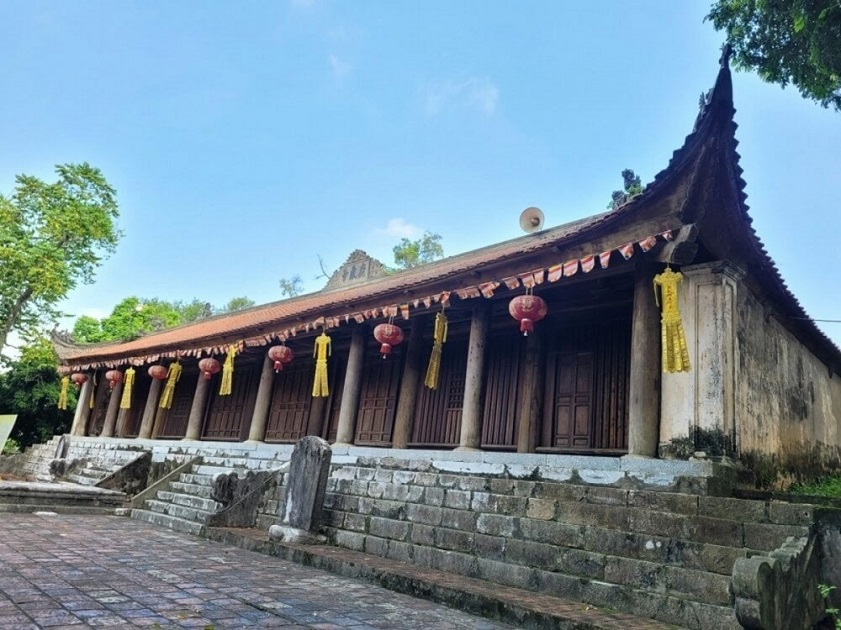
Tram Gian Pagoda is a must-see destination for travelers seeking a vivid connection to Vietnam’s spiritual past (Source: Collected)
Read more about Hanoi pagodas and uncover timeless stories and design of Vietnam
Best-selling products
![[-10%] [Times City Hanoi] - Combo Aquarium Admission Ticket + F&B Set](http://booking-static.vinpearl.com/tours/e7fcffc8256546e8bdcfd5ccfbe69783_VINKE2%20(1)_vinke-ve-vao-cua-truc-tiep.jpg)
![[Aquafield Ocean City] - Body Exfoliation Session](http://booking-static.vinpearl.com/tours/0e8ee4024e1f4378ba932eb06d945636_Screenshot_14_aquafield-nha-trang.png)
![[Times City Hanoi] VinKE Entrance Ticket](http://booking-static.vinpearl.com/tours/d6296ca1d3714503b01f24603b85b8cf_vinke1_vinke-ve-vao-cua-truc-tiep.jpg)
![[VinGroup Employees] Standard Admission Ticket to Ocean Park 3 Water Park](http://booking-static.vinpearl.com/tours/f949b31af919495c9b4e111237642763_358600999_111579731994757_433244877993048710_n_vinwonders-ha-noi.jpg)
![[-30% Grand Opening] [Aquafield Ocean City] – Standard Jjimjilbang Sauna Ticket for Male](http://booking-static.vinpearl.com/tours/94abeb55e3d54efbac23f7a862445389_0d72b531dd6749bbac2874b915ab0512_Screenshot_8_aquafield-nha-trang_aquafield-nha-trang.png)
![[Aquafield Ocean City] [Female] – Standard Jjimjilbang Sauna Ticket](http://booking-static.vinpearl.com/tours/4aec5fed6be54fe8a736aca12893384b_40fc72547fe242f8b6bbbbc428885848_065A8735_aquafield-nha-trang_aquafield-nha-trang.jpg)
![[Deep Relaxation Combo] [Female] – Jjimjilbang Sauna & Korean Sesin Body Scrub](http://booking-static.vinpearl.com/tours/0be276c684454e8d969c373f35f6be97_DSC_2127_11zon_aquafield-nha-trang.jpg)
![[Vinpearl Aquarium Times City] Entrance Ticket](http://booking-static.vinpearl.com/tours/8702a10bf2934d6299df65669a290679_aquarium%20times%20city%203_thuy-cung-vinpearl-aquarium-times-city.jpg)
![[Grand World] Skydrop ticket](http://booking-static.vinpearl.com/tours/ed7c962747be42458f35c7b18340b901_A2-4-jpeg-2640-1687438608_grandworld.jpg)
![[Grand World] Carousel Ride](http://booking-static.vinpearl.com/tours/0d6a4bcfc2a54fd4aa9df0b38ae8c7b6_A2-4-jpeg-2640-1687438608_grandworld.jpg)
3. Architectural highlights of Tram Gian Pagoda
Tram Gian Pagoda is architecturally remarkable and distinctive. By the traditional method of counting each set of four pillars as one “gian,” it features 104 sections thoughtfully arranged into three harmonious clusters.
3.1. Cluster 1
The first cluster features four stone pillars and two pavilions, once used for human chess matches during festivals. Beyond this stands the Gia Ngu House, overlooking a serene lotus pond. Here, the sacred palanquin was traditionally placed so that visitors could watch enchanting water puppet performances.
3.2. Cluster 2
The second cluster of Tram Gian Pagoda features a graceful two-story bell tower with wooden balconies and delicate carvings of clouds and flowers. A historic bronze bell from 1794, engraved with a poem by Pham Huy Ich, hangs at its center. Beyond the tower, twenty-five green stone steps adorned with dragon-cloud motifs lead to an upper courtyard crowned by a simple rectangular stone platform.
3.3. Cluster 3
The third cluster reveals the main sanctuary of the pagoda, reached by climbing nine stone steps flanked by dragon-carved balustrades. This sacred area includes the Hall of Worship, the Incense Pavilion, and the Upper Sanctuary, creating a solemn atmosphere for prayer.
Inside, visitors can admire 153 statues, mostly wooden with some terracotta, including the revered Snow Mountain statue and Avalokiteśvara Bodhisattva. At the center rests a rectangular red-terracotta pedestal reminiscent of Tran dynasty stone bases, topped with a lotus platform decorated with floral motifs and mythical birds. The complex also preserves numerous ancient steles, lacquered boards, and two rare mother-of-pearl inlaid couplets from the Ho dynasty.
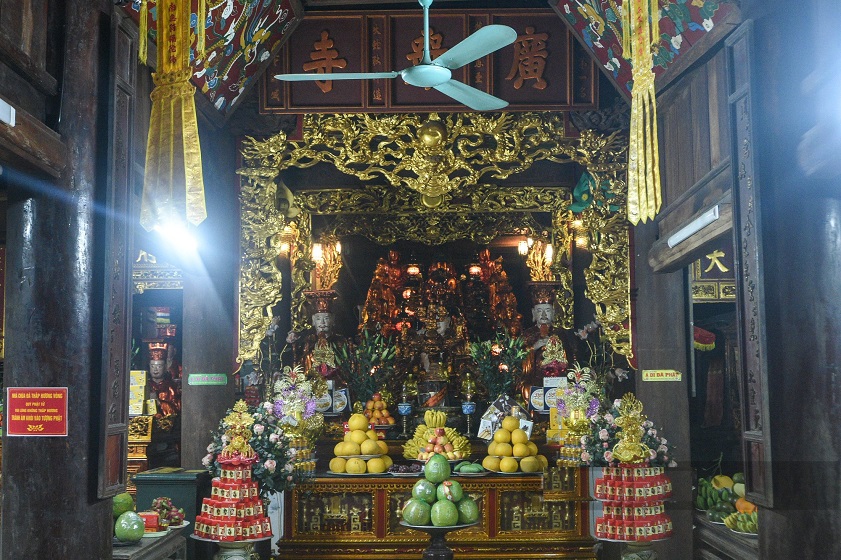
Sacred main sanctuary of Tram Gian Pagoda’s third cluster (Source: Collected)
Refer to the Hanoi itinerary to plan an unforgettable journey
4. Things to do on your visit to Tram Gian Pagoda
4.1. Admire unique architecture
Visitors can first admire its striking architecture, where finely carved wooden details and elegant tiled roofs showcase centuries of Vietnamese artistry. Each pavilion and courtyard reveals graceful craftsmanship that highlights the site’s historic charm.
You can then take your time capturing beautiful photographs, from sweeping shots of layered roofs to close-ups of intricate carvings. Wearing traditional Vietnamese attire, such as the Ao Dai, adds authenticity and elegance to your photos at this remarkable heritage landmark.
4.2. Explore valuable artifacts
Among the most remarkable treasures are the stone dragons from the Tran Dynasty, whose powerful, rounded bodies still guard the temple steps, later adorned with dragon heads from the Nguyen era. Visitors can also admire ancient Mac Dynasty bricks carved with mythical birds and lively animals, as well as rare La Han and Ten Kings of Hell relief paintings that blend intricate carvings with vivid colors.
Inside the pagoda, an extensive collection of Buddhist statues reflects centuries of spiritual devotion. Highlights include the striking Tuyet Son statue, noted for its sharply defined veins and lifelike detail, and the revered figure of Admiral Dang Tien Dong, a national hero of the Tay Son period.
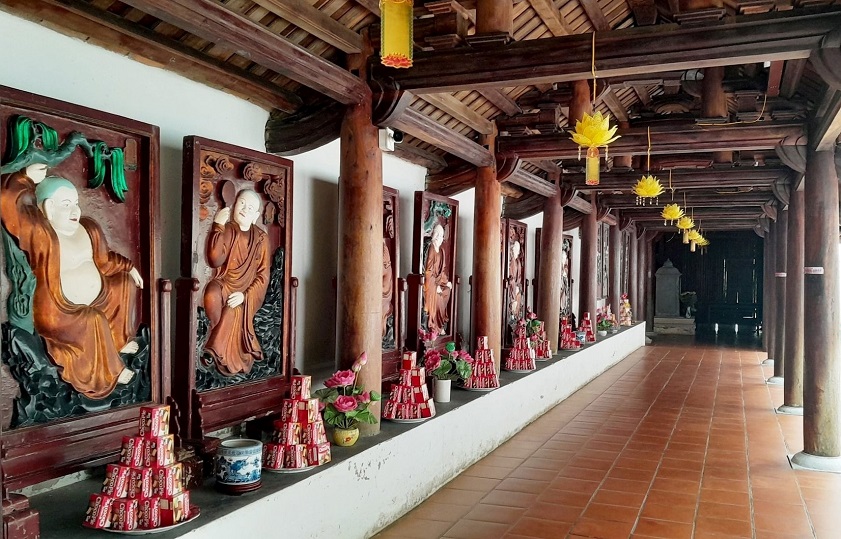
Timeless artifacts make Tram Gian Pagoda a must-see destination for history enthusiasts (Source: Collected)
4.3. Enjoy the tranquil atmosphere
Visitors can enjoy the serene atmosphere of Tram Gian Pagoda, a peaceful sanctuary hidden within bustling Hanoi. Towering ancient trees create cool, refreshing shade, while nearly thirty centuries-old pine trees surround travelers with fresh air and calming natural scents.
Perched on a gentle hill and facing a tranquil lotus pond, the pagoda reflects the harmonious “mountain-back, water-facing” design traditional in Vietnamese architecture. Lush greenery, soft breezes, and quiet temple bells offer an ideal retreat for relaxation.
4.4. Learn about the sacred festival
Every spring, Tram Gian Pagoda hosts a vibrant annual festival honoring Saint Nguyen Binh An, a revered monk and former abbot from the late Tran dynasty. Beginning shortly after the Lunar New Year (from the 4th to the 6th day of the first lunar month), it’s one of the most anticipated festivals in Hanoi.
The festival combines solemn ceremonies with colorful processions, including the grand ‘rước kiệu’ where participants carry the saint’s palanquin and offerings through the village. Monks and villagers dress in traditional garments as drums and ceremonial music echo across the hills.
Beyond spiritual rituals, visitors enjoy human chess matches on a floating stage, wrestling competitions, and captivating water puppet shows on the temple’s lotus pond.
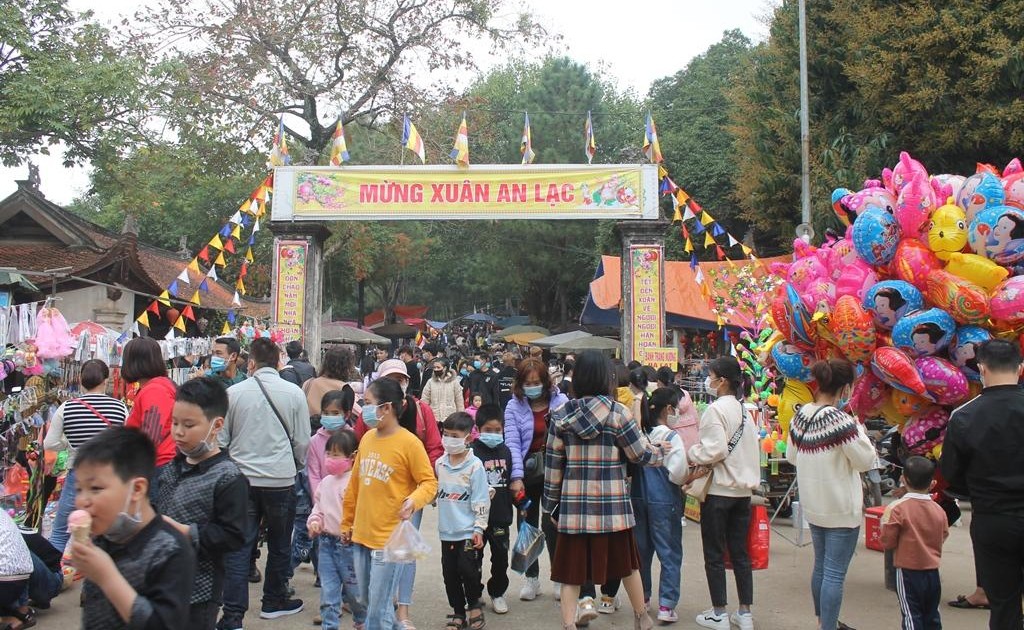
Experience the vibrant Festival of Tram Gian Pagoda (Source: Collected)
Explore the must-do things to do in Hanoi for the best experiences
5. Guide for visitors to Tram Gian Pagoda
5.1. How to get there?
Travelers can reach Tram Gian Pagoda from central Hanoi via a scenic 26-kilometer route. Begin on Ton Duc Thang Street, turn left onto Lang Ha, then right onto Huynh Thuc Khang. Continue to Nguyen Chi Thanh, turn left over the overpass to Tran Duy Hung, and enter the Trung Hoa underpass.
Stay on Thang Long Boulevard, turn right at Da Day River dyke for 1.8 kilometers, then take provincial road 70A. Turn left onto Cu Son Street and cross Cu Son Bridge to reach Cong Hoa Village, the gateway to Tram Gian Pagoda. Due to winding routes, consider hiring a taxi or using Google Maps navigation if driving yourself.
5.2. What to note?
When visiting Tram Gian Pagoda, travelers should follow these key guidelines for a respectful experience:
- Enter and exit correctly: Use the right-side gate when entering and the left-side gate when leaving; avoid the central doorway of the triple-arch gate.
- Dress modestly: Wear non-revealing clothing; avoid shorts or short skirts.
- Choose comfortable footwear: Soft shoes or sneakers are best for climbing stone steps.
- Stay quiet: Speak softly and keep prayers silent.
- Prepare pure offerings: Incense, fruit, tea, candles, or vegetarian food only.
- Light incense outdoors: To protect statues and interiors.
- Respect sacred objects: Don’t touch statues, paintings, or strike the bell without permission.
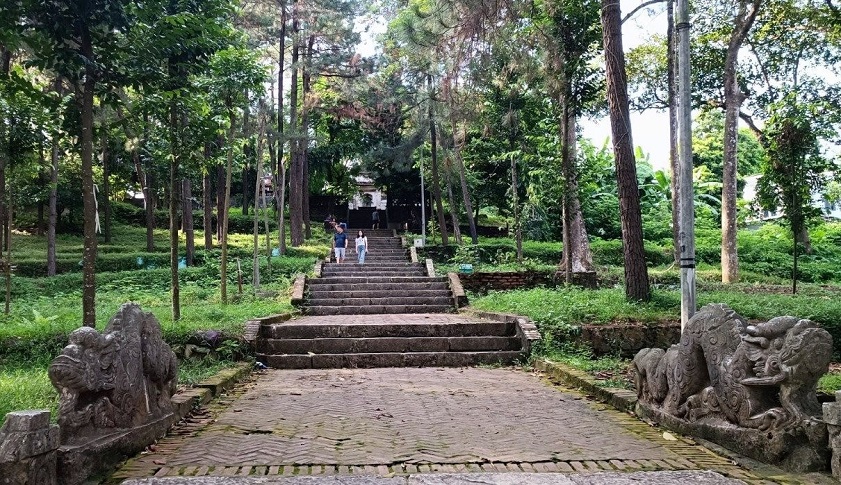
Peacefully embrace tradition and serenity while exploring Tram Gian Pagoda (Source: Collected)
Keep reading about places to visit near Hanoi
FAQs about Tram Gian Pagoda in Hanoi
Where is Tram Gian Pagoda located?
It is situated in Chuong My Ward, roughly 26 kilometers southwest of Hanoi’s center.
Why is Tram Gian Pagoda famous?
The pagoda is celebrated for its nearly millennium-old history, showcasing classic Vietnamese wooden architecture and deep spiritual heritage.
What can visitors see at Tram Gian Pagoda?
Visitors can admire the elegant Bell Tower, a remarkable collection of Buddha and Arhat statues, detailed wood carvings, and serene courtyards filled with timeless charm.
When is the best time to visit Tram Gian Pagoda?
It welcomes guests year-round, but visits during Lunar New Year and major Buddhist festivals are most memorable, when vibrant ceremonies bring the site to life.
Is there an entrance fee to Tram Gian Pagoda?
There is no official admission fee, but voluntary donations are welcome.
What should I wear when visiting Tram Gian Pagoda?
Visitors should dress modestly, ensuring shoulders and knees are covered, as it remains an active place of worship.
Visiting Tram Gian Pagoda is a unique opportunity to step into Vietnam’s spiritual and cultural heritage. From its ancient architecture and sacred artifacts to the lively festival celebrations, every corner tells a story of devotion and history. Whether you are seeking peace, inspiration, or a deeper understanding of Vietnamese traditions, a trip to this serene pagoda will leave lasting memories.
For travelers planning day trips from Hanoi, VinWonders Wave Park & Water Park in eastern Hanoi is another great choice. Just a short drive away, it offers endless family fun with giant wave pools, thrilling slides, and relaxing lagoons.
Nearby, Grand World adds vibrant canals, colorful shophouses, exciting games, and festive parades, perfect for rounding out an unforgettable day trip.

Dive into fun and excitement at VinWonders Wave Park & Water Park
Book VinWonders Wave Park & Water Park ticket now

Explore the vibrant canals and colorful streets of Grand World




![[Mega Sale 2.2] Get up to 50% off VinWonders on Double Day](https://static.vinwonders.com/production/2025/12/homepage-banner-3-336x161.jpg)


