 en
en


 Tiếng Việt
  中文 (中国)
  한국어
한국어  Русский


 02/05/2025
 1.373 views
Understanding the social etiquette in Vietnamese culture is key to showing respect and making a good impression while traveling in Vietnam. From greetings to gestures, these small details of Vietnamese etiquette can make a big difference in how you are received.
1.1. Greetings
Greetings in Vietnam reflect respect and social hierarchy. Knowing how to greet properly with Vietnamese etiquette can help you connect more warmly with locals.
- Always greet with a smile! It is seen as a sign of respect and friendliness.
- A slight bow or nod is common when saying hello, especially to the elderly.
- Handshakes are okay, but use both hands or your right hand with your left hand touching your wrist for added respect.
- When greeting the elderly or those of higher status, wait for them to initiate the handshake.
- Use proper titles like “Anh” (older brother), “Chị” (older sister), “Bác” (uncle/aunt), or “Thầy/Cô” (teacher) followed by their first name.
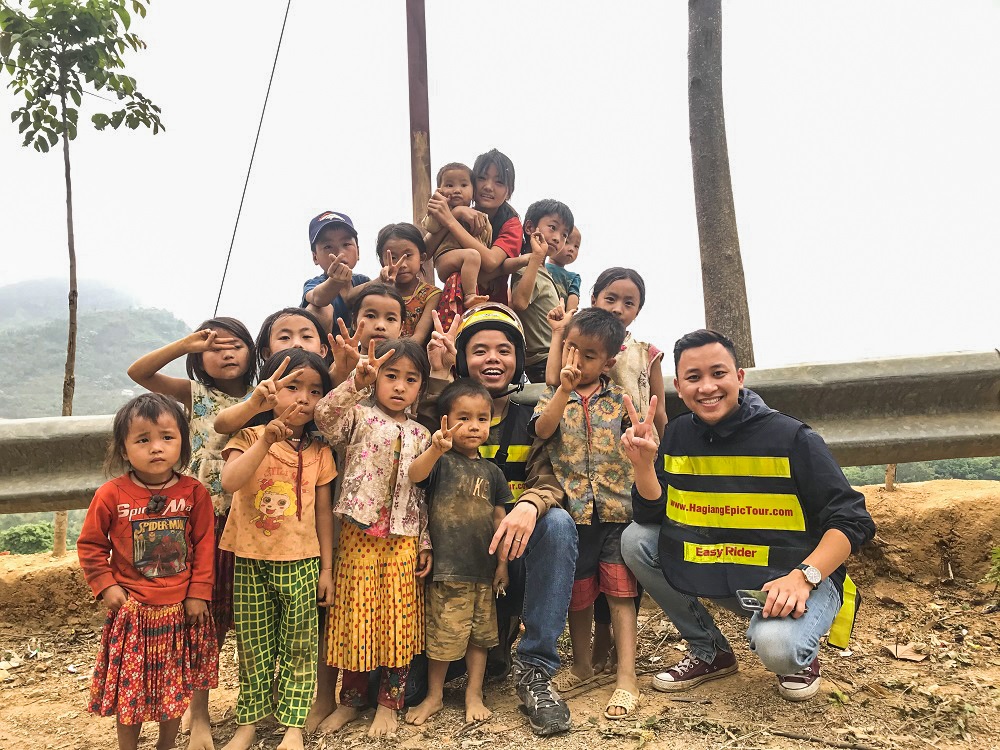
Greetings are an important aspect of Vietnamese etiquette (Source: Collected)
1.2. Communication
Vietnamese etiquette regarding communication emphasizes indirectness and politeness. Being aware of subtle cues can help you avoid misunderstandings.
- Speak calmly and politely. Raising your voice or showing anger is seen as disrespectful and causes loss of face.
- Be aware that sometimes “yes” might mean “maybe,” and “no” could be politely avoided. Listen to the tone and body language too.
- Always ask for permission before taking someone’s photo, especially in rural areas or at temples.
- Bargaining is expected at local markets, but do it respectfully and with a smile.
Explore: Taboos in Vietnam: Top 10 things travelers should beware of
1.3. Body language and physical contact
Body language in Vietnamese etiquette carries important cultural meanings. Certain gestures may be polite in your country but are inappropriate here.
- Avoid touching people’s heads.
- Don’t point your finger at someone. Instead, use your whole hand or nod your head.
- When giving/receiving something, especially to/from the elderly, use both hands or support your right hand with your left.
- Public displays of affection like hugging or kissing are not common, especially in rural areas.
- Avoid standing with your hands on your hips or crossing your arms during a conversation.
- Sitting with your feet pointing toward someone or a sacred object, like an altar, is considered disrespectful.
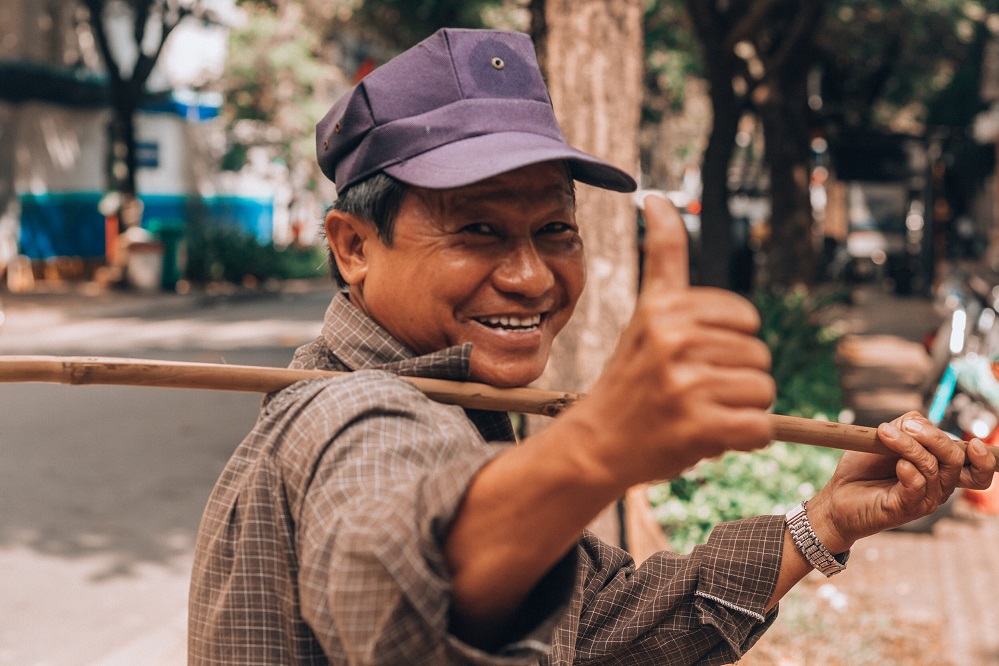
Be mindful of the body language etiquette in Vietnam (Source: Collected)
1.4. Dress code
Dressing modestly and appropriately is a sign of respect in Vietnamese etiquette, especially in public places or at religious sites.
- Avoid wearing shorts, sleeveless tops, or revealing clothes at religious sites.
- Lightweight, breathable clothing is best for the hot weather, but try to keep your outfit respectful.
- Follow the locals’ example! Vietnamese people tend to dress neatly and conservatively, even in casual settings.
- Swimwear is fine at the beach or pool, but always cover up when leaving those areas.
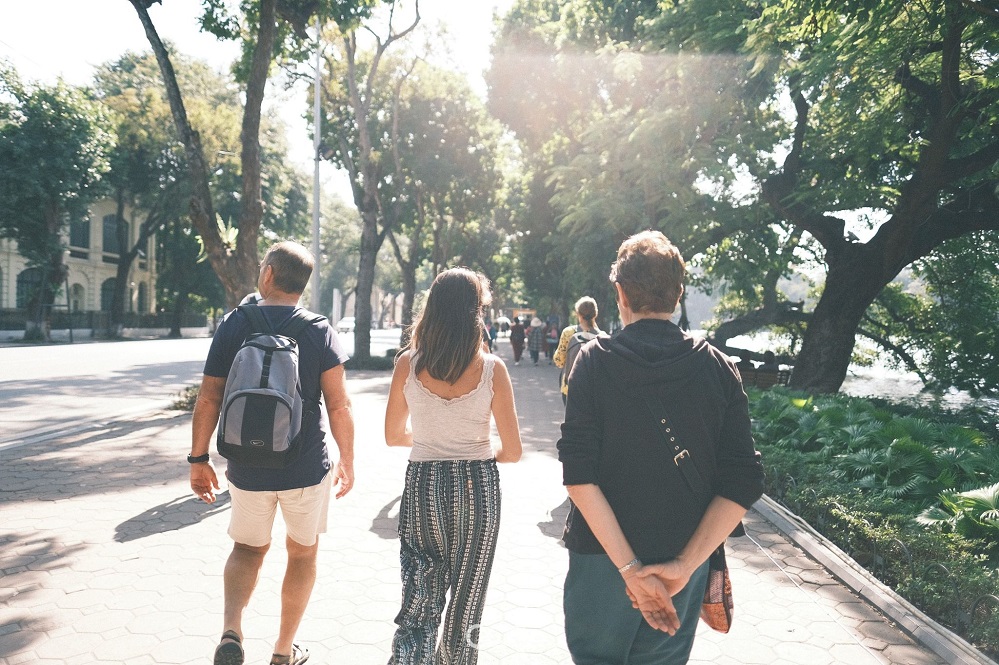
Knowing the dressing Vietnamese etiquette is crucial for tourists (Source: Collected)
1.5. Gift-giving
Gift-giving is a thoughtful way to show appreciation or build relationships in Vietnamese etiquette. However, the meaning of the gifts can vary, so it is good to know what is considered polite or taboo.
- Giving gifts is a thoughtful gesture in Vietnam, especially when visiting someone’s home.
- It is polite to offer the gift with both hands as a sign of respect.
- It is common for the receiver not to open the gift right away. This is seen as being polite.
- If visiting a home, fruits, sweets, or something from your home country will make nice gifts.
Read more: 23 do’s and don’ts in Vietnam to ensure a respectful visit
1.6. Tipping
Tipping is not mandatory in Vietnamese etiquette, but it is appreciated in many service industries. Knowing when and how much to tip can enhance your experience and support local workers.
- While tipping is not a common practice in Vietnam, it is always warmly received.
- If you feel satisfied with the service from drivers, waitstaff, tour guides, or other service workers, offering a small tip is a thoughtful way to express your gratitude.
- When taking part in a guided tour, it is a kind gesture to tip your tour leader at the end as a thank you for their efforts.
- To make tipping easier, it helps to carry small denominations of the local currency or a few US dollars.
- Try to avoid giving coins, very low-value bills, or damaged notes, as these might come across as disrespectful.
2. Vietnamese dining etiquette
Sharing a meal is a big part of Vietnamese culture. Understanding the dining etiquette in Vietnam will make your culinary experiences more enjoyable.
2.1. Table manners
Traditional Vietnamese meals often involve shared dishes. Practicing good table manners helps you blend in and enjoy meals with Vietnamese etiquette.
- Always wait for the elderly or the oldest people at the table to start the meal before you begin eating.
- It is polite to say “Mời cả nhà ăn cơm” before you start.
- When taking or passing dishes, bowls, or utensils, use both hands to show respect.
- Avoid taking large portions of food at once; it is better to take small amounts and come back for more if needed.
- Don’t rummage through shared dishes. Take what’s on top or closest to you.
- Don’t shake your legs or rest your chin on your hands while at the table.
- Chewing should be done quietly. Avoid making noises or smacking your lips when eating.
- If you need to leave the table during the meal for personal reasons, remember to ask for permission first.
- It is polite to stay at the table until everyone has finished eating.
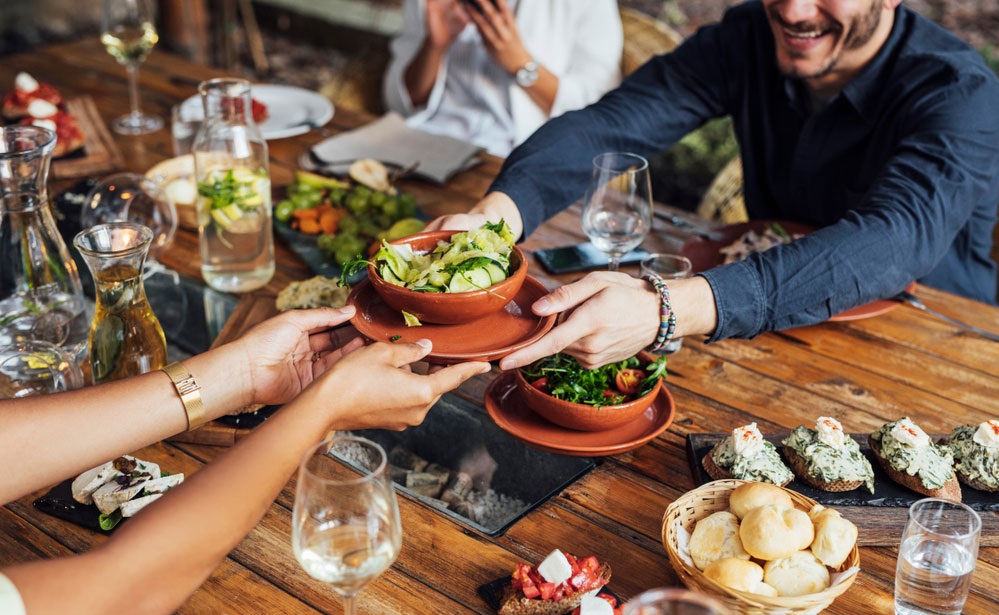
It’s worth learning the Vietnamese table etiquette (Source: Collected)
2.2. Chopstick etiquette
Vietnamese chopsticks are used daily, and how you use them matters. According to Vietnamese etiquette:
- Never stick chopsticks upright in a bowl of rice. It looks like incense at a funeral altar.
- Don’t use chopsticks to point at people.
- Avoid tapping chopsticks on the bowl or plate.
- Don’t pass the food directly from your chopsticks to someone else’s. Put it in their bowl.
- Don’t dig through shared dishes to find a specific item, just take what’s easily reachable.
- Don’t dip chopsticks directly into shared sauces, and never dip a piece of food you have already bitten into.
- When not using chopsticks, place them neatly on the chopstick rest or over your bowl.
- Use the opposite end of your chopsticks if you are taking food from a shared dish.
Best-selling products
![[VinWonders Vu Yen] - [02 Adults + 02 Children] - Admission to Zoo + Games + Water Park | FREE 01 Limited Tote Bag](http://booking-static.vinpearl.com/tours/b2cd8cf6b14c48459b21393e14d73163_vwvy%201_vinwonders-nha-trang-ve-vao-cua-2-chieu.jpg)
![[Aquafield Ocean City] - Body Exfoliation Session](http://booking-static.vinpearl.com/tours/0e8ee4024e1f4378ba932eb06d945636_Screenshot_14_aquafield-nha-trang.png)
![[Onsite service] - VIP Zoo Tour Vinpearl Safari Phu Quoc](http://booking-static.vinpearl.com/tours/ceb77f9174d845ebb2fd3dfe2b846066_3%20copy_vinwonders-nam-hoi-an-ve-vao-cua.jpg)
![[Aquafield Ocean City] [Male] – Standard Jjimjilbang Sauna Ticket](http://booking-static.vinpearl.com/tours/0be276c684454e8d969c373f35f6be97_DSC_2127_11zon_aquafield-nha-trang.jpg)
![[VinWonders Nha Trang] - Standard Admission Ticket to VinWonders | Free F&B Voucher](http://booking-static.vinpearl.com/tours/d1425f018b3e4d2d833374b5b52d8bb9_Hinh-anh-VinWonders-Nha-Trang-The-World-Garden-Lau-vong-canh-3x2-so-1_vinwonders-nha-trang-ve-vao-cua-sau-16h.jpg)
![[Grand World Phu Quoc] [Ultimate Combo] - Water Taxi + Teddy Bear Museum + Grand Show](http://booking-static.vinpearl.com/tours/e31a9e66b5444808bba3e3114d195559_VENICE%20ALL%20IN%20ONE%20KV%20(1)_ve-bao-tang-gau-teddy-bear.jpg)
![[-10%] [Times City Hanoi] - Combo Aquarium Admission Ticket + F&B Set](http://booking-static.vinpearl.com/tours/e7fcffc8256546e8bdcfd5ccfbe69783_VINKE2%20(1)_vinke-ve-vao-cua-truc-tiep.jpg)
![[-50%] [VinWonders Wave Park] Standard Admission Ticket to Wave Park](http://booking-static.vinpearl.com/tours/f949b31af919495c9b4e111237642763_358600999_111579731994757_433244877993048710_n_vinwonders-ha-noi.jpg)
![[Grand Park] Enchanted Banquet](http://booking-static.vinpearl.com/tours/eeb9a602315342ccbc7965b29cfb0db0_Ảnh%20màn%20hình%202025-03-03%20lúc%2015.00.17_vinwonders-nam-hoi-an-ve-vao-cua.png)
![[01 Day Combo] - Admission to VinWonders + Vinpearl Safari Phu Quoc](http://booking-static.vinpearl.com/tours/877d8a3289a246d18f95aa5cc414f6d6_27be58d21e244664bf34d11d72e77860_Castle_vinwonders-phu-quoc-ve-vao-cua_vinwonders-phu-quoc-ve-vao-cua.jpg)
![[Aquafield] - [Male] - 4-hour Korean Sauna](http://booking-static.vinpearl.com/tours/4ae60d29ea264f8fab17beb6b4415502_aqf-da-muoi_aquafield-nha-trang-xong-hoi-chuan-han.jpg)
![[-30% Grand Opening] [Aquafield Ocean City] – Standard Jjimjilbang Sauna Ticket for Male](http://booking-static.vinpearl.com/tours/94abeb55e3d54efbac23f7a862445389_0d72b531dd6749bbac2874b915ab0512_Screenshot_8_aquafield-nha-trang_aquafield-nha-trang.png)
![[VinWonders Nam Hoi An] Direct admission & Buggy Ticket Combo](http://booking-static.vinpearl.com/tours/6c002e3ea71642f38eda8efa8654e5e4_vwnha0_vinwonders-nam-hoi-an-ve-vao-cua.jpg)
![[VinWonders Vu Yen] - [04 Adults] - Admission to Zoo + Games + Free Tote Bag](http://booking-static.vinpearl.com/tours/34488b227a3648e5b73d4aa6d6d36b46_DO__8153_vinwonders-nha-trang-ve-vao-cua-2-chieu.jpg)

![[Hon Tam] - [Zone A&B] - Full island entertainment + Mud Bath Zone A + Lunch](http://booking-static.vinpearl.com/tours/af991883d63f4133b62b76551ba2444d_tam-bun-dao-hon-tam_httpswwwhontammudbathvnwp-contentuploadssites2720190625-3-2200x700jpg.jpg)
![[VinWonders Cua Hoi] Full Access to 04 Main Areas + Buffet Voucher worth VND 125,000](http://booking-static.vinpearl.com/tours/aa8379d6db3a4f5c9df6d78d53177c35_11-E-Ticket-Vinwonder-Cua-Hoi_23072024111407_vinwonders-nam-hoi-an-ve-vao-cua.jpg)
![[Buggy Combo] - VinWonders Phu Quoc + Buggy + Free Ice Cream](http://booking-static.vinpearl.com/tours/0fc52a574094489da612d0f36bb4b1e6_buggy%20kem_vinwonders-phu-quoc-ve-vao-cua-tet-vi-vu.jpg)
![[VinWonders Nha Trang] - 01-day Unlimited Admission Ticket | Free F&B Voucher](http://booking-static.vinpearl.com/tours/ccf23087ea0f419980c411d0e79c10fb_88c594a8352d49e7b031b9fbd5c5d27f_tro-choi-mao-hiem-o-vinpearl-nha-trang-thumb-1_vinwonders-nha-trang-khong-gioi-han-2-ngay_vinwonders-nam-hoi-an-ve-vao-cua.jpg)
![[VinWonders Cua Hoi] - Combo: Indoor Games + Outdoor Games](http://booking-static.vinpearl.com/tours/59e1a8613d6741d9b9c86645ecf6726e_vinwonders-cua-hoi-10_vinwonders-cua-hoi.jpeg)
![[Grand Park] Water Park + Dream Garden Outdoor Games Combo](http://booking-static.vinpearl.com/tours/35566b714d4c4dd9802a6bf4650ac2b1_khu-vui-choi-cua-hoi-9_vinwonders-nam-hoi-an-ve-vao-cua.jpg)
![[Grand World Phu Quoc] - Venice Water Taxi Ticket](http://booking-static.vinpearl.com/tours/6cee2bcb52a447009f64771095d03c9e_Screenshot%202024-10-22%20at%2014.49.18_ve-bao-tang-gau-teddy-bear.png)
![[VinWonders Nam Hoi An] - Standard Admission Ticket](http://booking-static.vinpearl.com/tours/5d3ee19e977446be8917a34697bb9443_ece6e58a02fd48de9eba9d3f4689f77a_Hinh-anh-VinWonders-Nam-Hoi-An-River-Safari-3x2-so-1%20(1)_vinwonders-nam-hoi-an-ve-vao-cua_vinwonders-nam-hoi-an-ve-vao-cua.jpg)
![[Onsite service] - Premium VIP Zoo Tour Vinpearl Safari Phu Quoc](http://booking-static.vinpearl.com/tours/ff1e4b66ec1b46edad0c0460144e70ad_VINPEARL%20SAFARI%20PHU%20QUOC%20%20(51)_vinwonders-nam-hoi-an-ve-vao-cua.jpg)
![[Nha Trang Passport] - [Half-Day] - Cable Car + Aquafield Sauna (2 hours) + Tata Show](http://booking-static.vinpearl.com/tours/ef49c187eadf4177b425d2bb85a18b30_200dd4dda03e45e0a1add52e4acc11fa_NHT_1796_ve-xem-tata-show-vinwonders-nha-trang.jpg)
![[VinWonders Vu Yen] - Admission Ticket to Games zone (after 5:00 PM)](http://booking-static.vinpearl.com/tours/edbd3eb4bc9848aead9940e0f5aa050d_fa21c62dfa9644ada0c3fce89b3e79ff_DO__8711_vinwonders-vu-yen-vuon-thu-khu-tro-choi-sau-17h.jpg)
![[Hon Tam] - 15-Minute Snorkeling](http://booking-static.vinpearl.com/tours/56618ea554304747b54636a31d59f9f4_Untitled-design-1_httpswwwhontammudbathvnwp-contentuploadssites2720190625-3-2200x700jpg.jpg)
![[Aquafield] - [Female] - Round-trip Cable Car + 4-hour Korean Sauna](http://booking-static.vinpearl.com/tours/c3bae84e472b42078ca3ff6f28d55d80_1c5968412aca409fa8571c88cc85a4ba_aqf%205_aquafield-nha-trang.jpg)
![[Aquafield] - [Male] - Round-trip Cable Car + 4-hour Korean Sauna](http://booking-static.vinpearl.com/tours/625529980f3249e6b0491cddfc30db43_297be2477c5847748ef3bc08603ebf90_aqf%204_aquafield-nha-trang.jpg)
![[Hon Tam] - [Zone A] - Mud Bath + Lunch Combo](http://booking-static.vinpearl.com/tours/5debd1efb6d34e42a88efa65354c8c72_ebdde60fd9a44539afe75c9338ec8a3d_ảnh%205_tam-bun-hon-tam.jpg)
![[-10%] - Tata Show Ticket](http://booking-static.vinpearl.com/tours/18dc9f798082474ba26cf00121da6180_Hinh-anh-VinWonders-Nha-Trang-The-World-Garden-Lau-vong-canh-3x2-so-1_ve-xem-tata-show-vinwonders-nha-trang.jpg)
![[Aquafield] - Round-trip cable car + 2-hour Aquafield Sauna + 30-min Spa](http://booking-static.vinpearl.com/tours/b0bf65880af449f39ea19fa0acbb94d5_34d71a9c3e6b4b7484f9d7cbbc935c26_200dd4dda03e45e0a1add52e4acc11fa_NHT_1796_ve-xem-tata-show-vinwonders-nha-trang_ve-xem-tata-show-vinwonders-nha-trang.jpg)
![[Aquafield Ocean City] [Female] – Standard Jjimjilbang Sauna Ticket](http://booking-static.vinpearl.com/tours/4aec5fed6be54fe8a736aca12893384b_40fc72547fe242f8b6bbbbc428885848_065A8735_aquafield-nha-trang_aquafield-nha-trang.jpg)
![[Grand World Phu Quoc] - Teddy Bear Museum](http://booking-static.vinpearl.com/tours/30da03237e2f42fe818e6686fb350481_teddy%20bear%201_ve-bao-tang-gau-teddy-bear.jpg)
![[VinWonders Phu Quoc] - Standard Entrance Ticket](http://booking-static.vinpearl.com/tours/0dd25afc61ad45d48486bbd3b9c8a96a_tieu%20chuan%201_vinwonders-phu-quoc-ve-vao-cua.jpg)
![[Vinpearl Harbour] - Tata Show Ticket & Round-trip Cable Car](http://booking-static.vinpearl.com/tours/3cbd16b8edc74f6abc7f7cfa0e91caec_VPHB_Photos15_vinwonders-nha-trang-ve-vao-cua-2-chieu.jpg)
![[50% Student Discount] – VinWonders Admission Ticket](http://booking-static.vinpearl.com/tours/43126c168bb04853bf7c93e197db724a_Banner%201200x628_vinwonders-nha-trang-ve-vao-cua-2-chieu.jpg)
![[Aquafield] - [Female] - 4-hour Korean Sauna](http://booking-static.vinpearl.com/tours/0e6fe24c37b84cb799b94dae70578054_aqf-suong-may-2048x1365_aquafield-nha-trang-xong-hoi-chuan-han.jpg)
![[Grand World] Carousel Ride](http://booking-static.vinpearl.com/tours/0d6a4bcfc2a54fd4aa9df0b38ae8c7b6_A2-4-jpeg-2640-1687438608_grandworld.jpg)
![[VinWonders Nam Hoi An] - Standard Admission Ticket](http://booking-static.vinpearl.com/tours/81813f8ced2c466e82ad53f1c29c1904_tour-kham-pha-van-hoa-viet-vinwonders-nam-hoi-an-668ca102bcc29_vinwonders-nam-hoi-an-ve-vao-cua.jpg)
![[Grand World Phu Quoc] - The Quintessence of Vietnam Show](http://booking-static.vinpearl.com/tours/f88e2be1139b4eada4043eb7f0e39362_THVN1_show-tinh-hoa-viet-nam.jpg)
![[Times City] Combo VinKE & Vinpearl Aquarium Entrance Ticket](http://booking-static.vinpearl.com/tours/d6296ca1d3714503b01f24603b85b8cf_vinke1_vinke-ve-vao-cua-truc-tiep.jpg)
![[Hon Tam] - [Zone A] - Standard Mud Bath](http://booking-static.vinpearl.com/tours/9db66a615a7d4f119316b338afff30cb_tam-bun-dao-hon-tam_httpswwwhontammudbathvnwp-contentuploadssites2720190625-3-2200x700jpg.jpg)
![[VinWonders Cua Hoi] - Indoor Games Area](http://booking-static.vinpearl.com/tours/0b0d68a6480146e3a0aba9a3cfc038c1_1920-x-1080-double%20day%20sale%2077%20no%20text_vinwonders-nam-hoi-an-ve-vao-cua.jpg)
![[Grand World Phu Quoc] - Water Taxi Boat + Teddy Bear Museum](http://booking-static.vinpearl.com/tours/add2e0908faa4289b555856472b181be_VENICE%20ALL%20IN%20ONE%20KV%20(1)_ve-bao-tang-gau-teddy-bear.jpg)
![[Vinpearl Harbour] - Combo for 02 pax: Round-trip cable car + Two-seater Go Kart ride](http://booking-static.vinpearl.com/tours/ab277ed82445448aad2f6b1a0c249e40_Gokart-1_vinpearl-harbour-go-kart-xe-doi.jpeg)
![[VinWonders Nha Trang] - Admission to VinWonders after 4:00 PM](http://booking-static.vinpearl.com/tours/de2da6d471b34297ab13cb26ef2da9a0_Hinh-anh-VinWonders-Nha-Trang-The-World-Garden-Lau-vong-canh-3x2-so-1_vinwonders-nha-trang-ve-vao-cua-sau-16h.jpg)
![[Nha Trang Passport] - [Half-Day] - Cable Car + Aquafield Sauna (2 hours) + Tata Show](http://booking-static.vinpearl.com/tours/91c34711df754e76b66d3ff6d3436e26_34d71a9c3e6b4b7484f9d7cbbc935c26_200dd4dda03e45e0a1add52e4acc11fa_NHT_1796_ve-xem-tata-show-vinwonders-nha-trang_ve-xem-tata-show-vinwonders-nha-trang.jpg)
![[VinWonders Cua Hoi] Combo Entrance Ticket | Includes Cable Car + Games Area (excluding Gokart and Indoor Games)](http://booking-static.vinpearl.com/tours/d5af0cb7759d48a7a2b991c8de1e19a0_Hinh-anh-VinWonders-Nam-Hoi-An-Noi-bat-3x2-so-3%20(1)_vinwonders-nam-hoi-an-ve-vao-cua.jpg)
![[Vinpearl Harbour] - Happy Hour Combo: Round-trip Cable Car + Dinner Buffet + Tata Show](http://booking-static.vinpearl.com/tours/a869acdae59e4137855742de1cbbb1af__KAH2165_vinpearl-harbour-combo-happy-hour.jpg)
![[Nha Trang Passport] – [01 day] – Snorkeling Tour + Lunch & Mud Bath at Hon Tam + Vinpearl Harbour + Tata Show](http://booking-static.vinpearl.com/tours/f6b1826759674c9c9d3f074e03fa04ba_snorkeling%201_vinwonders-nha-trang-ve-vao-cua-2-chieu.jpg)
![[Vinpearl Aquarium Times City] Entrance Ticket](http://booking-static.vinpearl.com/tours/8702a10bf2934d6299df65669a290679_aquarium%20times%20city%203_thuy-cung-vinpearl-aquarium-times-city.jpg)
3. Vietnamese etiquette for special events
Vietnamese people observe many customs during important life events. Being aware of what is appropriate helps you respectfully take part in these important celebrations.
3.1. Weddings
Vietnamese weddings are full of cultural traditions. Guests are expected to:
- Dress nicely. Bright, cheerful colors and pastel tones are good choices.
- Bring a small gift. Alternatively, bring a red envelope with cash. This is the most common wedding gift.
- The amount of money in the envelope depends on your relationship with the couple. 300,000 – 1,000,000 VND is typical.
- Write your name on the envelope so the couple knows who it’s from.
- Arrive on time, but be prepared to wait a little. Wedding schedules are often flexible.
- Enjoy the food and drinks, but don’t leave before the meal is finished unless absolutely necessary.
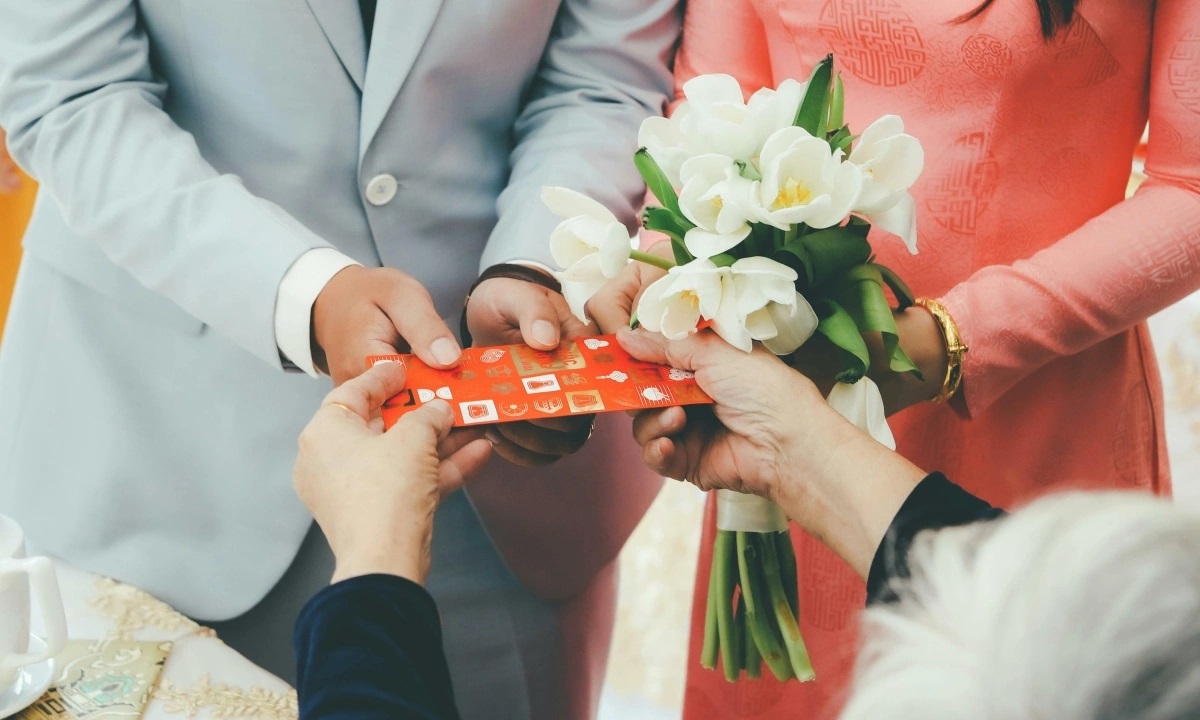
Be aware of the Vietnamese wedding gift etiquette if you are attending one (Source: Collected)
3.2. Business meetings
In Vietnam, business is built on relationships. Understanding proper Vietnamese business etiquette can help you make a strong impression.
- Dress formally and professionally! Business attire is expected, especially at first meetings.
- Always greet with a smile and a handshake, and show respect to senior members first.
- Exchange business cards using both hands, with the card facing the other person so they can read it.
- Take a moment to look at the card before putting it away. It shows respect.
- Titles and hierarchy matter in Vietnam, so address people by their titles (Mr., Ms., Director, etc.)
- Don’t rush into deals; expect multiple meetings before decisions are made.
- Always follow up after the meeting with a polite thank-you message or email.
3.3. Funerals
Attending a funeral in Vietnam requires quiet respect. Certain Vietnamese etiquette behaviors help show sympathy and honor the family.
- Dress in modest, dark clothing and avoid bright colors.
- It is common to bring a small monetary offering in an envelope to help with funeral costs.
- During the funeral ceremony, remain quiet and respectful. It is best to avoid talking or laughing.
- At the wake, family members and close friends may perform rituals like burning incense or making offerings. Observe quietly and respectfully.
- Be aware that the funeral process can last several days, with ceremonies often taking place at the home of the deceased.
- Avoid being overly emotional in public. While grief is shared, public displays of intense emotion are not common.
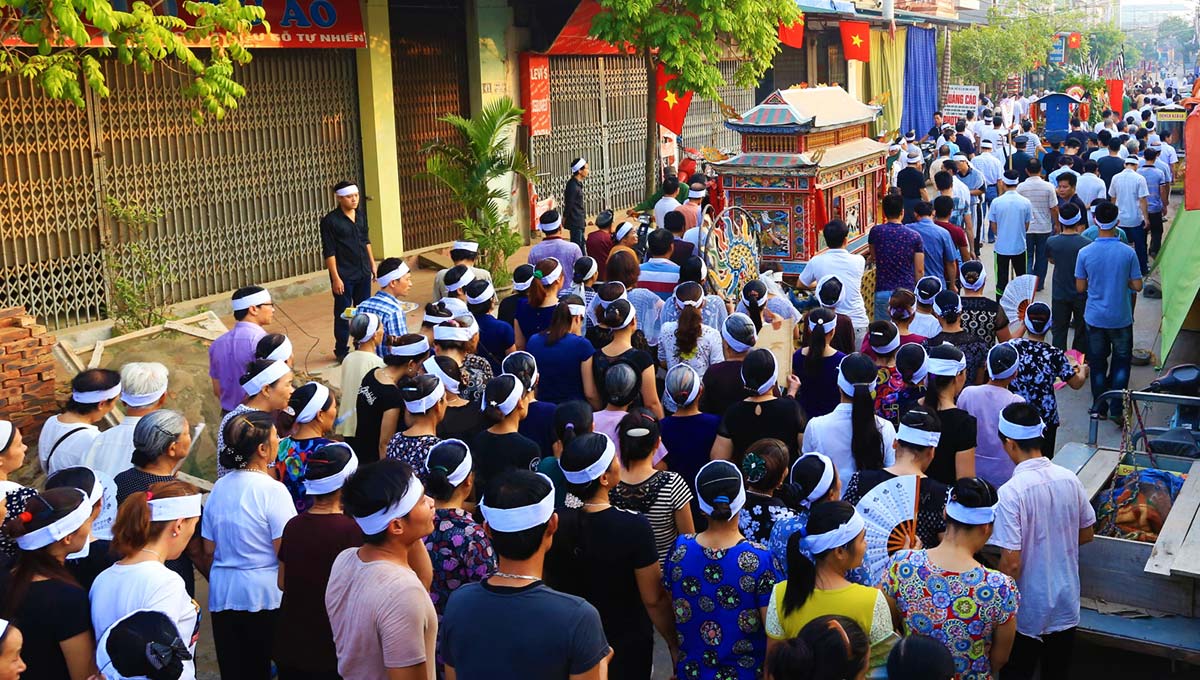
The Vietnamese funeral etiquette is also worth knowing (Source: Collected)
3.4. Home visits
Being invited to a Vietnamese home is a special experience. Observing Vietnamese etiquette helps show gratitude and respect for your hosts.
- Remove your shoes before entering the home. Leave them just outside the door.
- Be respectful of altars in the home; don’t step over them.
- Greet the eldest family members first and show respect by shaking hands with your right hand.
- Offer a small gift when visiting such as fruits, flowers, soft drinks, or a box of biscuits or cakes.
- It is common to sit and chat for a while. Don’t rush, as home visits are often seen as an opportunity to bond.
3.5. Temple visits
Temples are sacred spaces in Vietnam. Dressing appropriately and behaving respectfully by following Vietnamese etiquette helps you appreciate their beauty while honoring local beliefs.
- Dress modestly. Cover your shoulders and knees.
- Remove your shoes before entering the temple building and leave them outside.
- Speak quietly while inside the temple grounds to maintain a peaceful atmosphere.
- Avoid touching or disturbing statues or sacred objects.
- If you are invited to participate in rituals, follow the lead of the locals. Don’t force yourself to participate if you are unsure.
- Be respectful to monks and nuns! Greet them politely and never interrupt their duties.
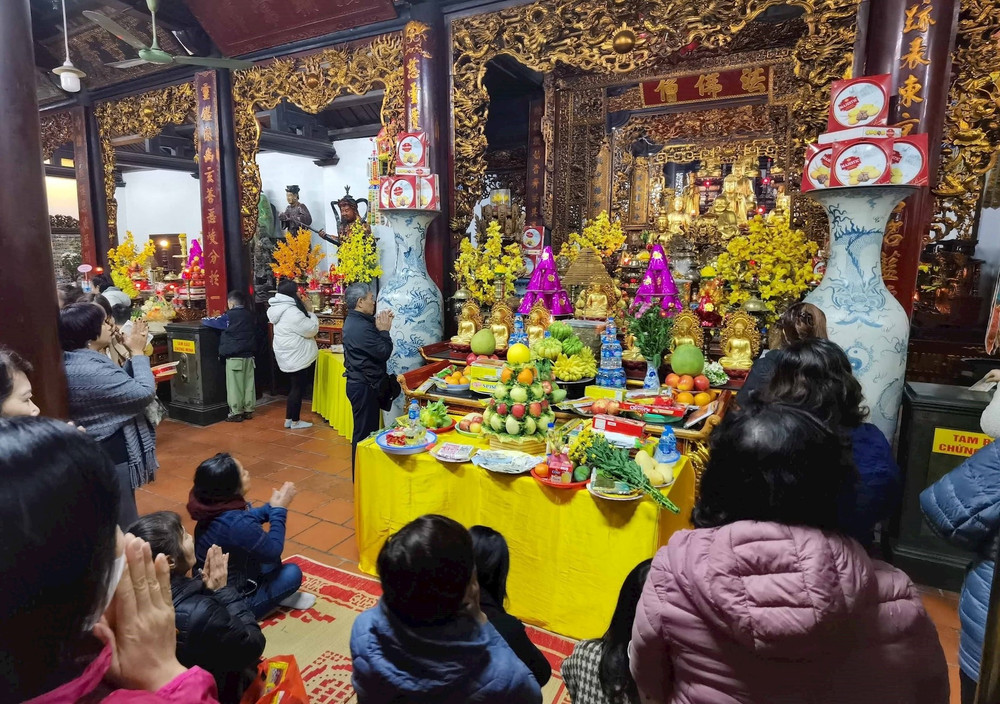
Keep Vietnamese etiquette in mind while visiting temples (Source: Collected)
Understanding Vietnamese etiquette is crucial for fostering meaningful interactions during your travels. By adhering to the local customs, whether it is following proper table manners, respecting cultural norms during special events, or being mindful of body language, you will not only avoid misunderstandings but also deepen your connections with the people.
Besides practicing Vietnamese etiquette, to truly immerse yourself in Vietnam, you should explore famous destinations such as Phu Quoc, Nha Trang, Da Nang, and Hoi An. For an unforgettable experience in these destinations, don’t miss VinWonders, where you can enjoy world-class entertainment. After a day of exploration, unwind at the luxurious hotels and resorts of Vinpearl, where top-notch amenities amidst serene surroundings promise a perfect retreat.
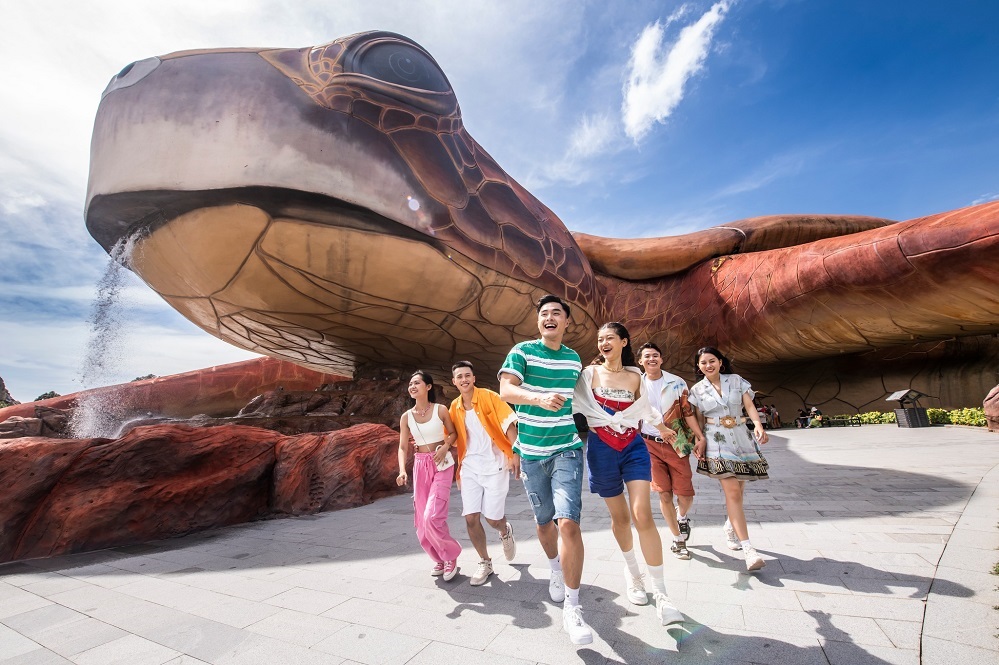
Have fun at VinWonders Phu Quoc
Book VinWonders Phu Quoc ticket now
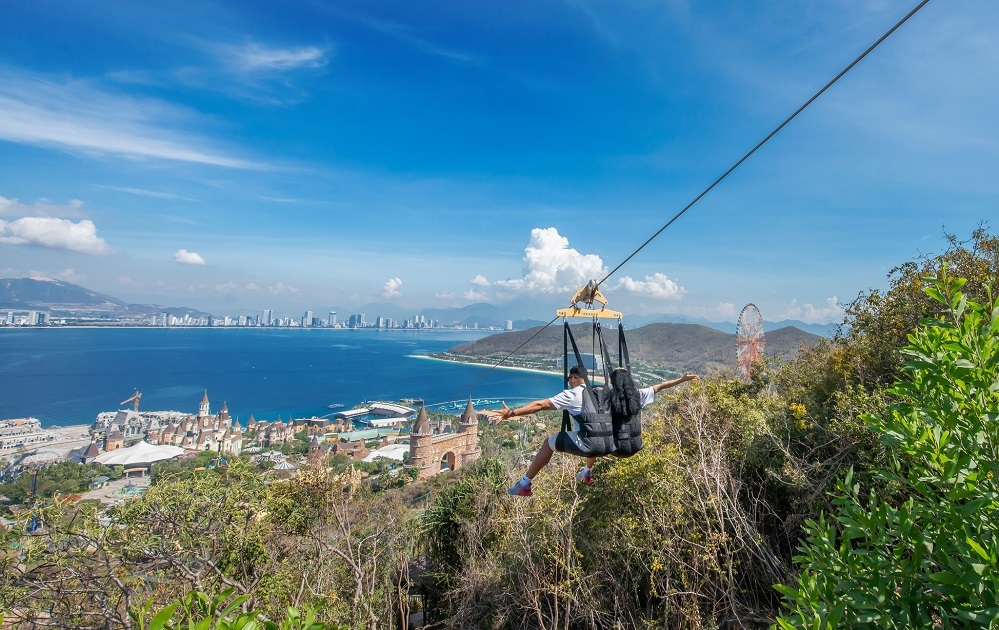
Create cherished memories at VinWonders Nha Trang
Book VinWonders Nha Trang ticket now
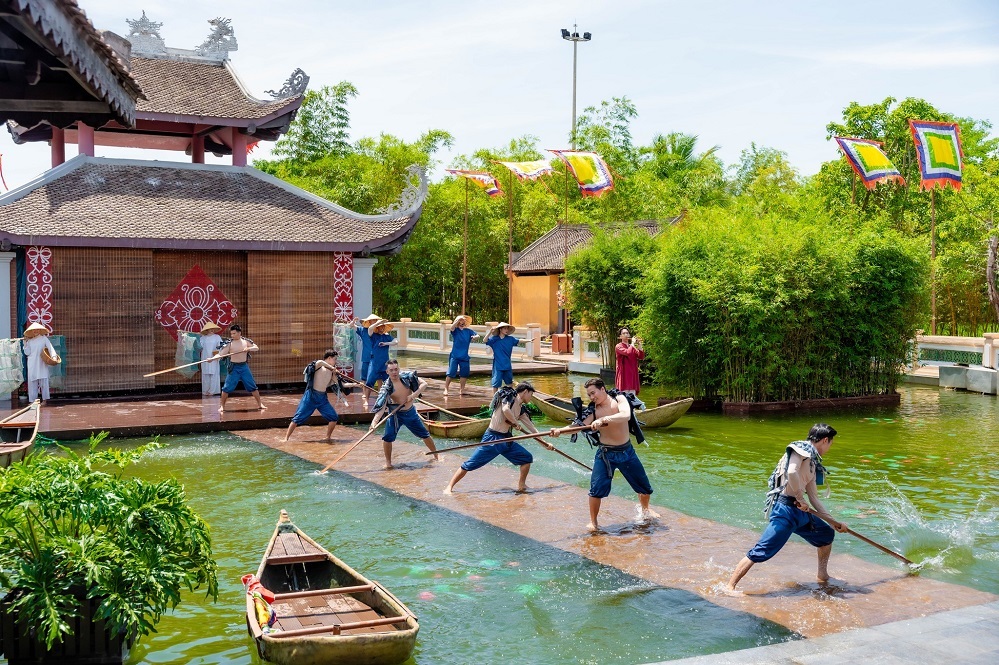
Watch lively shows at VinWonders Nam Hoi An
Book VinWonders Nam Hoi An ticket now
Best-selling products




![[Mega Sale 2.2] Get up to 50% off VinWonders on Double Day](https://static.vinwonders.com/production/2025/12/homepage-banner-3-336x161.jpg)


