 en
en


 Tiếng Việt
  中文 (中国)
  한국어
한국어  Русский


 07/12/2025
 1.213 views
1. Where is Giac Lam Pagoda? How to get there?
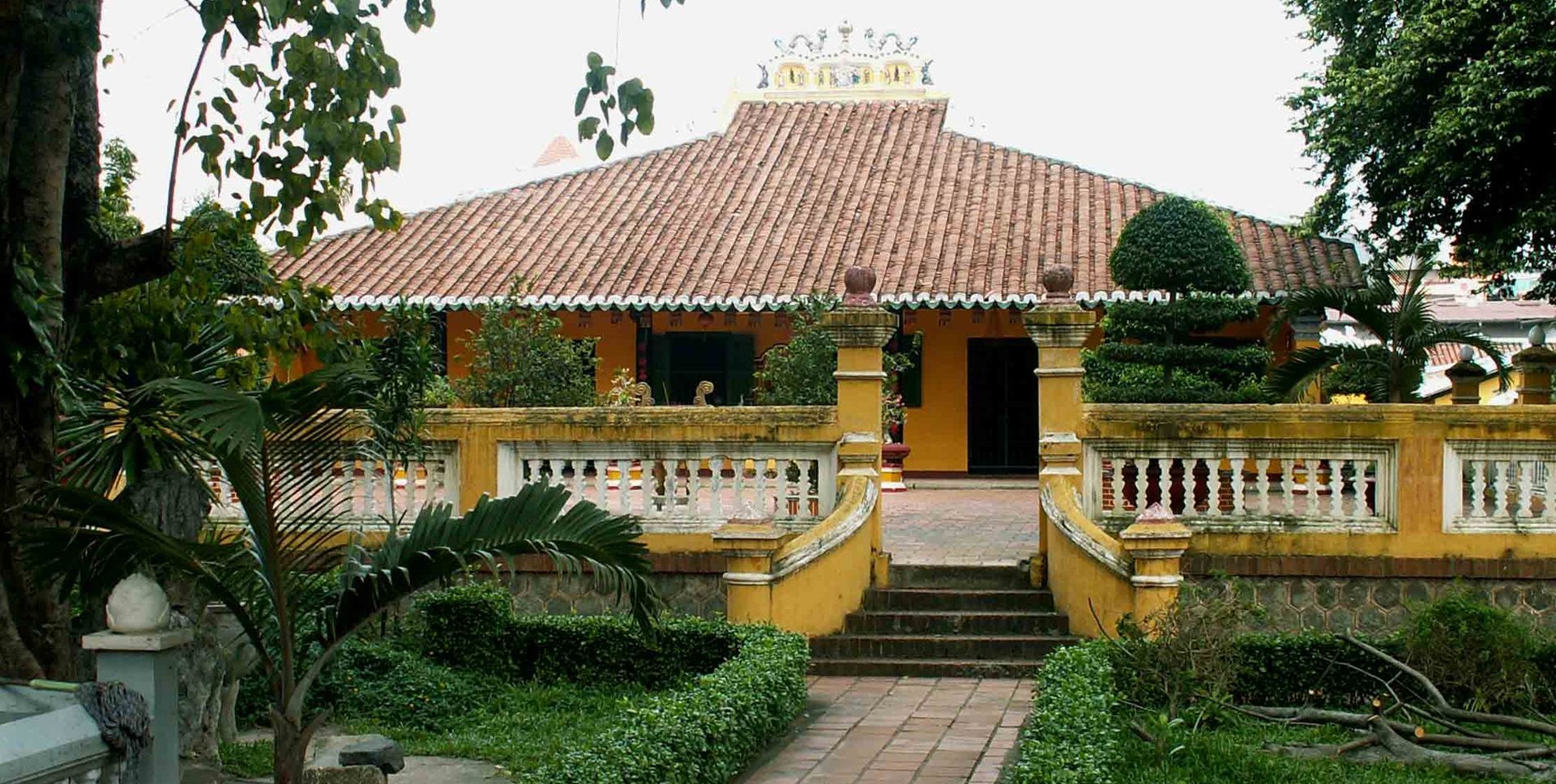
Giac Lam Pagoda, or Giac Lam Patriarchal Temple, is situated at 565 (formerly 118) Lac Long Quan Street, Tan Binh District (now part of Bay Hien Ward), Ho Chi Minh City. It is also known as Cam Son Pagoda, Son Can Pagoda, or Cam Dem Pagoda.
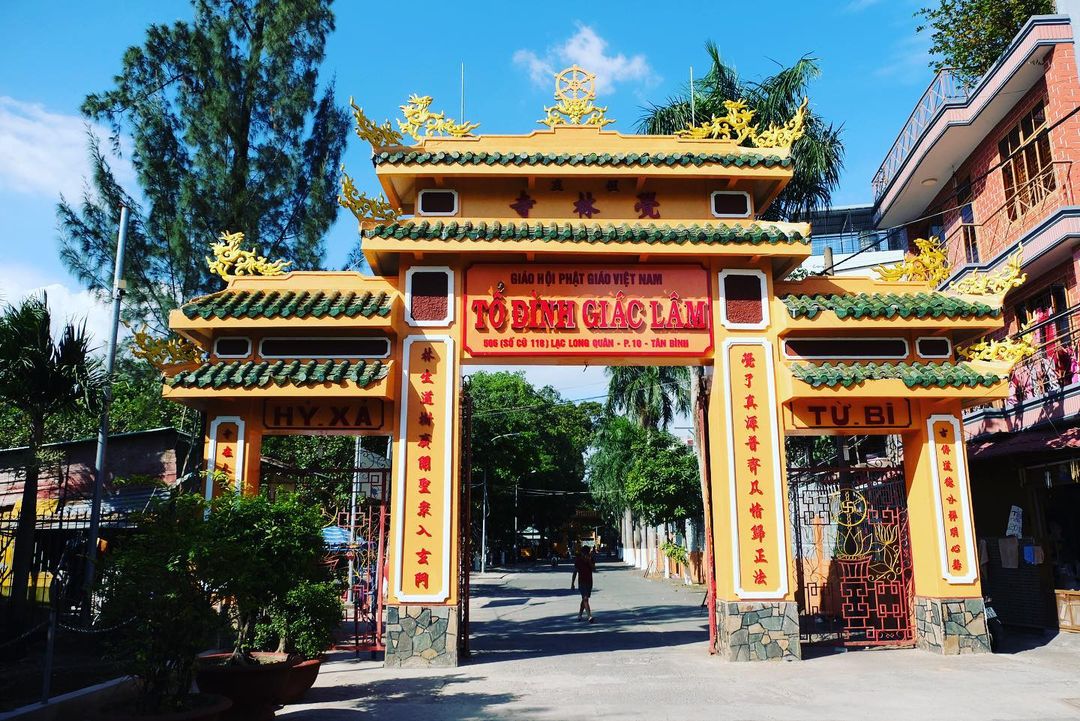
Giac Lam is an iconic pagoda in Ho Chi Minh City (Source: Collected)
As one of the oldest Vietnamese pagodas, Giac Lam Pagoda boasts nearly 300 years of history. It is set in a tranquil atmosphere, where birds gather and trees offer year-round shade. More than just an architectural gem, the pagoda stands as a symbol of cultural fusion, deeply rooted in the rich history of southern Vietnam. In 1988, the pagoda was designated a National Historical and Cultural Relic and has since been a prominent pilgrimage site for visitors nationwide.
If you are going from District 1 (now part of Sai Gon Ward) to Giac Lam Pagoda, follow the streets of Le Loi – Le Lai – Cong Quynh – Nguyen Thi Minh Khai – Ly Thai To – 3/2 Street – Le Dai Hanh – Au Co – Lac Long Quan Street. On Lac Long Quan Street, enter Alley 565 to reach the pagoda.
Check out: Ho Chi Minh City map: A compass for first-time tourists
2. Things to know about the history of Giac Lam Pagoda
From its founding until 1742, Giac Lam Pagoda was a simple thatched house with earthen walls. In 1744, a group of Chinese people raised funds to build a pagoda and named it Cam Son, Son Can, or Cam Dien. From 1744 to 1772, it primarily served as a worship hall without a monk. In 1774, Zen master Vien Quang became the first abbot, marking a significant milestone in the pagoda’s development.
Giac Lam Pagoda underwent several renovations from 1789 to 1945. There was a notable renovation in 1900, which was influenced by Western architectural styles. During wartime (1939 – 1945), the pagoda served as a safe haven for numerous Vietnamese revolutionaries. After 1946, it flourished under the guidance of Zen master Nhat Danh Thien Thuan and later Venerable Hue Sanh.
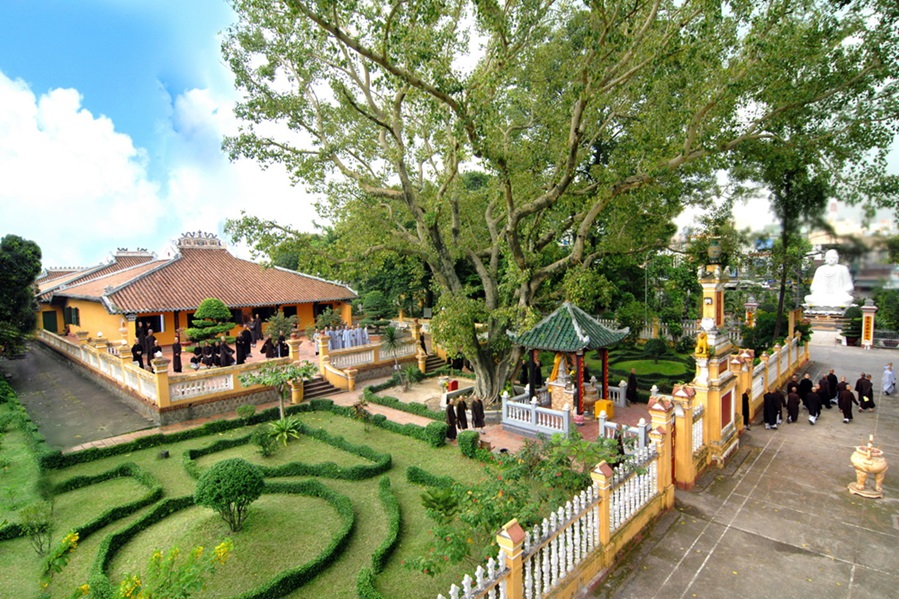
Giac Lam Buddhist Temple has a long history (Source: Collected)
Discover 20 places to visit in Ho Chi Minh City for your itinerary!
Best-selling products
![[Grand Park] Mambo Serenade](http://booking-static.vinpearl.com/tours/eeb9a602315342ccbc7965b29cfb0db0_Ảnh%20màn%20hình%202025-03-03%20lúc%2015.00.17_vinwonders-nam-hoi-an-ve-vao-cua.png)
![[Grand Park] Water Park + Dream Garden Outdoor Games Combo](http://booking-static.vinpearl.com/tours/35566b714d4c4dd9802a6bf4650ac2b1_khu-vui-choi-cua-hoi-9_vinwonders-nam-hoi-an-ve-vao-cua.jpg)
3. Architectural highlights of Giac Lam Buddhist Temple
Giac Lam Pagoda features three connected buildings: the main hall, the lecture hall, and the kitchen. Following the renovations, it has added structures such as the ancestral tower, the stupa, and the ossuary.
The pagoda roof, shaped like a traditional rice cake, is a hallmark of Southern Vietnamese architecture, exuding a rustic charm. One distinctive feature of Giac Lam Pagoda is the double gate adorned with lion statues at each corner. There is also a Naga head, a typical mythical creature in Southern Khmer Buddhism.
The main hall is supported by 56 large columns intricately carved with couplets and gilded in gold. At its center stands a wooden statue of Buddha surrounded by various bodhisattvas, some of which are centuries old. The walls are decorated with over 6,000 decorative plates, while the nearby ancestral tower showcases more than 1,000. Some of the plates were sourced from Japan and China.
With more than 7,000 plates, Giac Lam Pagoda holds the record for having the largest collection of decorative plates in Vietnam. It also has 113 statues, which were mostly made of wood or bronze.
In front of the main hall stands the seven-story, hexagonal stupa. The courtyard, with altars and Buddha statues nestled beneath the trees, is highlighted by an ancient bodhi tree that was brought from Sri Lanka in 1953.
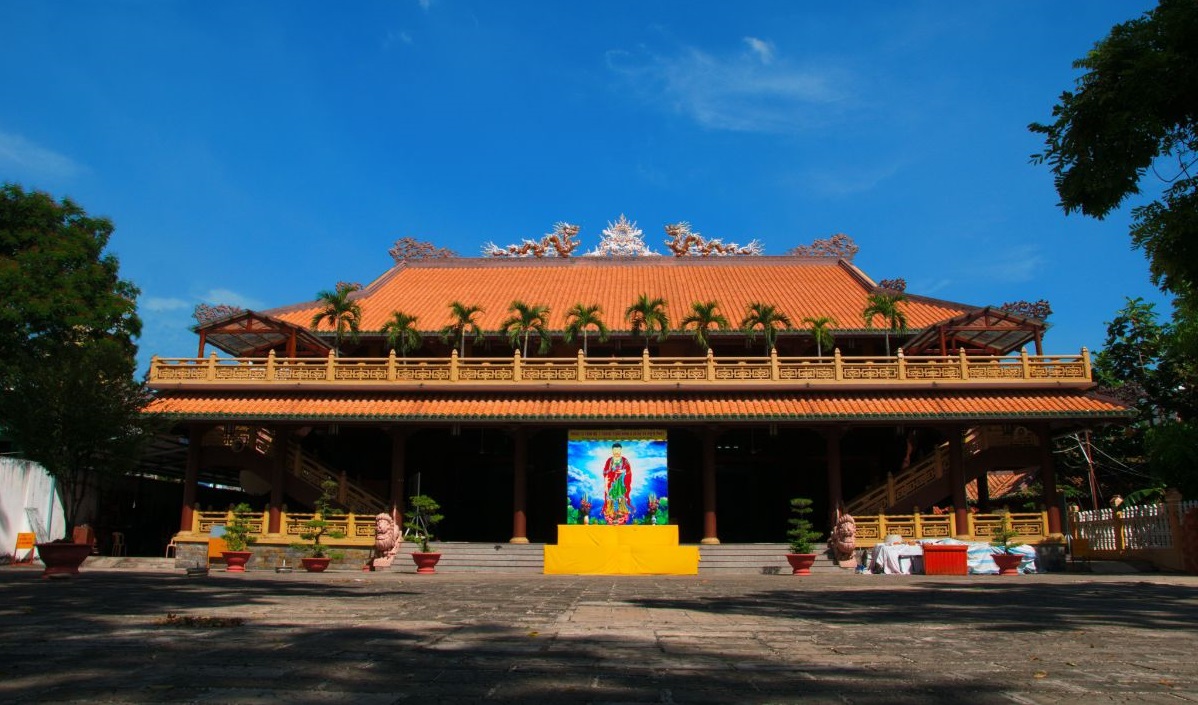
Giac Lam Pagoda showcases traditional Southern Vietnamese architecture (Source: Collected)
Explore: Top 10 historical places in Ho Chi Minh City you can’t skip
4. Things to experience at Giac Lam Pagoda, Ho Chi Minh City
Giac Lam Pagoda in Ho Chi Minh City is often chosen by the local Buddhist community to host major ceremonies. For tourists, this offers a unique opportunity to experience the traditions of Vietnamese Buddhism. Visiting during Vesak (Buddha’s Birthday), the Buddhist Day of the Dead, or the Vu Lan Festival allows tourists to not only witness the vibrant atmosphere but also pray for peace while gaining a deeper understanding of Buddhist teachings.
Besides, on special days like the Full Moon of the 1st or 7th lunar month, the pagoda draws large numbers of monks, nuns, and pilgrims. It is an excellent chance for visitors to witness traditional Buddhist rituals, join in the celebrations, and appreciate the pagoda’s centuries-old charm.
Beyond religious observances, Giac Lam Pagoda in Ho Chi Minh City is also a place for cultural practices. It is known for hosting weddings, blessing ceremonies, and calligraphy requests. For those eager to delve further into Buddhist philosophy, the pagoda offers meditation retreats, providing a peaceful environment to learn about Buddhist teachings and cultivate mindfulness.
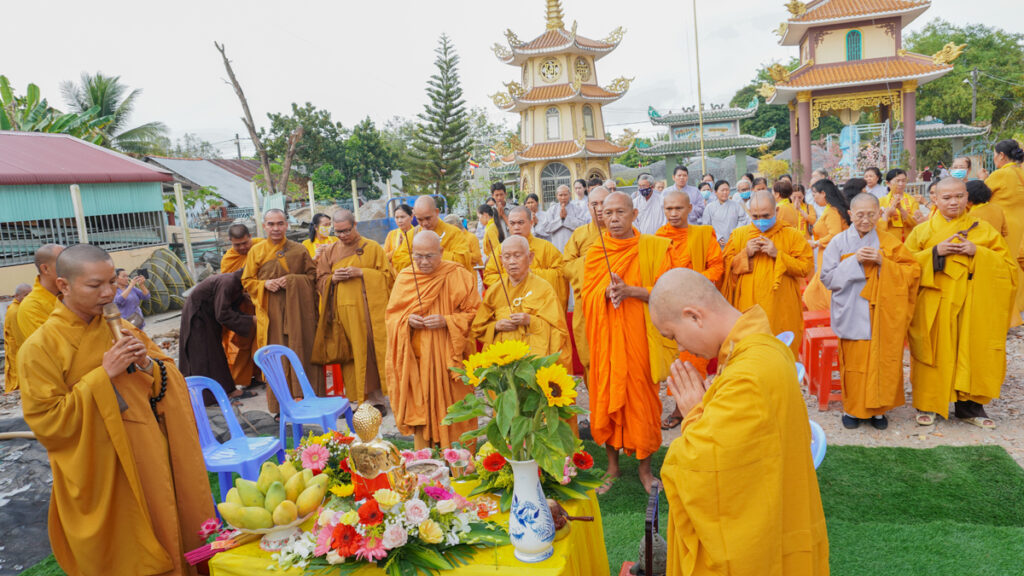
Giac Lam Pagoda welcomes many visitors during major festivals (Source: Collected)
Discover 21 bucket-list things to do in Ho Chi Minh City, Vietnam!
5. Important notes for your visit to Giac Lam Pagoda
Visitors to Giac Lam Pagoda are kindly reminded to:
- Dress modestly
- Move quietly and speak softly
- Not litter
- Refrain from climbing on statues
More on: Ho Chi Minh City travel tips: 7 things to keep in mind
Giac Lam Pagoda is celebrated for its unique architecture and stands as a captivating attraction for tourists. It has borne witness to the history of the city over the past 300 years. Today, it remains a must-visit for those seeking to explore the cultural heritage of Saigon.
In addition to pagodas, Ho Chi Minh City boasts various exciting attractions. For non-stop entertainment, head to Grand Park, a new amusement park in Thu Duc City (now part of Long Binh Ward). Set in a beautiful natural landscape, Grand Park offers the Tropical Island water park, the Dream Garden, an artificial beach, vibrant festivals, and a wide range of shopping – dining options.

Enjoy various thrilling experiences at Grand Park








![[Mega Sale 2.2] Get up to 50% off VinWonders on Double Day](https://static.vinwonders.com/production/2025/12/homepage-banner-3-336x161.jpg)


