en
en


 Tiếng Việt
  中文 (中国)
  한국어
한국어  Русский


 13/09/2024
 1.593 views

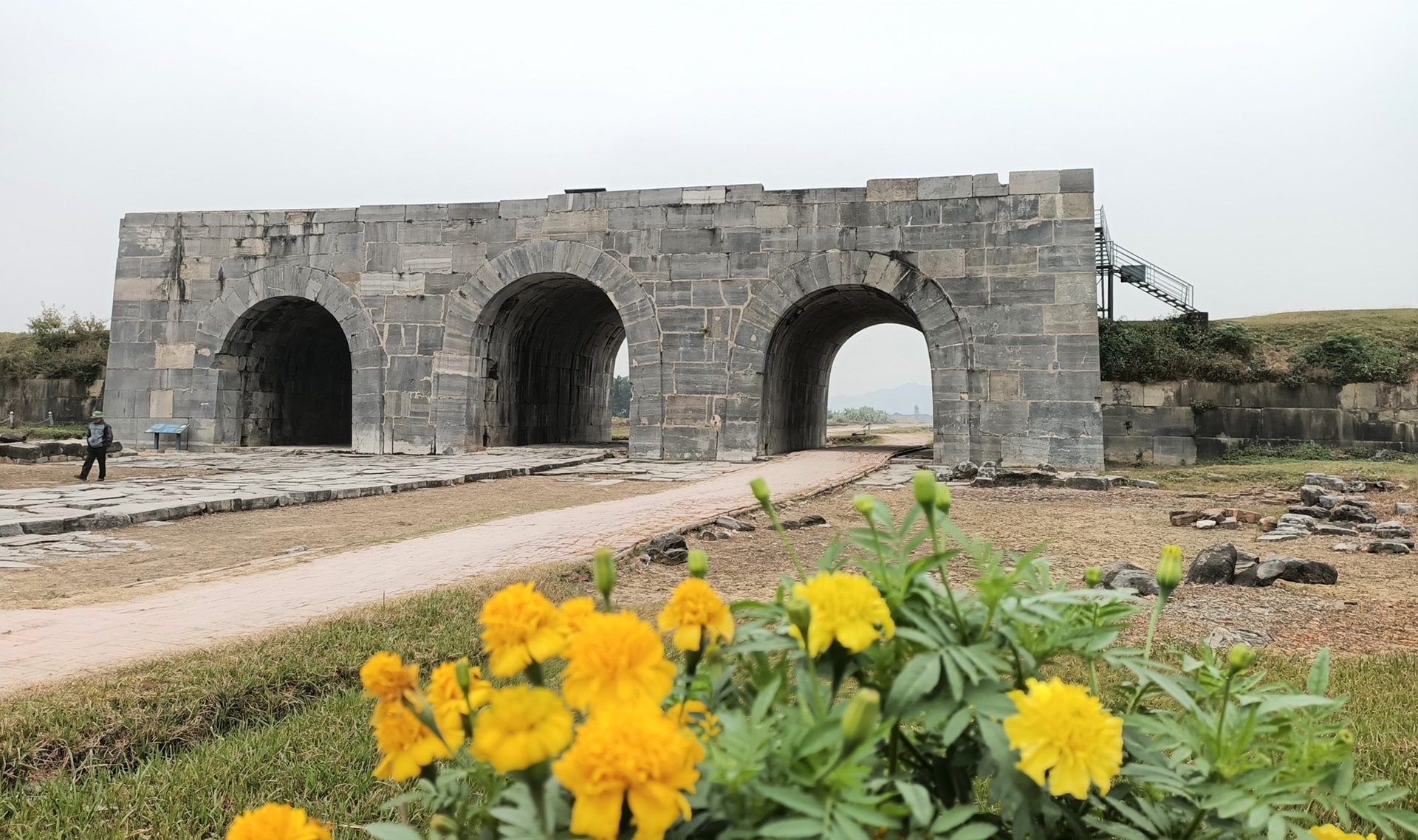
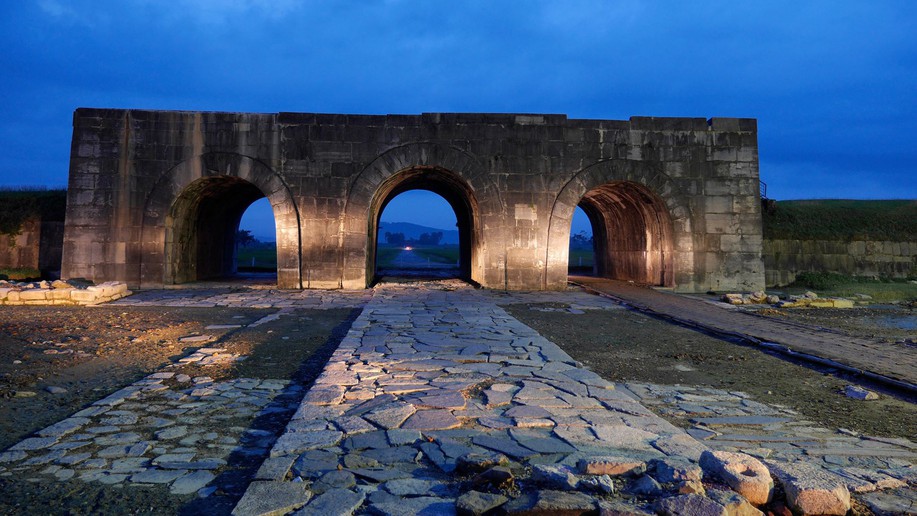
The impressive architecture of the Ho Citadel (Source: Collected)
1. About the Citadel of the Ho Dynasty
The Citadel of the Ho Dynasty, also known as Tay Do Citadel, An Ton Citadel, Tay Kinh Citadel, or Tay Giai Citadel, served as the capital of Dai Ngu (Vietnam during the Ho Dynasty). The citadel is approximately 45 kilometers away from Thanh Hoa’s city center and 140 kilometers away from Hanoi. Constructed in 1397 by the order of Ho Quy Ly, the Ho Dynasty Citadel stands as one of the most unique stone architectural works in both Vietnam and the world. Remarkably, the citadel was completed in just three months, from January to March. That same year, Ho Quy Ly relocated the capital from Thang Long (now Hanoi) to this new stronghold in Thanh Hoa.
2. Ticket prices & opening hours of the Ho Dynasty Citadel
- Opening hours:
- In summer: 7 am – 5:30 pm
- In winter: 7 am – 5 pm
- Ticket prices:
- Adults: 40,000 VND
- Children from 7 to 12 years old: 20,000 VND
- Contact information:
- Main office: Conservation Center for the Ho Dynasty Citadel
- Address: Xuan Giai Village, Vinh Tien Commune, Vinh Loc District, Thanh Hoa Province
- Phone: 02378 929 181 | 0984 766 852
- Email: [email protected]
For the most up-to-date information on the opening hours and ticket prices, you should contact the main office directly.

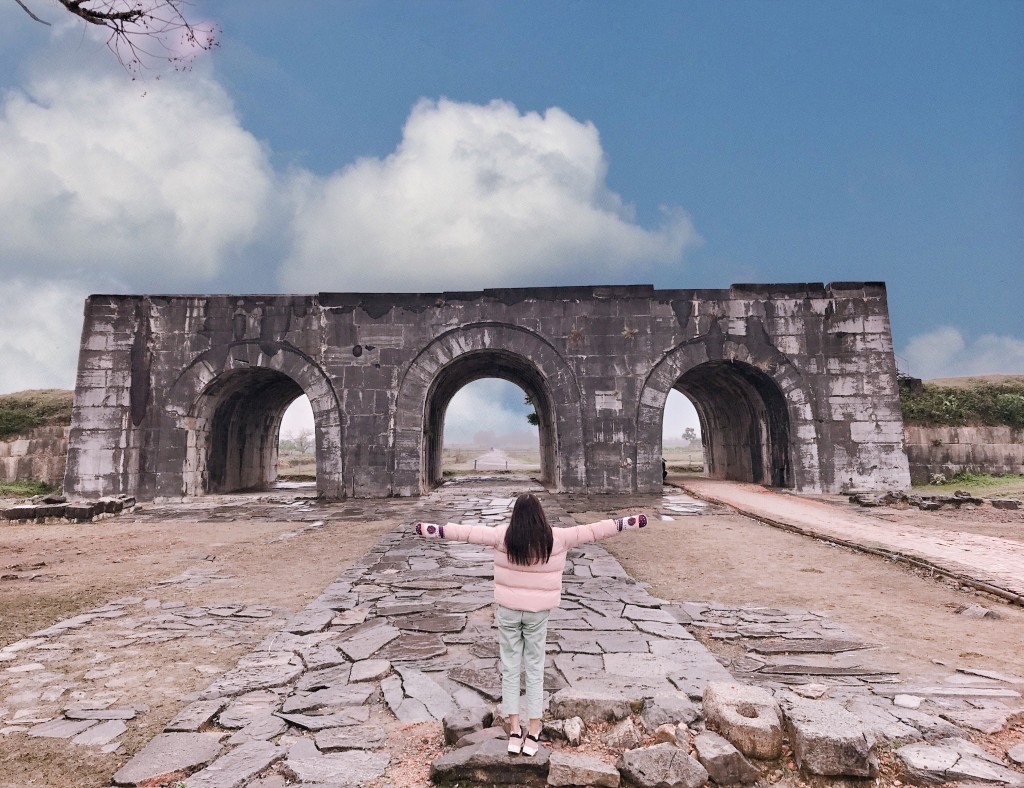
The Citadel of the Ho Dynasty is a UNESCO World Heritage Site (Source: Collected)
Best-selling products
![[VinGroup Employees] Standard Admission Ticket to Ocean Park 3 Water Park](http://booking-static.vinpearl.com/tours/f949b31af919495c9b4e111237642763_358600999_111579731994757_433244877993048710_n_vinwonders-ha-noi.jpg)
![[VinWonders Nha Trang] - 01-day Unlimited Admission Ticket | Free F&B Voucher](http://booking-static.vinpearl.com/tours/ccf23087ea0f419980c411d0e79c10fb_88c594a8352d49e7b031b9fbd5c5d27f_tro-choi-mao-hiem-o-vinpearl-nha-trang-thumb-1_vinwonders-nha-trang-khong-gioi-han-2-ngay_vinwonders-nam-hoi-an-ve-vao-cua.jpg)
![[Vinpearl Harbour] - Admission to VinWonders (after 4:00PM) & Round trip cable car](http://booking-static.vinpearl.com/tours/4b2d76bbde1f4c54a43370680d311928_Hinh-anh-VinWonders-Nha-Trang-The-World-Garden-Lau-vong-canh-3x2-so-1_vinwonders-nha-trang-ve-vao-cua-sau-16h.jpg)
![[Grand Park] Fairy Guardian](http://booking-static.vinpearl.com/tours/eeb9a602315342ccbc7965b29cfb0db0_Ảnh%20màn%20hình%202025-03-03%20lúc%2015.00.17_vinwonders-nam-hoi-an-ve-vao-cua.png)
![[Vinpearl Safari Phu Quoc] - Standard Entrance Ticket + Meal voucher gift](http://booking-static.vinpearl.com/tours/ceb77f9174d845ebb2fd3dfe2b846066_3%20copy_vinwonders-nam-hoi-an-ve-vao-cua.jpg)
![[Grand World] Skydrop ticket](http://booking-static.vinpearl.com/tours/ed7c962747be42458f35c7b18340b901_A2-4-jpeg-2640-1687438608_grandworld.jpg)
![[Aquafield] - 2-hour Aquafield Sauna + 30-min Spa](http://booking-static.vinpearl.com/tours/b0bf65880af449f39ea19fa0acbb94d5_34d71a9c3e6b4b7484f9d7cbbc935c26_200dd4dda03e45e0a1add52e4acc11fa_NHT_1796_ve-xem-tata-show-vinwonders-nha-trang_ve-xem-tata-show-vinwonders-nha-trang.jpg)
![[Grand World Phu Quoc] [Ultimate Combo] - Water Taxi + Teddy Bear Museum + Grand Show](http://booking-static.vinpearl.com/tours/e31a9e66b5444808bba3e3114d195559_VENICE%20ALL%20IN%20ONE%20KV%20(1)_ve-bao-tang-gau-teddy-bear.jpg)
![[VinWonders Phu Quoc] - Entrance Ticket + Gate Fastpass + Buggy](http://booking-static.vinpearl.com/tours/de2a24896b0e49469fa1e89e93aa5314_1920x1080%20VWPQ%20KV_vinwonders-phu-quoc-standard-entrance-ticket.jpg)
![[Vinpearl Harbour] - Happy Hour Combo: Round-trip Cable Car + Dinner Buffet + Tata Show](http://booking-static.vinpearl.com/tours/3cbd16b8edc74f6abc7f7cfa0e91caec_VPHB_Photos15_vinwonders-nha-trang-ve-vao-cua-2-chieu.jpg)
![[VinWonders Cua Hoi] Round-Trip Cable Car + Water Park + Buffet Voucher worth VND 125,000](http://booking-static.vinpearl.com/tours/aa8379d6db3a4f5c9df6d78d53177c35_11-E-Ticket-Vinwonder-Cua-Hoi_23072024111407_vinwonders-nam-hoi-an-ve-vao-cua.jpg)
![[Hon Tam] - [Zone A] - Mud Bath + Lunch Combo](http://booking-static.vinpearl.com/tours/5debd1efb6d34e42a88efa65354c8c72_ebdde60fd9a44539afe75c9338ec8a3d_ảnh%205_tam-bun-hon-tam.jpg)
![[VinWonders Nha Trang] – VIP Tour Experience](http://booking-static.vinpearl.com/tours/d1425f018b3e4d2d833374b5b52d8bb9_Hinh-anh-VinWonders-Nha-Trang-The-World-Garden-Lau-vong-canh-3x2-so-1_vinwonders-nha-trang-ve-vao-cua-sau-16h.jpg)
![[-15%] Combo Admission Tickets for 2 Zones: Aquarium & VinKE + F&B Set](http://booking-static.vinpearl.com/tours/e7fcffc8256546e8bdcfd5ccfbe69783_VINKE2%20(1)_vinke-ve-vao-cua-truc-tiep.jpg)
![[VinWonders Phu Quoc] - Standard Entrance Ticket](http://booking-static.vinpearl.com/tours/0dd25afc61ad45d48486bbd3b9c8a96a_tieu%20chuan%201_vinwonders-phu-quoc-ve-vao-cua.jpg)
![[Phu Quoc Passport] - VinWonders + Buggy + Deep Sea Lunch + Grand World fun](http://booking-static.vinpearl.com/tours/877d8a3289a246d18f95aa5cc414f6d6_27be58d21e244664bf34d11d72e77860_Castle_vinwonders-phu-quoc-ve-vao-cua_vinwonders-phu-quoc-ve-vao-cua.jpg)
![[Nam Hoi An Signature] VinWonders Ticket + VIP Safari Package | FREE Merchandise Gift](http://booking-static.vinpearl.com/tours/6c002e3ea71642f38eda8efa8654e5e4_vwnha0_vinwonders-nam-hoi-an-ve-vao-cua.jpg)
![[VinWonders Vu Yen] - [02 Adults + 01 Child] - Admission to Zoo + Games + Free Tote Bag](http://booking-static.vinpearl.com/tours/34488b227a3648e5b73d4aa6d6d36b46_DO__8153_vinwonders-nha-trang-ve-vao-cua-2-chieu.jpg)
![[VinWonders Vu Yen] - [02 Adults + 02 Children] - Admission to Zoo + Games + Water Park | FREE 01 Limited Tote Bag](http://booking-static.vinpearl.com/tours/b2cd8cf6b14c48459b21393e14d73163_vwvy%201_vinwonders-nha-trang-ve-vao-cua-2-chieu.jpg)
![[Aquafield Ocean City] – VIP Membership (12 Months)](http://booking-static.vinpearl.com/tours/3c2f7ab0ed374cb1bbdb2e54e6d6eb9a_e1f2756dfec346f3bb3b16e296b3b166_Screenshot_5_aquafield-nha-trang_aquafield-nha-trang.png)
![[Buggy Combo] - VinWonders Phu Quoc + Buggy + Free Ice Cream](http://booking-static.vinpearl.com/tours/0fc52a574094489da612d0f36bb4b1e6_buggy%20kem_vinwonders-phu-quoc-ve-vao-cua-tet-vi-vu.jpg)
![[50% Student Discount] – VinWonders Admission Ticket](http://booking-static.vinpearl.com/tours/43126c168bb04853bf7c93e197db724a_Banner%201200x628_vinwonders-nha-trang-ve-vao-cua-2-chieu.jpg)
![[VinWonders Nam Hoi An] - Standard Admission Ticket](http://booking-static.vinpearl.com/tours/81813f8ced2c466e82ad53f1c29c1904_tour-kham-pha-van-hoa-viet-vinwonders-nam-hoi-an-668ca102bcc29_vinwonders-nam-hoi-an-ve-vao-cua.jpg)
![[Vinpearl Aquarium Times City] Entrance Ticket](http://booking-static.vinpearl.com/tours/8702a10bf2934d6299df65669a290679_aquarium%20times%20city%203_thuy-cung-vinpearl-aquarium-times-city.jpg)
![[Vinpearl Harbour] - Round-trip Cable Car Ticket | Free Wishing Coin Voucher](http://booking-static.vinpearl.com/tours/e584c2f486d246c5820a19f519d184a4_VPHB_Photos15_vinwonders-nha-trang-ve-vao-cua-2-chieu.jpg)
![[Grand World Phu Quoc] - Venice Water Taxi Ticket](http://booking-static.vinpearl.com/tours/6cee2bcb52a447009f64771095d03c9e_Screenshot%202024-10-22%20at%2014.49.18_ve-bao-tang-gau-teddy-bear.png)
![[Grand World] Carousel Ride](http://booking-static.vinpearl.com/tours/0d6a4bcfc2a54fd4aa9df0b38ae8c7b6_A2-4-jpeg-2640-1687438608_grandworld.jpg)
![[Onsite service] - Premium VIP Zoo Tour Vinpearl Safari Phu Quoc](http://booking-static.vinpearl.com/tours/ff1e4b66ec1b46edad0c0460144e70ad_VINPEARL%20SAFARI%20PHU%20QUOC%20%20(51)_vinwonders-nam-hoi-an-ve-vao-cua.jpg)
![[Grand Park] Dream Garden Outdoor Games Pass](http://booking-static.vinpearl.com/tours/35566b714d4c4dd9802a6bf4650ac2b1_khu-vui-choi-cua-hoi-9_vinwonders-nam-hoi-an-ve-vao-cua.jpg)
![[Aquafield] - [Male] - 4-hour Korean Sauna](http://booking-static.vinpearl.com/tours/4ae60d29ea264f8fab17beb6b4415502_aqf-da-muoi_aquafield-nha-trang-xong-hoi-chuan-han.jpg)
![[Nha Trang Passport] - [Half-Day] - Cable Car + Aquafield Sauna (2 hours) + Tata Show](http://booking-static.vinpearl.com/tours/ef49c187eadf4177b425d2bb85a18b30_200dd4dda03e45e0a1add52e4acc11fa_NHT_1796_ve-xem-tata-show-vinwonders-nha-trang.jpg)
![[-30% Grand Opening] [Aquafield Ocean City] – Standard Jjimjilbang Sauna Ticket for Female](http://booking-static.vinpearl.com/tours/94abeb55e3d54efbac23f7a862445389_0d72b531dd6749bbac2874b915ab0512_Screenshot_8_aquafield-nha-trang_aquafield-nha-trang.png)
![[VinWonders Nha Trang] - Admission to VinWonders after 4:00 PM](http://booking-static.vinpearl.com/tours/de2da6d471b34297ab13cb26ef2da9a0_Hinh-anh-VinWonders-Nha-Trang-The-World-Garden-Lau-vong-canh-3x2-so-1_vinwonders-nha-trang-ve-vao-cua-sau-16h.jpg)
![[Grand World Phu Quoc] - The Quintessence of Vietnam Show](http://booking-static.vinpearl.com/tours/f88e2be1139b4eada4043eb7f0e39362_THVN1_show-tinh-hoa-viet-nam.jpg)
![[Nam Hoi An Signature] VinWonders Ticket + VIP Safari Package | FREE Merchandise Gift](http://booking-static.vinpearl.com/tours/881ac31c4a2b4687a59f412901e85b2c_VIN2725_-08746%20(2)_vinwonders-nam-hoi-an-ve-vao-cua.jpg)
![[VinWonders Nam Hoi An] [Sunset Premium] Admission Ticket & Buggy Ride & VIP Safari Package & Afternoon Tea Set](http://booking-static.vinpearl.com/tours/3a1e510945b4421d861fede29a1b3e58_xE3mXzIVwTdZRf7M8zZfHqHIPqV17uyEOzL8PaUQ_vinwonders-nam-hoi-an-ve-vao-cua.jpg)
![[Nha Trang Passport] – [01 day] – Snorkeling Tour + Lunch & Mud Bath at Hon Tam + Vinpearl Harbour + Tata Show](http://booking-static.vinpearl.com/tours/f6b1826759674c9c9d3f074e03fa04ba_snorkeling%201_vinwonders-nha-trang-ve-vao-cua-2-chieu.jpg)
![[Aquafield] - [Female] - 4-hour Korean Sauna](http://booking-static.vinpearl.com/tours/0e6fe24c37b84cb799b94dae70578054_aqf-suong-may-2048x1365_aquafield-nha-trang-xong-hoi-chuan-han.jpg)
![[Hon Tam] - [Zone A] - Standard Mud Bath](http://booking-static.vinpearl.com/tours/9db66a615a7d4f119316b338afff30cb_tam-bun-dao-hon-tam_httpswwwhontammudbathvnwp-contentuploadssites2720190625-3-2200x700jpg.jpg)
![[-10%] - VIP River Safari Ticket*](http://booking-static.vinpearl.com/tours/5d3ee19e977446be8917a34697bb9443_ece6e58a02fd48de9eba9d3f4689f77a_Hinh-anh-VinWonders-Nam-Hoi-An-River-Safari-3x2-so-1%20(1)_vinwonders-nam-hoi-an-ve-vao-cua_vinwonders-nam-hoi-an-ve-vao-cua.jpg)
![[Grand World Phu Quoc] - Water Taxi Boat + Teddy Bear Museum](http://booking-static.vinpearl.com/tours/add2e0908faa4289b555856472b181be_VENICE%20ALL%20IN%20ONE%20KV%20(1)_ve-bao-tang-gau-teddy-bear.jpg)
![[VinWonders Cua Hoi] - Indoor Games Zone](http://booking-static.vinpearl.com/tours/b952de18058e4a67a8ffa52f2039e7d2_1920-x-1080-double%20day%20sale%2077%20no%20text_vinwonders-nam-hoi-an-ve-vao-cua.jpg)
![[Aquafield Ocean City] [Male] – Standard Jjimjilbang Sauna Ticket](http://booking-static.vinpearl.com/tours/0be276c684454e8d969c373f35f6be97_DSC_2127_11zon_aquafield-nha-trang.jpg)
![[Aquafield] - Round-trip Cable Car + Korean Sauna + Body Scrub](http://booking-static.vinpearl.com/tours/d00bc95eb402434c8f4a4756c2a3ad3d_Akoya-spa-Villa-Vinpearl-Resort-Spa-Phu-Quoc-12_aquafield-nha-trang.jpg)
![[Aquafield] - [Male] - Round-trip Cable Car + 4-hour Korean Sauna](http://booking-static.vinpearl.com/tours/625529980f3249e6b0491cddfc30db43_297be2477c5847748ef3bc08603ebf90_aqf%204_aquafield-nha-trang.jpg)
![[Aquafield Ocean City] [Male] – VIP Membership (12 Months)](http://booking-static.vinpearl.com/tours/6ab10678fcbd4822a8fddb0590d3bcbf_0d72b531dd6749bbac2874b915ab0512_Screenshot_8_aquafield-nha-trang_aquafield-nha-trang.png)
![[Aquafield] - [Female] - Round-trip Cable Car + 4-hour Korean Sauna](http://booking-static.vinpearl.com/tours/c3bae84e472b42078ca3ff6f28d55d80_1c5968412aca409fa8571c88cc85a4ba_aqf%205_aquafield-nha-trang.jpg)
![[VinWonders Phu Quoc] - Game Fastpass - Top 04 Rides](http://booking-static.vinpearl.com/tours/574c2b7798524c17a08f28feb80d45b5_fastpass%204%20games%20vwpq_vinwonders-phu-quoc-fastpass.jpg)
![[VinWonders Cua Hoi] - Cable Car + Games on the Island](http://booking-static.vinpearl.com/tours/63c924f8521a4af981666076c5c3b0fe_VinWonders%20Cua%20Hoi%20Summer%20Say%20Hi%20Banner%201920x920px_vinwonders-nam-hoi-an-ve-vao-cua.jpg)
![[Hon Tam] - [Zone A&B] - Full island entertainment + Mud Bath Zone A + Lunch](http://booking-static.vinpearl.com/tours/af991883d63f4133b62b76551ba2444d_tam-bun-dao-hon-tam_httpswwwhontammudbathvnwp-contentuploadssites2720190625-3-2200x700jpg.jpg)
![[VinWonders Vu Yen] - Admission Ticket to Games zone (after 5:00 PM)](http://booking-static.vinpearl.com/tours/edbd3eb4bc9848aead9940e0f5aa050d_fa21c62dfa9644ada0c3fce89b3e79ff_DO__8711_vinwonders-vu-yen-vuon-thu-khu-tro-choi-sau-17h.jpg)
3. Best things to do in the Citadel of the Ho Dynasty
3.1. Marvel at the architecture of the Citadel
The Citadel of the Ho Dynasty is a remarkable structure built on a core area of 155 hectares, with the entire complex spanning 5,000 hectares. It was designed with a nearly square layout, measuring 870.5 meters from north to south and 883.5 meters from east to west, with walls that stand 7 – 8 meters high. It features four gates, each facing one of the cardinal directions – North, South, East, and West. These gates are designed in an arch shape, with stone slabs carved and fitted closely together.
The construction of the citadel involved massive stone blocks, some up to 6 meters long and weighing between 10 to 20 tons. The western wall even includes a giant stone block weighing 26.7 tons. In total, about 25,000 cubic meters of stone and nearly 100,000 cubic meters of soil were used to build the citadel, showcasing the incredible skill and effort of the builders.
Even after more than 600 years, some parts of the Ho Dynasty Citadel have remained relatively intact. Key sections include:
- Inner Citadel (Hoang Thanh): The inner citadel still has some remnants like the foundation, parts of the wall, the four main gates, and other relics such as the South Gate area, stone dragon steps, the Hoa Nhai stone-paved road, and artifacts from the Tran-Ho dynasties.
- Moat (Hao Thanh): Traces of the moat, which once surrounded the citadel, can still be seen in the northern, eastern, and southern areas.
- La Thanh Outer Wall: Remains of the La Thanh outer wall have been found in Beo Village, offering insight into the citadel’s defensive strategies.
- Nam Giao Altar: Nam Giao Altar, which was used for important ceremonies, still has visible traces of its five bases.
These remaining structures and artifacts allow visitors to glimpse the impressive scale and craftsmanship of the Ho Dynasty Citadel, a true architectural marvel of its time.
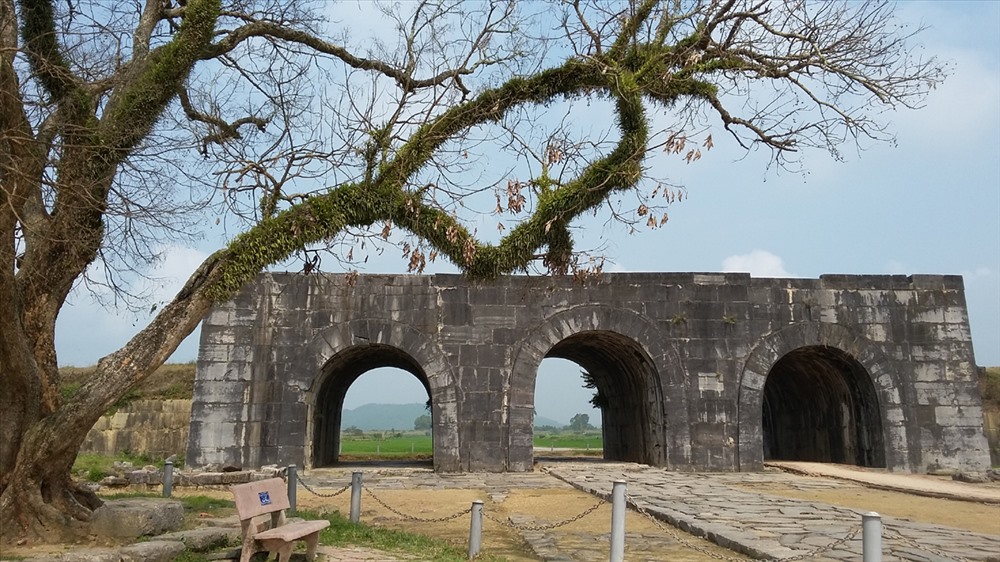
The grandeur of the Citadel of the Ho Dynasty (Source: Collected)
3.2. Explore a massive collection of artifacts
At the Citadel of the Ho Dynasty, visitors should visit the Display House to admire the fascinating collection of artifacts discovered during various excavations at the citadel and Nam Giao Altar. These items, closely linked to the Ho Dynasty’s history, give visitors a deeper understanding of this unique world heritage site. The collection includes stone tablets, stone bullets, inscribed bricks, terracotta decorations, and stones used in building the citadel.
Key groups of artifacts:
- Decorative materials: Excavations revealed a variety of terracotta items used for architectural decoration, which date back to the late 14th and early 15th centuries. These include lotus-shaped tiles, leaf-shaped tiles, yin-yang tiles, and decorative tiles.
- Construction materials: While stone was the main material, bricks also played a crucial role in constructing the citadel. Many of these bricks were inscribed with Nom characters indicating where they were made. There were over 300 places across Vietnam which contributed these bricks, showing the widespread effort to build the citadel.
- Weapons: The Ho Dynasty focused heavily on defense, as seen in the military artifacts on display. Stone bullets, used in cannons, were found in large quantities during excavations. These bullets were crafted with great skill, reflecting the advanced military technology of the time.
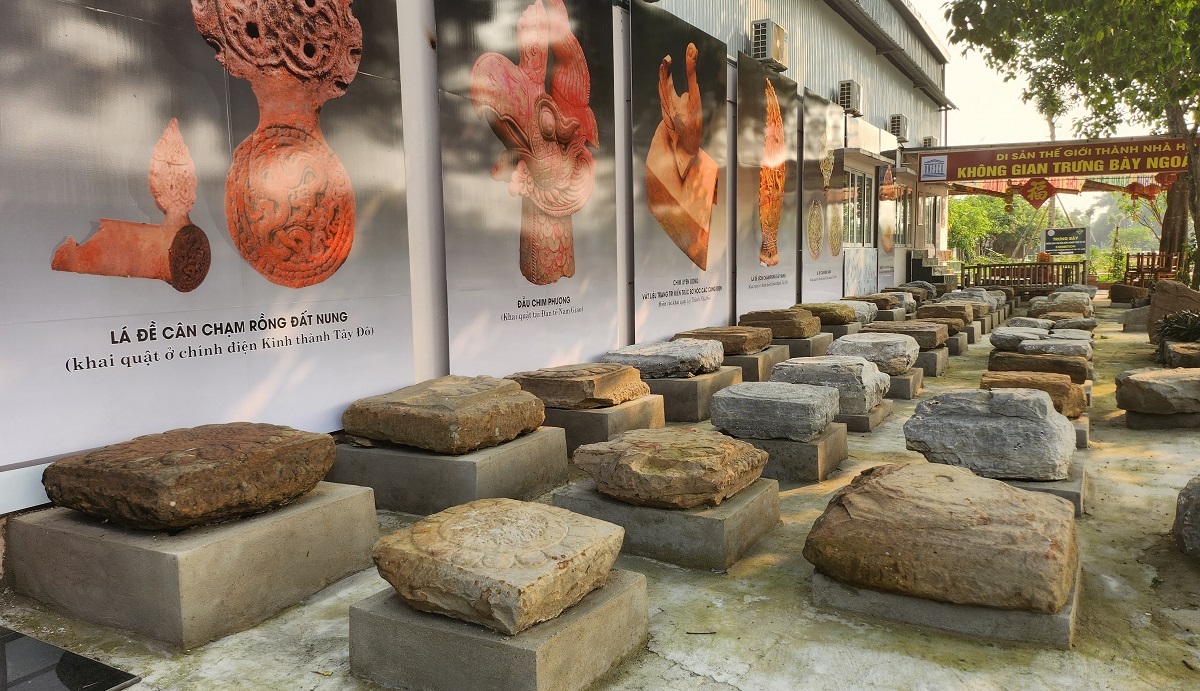
Preservation efforts are crucial to maintaining the historical integrity of the Citadel of the Ho Dynasty (Source: Collected)
3.3. Visit nearby cultural & historical sites
After exploring the Citadel of the Ho Dynasty, tourists can extend their journey to nearby cultural and historical sites:
- Binh Khuong Temple: This temple honors the spirit of Binh Khuong, a widow who died protesting her husband’s unjust execution. It features a rectangular layout with stucco-clad brick walls and three sections: a worship hall, a central courtyard, and a small shrine at the rear. The shrine houses a stone believed to bear the imprints of Binh Khuong’s face and hands, where she is said to have struck her head in despair.
- Dong Mon Communal House: This communal house has long served as the local community’s administrative, social, and religious center. The five-by-three-bay structure features an open interior with minimal ground-level woodwork. Its roof brackets are intricately carved with depictions of natural and supernatural creatures.
- Pham Ngoc Tung Old House: Located near the West Gate area of the Ho Dynasty Citadel, this old house is a 200-year-old wooden structure preserved by the family for generations. It features seven rooms, with three main compartments functioning as worship and reception areas. The house is adorned with intricate carvings of sacred animals and plants, reflecting the heritage of its time.
- Du Anh Pagoda – Ho Cong Cave: Du Anh Pagoda is an ancient temple at the foot of Xuan Dai Mountain. It is steeped in history and legend, as it is linked to the story of Tran Nghe Tong bringing Princess Du Anh here to recover her health. The princess was miraculously cured by the medicinal herbs found in Ho Cong Cave. The cave, located halfway up the mountain, is accessible by stone steps and features colorful stalactites that create a mystical atmosphere.
- Tuong Van Pagoda: This pagoda was constructed in the 14th century during the Tran Dynasty and is located at the foot of Dun Mountain. It is surrounded by beautiful scenery and is renowned for its unique architecture. The pagoda attracts many visitors who come to explore its serene surroundings, admire its design, and burn incense to pray for blessings.
- Tam Tong Temple: Tam Tong Temple is a significant site for the local community, dedicated to honoring the esteemed general Tran Khat Chan. Beyond its role in religious practices, the temple stands as a symbol of pride and a testament to the heritage of Tay Do – Vinh Loc. The vitality of the temple and the stories associated with Tran Khat Chan play a crucial role in educating the younger generation about patriotism.
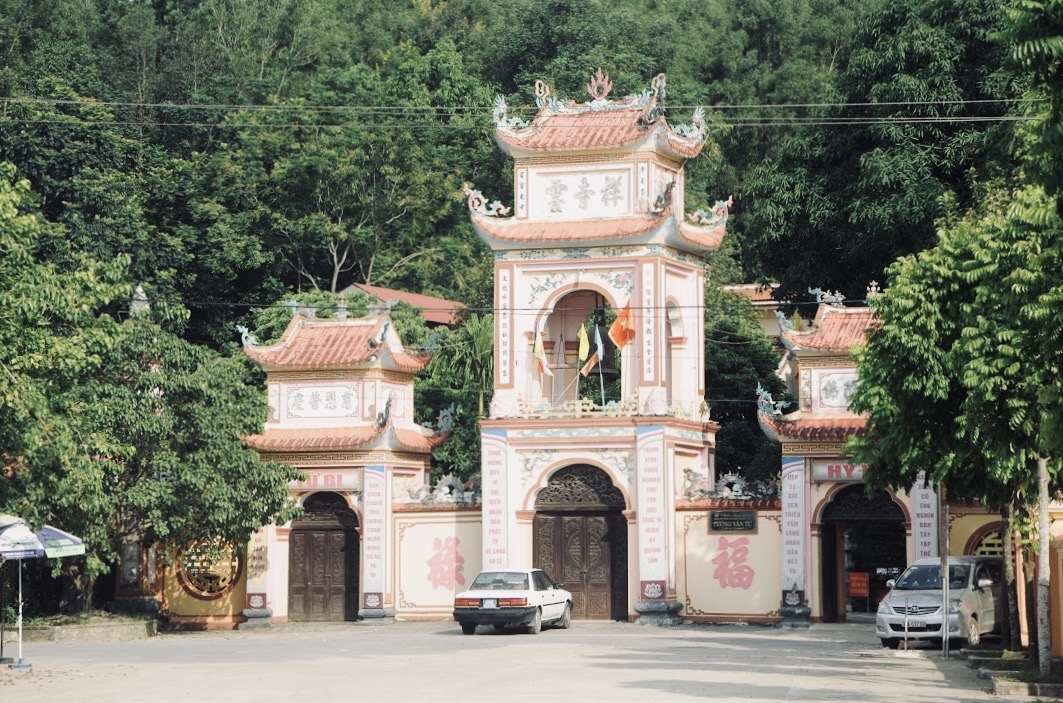
Exploring the Citadel of the Ho Dynasty is a journey through Vietnam’s heritage (Source: Collected)
Don’t forget to check out the map of Thanh Hoa!
4. Key information about Ho Citadel tours
| Tour | Duration | Itinerary | Price |
|
Sightseeing tour (for visitors who do not need electric car rides) |
1 hour |
Display House – Models of cannons and reforms of the Ho Dynasty – Famous people of the Ho Dynasty – Outdoor exhibition for artifacts – Tay Do agricultural and culture space – Ginseng booth – South Gate – Exhibition of the stones used to build the Ho Dynasty Citadel |
40,000 VND/person (including entrance fee and commentary) |
|
Heritage tour (For visitors who want to take electric car rides) |
1 hour |
Display House – Incense offering at the temple and the stele of Lady Binh Khuong – Pham Ngoc Tung Old House – Linh Giang Pagoda – South Gate – Exhibition of the stones used to build the Ho Dynasty Citadel |
200,000 VND/group/electric car (Each electric car carries no more than 10 people) |
|
Sightseeing route of the buffer zone of the Ho Dynasty Citadel (For visitors who want to take electric car rides) |
1 hour and 30 minutes |
Display House – Incense offering at the temple and the stele of Lady Binh Khuong – Linh Giang Pagoda – Nhan Lo Pagoda – South Gate – Exhibition of the stones used to build the Ho Dynasty Citadel |
300,000 VND/group/electric car (Each electric car carries no more than 10 people) |
*Note: These details may be subject to change over time. Contact the management board for the most up-to-date information.
There are many Ho Citadel tours (Source: Collected)
5. Frequently asked questions about visiting the Ho Citadel
5.1. How to get to the Citadel of the Ho Dynasty?
To reach the Citadel of the Ho Dynasty, you can take a taxi or rent a motorbike to get there yourself. The journey from Thanh Hoa’s city center to the Citadel is quite straightforward and takes about 1 hour. From Le Loi Boulevard, follow the 1A National Highway, and then make your way to National Road 45. Follow the road until you see the signs directing you to the Ho Citadel.
5.2. Where to stay for easy access to the Ho Citadel?
For convenient access to the Citadel of the Ho Dynasty, consider staying at hotels located in the city center. The city center also provides easy access to other popular attractions like Sam Son Beach, Hai Tien Beach, Ben En National Park, Lam Kinh Historical Site, etc. Room rates typically range from 600,000 VND to over 1 million VND per night.
5.3. When is the best time to visit the Ho Dynasty Citadel?
You can visit the Citadel of the Ho Dynasty at any time of the year. However, to enhance your experience, consider visiting during the early months of the year. This period is when you can enjoy local festivals such as the Cau Ngu Festival and the Den Song Festival, which bring a lively atmosphere to the Citadel.
The Citadel of the of Dynasty is best visited during the beginning of the year (Source: Collected)
Remember to check the weather in Thanh Hoa in advance!
5.4. What to note for a visit to the Citadel of the Ho Dynasty?
Here are some notes for a smooth visit to the Citadel of the Ho Dynasty:
- Purchase tickets and present them at the ticket counter.
- Park your vehicle only in the designated area.
- Maintain environmental cleanliness
- Don’t touch artifacts, step on grass, pick flowers, or break branches.
- Smoking is not allowed in the exhibition areas.
- Wear respectful clothing during your visit.
- You are legally responsible for any damage you cause to the site.
The Citadel of the Ho Dynasty stands as a remarkable testament to Vietnam’s heritage. Its impressive architecture, historical significance, and the surrounding natural beauty make it a must-see attraction for culture enthusiasts. Visiting the Citadel offers a profound glimpse into Vietnam’s past and a memorable experience of Thanh Hoa’s vibrant culture.
After exploring Thanh Hoa, consider extending your adventure to the nearby province of Nghe An. There, you have a chance to discover VinWonders Cua Hoi, a new recreational hub that promises to enhance your journey with a myriad of experiences and surprises. As the largest tourist and entertainment complex in the North Central region, VinWonders Cua Hoi features various attractions for all ages. From a sea-crossing cable car and expansive water park to a lively commercial district and diverse dining options, every aspect of VinWonders Cua Hoi is crafted to captivate and entertain.

VinWonders Cua Hoi – a new hub for recreation in Central Vietnam
Book tickets of VinWonders Cua Hoi for the best deal
Grab the hottest deals at VinWonders
Best-selling products