 en
en


 Tiếng Việt
  中文 (中国)
  한국어
한국어  Русский


 18/09/2023
 3.634 views

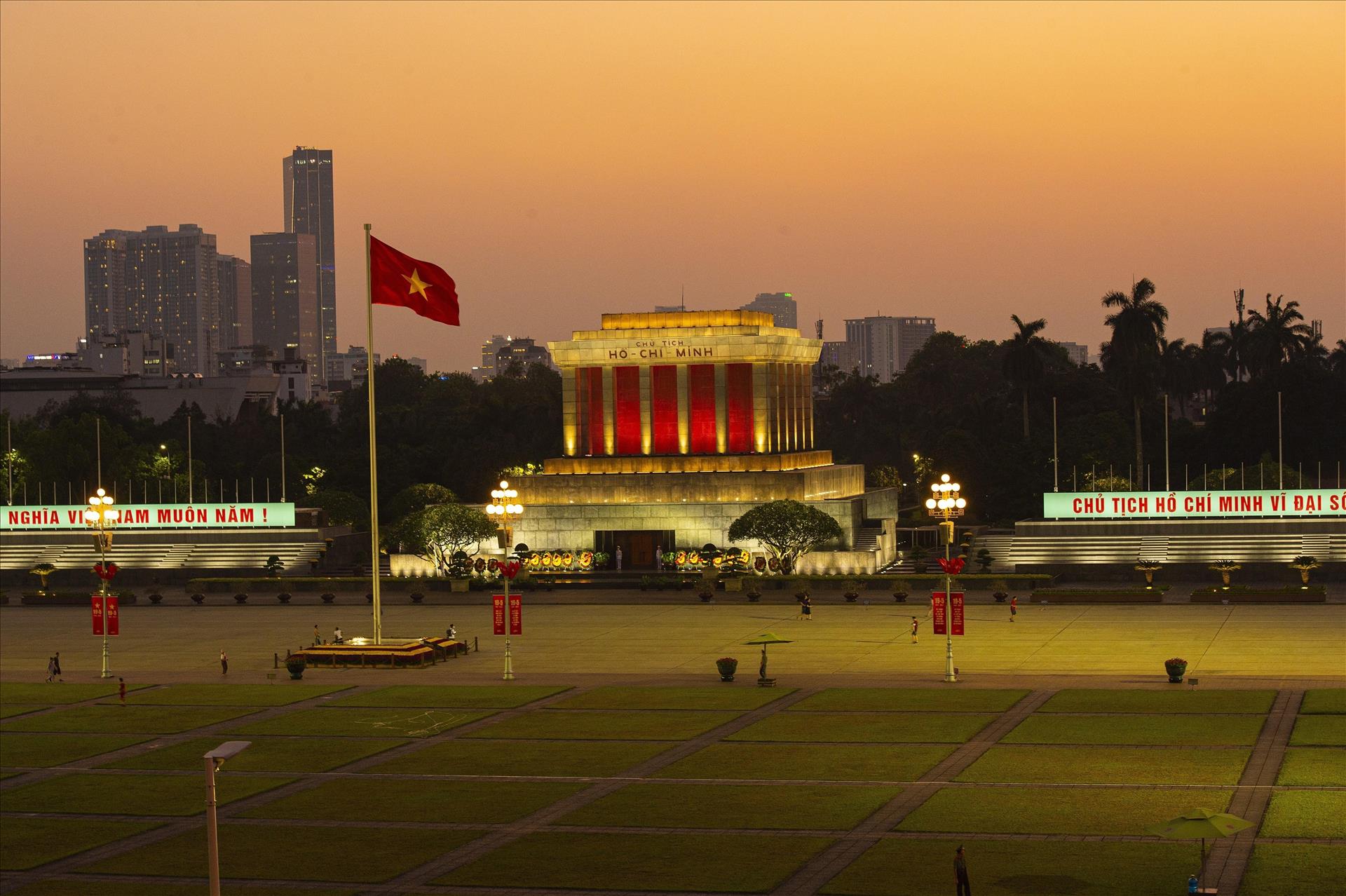
Ho Chi Minh Mausoleum honors the late president of the same name (Source: Collected)
On September 2, 1969, President Ho Chi Minh, an exceptional leader and national hero departed this world, leaving an immeasurable void in the hearts of Vietnamese people and international comrades. In line with the wishes of the people, the government of Vietnam made a historic decision to preserve President Ho Chi Minh’s embalmed body and construct his mausoleum. His passing was mourned by all, and his legacy continues to resonate today.
1. How long has President Ho Chi Minh’s body been preserved?
President Ho Chi Minh’s embalmed body has been preserved for over five decades since his passing in 1969. This reflects the nation’s unwavering respect and gratitude towards the late leader. The decision to embalm President Ho Chi Minh’s body aimed to allow citizens and international guests to see and honor him, expressing their respect for his monumental contributions to the nation. This decision aligns with Vietnam’s deep-rooted tradition of constructing mausoleums to commemorate national heroes.

Many Vietnamese people revere Uncle Ho as a national hero and a symbol of determination (Source: Collected)
The process of preserving President Ho Chi Minh’s body began shortly after his passing. In May 1967, the Vietnamese government held an extraordinary meeting to discuss President Ho Chi Minh’s health and planning for the long-term preservation of his remains. A team of experts, including doctors and specialists, was sent to the Soviet Union to study the science of preserving bodies.
The Soviet Union played a pivotal role in assisting Vietnam in this endeavor. Initially, they suggested that President Ho Chi Minh’s body be moved to Moscow for preservation due to Vietnam’s unfavorable climate and limited technical facilities. However, negotiations led by Vietnamese officials, including Le Quang Dao, eventually convinced the Soviet Union to support Vietnam in preserving the body in Hanoi.
>>> Learn more about who is Ho Chi Minh!
2. How was President Ho Chi Minh’s body embalmed?
The preservation of President Ho Chi Minh’s body hinged on two critical factors: a specialized preservation fluid and custom-made clothing. Initially, Vietnam relied on Soviet expertise for this intricate task, which was a relatively new field at that time.
In 1992, Russia agreed to transfer the preservation solution to Vietnam, marking a turning point. Vietnam gained the capacity to research and domestically produce this solution. Negotiations and technical advancements allowed Vietnam to achieve this self-sufficiency by 2004, a remarkable achievement in this field.

Visitors to Ho Chi Minh Mausoleum in Hanoi can pay their respects to Uncle Ho (Source: Collected)
Equally crucial was the development of special clothing. It involved extensive research into fabric structures, collaboration with local manufacturers, and negotiation with Russia’s Biomedical Research Center for technology transfer. In 2013, Vietnam and Russia signed an agreement that paved the way for Vietnam to produce special clothing for President Ho Chi Minh’s body.
Best-selling products
![[Grand Park] Celestial Swing](http://booking-static.vinpearl.com/tours/eeb9a602315342ccbc7965b29cfb0db0_Ảnh%20màn%20hình%202025-03-03%20lúc%2015.00.17_vinwonders-nam-hoi-an-ve-vao-cua.png)
![[Grand Park] Water Park + Dream Garden Outdoor Games Combo](http://booking-static.vinpearl.com/tours/35566b714d4c4dd9802a6bf4650ac2b1_khu-vui-choi-cua-hoi-9_vinwonders-nam-hoi-an-ve-vao-cua.jpg)
3. Where is Ho Chi Minh’s embalmed body displayed?
President Ho Chi Minh’s embalmed body rests in the heart of the capital of Vietnam, Hanoi, in Ho Chi Minh Mausoleum. This sacred site, established in 1975, is part of Ho Chi Minh Mausoleum Complex, which also includes the Presidential Palace, Ho Chi Minh Museum, etc. Every day, thousands of visitors gather in Ba Dinh Square to pay their respects to President Ho Chi Minh and engage in cultural activities. Visiting Ho Chi Minh Mausoleum is free of charge, where both Vietnamese citizens and international guests are welcome.
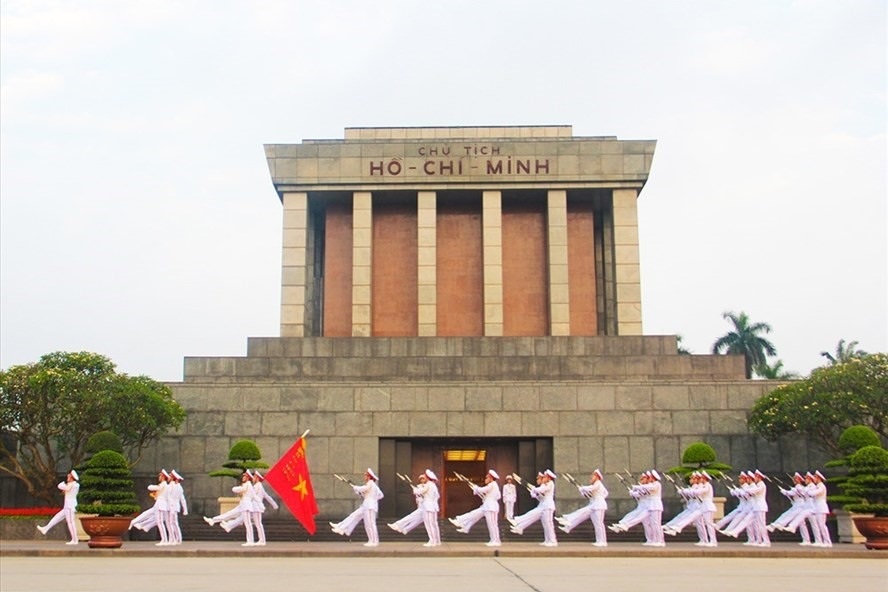
Ho Chi Minh Mausoleum is a place of solemnity and reverence (Source: Collected)
Opening hours of Ho Chi Minh Mausoleum during summer (from April to October):
- Tuesday, Wednesday, Thursday: 7:30 AM – 10:30 AM
- Saturday, Sunday, public holidays: 7:30 AM – 11:00 AM
Opening hours of Ho Chi Minh Mausoleum during winter (from November to March):
- Tuesday, Wednesday, Thursday: 8:00 AM – 11:00 AM
- Saturday, Sunday, public holidays: 8:00 AM – 11:30 AM
Note that the Mausoleum is closed for maintenance every Monday and Friday. However, if these days coincide with May 19th, September 2nd, or the 1st day of the Lunar New Year, Ho Chi Minh Mausoleum will remain open to visitors.
4. Can visitors see President Ho Chi Minh’s body up close?
Visitors to Ho Chi Minh Mausoleum can see President Ho Chi Minh’s embalmed body. However, there are certain rules that must be followed:
- Visitors wishing to take photos or videos in the vicinity of the Mausoleum and Ba Dinh Square must do so with utmost solemnity and in an orderly fashion, following the guidance of security personnel.
- Visitors wishing to take photos or videos within the Mausoleum’s protected area must obtain written permission from the management board of the Mausoleum.
- Photography, videography, and sketching of President Ho Chi Minh’s preserved body inside the Mausoleum are strictly prohibited. Sharing such images or sketches on public platforms or social media is also forbidden.
In addition to these rules, visitors are expected to show respect by dressing modestly and maintaining proper decorum. Children under the age of two, individuals with health concerns, and those displaying inappropriate behavior or not adhering to the instructions of the mausoleum staff will not be admitted.

Taking photos or videos inside the Mausoleum is generally not allowed (Source: Collected)
If you are looking to further explore Vietnam, Hanoi, Hoi An, Nha Trang, and Phu Quoc are some notable cities that guarantee a memorable visit. And for those seeking a dose of exhilaration and fun, VinWonders Wave Park & Water Park, VinKE & Vinpearl Aquarium, VinWonders Nam Hoi An, VinWonders Nha Trang, and VinWonders Phu Quoc are perfect destinations to add to your itinerary. These entertainment complexes offer an array of thrilling rides, aquatic wonders, and immersive activities that will captivate visitors of all ages.

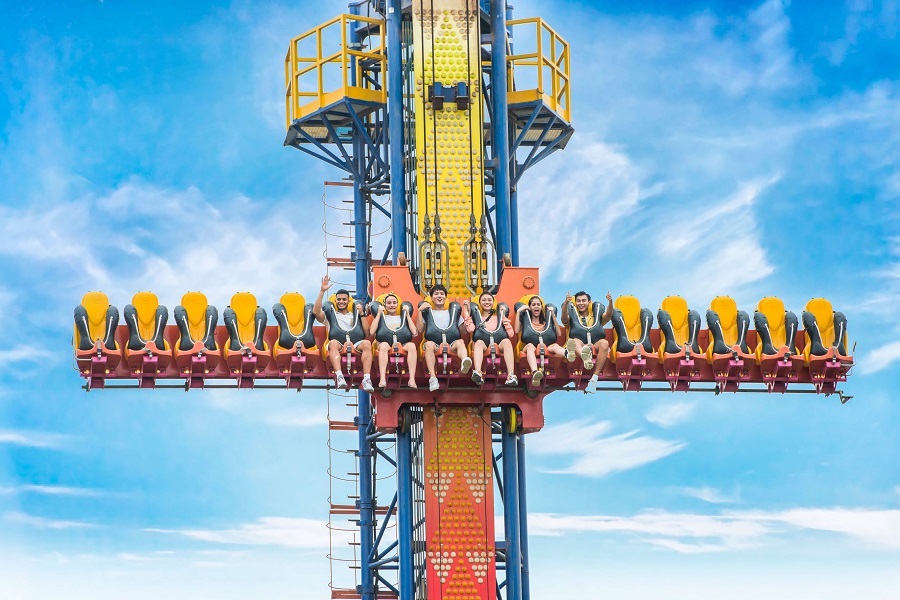
VinWonders offer thrilling entertainment for all ages
>>> Book tickets to VinWonders Phu Quoc, Nha Trang, Nam Hoi An, VinKE & Vinpearl Aquarium, and VinWonders Wave Park & Water Park for a memorable adventure in Vietnam!
President Ho Chi Minh’s embalmed body is a symbol of the deep respect and gratitude that Vietnamese people hold for their late leader. The meticulous preservation process has allowed generations to pay their respects at Ho Chi Minh Mausoleum in Hanoi. Visitors from around the world continue to come to this sacred site, honoring the man who played a pivotal role in shaping Vietnam’s history and identity.




![[Must-try] Unique dining experiences at VinWonders Phu Quoc / Vinpearl Safari Phu Quoc](https://static.vinwonders.com/production/DSC_5620-329x220.jpg)


