 en
en


 Tiếng Việt
  中文 (中国)
  한국어
한국어  Русский


 28/03/2025
 1.428 views
1. About Yen Tu Pagoda
As part of the Yen Tu – Quang Ninh heritage site, Yen Tu Pagoda attracts visitors from around the world seeking a peaceful retreat, cultural exploration, and an immersive experience in Vietnam’s rich spiritual traditions.
1.1. Location
Yen Tu Pagoda is part of the Yen Tu relic and scenic complex, located in Quang Ninh province. Most of the site is in Uong Bi city (Phuong Dong ward and Thuong Yen Cong commune), with a small part in Dong Trieu district (Hong Thai Dong commune).
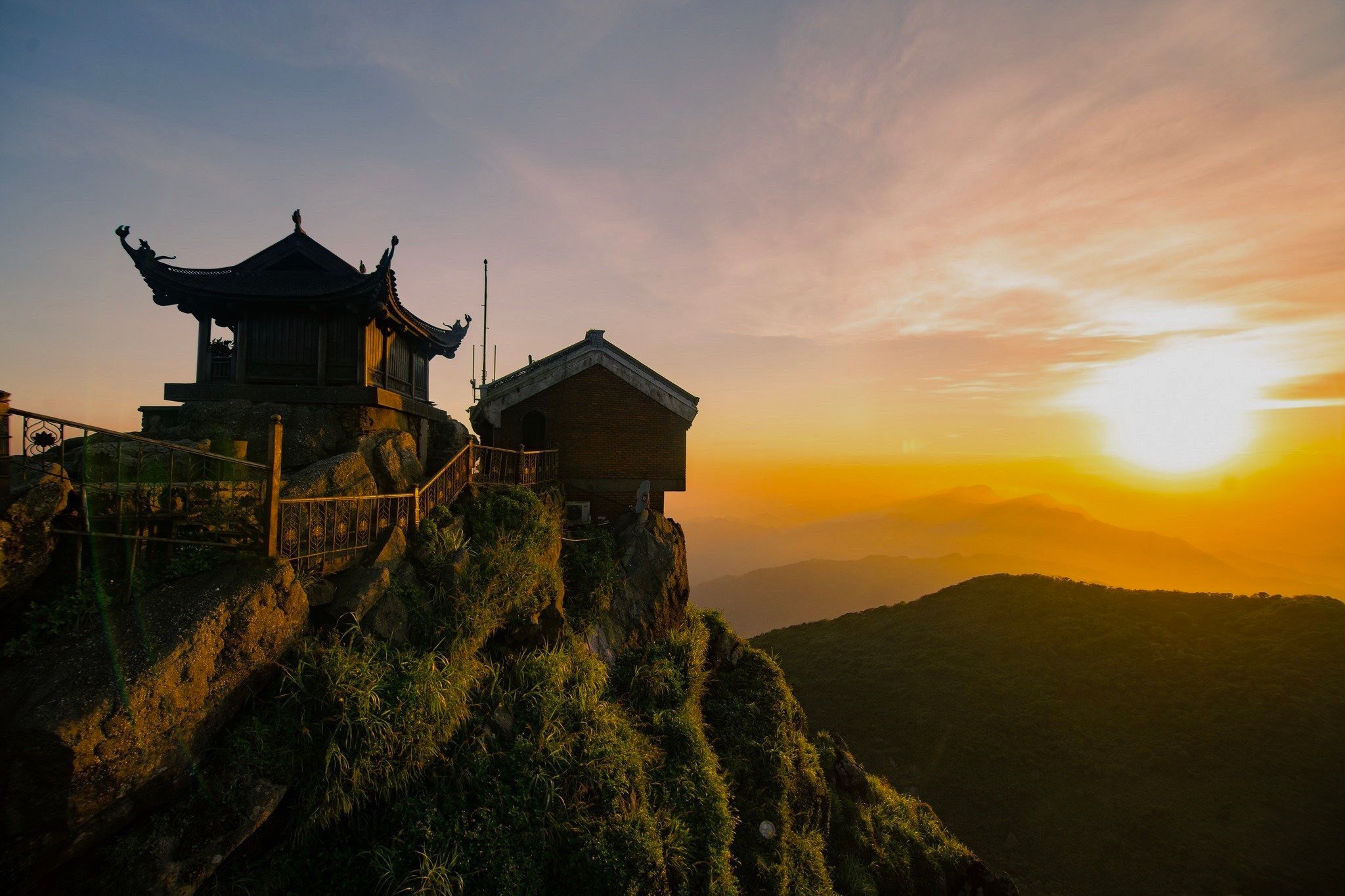
This spiritual and cultural site is known as the birthplace of Truc Lam Zen Buddhism. It features pagodas, hermitages, and ancient towers spread along the pilgrimage path from Bi Thuong (at the foot of Doc Do) to the peak of Yen Tu Mountain. Many of these structures date back to the Tran Dynasty. The area is also home to lush forests, diverse wildlife, and stunning natural scenery, creating a peaceful and sacred atmosphere for visitors.
Yen Tu Pagoda Vietnam is a spiritual haven for many who seek tranquility and reflection (Source: Collected)
1.2. History
Yen Tu Pagoda is deeply connected to Buddhist Emperor Tran Nhan Tong (1258–1308), who abdicated his throne after defeating the Yuan-Mongol army and founded the Truc Lam Zen sect in Yen Tu. Many temples and towers were built for meditation and teaching. His successor, Phap Loa Dong Kien Cuong (1284–1330), and other people expanded the sect by constructing 800 religious structures and writing Buddhist texts. Huyen Quang Ly Dao Tai (1254–1334) later continued their work. Through the Le and Nguyen dynasties, Yen Tu Pagoda remained a key Buddhist center, preserving Vietnam’s cultural and spiritual heritage.
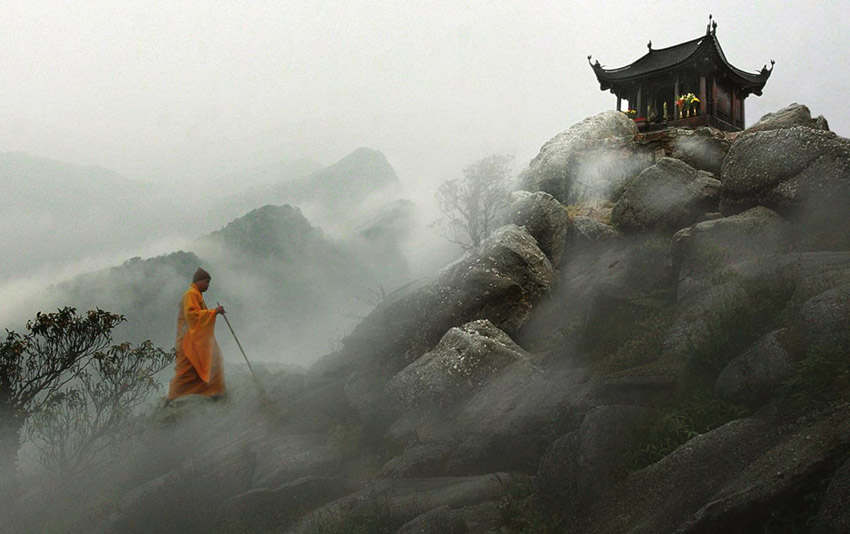
The journey to Yen Tu Pagoda is filled with scenic views of lush forests and towering mountains (Source: Collected)
1.3. Significance
Yen Tu Pagoda is known as the spiritual capital of Vietnamese Buddhism and the birthplace of the Truc Lam Yen Tu Zen sect. Beyond its majestic natural beauty, it holds deep spiritual, cultural, and historical significance, serving as a sacred place of worship and meditation for generations of Vietnamese people.
For over a thousand years, Yen Tu Pagoda has been a center of Buddhist practice and national heritage, blending nature, religion, and history. Recognizing its importance, Quang Ninh province has prepared a dossier to nominate the Yen Tu – Vinh Nghiem – Con Son, Kiep Bac complex as a UNESCO World Cultural Heritage Site, further cementing its role in Vietnam’s spiritual and cultural identity.
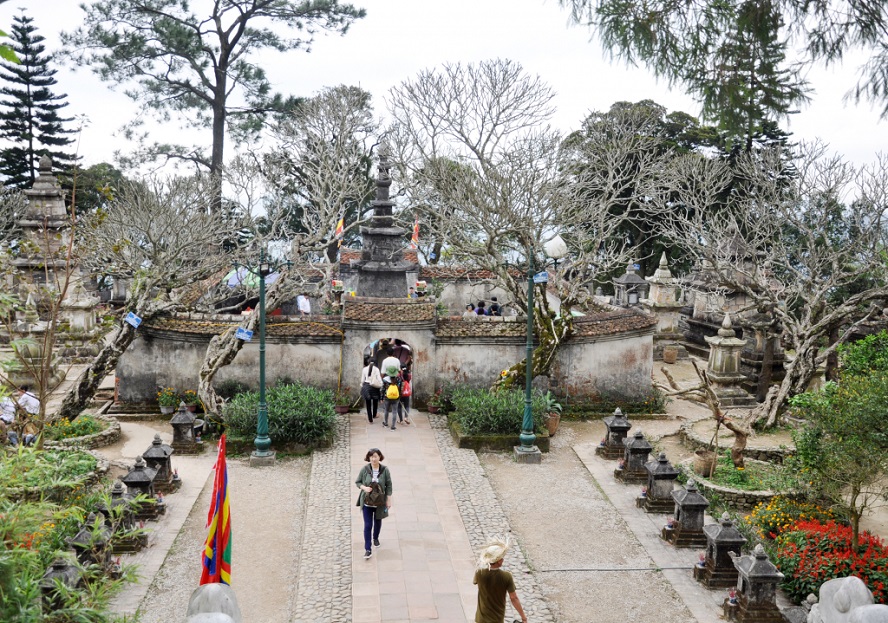
Yen Tu Pagoda is considered one of the most important religious sites in northern Vietnam (Source: Collected)
Don’t forget to check out Ha Long Bay map to better plan your trip!
2. Key attractions in the Yen Tu Monuments and Landscape Complex
Having witnessed many historical events and changes over time, Yen Tu today preserves 11 pagodas along with hundreds of shrines, towers, steles, and statues. These relics showcase the architectural, artistic, and sculptural styles of the Ly, Tran, Le, and Nguyen dynasties, reflecting their rich cultural and historical value.
2.1. Dong Pagoda
Being one of the most famous Vietnamese pagodas, Dong Pagoda sits at the highest peak of Yen Tu Mountain and is entirely cast in bronze. Facing southwest, the pagoda covers an area of about 20 square meters and stands 3.35 meters high. It has a square layout with four sloping roofs, adorned with fish-tail tiles. While the ridge and eaves are undecorated, the two ends of the ridge and the four roof corners are elegantly shaped like dragon heads, adding to its sacred and majestic appearance.
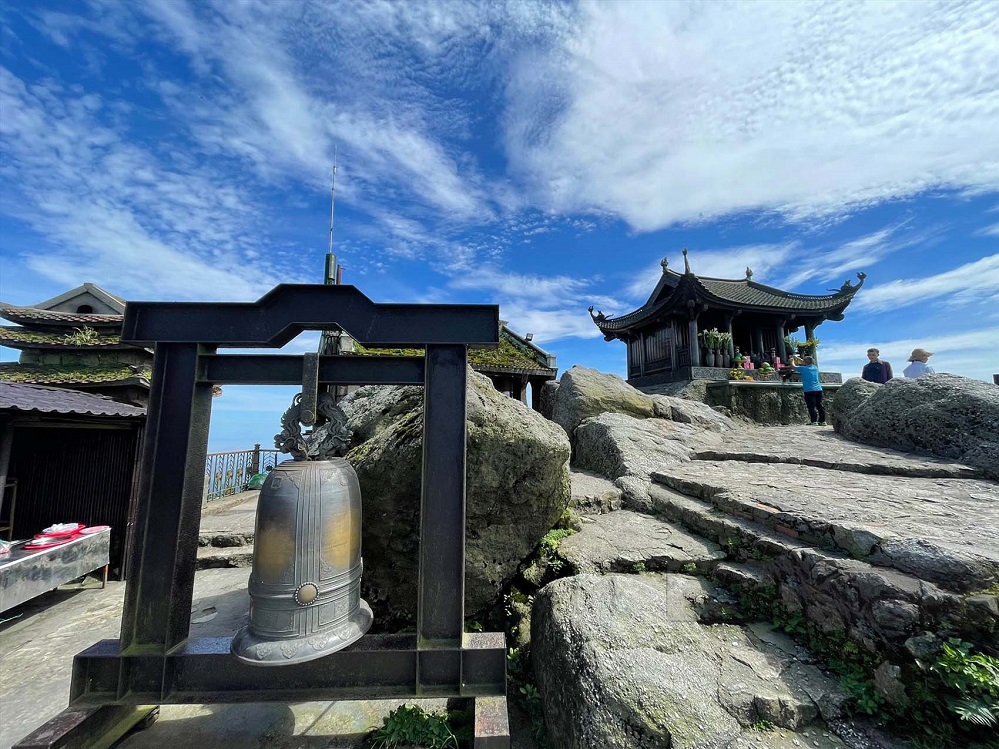
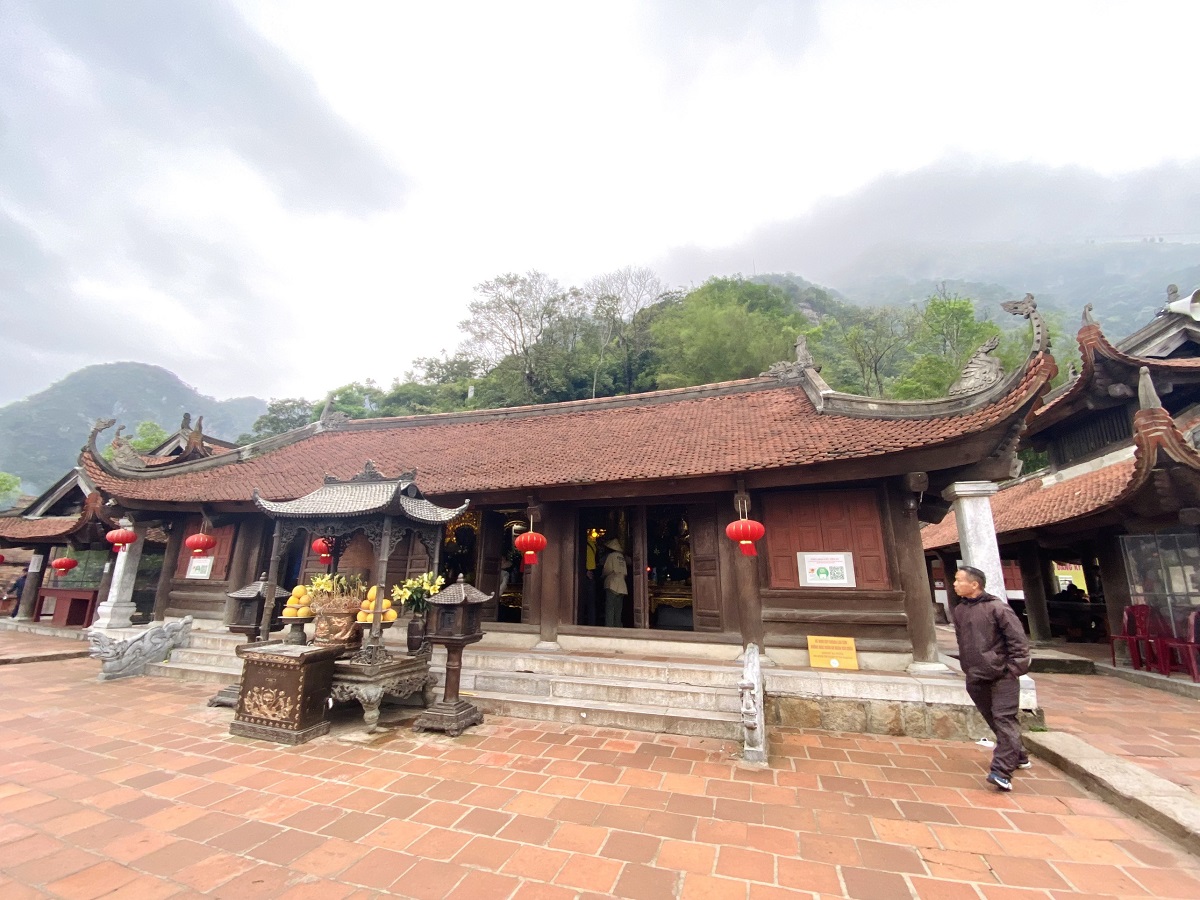
Visitors to Yen Tu Pagoda often marvel at its ancient architecture and peaceful ambiance (Source: Collected)
2.2. Hoa Yen Pagoda
Located 534 meters above sea level, Hoa Yen Pagoda is the central pagoda of the Yen Tu relic site. This pagoda is originally called Van Yen Pagoda and has been renovated many times over the years. In 2002, with state funding and public donations, the pagoda was rebuilt on the foundation of the original Tran Dynasty structure. The current pagoda includes the Main Hall for Buddha worship, the Ancestor House, and two towers: a bell tower and a gong tower. The foundation of the pagoda still preserves the Tran Dynasty base, which was uncovered in 2001.
2.3. Giai Oan Pagoda
Giai Oan Pagoda is located with its back against Ngoc Mountain and facing Giai Oan Stream. The Main Hall was constructed in 1994 by Venerable Chan Duc and Buddhists, while the Mother Temple was restored in 2003 to honor the mother of King Tran Nhan Tong, Nguyen Thanh Thien Cam Hoang Thai Hau, sister of Tran Hung Dao. In 2010, the Ancestral House was built on the site. In front of the temple, there is still a fruit garden that was planted by the ancients several hundred years ago, featuring trees like lychee, jackfruit, and mango.
Right in front of the temple, a centuries-old fruit garden still thrives, planted by the ancients hundreds of years ago. The lush space is home to lychee, jackfruit, and mango trees, offering a glimpse into the past and a touch of nature’s beauty.
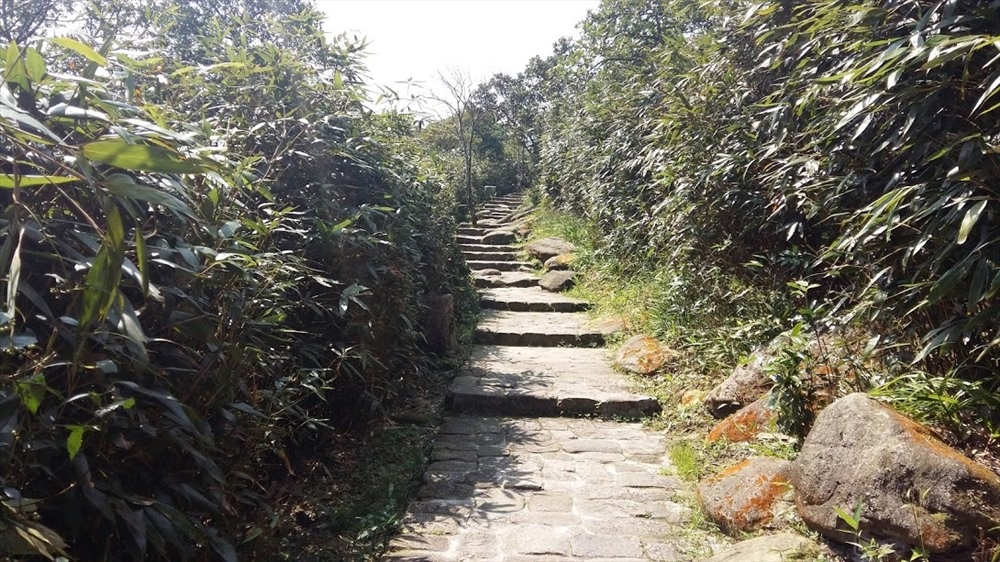
The ascent to Yen Tu Pagoda, with its winding stone steps, offers both physical challenge and spiritual reward (Source: Collected)
2.4. Van Tieu Pagoda
Located at an altitude of 724 meters above sea level, Van Tieu Pagoda is rich in history. Historical records mention that Tran Nhan Tong, four months before his death in July 1308, preached the Truyen Dang Luc to Phap Loa at Tu Tieu Hermitage on Yen Tu Mountain. Many believe that Tu Tieu was in the area where Van Tieu Pagoda stands today. A stone stele at the pagoda notes that it was restored during the Le Dynasty by Lord Trinh. After several renovations over the years, the pagoda was fully restored to its present form in 2001, with the support and donations from Buddhists both in Vietnam and abroad.
2.5. Bao Sai Pagoda
Named after Zen master Bao Sai from the Tran Dynasty, Bao Sai Pagoda is located at 724 meters above sea level. This place used to be a cave hermitage before it was damaged by a falling rock during the Nguyen Dynasty, leaving only the altar and an east wall. After extensive restorations in 1990 and 1995, the pagoda was fully reinstalled in 2012. The statues inside are carefully arranged in accordance with the traditional Northern Vietnamese worship style.
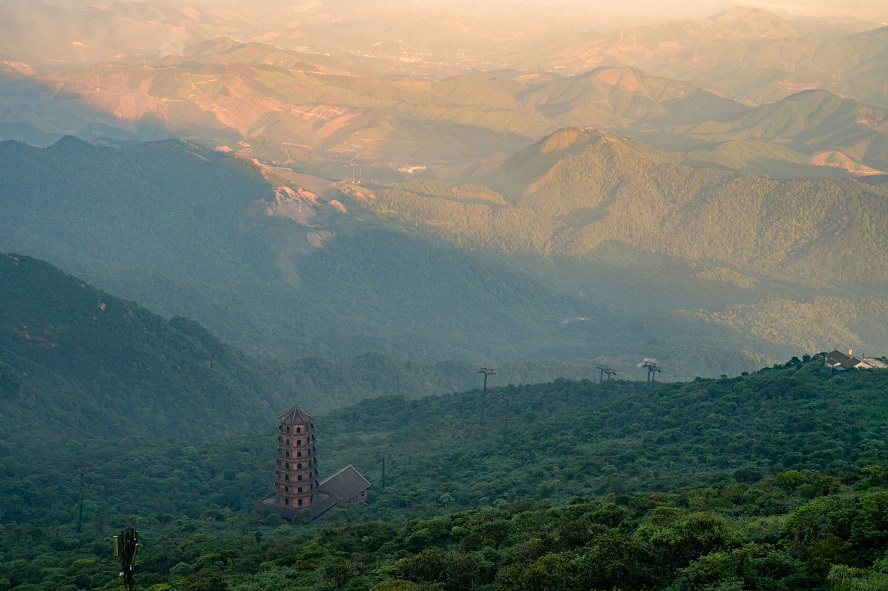
The stunning beauty of Yen Tu Pagoda is complemented by its surrounding natural landscapes (Source: Collected)
2.6. Mot Mai Pagoda
Mot Mai Pagoda is uniquely nestled on a high mountain, with half of its structure hidden within a cave and the other half exposed to the open air. This narrow wooden pagoda, topped with a traditional tiled roof, carries deep historical and spiritual significance. Originally known as Thanh Long Cave during the Tran Dynasty, it was later renamed Bo Da Pagoda in the Le Dynasty before becoming Mot Mai Pagoda as it is known today. Over the centuries, the pagoda has undergone several renovations, with the most recent restoration completed in October 2014.
2.7. Hue Quang Golden Stupa
The Hue Quang Golden Stupa is a significant monument on Yen Tu Mountain, built in 1309 to honor King Tran Nhan Tong and the monks of the Tran and Le Dynasties. Standing at 7 meters tall, the stupa features Tran Dynasty architecture, with a lotus-inspired base and dragon, cloud, and daisy decorations. It is surrounded by 97 smaller towers, which serve as the graves of prominent monks from the Truc Lam Yen Tu Zen Sect. The stupa has undergone several restorations, with the most notable occurring in the 18th century.
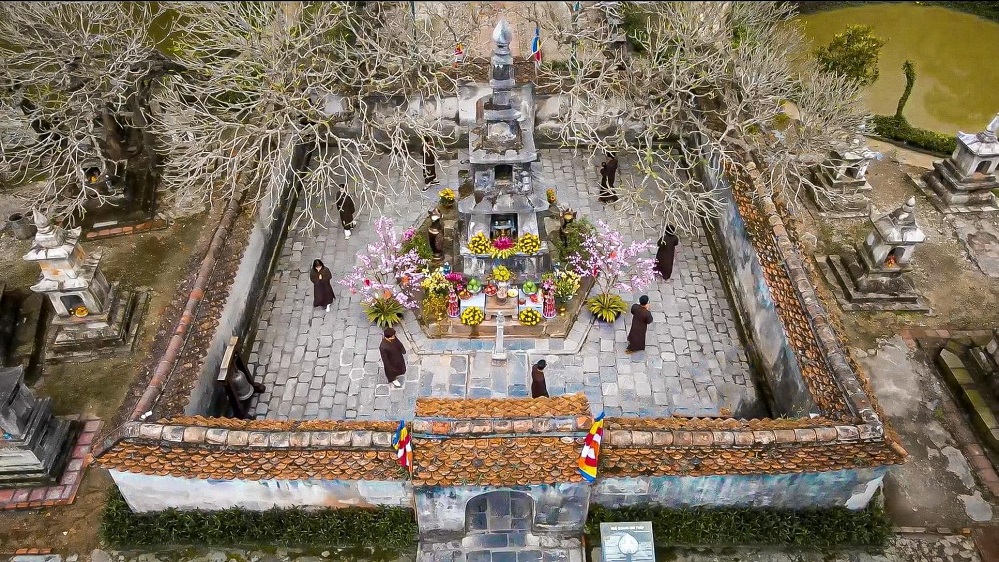
The quietude and serene atmosphere at Yen Tu Pagoda provide the perfect setting for meditation and inner peace (Source: Collected)
Let’s explore some must-visit Ha Long attractions!
Best-selling products
![[02 Day Combo] - Admission to VinWonders + Vinpearl Safari Phu Quoc | Gifts: Meal Voucher + Teddy Bear Museum](http://booking-static.vinpearl.com/tours/877d8a3289a246d18f95aa5cc414f6d6_27be58d21e244664bf34d11d72e77860_Castle_vinwonders-phu-quoc-ve-vao-cua_vinwonders-phu-quoc-ve-vao-cua.jpg)
![[Hoi An Passport] VinWonders Ticket & Buggy Ride & Hoi An Coconut Forest](http://booking-static.vinpearl.com/tours/6c002e3ea71642f38eda8efa8654e5e4_vwnha0_vinwonders-nam-hoi-an-ve-vao-cua.jpg)
![[Nha Trang Passport] - [Half-Day] - Cable Car + Aquafield Sauna (2 hours) + Tata Show](http://booking-static.vinpearl.com/tours/91c34711df754e76b66d3ff6d3436e26_34d71a9c3e6b4b7484f9d7cbbc935c26_200dd4dda03e45e0a1add52e4acc11fa_NHT_1796_ve-xem-tata-show-vinwonders-nha-trang_ve-xem-tata-show-vinwonders-nha-trang.jpg)
![[VinWonders Cua Hoi] - Indoor Games Area](http://booking-static.vinpearl.com/tours/0b0d68a6480146e3a0aba9a3cfc038c1_1920-x-1080-double%20day%20sale%2077%20no%20text_vinwonders-nam-hoi-an-ve-vao-cua.jpg)
![[VinWonders Nha Trang] - Standard Admission Ticket to VinWonders | Free F&B Voucher](http://booking-static.vinpearl.com/tours/d1425f018b3e4d2d833374b5b52d8bb9_Hinh-anh-VinWonders-Nha-Trang-The-World-Garden-Lau-vong-canh-3x2-so-1_vinwonders-nha-trang-ve-vao-cua-sau-16h.jpg)
![[VinWonders Cua Hoi] Round-Trip Cable Car + Water Park + Buffet Voucher worth VND 125,000](http://booking-static.vinpearl.com/tours/aa8379d6db3a4f5c9df6d78d53177c35_11-E-Ticket-Vinwonder-Cua-Hoi_23072024111407_vinwonders-nam-hoi-an-ve-vao-cua.jpg)
![[Vinpearl Harbour] - Happy Hour Combo: Round-trip Cable Car + Dinner Buffet + Tata Show](http://booking-static.vinpearl.com/tours/a869acdae59e4137855742de1cbbb1af__KAH2165_vinpearl-harbour-combo-happy-hour.jpg)
![[Grand World Phu Quoc] [Ultimate Combo] - Water Taxi + Teddy Bear Museum + Grand Show](http://booking-static.vinpearl.com/tours/e31a9e66b5444808bba3e3114d195559_VENICE%20ALL%20IN%20ONE%20KV%20(1)_ve-bao-tang-gau-teddy-bear.jpg)
![[VinWonders Nha Trang] - 01-day Unlimited Admission Ticket | Free F&B Voucher](http://booking-static.vinpearl.com/tours/ccf23087ea0f419980c411d0e79c10fb_88c594a8352d49e7b031b9fbd5c5d27f_tro-choi-mao-hiem-o-vinpearl-nha-trang-thumb-1_vinwonders-nha-trang-khong-gioi-han-2-ngay_vinwonders-nam-hoi-an-ve-vao-cua.jpg)
![[VinWonders Nha Trang] - Admission to VinWonders after 4:00 PM](http://booking-static.vinpearl.com/tours/de2da6d471b34297ab13cb26ef2da9a0_Hinh-anh-VinWonders-Nha-Trang-The-World-Garden-Lau-vong-canh-3x2-so-1_vinwonders-nha-trang-ve-vao-cua-sau-16h.jpg)
![[Vinpearl Aquarium Times City] Entrance Ticket](http://booking-static.vinpearl.com/tours/8702a10bf2934d6299df65669a290679_aquarium%20times%20city%203_thuy-cung-vinpearl-aquarium-times-city.jpg)
![[VinWonders Cua Hoi] Combo Entrance Ticket | Includes Cable Car + Games Area (excluding Gokart and Indoor Games)](http://booking-static.vinpearl.com/tours/d5af0cb7759d48a7a2b991c8de1e19a0_Hinh-anh-VinWonders-Nam-Hoi-An-Noi-bat-3x2-so-3%20(1)_vinwonders-nam-hoi-an-ve-vao-cua.jpg)
![[Zoo Tram Combo] - Admission to Vinpearl Safari Phu Quoc + Zoo Tram](http://booking-static.vinpearl.com/tours/ceb77f9174d845ebb2fd3dfe2b846066_3%20copy_vinwonders-nam-hoi-an-ve-vao-cua.jpg)
![[VinWonders Vu Yen] - Admission Ticket to Games zone (after 5:00 PM)](http://booking-static.vinpearl.com/tours/edbd3eb4bc9848aead9940e0f5aa050d_fa21c62dfa9644ada0c3fce89b3e79ff_DO__8711_vinwonders-vu-yen-vuon-thu-khu-tro-choi-sau-17h.jpg)
![[Aquafield] - [Female] - 4-hour Korean Sauna](http://booking-static.vinpearl.com/tours/0e6fe24c37b84cb799b94dae70578054_aqf-suong-may-2048x1365_aquafield-nha-trang-xong-hoi-chuan-han.jpg)
![[VinWonders Nam Hoi An] - Standard Admission Ticket](http://booking-static.vinpearl.com/tours/81813f8ced2c466e82ad53f1c29c1904_tour-kham-pha-van-hoa-viet-vinwonders-nam-hoi-an-668ca102bcc29_vinwonders-nam-hoi-an-ve-vao-cua.jpg)
![[VinWonders Phu Quoc] - Standard Entrance Ticket](http://booking-static.vinpearl.com/tours/0dd25afc61ad45d48486bbd3b9c8a96a_tieu%20chuan%201_vinwonders-phu-quoc-ve-vao-cua.jpg)
![[VinGroup Employees] Standard Admission Ticket to Ocean Park 3 Water Park](http://booking-static.vinpearl.com/tours/f949b31af919495c9b4e111237642763_358600999_111579731994757_433244877993048710_n_vinwonders-ha-noi.jpg)
![[50% Student Discount] – VinWonders Admission Ticket](http://booking-static.vinpearl.com/tours/43126c168bb04853bf7c93e197db724a_Banner%201200x628_vinwonders-nha-trang-ve-vao-cua-2-chieu.jpg)
![[Grand World] Skydrop ticket](http://booking-static.vinpearl.com/tours/ed7c962747be42458f35c7b18340b901_A2-4-jpeg-2640-1687438608_grandworld.jpg)
![[Grand World Phu Quoc] - The Quintessence of Vietnam Show](http://booking-static.vinpearl.com/tours/f88e2be1139b4eada4043eb7f0e39362_THVN1_show-tinh-hoa-viet-nam.jpg)
![[Grand Park] Celestial Swing](http://booking-static.vinpearl.com/tours/eeb9a602315342ccbc7965b29cfb0db0_Ảnh%20màn%20hình%202025-03-03%20lúc%2015.00.17_vinwonders-nam-hoi-an-ve-vao-cua.png)
![[Nha Trang Passport] - [Half-Day] - Cable Car + Aquafield Sauna (2 hours) + Tata Show](http://booking-static.vinpearl.com/tours/ef49c187eadf4177b425d2bb85a18b30_200dd4dda03e45e0a1add52e4acc11fa_NHT_1796_ve-xem-tata-show-vinwonders-nha-trang.jpg)
![[Grand World Phu Quoc] - Water Taxi Boat + Teddy Bear Museum](http://booking-static.vinpearl.com/tours/add2e0908faa4289b555856472b181be_VENICE%20ALL%20IN%20ONE%20KV%20(1)_ve-bao-tang-gau-teddy-bear.jpg)
![[VinWonders Vu Yen] - Admission Ticket to Zoo + Games + Buffet](http://booking-static.vinpearl.com/tours/b2cd8cf6b14c48459b21393e14d73163_vwvy%201_vinwonders-nha-trang-ve-vao-cua-2-chieu.jpg)
![[Hon Tam] - [Zone A&B] - Full island entertainment + Mud Bath Zone A + Lunch](http://booking-static.vinpearl.com/tours/af991883d63f4133b62b76551ba2444d_tam-bun-dao-hon-tam_httpswwwhontammudbathvnwp-contentuploadssites2720190625-3-2200x700jpg.jpg)
![[VinWonders Vu Yen] - [04 Adults] - Admission to Zoo + Games + Free Tote Bag](http://booking-static.vinpearl.com/tours/34488b227a3648e5b73d4aa6d6d36b46_DO__8153_vinwonders-nha-trang-ve-vao-cua-2-chieu.jpg)
![[Grand World] Carousel Ride](http://booking-static.vinpearl.com/tours/0d6a4bcfc2a54fd4aa9df0b38ae8c7b6_A2-4-jpeg-2640-1687438608_grandworld.jpg)
![[-30%] The Quintessence of Vietnam Show](http://booking-static.vinpearl.com/tours/6cee2bcb52a447009f64771095d03c9e_Screenshot%202024-10-22%20at%2014.49.18_ve-bao-tang-gau-teddy-bear.png)
![[-10%] - VIP River Safari Ticket*](http://booking-static.vinpearl.com/tours/5d3ee19e977446be8917a34697bb9443_ece6e58a02fd48de9eba9d3f4689f77a_Hinh-anh-VinWonders-Nam-Hoi-An-River-Safari-3x2-so-1%20(1)_vinwonders-nam-hoi-an-ve-vao-cua_vinwonders-nam-hoi-an-ve-vao-cua.jpg)
![[Vinpearl Aquarium Times City] Entrance Ticket](http://booking-static.vinpearl.com/tours/e7fcffc8256546e8bdcfd5ccfbe69783_VINKE2%20(1)_vinke-ve-vao-cua-truc-tiep.jpg)
![[Aquafield] - [Male] - 4-hour Korean Sauna](http://booking-static.vinpearl.com/tours/94abeb55e3d54efbac23f7a862445389_0d72b531dd6749bbac2874b915ab0512_Screenshot_8_aquafield-nha-trang_aquafield-nha-trang.png)
![[Buggy Combo] - VinWonders Phu Quoc + Buggy + Free Ice Cream](http://booking-static.vinpearl.com/tours/0fc52a574094489da612d0f36bb4b1e6_buggy%20kem_vinwonders-phu-quoc-ve-vao-cua-tet-vi-vu.jpg)
![[Aquafield] - [Male] - 4-hour Korean Sauna](http://booking-static.vinpearl.com/tours/4ae60d29ea264f8fab17beb6b4415502_aqf-da-muoi_aquafield-nha-trang-xong-hoi-chuan-han.jpg)
![[Aquafield] - 2-hour Aquafield Sauna + 30-min Spa](http://booking-static.vinpearl.com/tours/b0bf65880af449f39ea19fa0acbb94d5_34d71a9c3e6b4b7484f9d7cbbc935c26_200dd4dda03e45e0a1add52e4acc11fa_NHT_1796_ve-xem-tata-show-vinwonders-nha-trang_ve-xem-tata-show-vinwonders-nha-trang.jpg)
![[Aquafield Ocean City] [Male] – Standard Jjimjilbang Sauna Ticket](http://booking-static.vinpearl.com/tours/0be276c684454e8d969c373f35f6be97_DSC_2127_11zon_aquafield-nha-trang.jpg)
![[Hon Tam] - [Zone A] - Mud Bath + Lunch Combo](http://booking-static.vinpearl.com/tours/5debd1efb6d34e42a88efa65354c8c72_ebdde60fd9a44539afe75c9338ec8a3d_ảnh%205_tam-bun-hon-tam.jpg)
![[Vinpearl Harbour] - Round-trip Cable Car Ticket](http://booking-static.vinpearl.com/tours/3cbd16b8edc74f6abc7f7cfa0e91caec_VPHB_Photos15_vinwonders-nha-trang-ve-vao-cua-2-chieu.jpg)
![[Aquafield] - [Male] - Round-trip Cable Car + 4-hour Korean Sauna](http://booking-static.vinpearl.com/tours/625529980f3249e6b0491cddfc30db43_297be2477c5847748ef3bc08603ebf90_aqf%204_aquafield-nha-trang.jpg)
![[Hon Tam] - [Zone A] - Standard Mud Bath](http://booking-static.vinpearl.com/tours/9db66a615a7d4f119316b338afff30cb_tam-bun-dao-hon-tam_httpswwwhontammudbathvnwp-contentuploadssites2720190625-3-2200x700jpg.jpg)
![[Aquafield] - [Female] - Round-trip Cable Car + 4-hour Korean Sauna](http://booking-static.vinpearl.com/tours/c3bae84e472b42078ca3ff6f28d55d80_1c5968412aca409fa8571c88cc85a4ba_aqf%205_aquafield-nha-trang.jpg)
![[Grand Park] Water Park + Dream Garden Outdoor Games Combo](http://booking-static.vinpearl.com/tours/35566b714d4c4dd9802a6bf4650ac2b1_khu-vui-choi-cua-hoi-9_vinwonders-nam-hoi-an-ve-vao-cua.jpg)
![[Nha Trang Passport] – [01 day] – Snorkeling Tour + Lunch & Mud Bath at Hon Tam + Vinpearl Harbour + Tata Show](http://booking-static.vinpearl.com/tours/f6b1826759674c9c9d3f074e03fa04ba_snorkeling%201_vinwonders-nha-trang-ve-vao-cua-2-chieu.jpg)
![[Onsite service] - Premium VIP Zoo Tour Vinpearl Safari Phu Quoc](http://booking-static.vinpearl.com/tours/ff1e4b66ec1b46edad0c0460144e70ad_VINPEARL%20SAFARI%20PHU%20QUOC%20%20(51)_vinwonders-nam-hoi-an-ve-vao-cua.jpg)
![[Aquafield Ocean City] - Body Exfoliation Session](http://booking-static.vinpearl.com/tours/0e8ee4024e1f4378ba932eb06d945636_Screenshot_14_aquafield-nha-trang.png)
![[Grand World Phu Quoc] - Teddy Bear Museum](http://booking-static.vinpearl.com/tours/30da03237e2f42fe818e6686fb350481_teddy%20bear%201_ve-bao-tang-gau-teddy-bear.jpg)
![[Vinpearl Harbour] - Combo for 02 pax: Round-trip cable car + Two-seater Go Kart ride](http://booking-static.vinpearl.com/tours/ab277ed82445448aad2f6b1a0c249e40_Gokart-1_vinpearl-harbour-go-kart-xe-doi.jpeg)
![[VinWonders Cua Hoi] - Combo: Indoor Games + Outdoor Games](http://booking-static.vinpearl.com/tours/59e1a8613d6741d9b9c86645ecf6726e_vinwonders-cua-hoi-10_vinwonders-cua-hoi.jpeg)
![[Aquafield Ocean City] [Female] – Standard Jjimjilbang Sauna Ticket](http://booking-static.vinpearl.com/tours/4aec5fed6be54fe8a736aca12893384b_40fc72547fe242f8b6bbbbc428885848_065A8735_aquafield-nha-trang_aquafield-nha-trang.jpg)
![[-10%] - Tata Show Ticket](http://booking-static.vinpearl.com/tours/18dc9f798082474ba26cf00121da6180_Hinh-anh-VinWonders-Nha-Trang-The-World-Garden-Lau-vong-canh-3x2-so-1_ve-xem-tata-show-vinwonders-nha-trang.jpg)
![[Hon Tam] - 15-Minute Snorkeling](http://booking-static.vinpearl.com/tours/56618ea554304747b54636a31d59f9f4_Untitled-design-1_httpswwwhontammudbathvnwp-contentuploadssites2720190625-3-2200x700jpg.jpg)
![[Times City] Combo VinKE & Vinpearl Aquarium Entrance Ticket](http://booking-static.vinpearl.com/tours/d6296ca1d3714503b01f24603b85b8cf_vinke1_vinke-ve-vao-cua-truc-tiep.jpg)
3. Things to experience on a trip to Yen Tu
There are countless experiences to enjoy on a trip to Yen Tu, from climbing the mountain to immersing yourself in its rich spiritual heritage and breathtaking natural beauty.
3.1. Climb Yen Tu mountain
Climbing Yen Tu Mountain is one of the most exciting experiences on a trip to Yen Tu Pagoda, offering both a physical challenge and a spiritual journey. As you make your way up, you will be surrounded by nature’s beauty, making the climb feel peaceful and reflective. This path is not just a hike but also a chance to immerse yourself in the spiritual journey of King Tran Nhan Tong, who once meditated and practiced Buddhism at the top of the mountain.
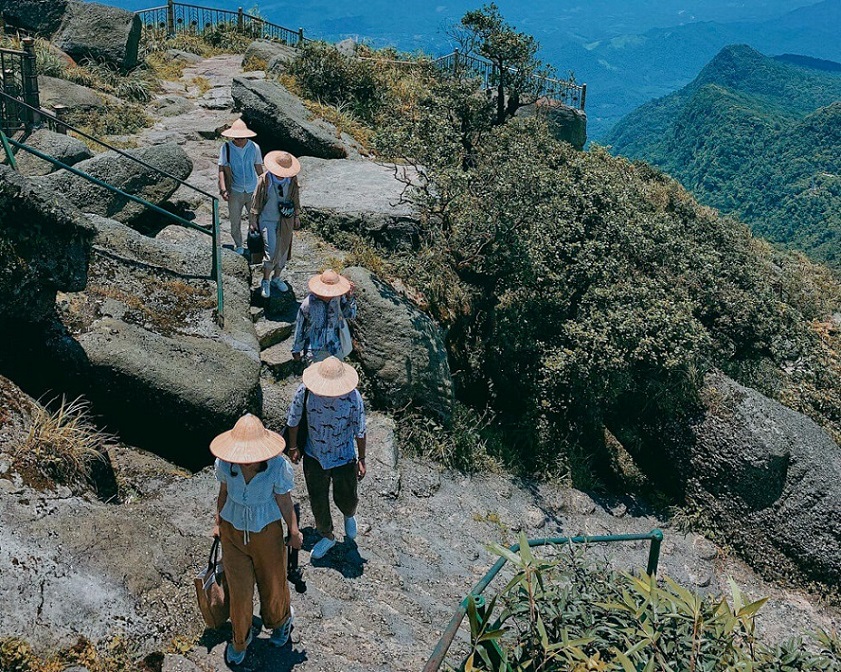
Climbing the mountain to reach Yen Tu Pagoda is an unforgettable experience for adventurers and spiritual seekers (Source: Collected)
3.2. Experience a scenic cable car ride
Experiencing the scenic cable car ride to Yen Tu Pagoda is a poetic and unforgettable journey. After walking along the stone steps for a while, visitors can board the cable car, which takes them over the lush primeval forests to a high altitude. From the cable car, you will feel a thrilling sense of floating above the forest, taking in the vast expanse below.
3.3. Marvel at the natural beauty
Marveling at the natural beauty of Yen Tu is an unforgettable experience. The area is home to nearly 2,700 hectares of untouched primeval forest, preserving a stunning ecosystem. The majestic mountains blend perfectly with the serene and ancient features of pagodas, hermitages, towers, and mausoleums, creating a peaceful atmosphere. The scenery is further enhanced by the misty clouds, flowing rivers, and the lush greenery of trees, flowers, and leaves.
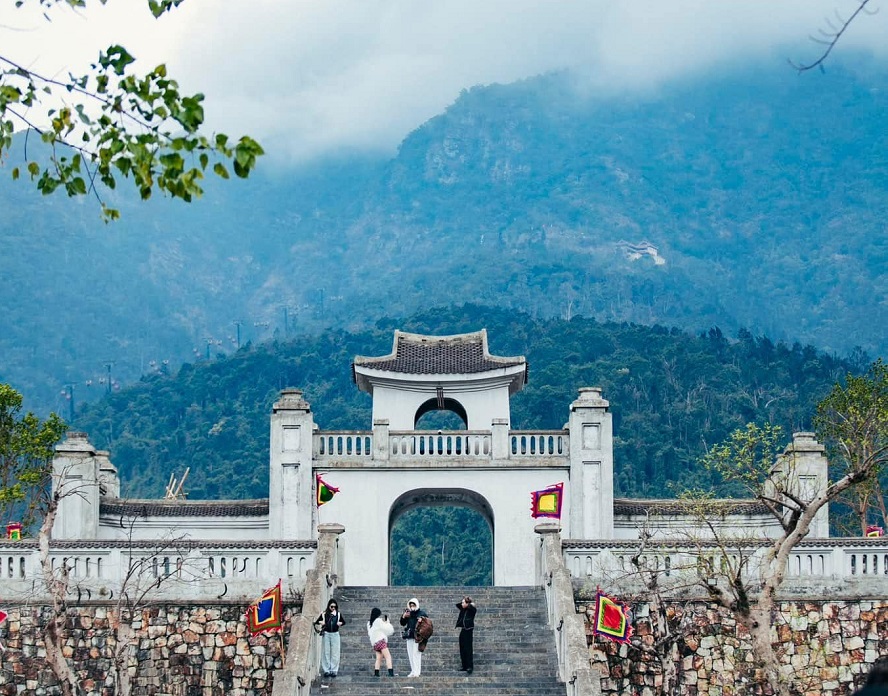
Yen Tu Pagoda attracts tourists not only for its religious importance but also for its breathtaking views (Source: Collected)
3.4. Experience the rich traditions of Yen Tu Festival
As one of the largest festivals in Vietnam, the Yen Tu Festival takes place annually from the 9th day of the first lunar month and lasts for three months. This grand celebration blends spiritual rituals like offerings and peace prayers with lively cultural activities, including dragon and lion dances, traditional music, folk games, and exhibitions showcasing Yen Tu’s beauty.
Visitors can also enjoy the cuisine of the Dao Thanh Y people, traditional martial arts, and horse riding experiences, making it a vibrant celebration of culture and tradition.
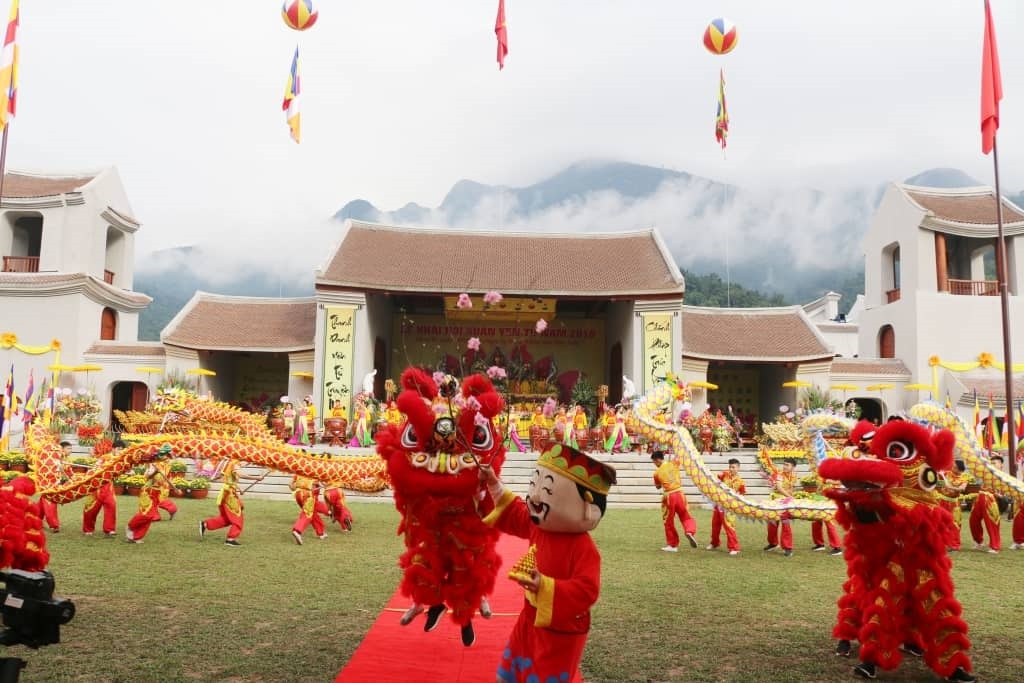
The annual Yen Tu Festival draws thousands of visitors to the pagoda (Source: Collected)
4. Guide to visiting Yen Tu Pagoda for first-timers
If you intend to explore Yen Tu Pagoda on your next trip, here is some crucial information that you should keep in mind for a smooth journey:
4.1. When to visit?
Yen Tu Pagoda is beautiful in all four seasons, each offering a unique atmosphere for visitors to experience. However, spring is often regarded as the best time to visit Yen Tu Pagoda. It is when the mountain comes alive with the stunning yellow apricot blossoms, a rare and special flower of Yen Tu. These ancient trees, growing on the steep cliffs, bloom with five-petaled flowers that release a fragrant, pure scent, creating a bright and warm contrast against the cool, green forest backdrop.
4.2. How to get there?
To reach Yen Tu Pagoda, the most convenient starting point is Hanoi, located about 130 kilometers from Yen Tu. From Hanoi, you can easily travel by bus or personal vehicle. Many buses traveling from Hanoi to Ha Long also pass by Yen Tu. You can catch a bus at My Dinh Bus Station, with options like Kumho Viet Thanh, Ka Long, Duc Phuc, or Van Minh.
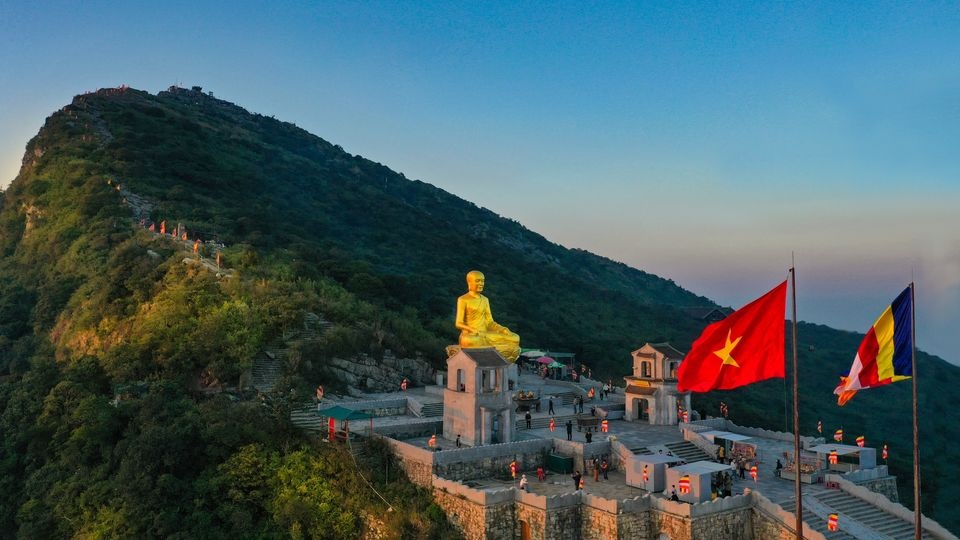
Yen Tu Pagoda is often seen as a symbol of the deep connection between nature and spirituality in Vietnamese culture (Source: Collected)
Once you arrive at Yen Tu, you can take the cable car system to make the journey up the mountain easier and more enjoyable. The cable car covers over 1.2 kilometers and takes you to the Hoa Yen Pagoda at an altitude of 450 meters. It offers a chance to enjoy the breathtaking views of the ancient pine trees, lush forests, and stunning mountain scenery.
Ticket prices for the cable car:
- Route 1 (Giai Oan Pagoda – Hoa Yen Pagoda): VND 200,000 one-way, VND 280,000 round-trip.
- Route 2 (Mot Mai Pagoda – An Ky Sinh): VND 200,000 one-way, VND 280,000 round-trip.
- Both routes: VND 350,000 round-trip.
Children under 1.2 meters tall, elderly people over 70 years old (with ID), and veterans (with ID) are eligible for free tickets.
4.3. What to prepare?
When preparing for your trip to Yen Tu Pagoda, it is important to pack with both comfort and respect in mind:
- Put on light, breathable clothes. Bring a thick coat in winter but keep it light for easy carrying. Dress modestly, as it is a sacred place.
- Opt for comfortable, soft-soled shoes or sneakers for the 6-kilometer climb. Avoid wearing high heels.
- Bring a small, light backpack for essentials like water and snacks.
- Get a bamboo stick at the foot of the mountain for support, especially on the descent.
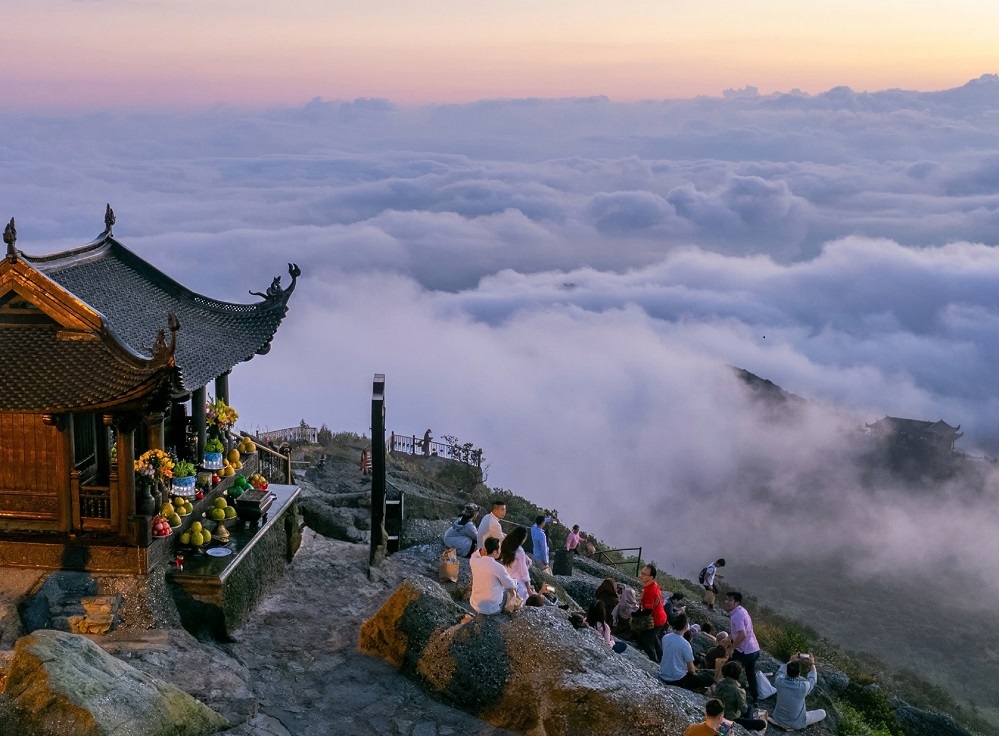
Yen Tu Pagoda never fails to leave a lasting impression on its visitors (Source: Collected)
4.4. What to note?
Here are some important notes for your Yen Tu Pagoda trip:
- Pack dry food and drinking water to stay energized on the climb.
- During festivals, keep an eye on your belongings to avoid pickpockets and buy a round-trip cable car ticket early to avoid long wait times.
- Avoid buying herbs from vendors on the mountain, as they are unverified and you might get scammed.
- Climb the mountain first and visit the temple on the way down for a more relaxed experience.
- Dispose of trash in designated bins or carry it down the mountain to maintain cleanliness.
- Take breaks if needed, drink water, eat a snack, and catch your breath to avoid exhaustion.
- Be cautious on the final stretch to the bronze pagoda, as it can be slippery without steps, especially on rainy days.
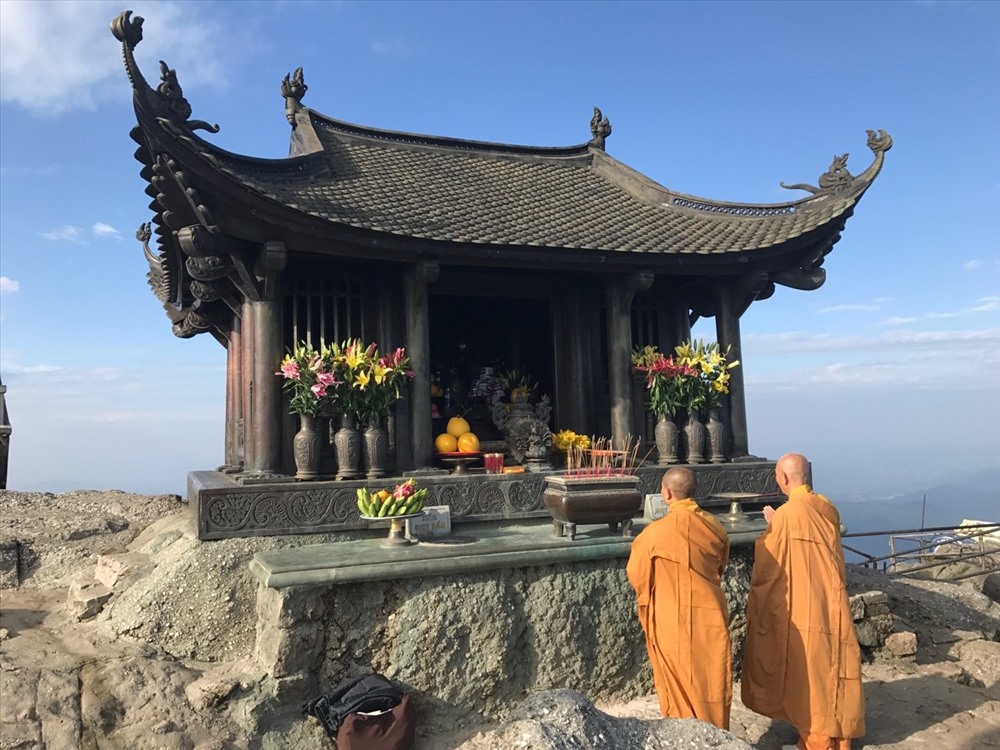
The tranquil atmosphere at Yen Tu Pagoda, Quang Ninh, Vietnam (Source: Collected)
Yen Tu Pagoda offers a unique blend of natural beauty, spiritual significance, and historical allure, making it a must-visit destination for travelers seeking both serenity and adventure. The rich cultural traditions, peaceful surroundings, and breathtaking views ensure that a visit to Yen Tu Pagoda will leave you with lasting memories.
When you are in Quang Ninh, it is highly recommended that you book a stay at Vinpearl Resort & Spa Ha Long. Situated on a private island, this resort offers breathtaking panoramic views of the bay, elegant rooms, and top-notch amenities. Guests can unwind by the infinity pool, enjoy rejuvenating spa treatments, or savor gourmet meals at the resort’s restaurants.
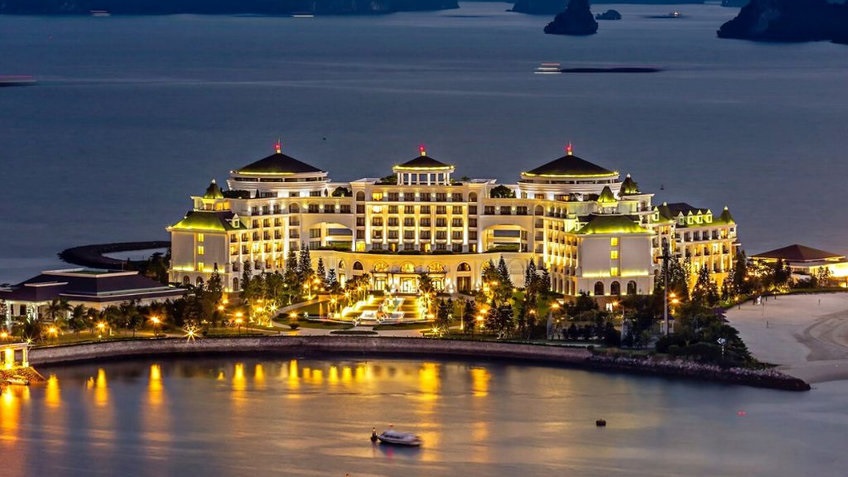
The impressive architecture of Vinpearl Resort & Spa Ha Long
Book rooms in Vinpearl Resort & Spa Ha Long
Beyond Ha Long, Vietnam is filled with stunning destinations to explore, such as Hanoi, Hoi An, Nha Trang, and Phu Quoc. For those in search of excitement and entertainment in these places, visiting the entertainment complexes of VinWonders is a must. These recreational centers offer thrilling rides, cultural shows, and immersive themed experiences, perfect for families and adventure lovers.
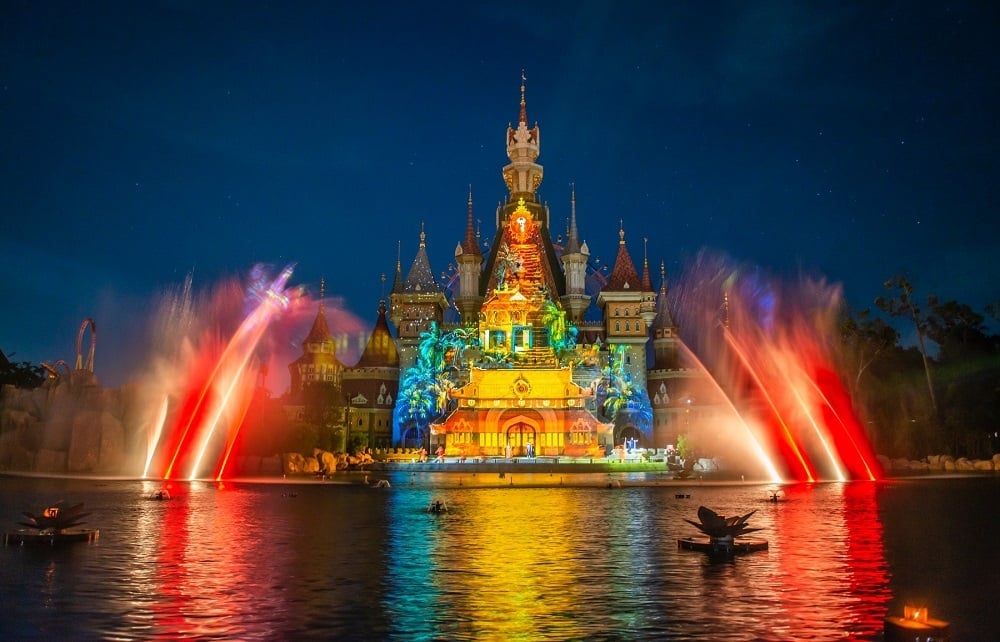
Visitors enjoying a special performance at VinWonders
Wherever you travel in Vietnam, staying at Vinpearl hotels and resorts ensures a world-class experience. These properties offer luxurious accommodations, outstanding service, and excellent facilities, making for a truly memorable stay.
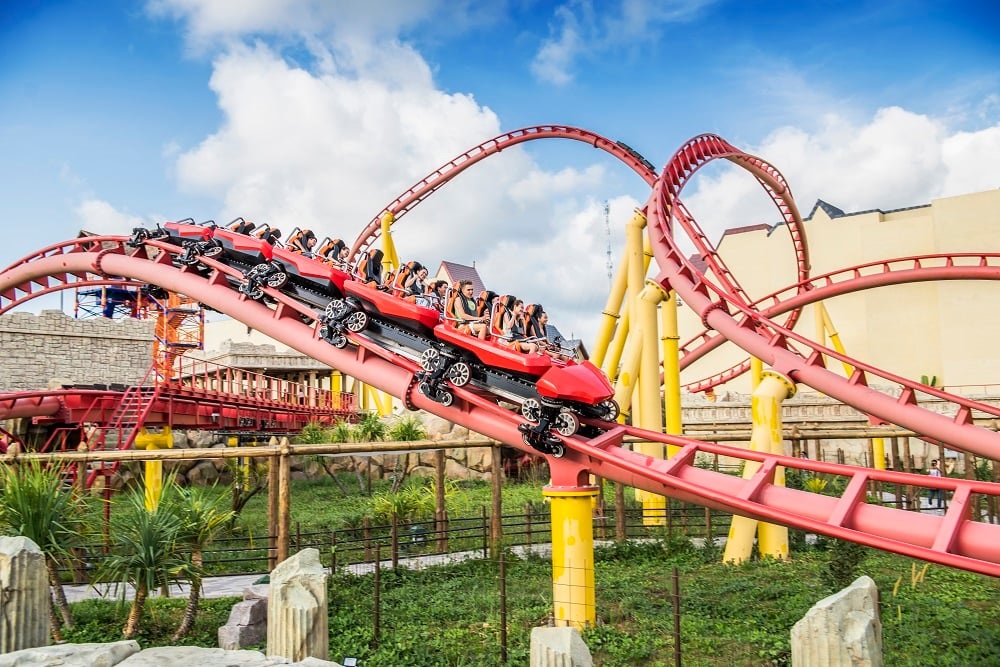
Numerous adrenaline-pumping rides await tourists at VinWonders Phu Quoc
Book VinWonders Phu Quoc ticket now
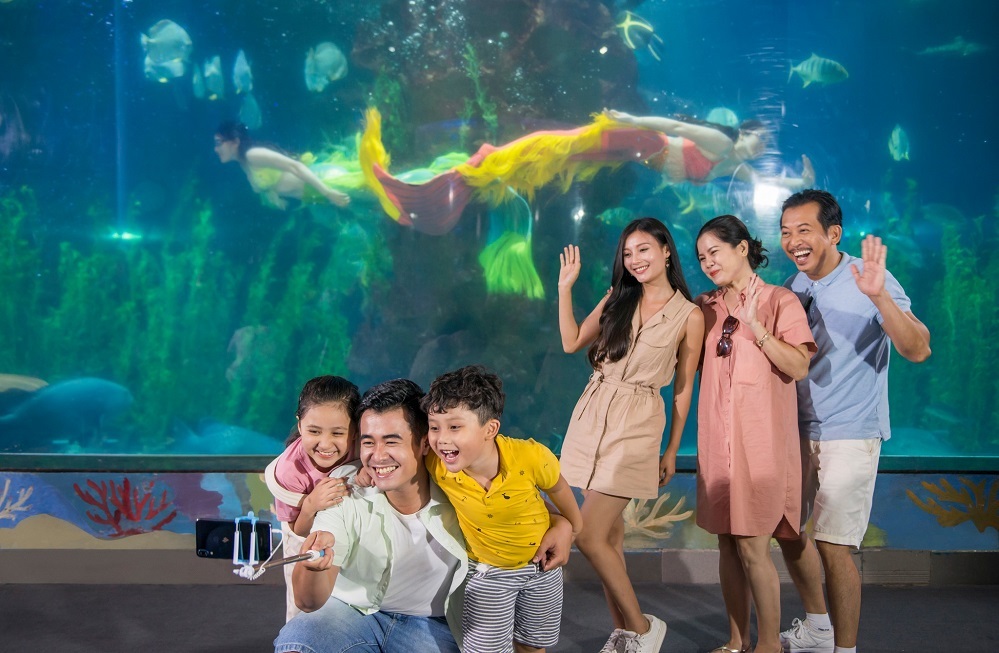
Admire fascinating ocean creatures at VinWonders Nha Trang
Book VinWonders Nha Trang ticket now
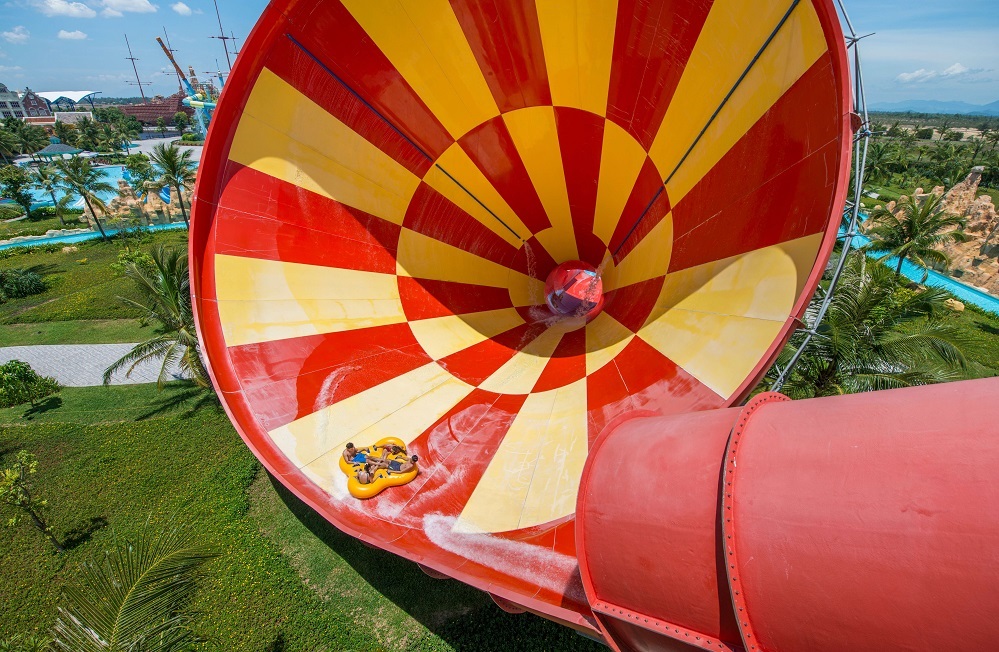
Visitors experiencing thrilling water activities at VinWonders Nam Hoi An
Book VinWonders Nam Hoi An ticket now
Best-selling products




![[Must-try] Unique dining experiences at VinWonders Phu Quoc / Vinpearl Safari Phu Quoc](https://static.vinwonders.com/production/DSC_5620-329x220.jpg)


