en
en


 Tiếng Việt
  中文 (中国)
  한국어
한국어  Русский


 11/10/2025
 748 views
1. Overview of Mu Cang Chai, Vietnam
Mu Cang Chai is in the western highlands of northern Vietnam. It used to be a district under Yen Bai Province, then Yen Bai Province was merged into Lao Cai Province, and now it is known as Mu Cang Chai Commune. Located more than 300 kilometers northwest of Hanoi, it is situated along National Road 32. This accessibility makes it easy for tourists to include other famous sites in their itinerary such as Muong Lo, Nghia Lo, and Sapa.
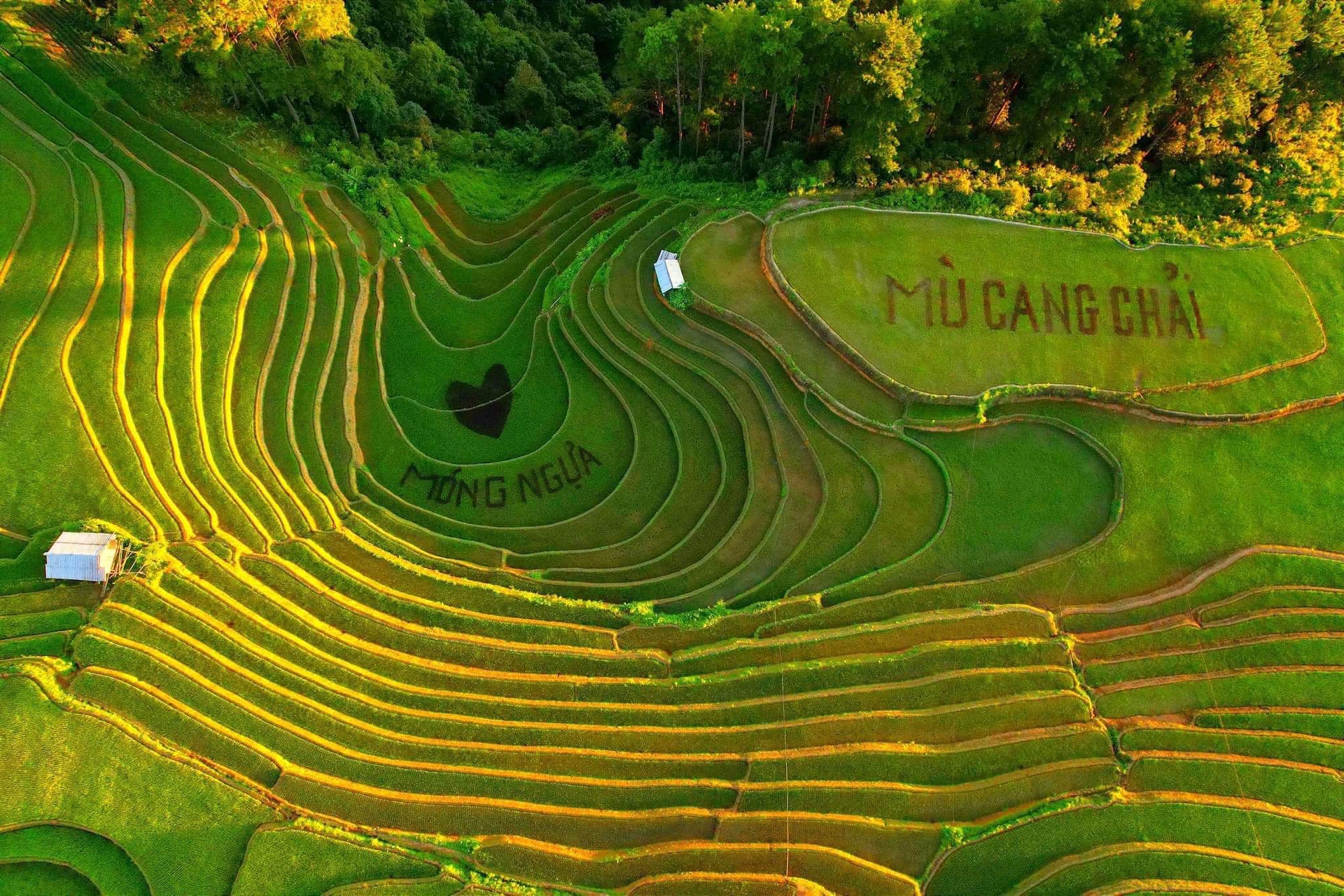
Mu Cang Chai in northern Vietnam is a breathtaking destination (Source: Collected)
To mention Mu Cang Chai, Vietnam is to mention its legendary terraced rice fields, which were crafted over centuries by the H’Mong ethnic group. These terraces are not only a unique method of farming but also a living symbol of harmony between people and nature. During the harvest season, golden waves of rice sweep across the mountainsides. In the water pouring season, sunlight reflects on flooded fields like giant mirrors. This remarkable scenery has made Mu Cang Chai one of the most captivating destinations in Northwest Vietnam.
Discover: Northern Vietnam: 10 amazing destinations to satisfy your wanderlust
2. Best places to visit on your trip to Mu Cang Chai
2.1. Mu Cang Chai Rice Terrace Relic Site
Covering over 2,200 hectares, the terraced fields of Mu Cang Chai, Vietnam are the region’s most celebrated feature. Among them, more than 300 hectares across the former communes of Che Cu Nha (now part of Mu Cang Chai Commune), La Pan Tan, and De Xu Phinh (both now part of Pung Luong Commune) have been recognized as a relic site.
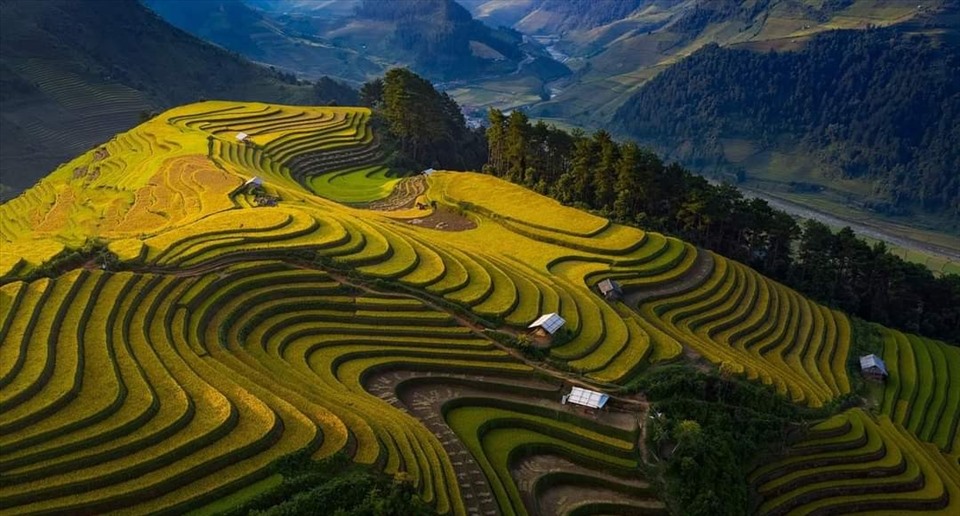
Tourists are often overwhelmed by the sheer grandeur of these terraces, which cascade down steep mountains in countless layers. During the harvest season, the air is filled with the fragrance of ripened rice and the lively sight of H’Mong families gathering their crops. Notable viewpoints include Mam Xoi Hills, Mong Ngua Hill, and Mui Giay Hill.
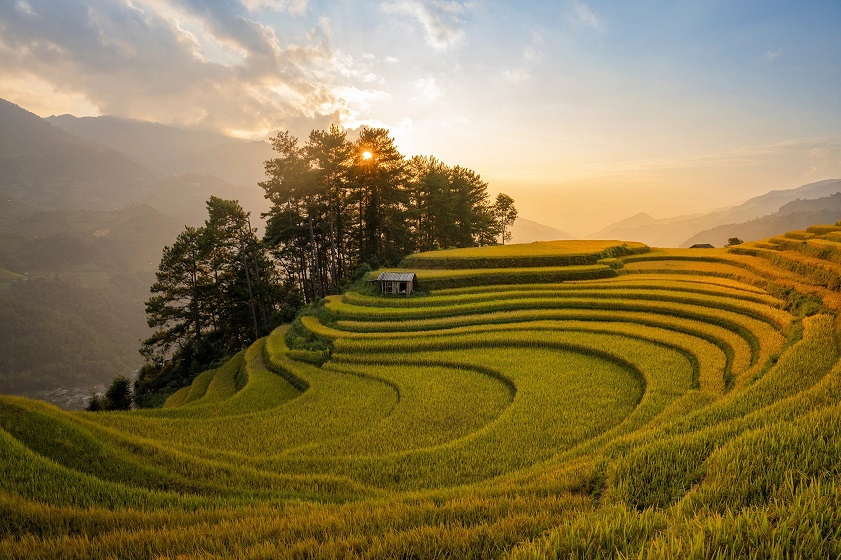
Mu Cang Chai rice terraces have been recognized as a relic site (Source: Collected)
2.1.1. Mam Xoi Hills
Mam Xoi Hills in La Pan Tan have become an icon of Mu Cang Chai, Vietnam. This site consists of a large hill and a small hill, both shaped like round trays of sticky rice. Although the road to reach them is steep and winding, the reward is one of the finest rice terrace landscapes in all of Northwest Vietnam. The smaller hill is less crowded, offering sweeping views of the fields and streams below, ideal for quiet photography. Tourists can also find buckwheat flower gardens nearby, along with ethnic costume rentals for photoshoots.
2.1.2. Mui Giay Hill
Mui Giay Hill, just 2 kilometers away from Mam Xoi Hills, is another picturesque viewpoint for Mu Cang Chai rice terraces. Its terraces lie deep in a valley, surrounded by winding streams and accessible by a rustic bamboo bridge. Quieter than other sites, Mui Giay Hill offers a peaceful atmosphere for those who prefer solitude and a more tranquil space for photography in Mu Cang Chai, Vietnam.
2.1.3. Mong Ngua Hill
Just 2 kilometers away from the center of Mu Cang Chai, Vietnam lies Mong Ngua Hill (Horseshoe Hill), named for the way its terraces curve gracefully like a giant horseshoe. It is especially stunning at harvest, when golden rice carpets the hillsides and draws professional photographers in search of the perfect shot. Although the uphill path is rugged and steep, reaching the top feels like stepping into a surreal world. From above, the endless fields seem to flow into the horizon. Sunset is the most magical time here, casting warm light across the landscape.
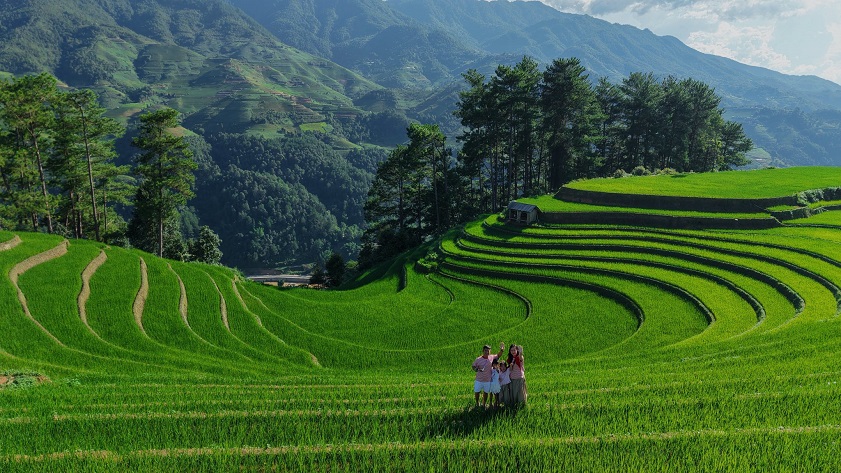
The poetic beauty of Mu Cang Chai rice terraces (Source: Collected)
2.2. Khau Pha Pass
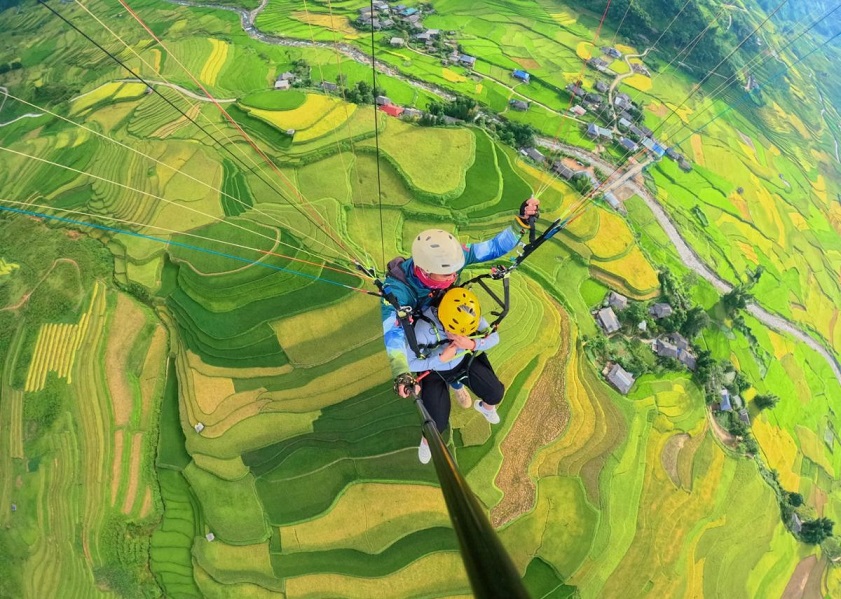
Stretching about 30 kilometers at an altitude of 1,200 meters, Khau Pha Pass is considered one of Vietnam’s “four great passes.” Conquering this pass means immersing yourself in dramatic scenery: jagged peaks piercing the clouds, winding mountain roads, ancient forests, and terraced fields. It is also Vietnam’s premier paragliding site. From above, adventurers can take in sweeping views of valleys and mountains, particularly Lim Mong Valley, when it looks like a golden ocean during the harvest season.
2.3. Cu Vai Village
Cu Vai Village rests on a remote mountaintop often cloaked in mist. In the Thai language, its name means “a strip of cloud stretched across the sky.” From here, tourists are treated to a 360-degree panorama of endless mountains and floating clouds close enough to touch. Home to mainly H’Mong families, the village retains its simple, traditional lifestyle.
2.4. Mo De Bamboo Forest
Located 20 kilometers away from town, Mo De is a 60-year-old bamboo forest covering more than 1 hectare. Recognized by Conde Nast Traveler as one of the world’s Top 20 Most Colorful Destinations, it supplies the region’s prized bamboo shoots. With towering stalks rising skyward, the forest resembles a cinematic backdrop.
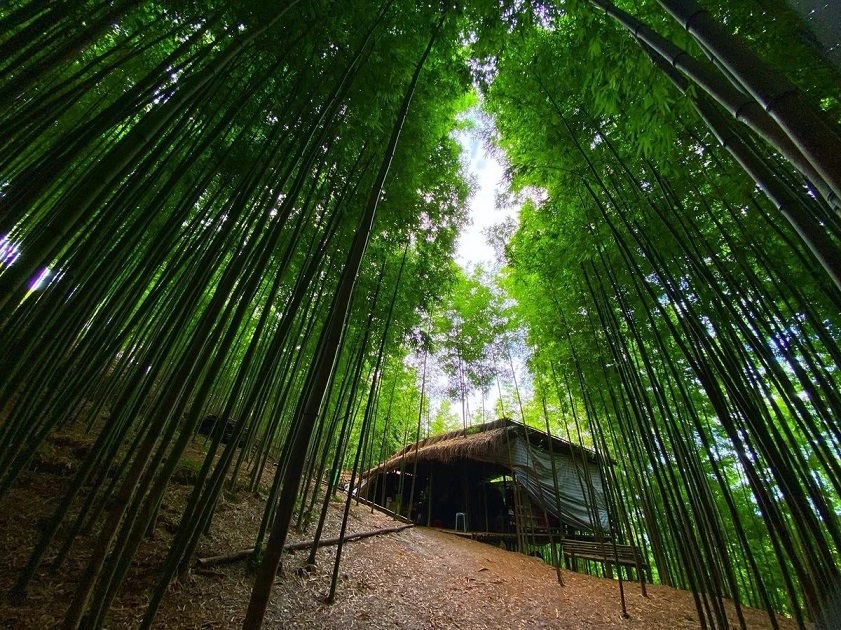
Mo De Bamboo Forest is a must-see on the Mu Cang Chai Vietnam map (Source: Collected)
2.5. Lim Mong & Lim Thai Villages
Nestled at the foot of Khau Pha Pass, these Thai villages in Mu Cang Chai, Vietnam are surrounded by terraced fields. Crossing a suspension bridge leads to winding lanes that climb the hillsides. In September and October, the valleys turn golden, when tourists can ride between the fields and watch the villagers harvest.
2.6. Tu Le Valley
Just 3 kilometers away from Khau Pha Pass, Tu Le Valley is famed for its fragrant sticky rice. During harvest, locals prepare fresh green rice flakes to sell across the country. The valley itself is a charming blend of gentle landscapes which are beautiful year-round. Here, tourists often stay in homestays, where mornings reveal a magical sunrise over the misty valley. Popular activities include bathing in hot springs, tasting specialties like Tu Le green rice, and exploring ethnic traditions.
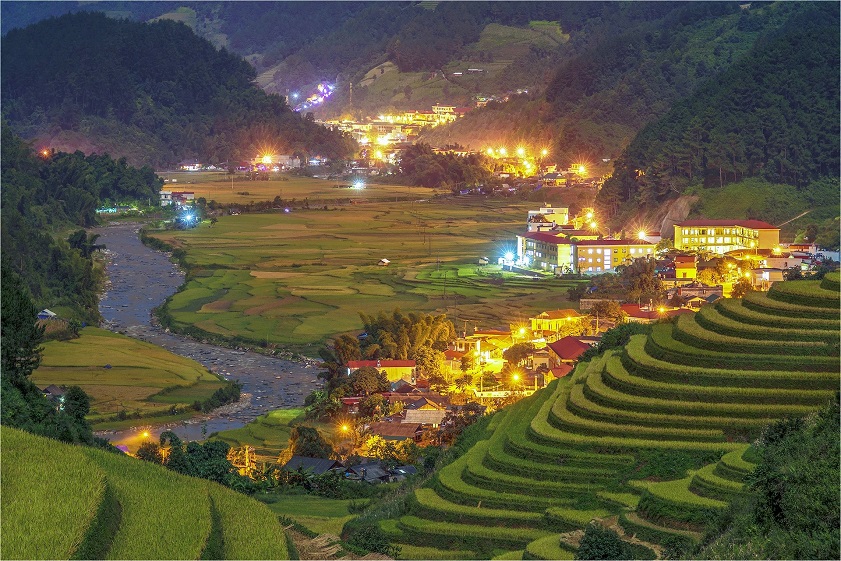
Don’t miss Tu Le Valley in your Mu Cang Chai Vietnam tour (Source: Collected)
Explore: North Vietnam itinerary: TOP places & tips for a memorable journey
Best-selling products
![[Buggy Combo] - VinWonders Phu Quoc + Buggy + Free Ice Cream](http://booking-static.vinpearl.com/tours/0fc52a574094489da612d0f36bb4b1e6_buggy%20kem_vinwonders-phu-quoc-ve-vao-cua-tet-vi-vu.jpg)
![[Phu Quoc Passport] - Top Experiences Across 3 Zones + Buffet voucher (2-Day Unlimited Access)](http://booking-static.vinpearl.com/tours/877d8a3289a246d18f95aa5cc414f6d6_27be58d21e244664bf34d11d72e77860_Castle_vinwonders-phu-quoc-ve-vao-cua_vinwonders-phu-quoc-ve-vao-cua.jpg)
![[Nha Trang Passport] - [Half-Day] - Cable Car + Aquafield Sauna (2 hours) + Tata Show](http://booking-static.vinpearl.com/tours/ef49c187eadf4177b425d2bb85a18b30_200dd4dda03e45e0a1add52e4acc11fa_NHT_1796_ve-xem-tata-show-vinwonders-nha-trang.jpg)
![[VinWonders Vu Yen] - Admission Ticket to Zoo + Games + Buffet](http://booking-static.vinpearl.com/tours/b2cd8cf6b14c48459b21393e14d73163_vwvy%201_vinwonders-nha-trang-ve-vao-cua-2-chieu.jpg)
![[Grand World Phu Quoc] - Venice Water Taxi Ticket](http://booking-static.vinpearl.com/tours/6cee2bcb52a447009f64771095d03c9e_Screenshot%202024-10-22%20at%2014.49.18_ve-bao-tang-gau-teddy-bear.png)
![[Grand World] Carousel Ride](http://booking-static.vinpearl.com/tours/0d6a4bcfc2a54fd4aa9df0b38ae8c7b6_A2-4-jpeg-2640-1687438608_grandworld.jpg)
![[VinGroup Employees] Standard Admission Ticket to Ocean Park 3 Water Park](http://booking-static.vinpearl.com/tours/f949b31af919495c9b4e111237642763_358600999_111579731994757_433244877993048710_n_vinwonders-ha-noi.jpg)
![[VinWonders Nha Trang] - 01-day Unlimited Admission Ticket | Free F&B Voucher](http://booking-static.vinpearl.com/tours/ccf23087ea0f419980c411d0e79c10fb_88c594a8352d49e7b031b9fbd5c5d27f_tro-choi-mao-hiem-o-vinpearl-nha-trang-thumb-1_vinwonders-nha-trang-khong-gioi-han-2-ngay_vinwonders-nam-hoi-an-ve-vao-cua.jpg)
![[VinWonders Phu Quoc] - Standard Entrance Ticket](http://booking-static.vinpearl.com/tours/0dd25afc61ad45d48486bbd3b9c8a96a_tieu%20chuan%201_vinwonders-phu-quoc-ve-vao-cua.jpg)
![[Hon Tam] - [Zone A] - Standard Mud Bath](http://booking-static.vinpearl.com/tours/9db66a615a7d4f119316b338afff30cb_tam-bun-dao-hon-tam_httpswwwhontammudbathvnwp-contentuploadssites2720190625-3-2200x700jpg.jpg)
![[Vinpearl Safari Phu Quoc] - Entrance Ticket + Gate Fastpass + Electric tram](http://booking-static.vinpearl.com/tours/ceb77f9174d845ebb2fd3dfe2b846066_3%20copy_vinwonders-nam-hoi-an-ve-vao-cua.jpg)
![[Grand Park] Celestial Swing](http://booking-static.vinpearl.com/tours/eeb9a602315342ccbc7965b29cfb0db0_Ảnh%20màn%20hình%202025-03-03%20lúc%2015.00.17_vinwonders-nam-hoi-an-ve-vao-cua.png)
![[-15%] Combo Admission Tickets for 2 Zones: Aquarium & VinKE + F&B Set](http://booking-static.vinpearl.com/tours/e7fcffc8256546e8bdcfd5ccfbe69783_VINKE2%20(1)_vinke-ve-vao-cua-truc-tiep.jpg)
![[VinWonders Nam Hoi An] - Standard Admission Ticket](http://booking-static.vinpearl.com/tours/81813f8ced2c466e82ad53f1c29c1904_tour-kham-pha-van-hoa-viet-vinwonders-nam-hoi-an-668ca102bcc29_vinwonders-nam-hoi-an-ve-vao-cua.jpg)
![[Nha Trang Passport] - [Half-Day] - Cable Car + Aquafield Sauna (2 hours) + Tata Show](http://booking-static.vinpearl.com/tours/c3bae84e472b42078ca3ff6f28d55d80_1c5968412aca409fa8571c88cc85a4ba_aqf%205_aquafield-nha-trang.jpg)
![[Vinpearl Harbour] - Happy Hour Combo: Round-trip Cable Car + Dinner Buffet + Tata Show](http://booking-static.vinpearl.com/tours/3cbd16b8edc74f6abc7f7cfa0e91caec_VPHB_Photos15_vinwonders-nha-trang-ve-vao-cua-2-chieu.jpg)
![[VinWonders Cua Hoi] Round-Trip Cable Car + Water Park + Buffet Voucher worth VND 125,000](http://booking-static.vinpearl.com/tours/aa8379d6db3a4f5c9df6d78d53177c35_11-E-Ticket-Vinwonder-Cua-Hoi_23072024111407_vinwonders-nam-hoi-an-ve-vao-cua.jpg)
![[Grand Park] Water Park + Dream Garden Outdoor Games Combo](http://booking-static.vinpearl.com/tours/35566b714d4c4dd9802a6bf4650ac2b1_khu-vui-choi-cua-hoi-9_vinwonders-nam-hoi-an-ve-vao-cua.jpg)
![[Hoi An Passport] VinWonders Ticket & Buggy Ride & Hoi An Coconut Forest](http://booking-static.vinpearl.com/tours/6c002e3ea71642f38eda8efa8654e5e4_vwnha0_vinwonders-nam-hoi-an-ve-vao-cua.jpg)
![[VinWonders Vu Yen] - [04 Adults] - Admission to Zoo + Games + Free Tote Bag](http://booking-static.vinpearl.com/tours/34488b227a3648e5b73d4aa6d6d36b46_DO__8153_vinwonders-nha-trang-ve-vao-cua-2-chieu.jpg)
![[VinWonders Cua Hoi] - Cable Car + Games on the Island](http://booking-static.vinpearl.com/tours/63c924f8521a4af981666076c5c3b0fe_VinWonders%20Cua%20Hoi%20Summer%20Say%20Hi%20Banner%201920x920px_vinwonders-nam-hoi-an-ve-vao-cua.jpg)
![[VinWonders Nha Trang] – VIP Tour Experience](http://booking-static.vinpearl.com/tours/d1425f018b3e4d2d833374b5b52d8bb9_Hinh-anh-VinWonders-Nha-Trang-The-World-Garden-Lau-vong-canh-3x2-so-1_vinwonders-nha-trang-ve-vao-cua-sau-16h.jpg)
![[VinWonders Nam Hoi An] [Sunset Premium] Admission Ticket & Buggy Ride & VIP Safari Package & Afternoon Tea Set](http://booking-static.vinpearl.com/tours/3a1e510945b4421d861fede29a1b3e58_xE3mXzIVwTdZRf7M8zZfHqHIPqV17uyEOzL8PaUQ_vinwonders-nam-hoi-an-ve-vao-cua.jpg)
![[Grand World Phu Quoc] - Water Taxi Boat + Teddy Bear Museum](http://booking-static.vinpearl.com/tours/add2e0908faa4289b555856472b181be_VENICE%20ALL%20IN%20ONE%20KV%20(1)_ve-bao-tang-gau-teddy-bear.jpg)
![[Nha Trang Passport] – [01 day] – Snorkeling Tour + Lunch & Mud Bath at Hon Tam + Vinpearl Harbour + Tata Show](http://booking-static.vinpearl.com/tours/f6b1826759674c9c9d3f074e03fa04ba_snorkeling%201_vinwonders-nha-trang-ve-vao-cua-2-chieu.jpg)
![[Aquafield] - [Male] - Round-trip Cable Car + 4-hour Korean Sauna](http://booking-static.vinpearl.com/tours/625529980f3249e6b0491cddfc30db43_297be2477c5847748ef3bc08603ebf90_aqf%204_aquafield-nha-trang.jpg)
![[-30% Grand Opening] [Aquafield Ocean City] – Standard Jjimjilbang Sauna Ticket for Male](http://booking-static.vinpearl.com/tours/94abeb55e3d54efbac23f7a862445389_0d72b531dd6749bbac2874b915ab0512_Screenshot_8_aquafield-nha-trang_aquafield-nha-trang.png)
![[Grand World Phu Quoc] - The Quintessence of Vietnam Show](http://booking-static.vinpearl.com/tours/f88e2be1139b4eada4043eb7f0e39362_THVN1_show-tinh-hoa-viet-nam.jpg)
![[Aquafield] - [Female] - 4-hour Korean Sauna](http://booking-static.vinpearl.com/tours/0e6fe24c37b84cb799b94dae70578054_aqf-suong-may-2048x1365_aquafield-nha-trang-xong-hoi-chuan-han.jpg)
![[VinWonders Phu Quoc] - Entrance Ticket + Gate Fastpass + Buggy](http://booking-static.vinpearl.com/tours/de2a24896b0e49469fa1e89e93aa5314_1920x1080%20VWPQ%20KV_vinwonders-phu-quoc-standard-entrance-ticket.jpg)
![[Aquafield] - Round-trip Cable Car + Korean Sauna + Body Scrub](http://booking-static.vinpearl.com/tours/d00bc95eb402434c8f4a4756c2a3ad3d_Akoya-spa-Villa-Vinpearl-Resort-Spa-Phu-Quoc-12_aquafield-nha-trang.jpg)
![[Nam Hoi An Signature] VinWonders Ticket + VIP Safari Package | FREE Merchandise Gift](http://booking-static.vinpearl.com/tours/881ac31c4a2b4687a59f412901e85b2c_VIN2725_-08746%20(2)_vinwonders-nam-hoi-an-ve-vao-cua.jpg)
![[Vinpearl Harbour] - Round-trip Cable Car Ticket | Free Wishing Coin Voucher](http://booking-static.vinpearl.com/tours/e584c2f486d246c5820a19f519d184a4_VPHB_Photos15_vinwonders-nha-trang-ve-vao-cua-2-chieu.jpg)
![[Onsite service] - Premium VIP Zoo Tour Vinpearl Safari Phu Quoc](http://booking-static.vinpearl.com/tours/ff1e4b66ec1b46edad0c0460144e70ad_VINPEARL%20SAFARI%20PHU%20QUOC%20%20(51)_vinwonders-nam-hoi-an-ve-vao-cua.jpg)
![[Aquafield] - 2-hour Aquafield Sauna + 30-min Spa](http://booking-static.vinpearl.com/tours/b0bf65880af449f39ea19fa0acbb94d5_34d71a9c3e6b4b7484f9d7cbbc935c26_200dd4dda03e45e0a1add52e4acc11fa_NHT_1796_ve-xem-tata-show-vinwonders-nha-trang_ve-xem-tata-show-vinwonders-nha-trang.jpg)
![[Vinpearl Harbour] - Admission to VinWonders (after 4:00PM) & Round trip cable car](http://booking-static.vinpearl.com/tours/4b2d76bbde1f4c54a43370680d311928_Hinh-anh-VinWonders-Nha-Trang-The-World-Garden-Lau-vong-canh-3x2-so-1_vinwonders-nha-trang-ve-vao-cua-sau-16h.jpg)
![[Aquafield Ocean City] – VIP Membership (12 Months)](http://booking-static.vinpearl.com/tours/3c2f7ab0ed374cb1bbdb2e54e6d6eb9a_e1f2756dfec346f3bb3b16e296b3b166_Screenshot_5_aquafield-nha-trang_aquafield-nha-trang.png)
![[Grand World] Skydrop ticket](http://booking-static.vinpearl.com/tours/ed7c962747be42458f35c7b18340b901_A2-4-jpeg-2640-1687438608_grandworld.jpg)
![[Aquafield Ocean City] [Male] – Standard Jjimjilbang Sauna Ticket](http://booking-static.vinpearl.com/tours/0be276c684454e8d969c373f35f6be97_DSC_2127_11zon_aquafield-nha-trang.jpg)
![[Aquafield Ocean City] [Male] – VIP Membership (12 Months)](http://booking-static.vinpearl.com/tours/6ab10678fcbd4822a8fddb0590d3bcbf_0d72b531dd6749bbac2874b915ab0512_Screenshot_8_aquafield-nha-trang_aquafield-nha-trang.png)
![[VinWonders Cua Hoi] - Indoor Games Zone](http://booking-static.vinpearl.com/tours/b952de18058e4a67a8ffa52f2039e7d2_1920-x-1080-double%20day%20sale%2077%20no%20text_vinwonders-nam-hoi-an-ve-vao-cua.jpg)
![[VinWonders Nha Trang] - Admission to VinWonders after 4:00 PM](http://booking-static.vinpearl.com/tours/de2da6d471b34297ab13cb26ef2da9a0_Hinh-anh-VinWonders-Nha-Trang-The-World-Garden-Lau-vong-canh-3x2-so-1_vinwonders-nha-trang-ve-vao-cua-sau-16h.jpg)
![[VinWonders Phu Quoc] - Game Fastpass - Top 04 Rides](http://booking-static.vinpearl.com/tours/574c2b7798524c17a08f28feb80d45b5_fastpass%204%20games%20vwpq_vinwonders-phu-quoc-fastpass.jpg)
![[VinWonders Vu Yen] - Admission Ticket to Games zone (after 5:00 PM)](http://booking-static.vinpearl.com/tours/edbd3eb4bc9848aead9940e0f5aa050d_fa21c62dfa9644ada0c3fce89b3e79ff_DO__8711_vinwonders-vu-yen-vuon-thu-khu-tro-choi-sau-17h.jpg)
![[Aquafield] - [Male] - 4-hour Korean Sauna](http://booking-static.vinpearl.com/tours/4ae60d29ea264f8fab17beb6b4415502_aqf-da-muoi_aquafield-nha-trang-xong-hoi-chuan-han.jpg)
![[50% Student Discount] – VinWonders Admission Ticket](http://booking-static.vinpearl.com/tours/43126c168bb04853bf7c93e197db724a_Banner%201200x628_vinwonders-nha-trang-ve-vao-cua-2-chieu.jpg)
![[Grand World Phu Quoc] [Ultimate Combo] - Water Taxi + Teddy Bear Museum + Grand Show](http://booking-static.vinpearl.com/tours/e31a9e66b5444808bba3e3114d195559_VENICE%20ALL%20IN%20ONE%20KV%20(1)_ve-bao-tang-gau-teddy-bear.jpg)
![[-10%] - VIP River Safari Ticket*](http://booking-static.vinpearl.com/tours/5d3ee19e977446be8917a34697bb9443_ece6e58a02fd48de9eba9d3f4689f77a_Hinh-anh-VinWonders-Nam-Hoi-An-River-Safari-3x2-so-1%20(1)_vinwonders-nam-hoi-an-ve-vao-cua_vinwonders-nam-hoi-an-ve-vao-cua.jpg)
![[Hon Tam] - [Zone A] - Mud Bath + Lunch Combo](http://booking-static.vinpearl.com/tours/5debd1efb6d34e42a88efa65354c8c72_ebdde60fd9a44539afe75c9338ec8a3d_ảnh%205_tam-bun-hon-tam.jpg)
![[Vinpearl Aquarium Times City] Entrance Ticket](http://booking-static.vinpearl.com/tours/8702a10bf2934d6299df65669a290679_aquarium%20times%20city%203_thuy-cung-vinpearl-aquarium-times-city.jpg)
![[Hon Tam] - [Zone A&B] - Full island entertainment + Mud Bath Zone A + Lunch](http://booking-static.vinpearl.com/tours/af991883d63f4133b62b76551ba2444d_tam-bun-dao-hon-tam_httpswwwhontammudbathvnwp-contentuploadssites2720190625-3-2200x700jpg.jpg)
3. Top foods to try in Mu Cang Chai, Vietnam
Mu Cang Chai is not only famous for its breathtaking landscapes but also for its local cuisine. Here are some specialties you should not miss:
- Smoked sausages: Made from pork belly, black pepper, rice wine, and honey, these flavorful sausages carry a smoky aroma with a hint of wood fire.
- Grilled pork skewered with forest sticks: Prepared from free-range black pigs, the meat is firm and juicy. When grilled over charcoal, the pork releases a mouth-watering fragrance.
- Chicken grilled with ‘mac mat’ leaves: This mountain specialty offers a distinctive fragrance from mac mat leaves. The dipping sauce (cham cheo) adds layers of salty and spicy flavors.
- Black chicken: A prized H’Mong breed raised freely in the mountains. Its meat is lean yet succulent. It can be roasted, stewed, or made into a hotpot.
- Salmon and sturgeon: Farmed using European techniques, the fish here are fresh and firm. They are commonly enjoyed in hotpot with aromatic herbs or thinly sliced as sashimi.
- Grilled stream fish (pa pinh top): Fresh stream fish seasoned with herbs and charcoal-grilled until juicy and tender.
- Five-colored sticky rice: Made from fragrant glutinous rice grown on the terraced fields of Mu Cang Chai, Vietnam, this sticky rice uses forest leaves for natural coloring.
- Tu Le green rice: Harvested from Tu Le Valley’s terraces, these rice flakes are jade-green and delicately fragrant.
- Black ‘banh chung’: Dyed a striking black with wood ash, this cake combines sticky rice with fatty pork belly. It offers a savory taste with a peppery kick.
- Sticky rice with ant eggs: An extraordinary dish combining sticky rice and ant eggs. The eggs add a buttery, slightly crunchy texture.
- Fried grasshoppers: Crispy and golden, they have a toasty, nutty flavor with a hint of saltiness, enhanced by the aroma of local spices.
- Bee pupae: When fried or stir-fried, these forest delicacies release a tempting aroma.
- Bamboo rolls with pork: Thin bamboo shoots wrapped around marinated pork belly and stewed until tender. The pork is savory and juicy, while the bamboo adds a subtle sweetness.
- Luc Yen duck: Raised naturally, the meat is firm, sweet, and flavorful. It is often boiled or stir-fried with bitter greens for a contrasting flavor.
- Grilled goat leg: From free-range mountain goats, the meat is firm and sweet. It is juicy, flavorful inside and has a golden, crispy exterior.
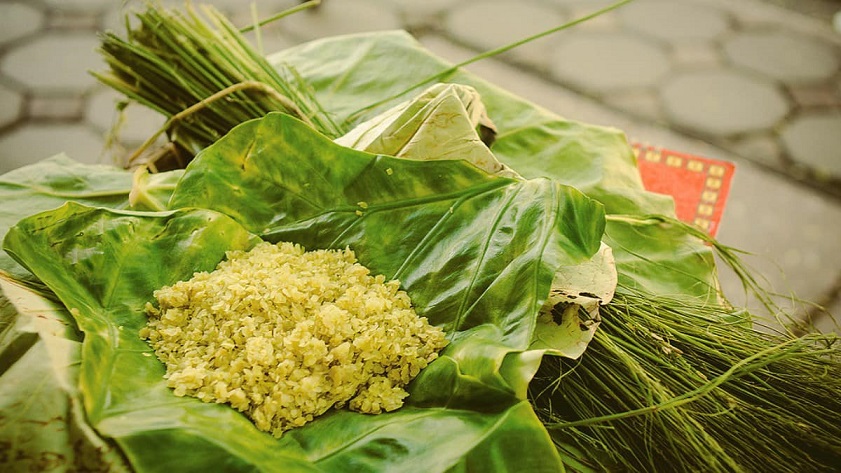
Tu Le green rice, a fragrant specialty in Mu Cang Chai, Yen Bai, Vietnam (Source: Collected)
More on: Northern Vietnamese food: Top 26 irresistible culinary gems
4. Guide for first-time visitors to Mu Cang Chai
4.1. Best time to visit
You can visit Mu Cang Chai, Vietnam anytime, as each season has its own charm. The two most beautiful times are:
- The water pouring season (late May – early June): Terraced fields shimmer like giant mirrors reflecting the sky, creating breathtaking scenery.
- The harvest season (September – October): Golden rice terraces blanket the hillsides, when photographers and tourists flock here.
4.2. Transportation
Mu Cang Chai, Vietnam is about 300 kilometers northwest of Hanoi. You can go from Hanoi to the former Yen Bai City by coach or limousine bus first, then rent a motorbike and go to Mu Cang Chai yourself. If you want to drive straight from Hanoi to Mu Cang Chai, just follow National Road 32 all the way northwest.
4.3. Accommodation
Most accommodation options in Mu Cang Chai, Vietnam are budget hotels, homestays, and traditional stilt houses, with a few eco-resorts emerging in recent years. Hotels are concentrated in the town center, offering basic amenities. Homestays and stilt houses allow tourists to enjoy local hospitality and immerse themselves in ethnic culture. They can easily be found near La Pan Tan or Tu Le.
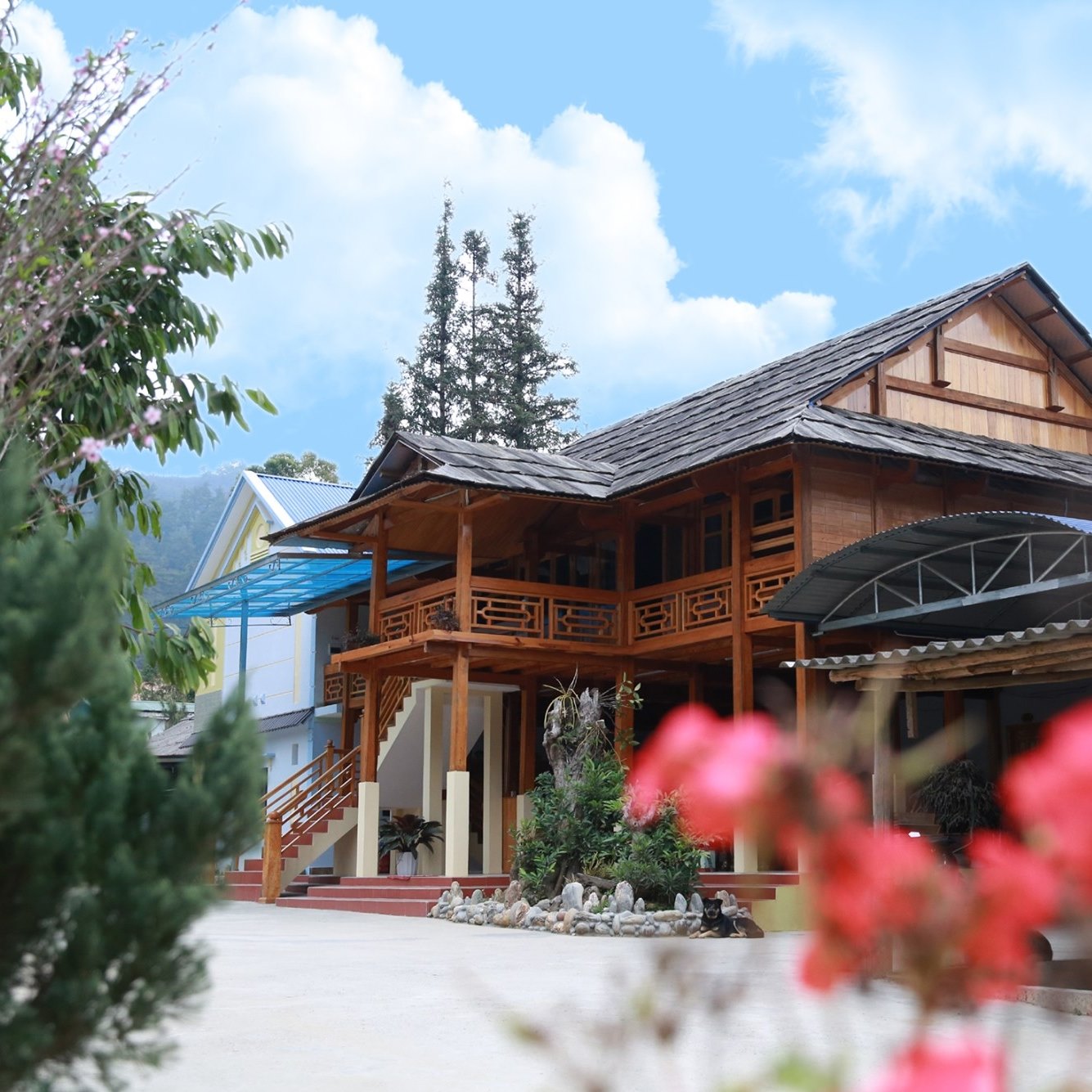
Stay in traditional stilt houses for a unique immersion in local life (Source: Collected)
4.4. Recommended itinerary
If you have two days in Mu Cang Chai, Vietnam, consider this suggested itinerary.
Day 1
- Explore Mam Xoi Hills
- Have lunch with regional specialties like grilled stream fish and five-colored sticky rice
- Explore Mo De Bamboo Forest
- Watch the sunset over Mong Ngua Hill
Day 2
- Admire sweeping views of rice fields and rugged cliffs from Kim Noi
- Experience paragliding at Khau Pha Pass
- Try salmon and sturgeon dishes from local fish farms in Khau Pha
- Relax at Tu Le Hot Springs
4.5. Important notes
For a rewarding journey to Mu Cang Chai, Vietnam, remember to:
- Not litter
- Refrain from giving money to local children
- Pack a light jacket, as the mountain weather can change quickly
- Carry all necessary documents (passport, driver’s license, vehicle registration)
- Drive carefully, maintain a steady speed, and stay alert on mountain roads
- Ask the locals for directions when in doubt
- Trek the trails around Tu Le rice fields and Khau Pha Pass if you enjoy trekking
Always protect the environment wherever you visit (Source: Collected)
More on: Mu Cang Chai or Sapa: Which is better for your trip?
FAQs about Mu Cang Chai, Vietnam
Where is Mu Cang Chai?
Mu Cang Chai was formerly under Yen Bai Province but is now part of Lao Cai Province. It lies about 300 kilometers northwest of Hanoi.
What is Mu Cang Chai most famous for?
Mu Cang Chai, Vietnam is renowned for its stunning rice terraces, which shift colors with the seasons. It is also home to the H’Mong ethnic people.
Is it cold in Mu Cang Chai?
Mu Cang Chai in northern Vietnam enjoys pleasantly cool weather throughout the year. Winter lasts from November to March, with temperatures that can drop close to 0°C.
Are there any festivals in Mu Cang Chai?
Yes. Around September each year, the “Mu Cang Chai Terraced Fields Festival” takes place, featuring harvest celebrations, cultural shows, and traditional games.
Can I do trekking in Mu Cang Chai?
Absolutely. Trekking is a highlight here, where tourists can explore terraced fields and ethnic villages. You can choose guided tours, which range from half-day walks to multi-day adventures.
Discover: Trekking in Vietnam: 13 BEST trails to satisfy your thirst for adventure
Mu Cang Chai, Vietnam is more than a scenic getaway – it is a place where nature and culture harmonize beautifully. From the golden rice terraces to the vibrant traditions of the H’Mong people, every visit offers a unique experience.
In addition to rice terraces, Vietnam is also home to stunning beaches and historic towns in Phu Quoc, Nha Trang, and Hoi An. These destinations also feature VinWonders, a series of dynamic entertainment complexes offering roller coasters, water parks, aquariums, safaris, shows, and much more.
For relaxation, the luxury accommodations of Vinpearl provide an ideal escape with refined designs and classy amenities.
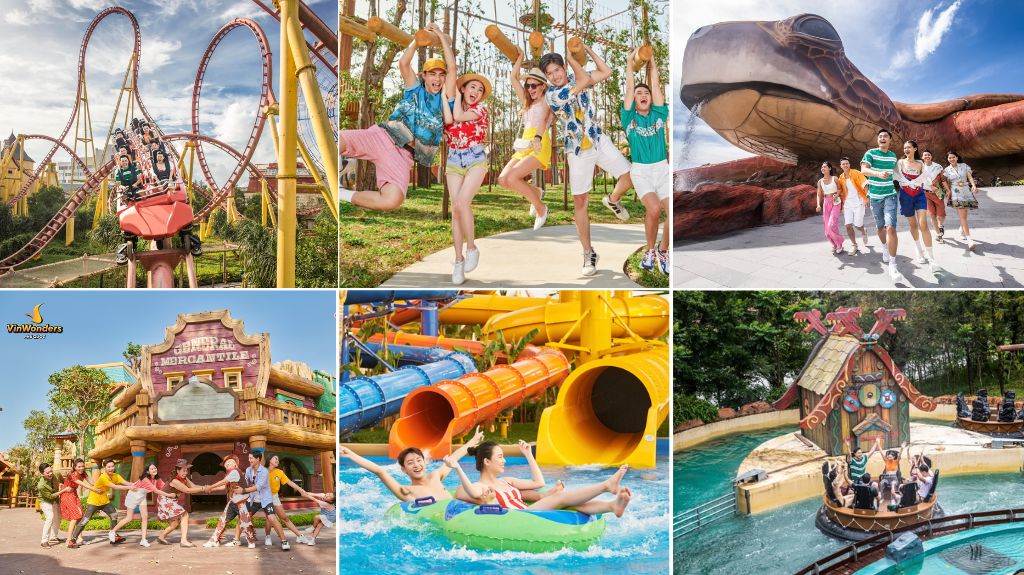
VinWonders Phu Quoc features hundreds of activities for all ages
Book VinWonders Phu Quoc ticket now
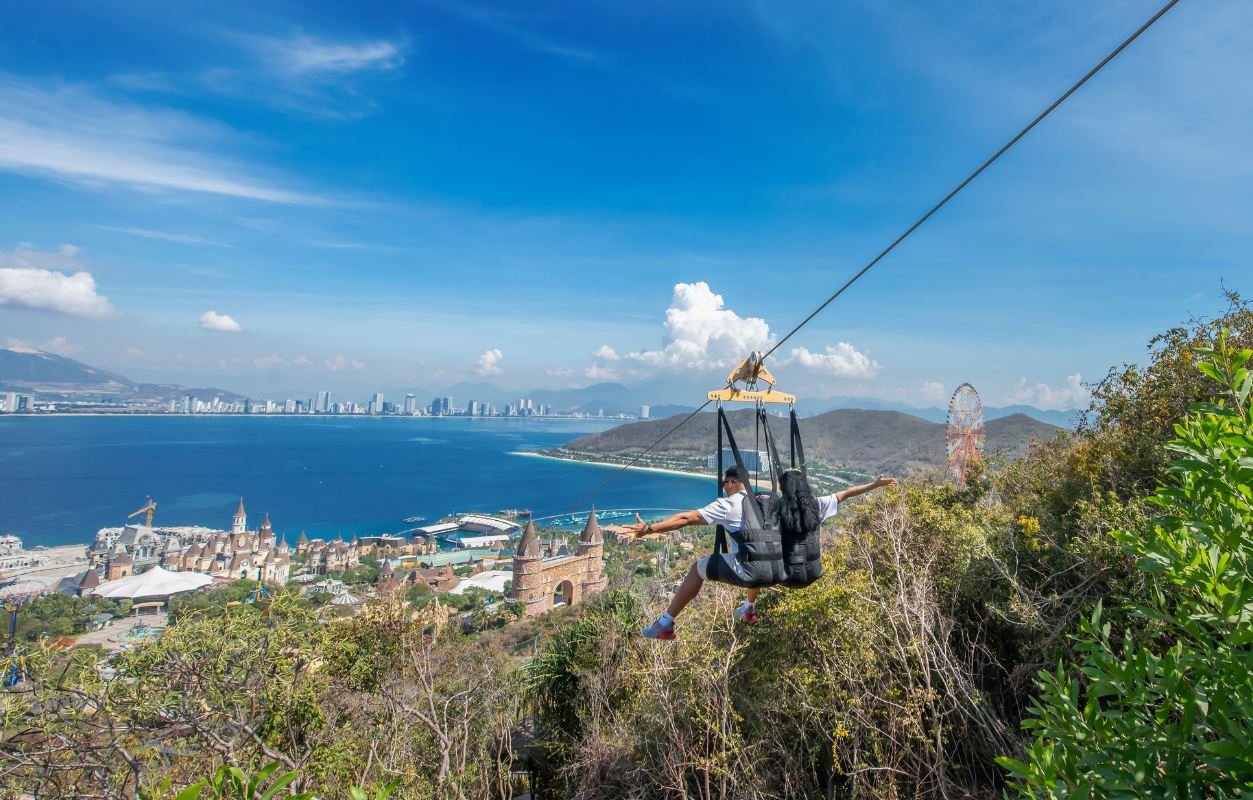
VinWonders Nha Trang combines thrilling games with water attractions
Book VinWonders Nha Trang ticket now

At VinWonders Nam Hoi An, tourists can explore Vietnam’s heritage
Book VinWonders Nam Hoi An ticket now
Best-selling products