en
en


 Tiếng Việt
  中文 (中国)
  한국어
한국어  Русский


 20/10/2025
 417 views
1. Overview of Tu Lan Cave
1.1. Location & directions
A true hidden gem in Quang Binh (now part of Quang Tri), Tu Lan Cave, better known as the Tu Lan Cave system, is situated just outside Phong Nha – Ke Bang National Park. This intricate cave system has captured the hearts of adventurers since it was first explored in 1992.
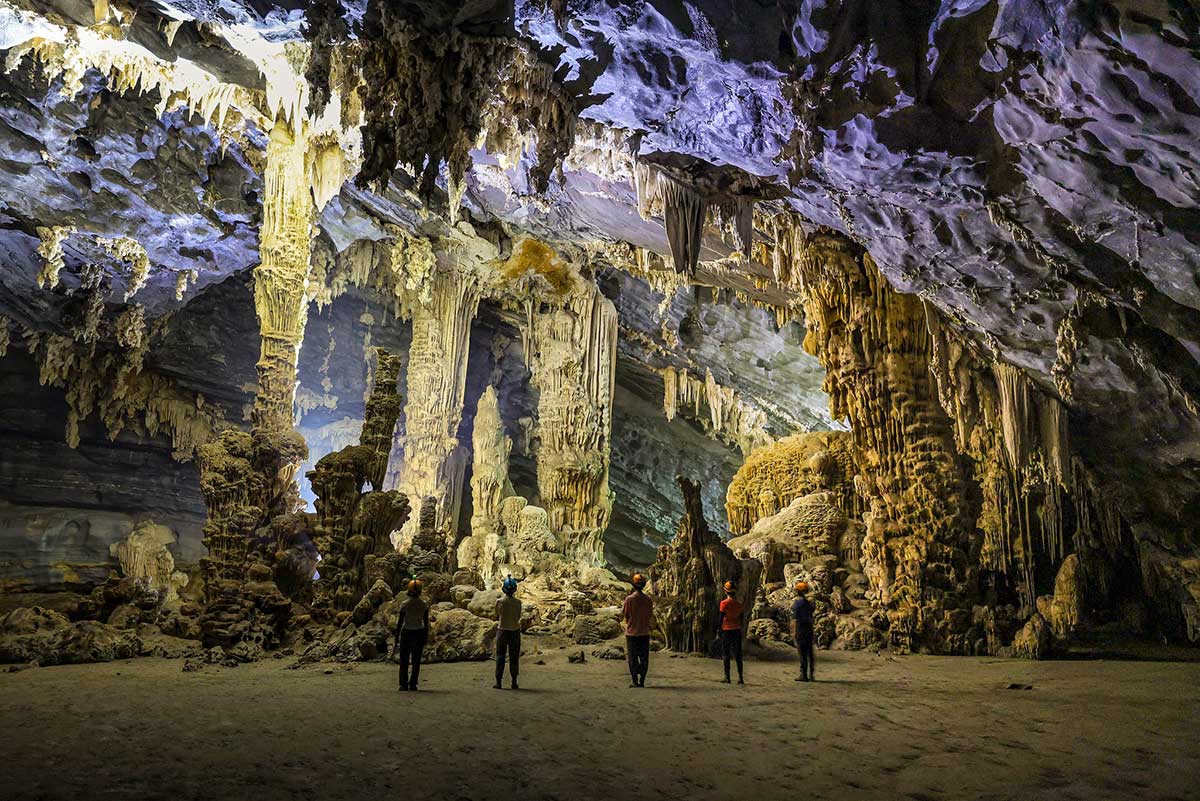
The Tu Lan Cave system is perfect for both seasoned spelunkers and curious beginners (Source: Collected)
The Tu Lan Cave system lies within a sprawling primary forest and limestone mountain range. It marks a point where eight valleys converge, their hidden waterways threading through each valley and forging a network of over 20 interconnected caves. That same underground river, called Rao Nan, originates from local communes, then carves its path through the karst landscape, creating the very passages you will soon explore.
To get to Tu Lan from Phong Nha, follow Provincial Road 20 (DT20) and turn left onto the Ho Chi Minh Trail. Stick to the trail for about 50 kilometers and turn left onto Provincial Road 559B (DT559B). This road will lead you to Tu Lan.
1.2. Origin
Tu Lan comes from an ancient language, where Làn represents the winding river Rao Nan vanishing into the cave mouths and Tú describes the rugged limestone peaks that loom over the valley.
Tu Lan Cave in Vietnam has already been a thing long before professional caving teams arrived on the scene. Pottery shards and charcoal, telltale signs that people were venturing in hundreds of years ago, were found around the area.
Fast-forward to 2009: a local fisherman named Dinh Hong Nham, while wandering deep into the jungle on his way to cast nets, stumbled across three major caves: Tu Lan, To Mo Lon, and To Mo Nho. That buzz caught the attention of professional spelunkers and naturally, formal expedition efforts were underway. British caver Howard Limbert, a team of fellow explorers, and National Geographic photographer Carsten Peter are some of the most notable individuals to uncover and introduce the Tu Lan Cave system to the world.
1.3. Geology and geomorphology
The Tu Lan Cave system is a wonderland made of karst, which has been sculpted over millions of years. The area’s geology is defined by towering limestone plateaus that were originally uplifted during tectonic shifts. As the water seeped through fractures, it slowly dissolved the carbonate rock, carving out an intricate underground network of passages and chambers.
The “younger” the caves, the deeper they are underwater. In contrast, the drier and older caves lie higher above the valley floor, forming the majestic peaks that you can admire. These spots also have larger and more spectacular stalactites and stalagmites, which are perfect for some amazing photo ops.
2. What are the top attractions of the Tu Lan Cave system?
The main attractions of the Tu Lan Cave system are none other than the caves.
The map of the Tu Lan Cave system (Source: Collected)
2.1. Hung Ton Cave
Put on a headlamp and prepare to descend a 15-meter ladder into Hung Ton Cave’s open entrance, where a pool greets you. Stretching nearly 500 meters long, this cave will take you on a journey through pools speckled with shell fragments and fossilized mollusks, evidence of ancient rivers or even prehistoric inhabitants. Once inside, the dry passage opens up, revealing soaring ceilings.
2.2. Ken Caves
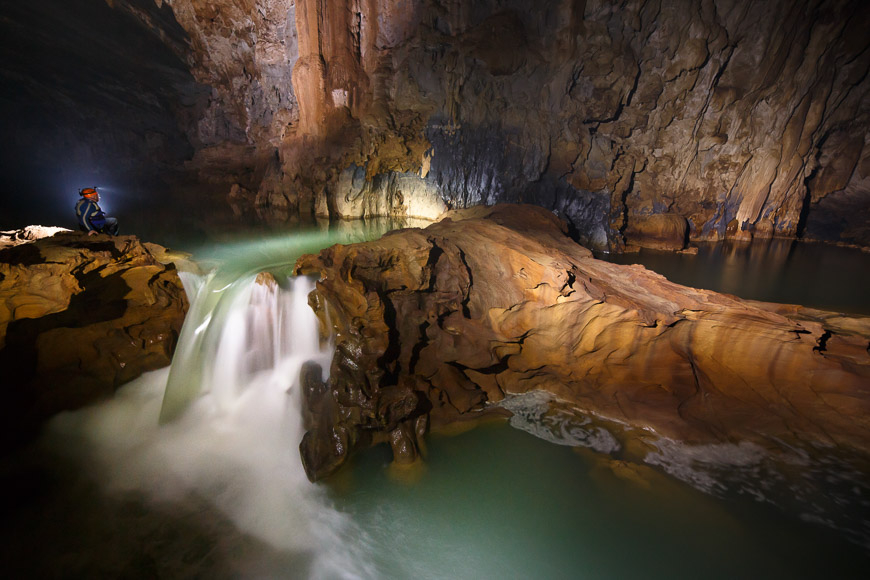
In 2010, surveyors wandered into Ken Caves to find a silent, waterless canyon, but returned in 2011 to discover a 5-meter-tall waterfall that spilled into the longest water cave in the entire Tu Lan Cave system. In the same exploration in 2011, National Geographic photographer Carsten Peter captured spellbinding photos of the interior stalactite formation, earning him multiple awards. The dry Ken Cave is like an “upper deck” discovered in 2018. Here, a 700-meter passage unfolds beneath a high ceiling adorned by coral-like formations.
2.3. Kim Cave
Discovered in 2012 by a Dutch traveler, Kim Cave is the thrill-seeker’s jackpot, where you can plunge into an underground river or climb up limestone walls. The cave’s passage opens to a 25-meter-wide corridor, spanning an impressive length of 1.2 kilometers.
2.4. Tu Lan Cave
Sharing the same name with the cave system, Tu Lan Cave is the largest cave in the entire system. It flaunts a 35-meter-wide floor and 30-meter-high ceiling, where clusters of stalactites resemble chandeliers in a grand banquet hall.
2.5. Chuot Cave
Oddly named Mouse Cave, this was the first cave discovered in the Tu Lan Cave system, way back in 1992. Here, you will notice a ceiling hovering 15-20 meters overhead and a corridor up to 30 meters wide. Its roomy interior and dry terrain have even made it a film set for Vietnamese blockbusters like Nguoi Bat Tu and Truyen Thuyet Ve Quan Tien.
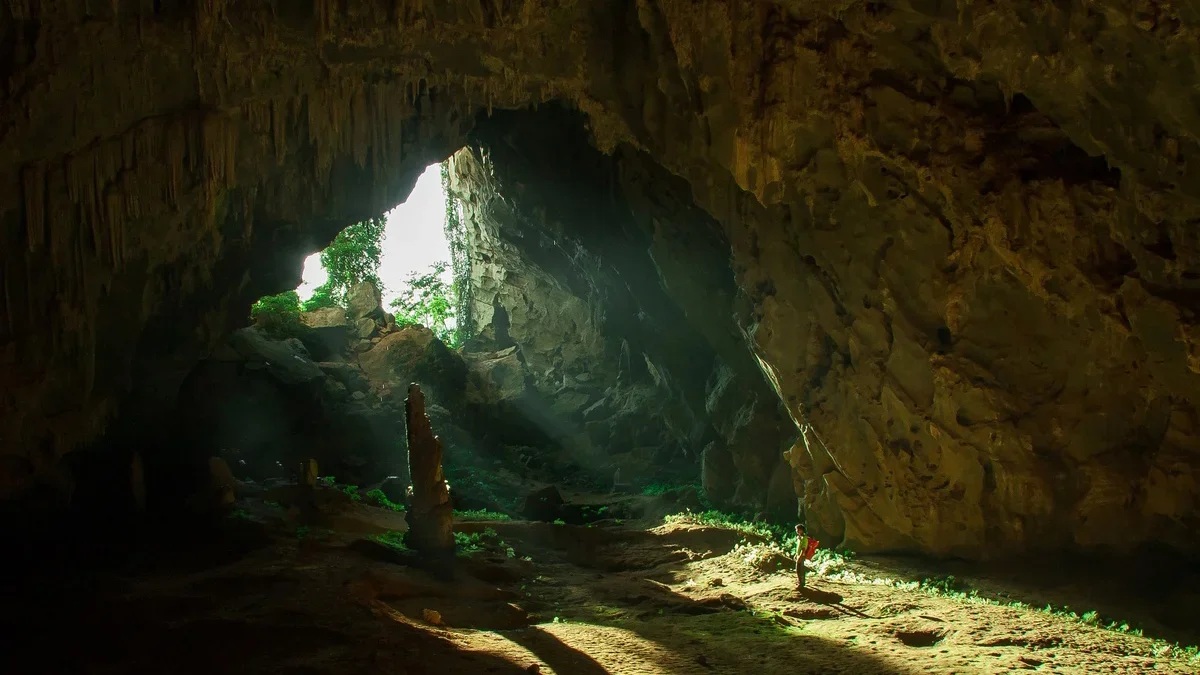
Chuot Cave is among the oldest caves in the Tu Lan Cave system (Source: Collected)
2.6. Tien Cave 1
Tien Cave 1 is likely the last cave in the system, with a jaw-dropping entrance standing nearly 100 meters tall. Its multi-tier interior has at least three levels. To reach the second tier from the first tier, you will need to scale a 12-meter ladder with secure fixings and help from professionals. The third tier remains a mystery. Explorers have only just begun sketching its contours, so there may be more than meets the eye.
2.7. Tien Cave 2
Unaired until 2015, Tien Cave 2 stretches over 2.5 kilometers and may connect to Tien Cave 1 via an underground stream. Fun fact: Tien Cave 2 is likely the oldest cave in the Tu Lan Cave system.
2.8. Song Cave
Resting atop a 200-meter-high hill above To Mo Valley, Song Cave spans around 600 meters and was formed with a unique terrain. Nowadays, scientists are still marking sections off to protect the vibrant stalagmites here, as well as collecting dripping-water samples to study climate change records of the area surrounding the Tu Lan Cave system.
2.9. Bi Mat Cave
A hidden gem in the truest sense of the term, Bi Mat Cave is only less than 200 meters long. This pocket-sized wonder has some very peculiar stalactites, almost like a secret that the cave system wants to keep for itself. Discovered by chance in 2013, Bi Mat Cave is proof that visitors and explorers have barely scratched the surface of the Tu Lan Cave system.
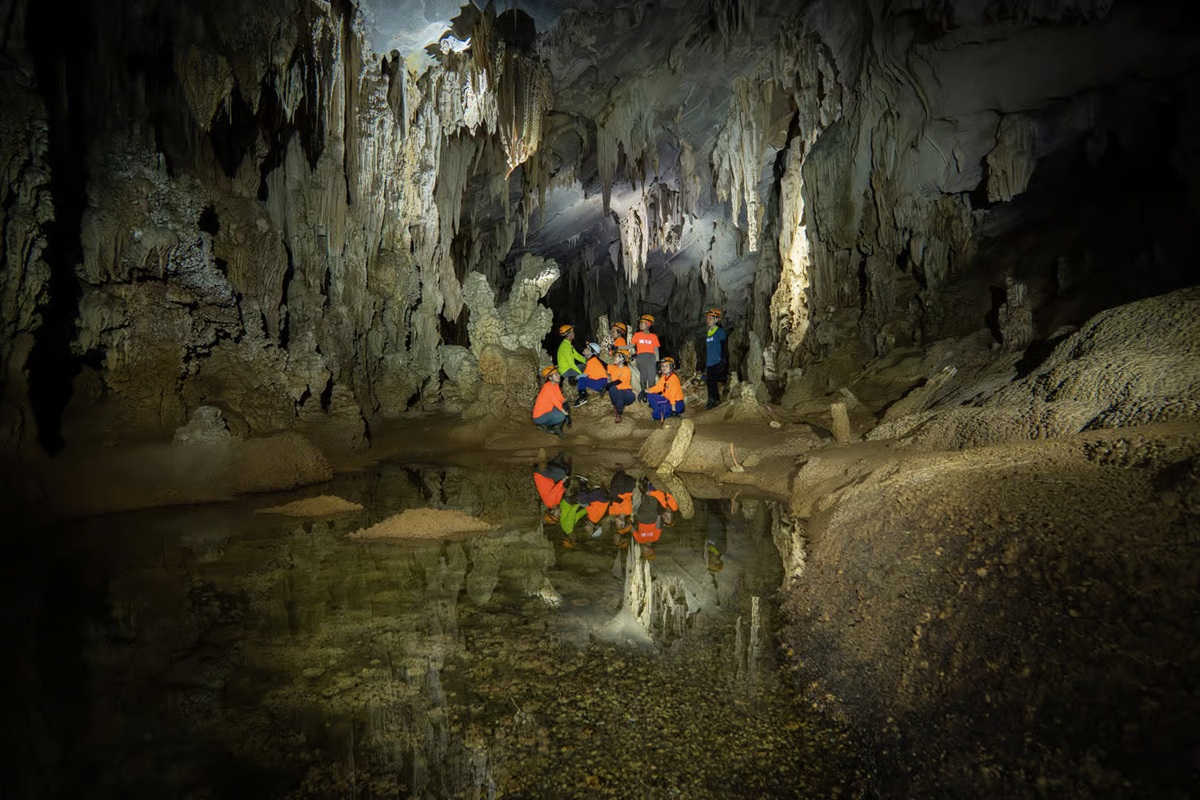
Bi Mat Cave will transport you to a different dimension (Source: Collected)
Check out other famous caves in Vietnam!
Best-selling products
![[Nha Trang Passport] - [Half-Day] - Cable Car + Aquafield Sauna (2 hours) + Tata Show](http://booking-static.vinpearl.com/tours/ef49c187eadf4177b425d2bb85a18b30_200dd4dda03e45e0a1add52e4acc11fa_NHT_1796_ve-xem-tata-show-vinwonders-nha-trang.jpg)
![[VinWonders Cua Hoi] - Indoor Games Zone](http://booking-static.vinpearl.com/tours/b952de18058e4a67a8ffa52f2039e7d2_1920-x-1080-double%20day%20sale%2077%20no%20text_vinwonders-nam-hoi-an-ve-vao-cua.jpg)
![[Grand World] Skydrop ticket](http://booking-static.vinpearl.com/tours/ed7c962747be42458f35c7b18340b901_A2-4-jpeg-2640-1687438608_grandworld.jpg)
![[Vinpearl Aquarium Times City] Entrance Ticket](http://booking-static.vinpearl.com/tours/8702a10bf2934d6299df65669a290679_aquarium%20times%20city%203_thuy-cung-vinpearl-aquarium-times-city.jpg)
![[VinWonders Nha Trang] – VIP Tour Experience](http://booking-static.vinpearl.com/tours/d1425f018b3e4d2d833374b5b52d8bb9_Hinh-anh-VinWonders-Nha-Trang-The-World-Garden-Lau-vong-canh-3x2-so-1_vinwonders-nha-trang-ve-vao-cua-sau-16h.jpg)
![[VinWonders Vu Yen] - [02 Adults + 01 Child] - Admission to Zoo + Games + Free Tote Bag](http://booking-static.vinpearl.com/tours/34488b227a3648e5b73d4aa6d6d36b46_DO__8153_vinwonders-nha-trang-ve-vao-cua-2-chieu.jpg)
![[VinWonders Cua Hoi] - Cable Car + Games on the Island](http://booking-static.vinpearl.com/tours/63c924f8521a4af981666076c5c3b0fe_VinWonders%20Cua%20Hoi%20Summer%20Say%20Hi%20Banner%201920x920px_vinwonders-nam-hoi-an-ve-vao-cua.jpg)
![[Vinpearl Harbour] - Tata Show Ticket & Round-trip Cable Car](http://booking-static.vinpearl.com/tours/3cbd16b8edc74f6abc7f7cfa0e91caec_VPHB_Photos15_vinwonders-nha-trang-ve-vao-cua-2-chieu.jpg)
![[VinWonders Phu Quoc] - Game Fastpass - Top 04 Rides](http://booking-static.vinpearl.com/tours/574c2b7798524c17a08f28feb80d45b5_fastpass%204%20games%20vwpq_vinwonders-phu-quoc-fastpass.jpg)
![[VinWonders Nha Trang] - 01-day Unlimited Admission Ticket | Free F&B Voucher](http://booking-static.vinpearl.com/tours/ccf23087ea0f419980c411d0e79c10fb_88c594a8352d49e7b031b9fbd5c5d27f_tro-choi-mao-hiem-o-vinpearl-nha-trang-thumb-1_vinwonders-nha-trang-khong-gioi-han-2-ngay_vinwonders-nam-hoi-an-ve-vao-cua.jpg)
![[Grand Park] Fairy Guardian](http://booking-static.vinpearl.com/tours/eeb9a602315342ccbc7965b29cfb0db0_Ảnh%20màn%20hình%202025-03-03%20lúc%2015.00.17_vinwonders-nam-hoi-an-ve-vao-cua.png)
![[Aquafield Ocean City] [Male] – VIP Membership (12 Months)](http://booking-static.vinpearl.com/tours/6ab10678fcbd4822a8fddb0590d3bcbf_0d72b531dd6749bbac2874b915ab0512_Screenshot_8_aquafield-nha-trang_aquafield-nha-trang.png)
![[Onsite service] - VIP Zoo Tour Vinpearl Safari Phu Quoc](http://booking-static.vinpearl.com/tours/ceb77f9174d845ebb2fd3dfe2b846066_3%20copy_vinwonders-nam-hoi-an-ve-vao-cua.jpg)
![[01 Day Combo] - Admission to VinWonders + Vinpearl Safari Phu Quoc](http://booking-static.vinpearl.com/tours/877d8a3289a246d18f95aa5cc414f6d6_27be58d21e244664bf34d11d72e77860_Castle_vinwonders-phu-quoc-ve-vao-cua_vinwonders-phu-quoc-ve-vao-cua.jpg)
![[Grand World Phu Quoc] - The Quintessence of Vietnam Show](http://booking-static.vinpearl.com/tours/f88e2be1139b4eada4043eb7f0e39362_THVN1_show-tinh-hoa-viet-nam.jpg)
![[Vinpearl Aquarium Times City] Entrance Ticket](http://booking-static.vinpearl.com/tours/e7fcffc8256546e8bdcfd5ccfbe69783_VINKE2%20(1)_vinke-ve-vao-cua-truc-tiep.jpg)
![[Vinpearl Harbour] - Admission to VinWonders (after 4:00PM) & Round trip cable car](http://booking-static.vinpearl.com/tours/4b2d76bbde1f4c54a43370680d311928_Hinh-anh-VinWonders-Nha-Trang-The-World-Garden-Lau-vong-canh-3x2-so-1_vinwonders-nha-trang-ve-vao-cua-sau-16h.jpg)
![[Aquafield] - Round-trip Cable Car + Korean Sauna + Body Scrub](http://booking-static.vinpearl.com/tours/d00bc95eb402434c8f4a4756c2a3ad3d_Akoya-spa-Villa-Vinpearl-Resort-Spa-Phu-Quoc-12_aquafield-nha-trang.jpg)
![[-50%] [VinWonders Wave Park & Water Park] Admission Ticket for 2 Parks](http://booking-static.vinpearl.com/tours/f949b31af919495c9b4e111237642763_358600999_111579731994757_433244877993048710_n_vinwonders-ha-noi.jpg)
![[VinWonders Cua Hoi] - GoKart F1 Racing Car (10:00 AM - 8:00 PM)](http://booking-static.vinpearl.com/tours/aa8379d6db3a4f5c9df6d78d53177c35_11-E-Ticket-Vinwonder-Cua-Hoi_23072024111407_vinwonders-nam-hoi-an-ve-vao-cua.jpg)
![[Aquafield] - [Male] - 4-hour Korean Sauna](http://booking-static.vinpearl.com/tours/94abeb55e3d54efbac23f7a862445389_0d72b531dd6749bbac2874b915ab0512_Screenshot_8_aquafield-nha-trang_aquafield-nha-trang.png)
![[Nam Hoi An Signature] VinWonders Ticket + VIP Safari Package | FREE Merchandise Gift](http://booking-static.vinpearl.com/tours/881ac31c4a2b4687a59f412901e85b2c_VIN2725_-08746%20(2)_vinwonders-nam-hoi-an-ve-vao-cua.jpg)
![[VinWonders Nam Hoi An] - Standard Admission Ticket](http://booking-static.vinpearl.com/tours/81813f8ced2c466e82ad53f1c29c1904_tour-kham-pha-van-hoa-viet-vinwonders-nam-hoi-an-668ca102bcc29_vinwonders-nam-hoi-an-ve-vao-cua.jpg)
![[Aquafield Ocean City] [Male] – Standard Jjimjilbang Sauna Ticket](http://booking-static.vinpearl.com/tours/0be276c684454e8d969c373f35f6be97_DSC_2127_11zon_aquafield-nha-trang.jpg)
![[Grand World Phu Quoc] [Ultimate Combo] - Water Taxi + Teddy Bear Museum + Grand Show](http://booking-static.vinpearl.com/tours/e31a9e66b5444808bba3e3114d195559_VENICE%20ALL%20IN%20ONE%20KV%20(1)_ve-bao-tang-gau-teddy-bear.jpg)
![[VinWonders Vu Yen] - Admission Ticket to Zoo + Games + Buffet](http://booking-static.vinpearl.com/tours/b2cd8cf6b14c48459b21393e14d73163_vwvy%201_vinwonders-nha-trang-ve-vao-cua-2-chieu.jpg)
![[Hon Tam] - [Zone A] - Mud Bath + Lunch Combo](http://booking-static.vinpearl.com/tours/5debd1efb6d34e42a88efa65354c8c72_ebdde60fd9a44539afe75c9338ec8a3d_ảnh%205_tam-bun-hon-tam.jpg)
![[Aquafield] - [Male] - Round-trip Cable Car + 4-hour Korean Sauna](http://booking-static.vinpearl.com/tours/625529980f3249e6b0491cddfc30db43_297be2477c5847748ef3bc08603ebf90_aqf%204_aquafield-nha-trang.jpg)
![[Onsite service] - Premium VIP Zoo Tour Vinpearl Safari Phu Quoc](http://booking-static.vinpearl.com/tours/ff1e4b66ec1b46edad0c0460144e70ad_VINPEARL%20SAFARI%20PHU%20QUOC%20%20(51)_vinwonders-nam-hoi-an-ve-vao-cua.jpg)
![[Aquafield] - [Female] - Round-trip Cable Car + 4-hour Korean Sauna](http://booking-static.vinpearl.com/tours/c3bae84e472b42078ca3ff6f28d55d80_1c5968412aca409fa8571c88cc85a4ba_aqf%205_aquafield-nha-trang.jpg)
![[Grand Park] Dream Garden Outdoor Games Pass](http://booking-static.vinpearl.com/tours/35566b714d4c4dd9802a6bf4650ac2b1_khu-vui-choi-cua-hoi-9_vinwonders-nam-hoi-an-ve-vao-cua.jpg)
![[Nha Trang Passport] – [01 day] – Snorkeling Tour + Lunch & Mud Bath at Hon Tam + Vinpearl Harbour + Tata Show](http://booking-static.vinpearl.com/tours/f6b1826759674c9c9d3f074e03fa04ba_snorkeling%201_vinwonders-nha-trang-ve-vao-cua-2-chieu.jpg)
![[Aquafield] - 2-hour Aquafield Sauna + 30-min Spa](http://booking-static.vinpearl.com/tours/b0bf65880af449f39ea19fa0acbb94d5_34d71a9c3e6b4b7484f9d7cbbc935c26_200dd4dda03e45e0a1add52e4acc11fa_NHT_1796_ve-xem-tata-show-vinwonders-nha-trang_ve-xem-tata-show-vinwonders-nha-trang.jpg)
![[VinWonders Nam Hoi An] [Sunset Premium] Admission Ticket & Buggy Ride & VIP Safari Package & Afternoon Tea Set](http://booking-static.vinpearl.com/tours/3a1e510945b4421d861fede29a1b3e58_xE3mXzIVwTdZRf7M8zZfHqHIPqV17uyEOzL8PaUQ_vinwonders-nam-hoi-an-ve-vao-cua.jpg)
![[-10%] - VIP River Safari Ticket*](http://booking-static.vinpearl.com/tours/5d3ee19e977446be8917a34697bb9443_ece6e58a02fd48de9eba9d3f4689f77a_Hinh-anh-VinWonders-Nam-Hoi-An-River-Safari-3x2-so-1%20(1)_vinwonders-nam-hoi-an-ve-vao-cua_vinwonders-nam-hoi-an-ve-vao-cua.jpg)
![[VinWonders Phu Quoc] - Standard Entrance Ticket](http://booking-static.vinpearl.com/tours/0dd25afc61ad45d48486bbd3b9c8a96a_tieu%20chuan%201_vinwonders-phu-quoc-ve-vao-cua.jpg)
![[-30%] The Quintessence of Vietnam Show](http://booking-static.vinpearl.com/tours/6cee2bcb52a447009f64771095d03c9e_Screenshot%202024-10-22%20at%2014.49.18_ve-bao-tang-gau-teddy-bear.png)
![[Grand World Phu Quoc] - Water Taxi Boat + Teddy Bear Museum](http://booking-static.vinpearl.com/tours/add2e0908faa4289b555856472b181be_VENICE%20ALL%20IN%20ONE%20KV%20(1)_ve-bao-tang-gau-teddy-bear.jpg)
![[VinWonders Nam Hoi An] Direct admission & Buggy Ticket Combo](http://booking-static.vinpearl.com/tours/6c002e3ea71642f38eda8efa8654e5e4_vwnha0_vinwonders-nam-hoi-an-ve-vao-cua.jpg)
![[VinWonders Nha Trang] - Admission to VinWonders after 4:00 PM](http://booking-static.vinpearl.com/tours/de2da6d471b34297ab13cb26ef2da9a0_Hinh-anh-VinWonders-Nha-Trang-The-World-Garden-Lau-vong-canh-3x2-so-1_vinwonders-nha-trang-ve-vao-cua-sau-16h.jpg)
![[50% Student Discount] – VinWonders Admission Ticket](http://booking-static.vinpearl.com/tours/43126c168bb04853bf7c93e197db724a_Banner%201200x628_vinwonders-nha-trang-ve-vao-cua-2-chieu.jpg)
![[Aquafield] - [Female] - 4-hour Korean Sauna](http://booking-static.vinpearl.com/tours/0e6fe24c37b84cb799b94dae70578054_aqf-suong-may-2048x1365_aquafield-nha-trang-xong-hoi-chuan-han.jpg)
![[Vinpearl Harbour] - Round-trip Cable Car Ticket | Free Wishing Coin Voucher](http://booking-static.vinpearl.com/tours/e584c2f486d246c5820a19f519d184a4_VPHB_Photos15_vinwonders-nha-trang-ve-vao-cua-2-chieu.jpg)
![[Hon Tam] - [Zone A&B] - Full island entertainment + Mud Bath Zone A + Lunch](http://booking-static.vinpearl.com/tours/af991883d63f4133b62b76551ba2444d_tam-bun-dao-hon-tam_httpswwwhontammudbathvnwp-contentuploadssites2720190625-3-2200x700jpg.jpg)
![[VinWonders Vu Yen] - Admission Ticket to Games zone (after 5:00 PM)](http://booking-static.vinpearl.com/tours/edbd3eb4bc9848aead9940e0f5aa050d_fa21c62dfa9644ada0c3fce89b3e79ff_DO__8711_vinwonders-vu-yen-vuon-thu-khu-tro-choi-sau-17h.jpg)
![[Grand World] Carousel Ride](http://booking-static.vinpearl.com/tours/0d6a4bcfc2a54fd4aa9df0b38ae8c7b6_A2-4-jpeg-2640-1687438608_grandworld.jpg)
![[Buggy Combo] - VinWonders Phu Quoc + Buggy + Free Ice Cream](http://booking-static.vinpearl.com/tours/0fc52a574094489da612d0f36bb4b1e6_buggy%20kem_vinwonders-phu-quoc-ve-vao-cua-tet-vi-vu.jpg)
![[Aquafield] - [Male] - 4-hour Korean Sauna](http://booking-static.vinpearl.com/tours/4ae60d29ea264f8fab17beb6b4415502_aqf-da-muoi_aquafield-nha-trang-xong-hoi-chuan-han.jpg)
![[Hon Tam] - [Zone A] - Standard Mud Bath](http://booking-static.vinpearl.com/tours/9db66a615a7d4f119316b338afff30cb_tam-bun-dao-hon-tam_httpswwwhontammudbathvnwp-contentuploadssites2720190625-3-2200x700jpg.jpg)
![[Aquafield Ocean City] – VIP Membership (12 Months)](http://booking-static.vinpearl.com/tours/3c2f7ab0ed374cb1bbdb2e54e6d6eb9a_e1f2756dfec346f3bb3b16e296b3b166_Screenshot_5_aquafield-nha-trang_aquafield-nha-trang.png)
![[VinWonders Phu Quoc] - Entrance Ticket + Gate Fastpass + Buggy](http://booking-static.vinpearl.com/tours/de2a24896b0e49469fa1e89e93aa5314_1920x1080%20VWPQ%20KV_vinwonders-phu-quoc-standard-entrance-ticket.jpg)
3. What to do on your adventure to the Tu Lan Cave system?
3.1. Admire unique stalactites
Have you ever seen natural sculptures that look like rice terraces or conical towers? Tu Lan’s dry caves, like Song Cave and the dry Ken Cave, are full of extraordinary flowstones. Beneath ceilings that gleam, you can admire each and every contour while capturing them with your trusty camera.
3.2. Explore stunning waterfalls
There is a hidden river flowing through the caves and it will take you from valley to valley while showing you the cascading falls inside the cave mouth. These waterfalls all empty into a pool bordered by ancient trees and limestone cliffs.
3.3. Swim through underground rivers
Those who want to test their limits can plunge into an underground stream. Hung Ton Cave, Kim Cave, and Tu Lan Cave all feature sections for you to kick, float, and sometimes crawl beneath dripping roofs. When your guide calls for total blackout – helmets off, lights out – that is when you can really become one with nature.
3.4. Trek through forest valleys
Beyond the caves, eight pristine valleys braid together for something more relaxing and healing for visitors. Most of the water caves end in a waterfall spilling into a sapphire-blue pool, which makes for a picturesque campground. Here, you can fall asleep under a blanket of stars, then wake to birdsong and the untouched beauty of nature.
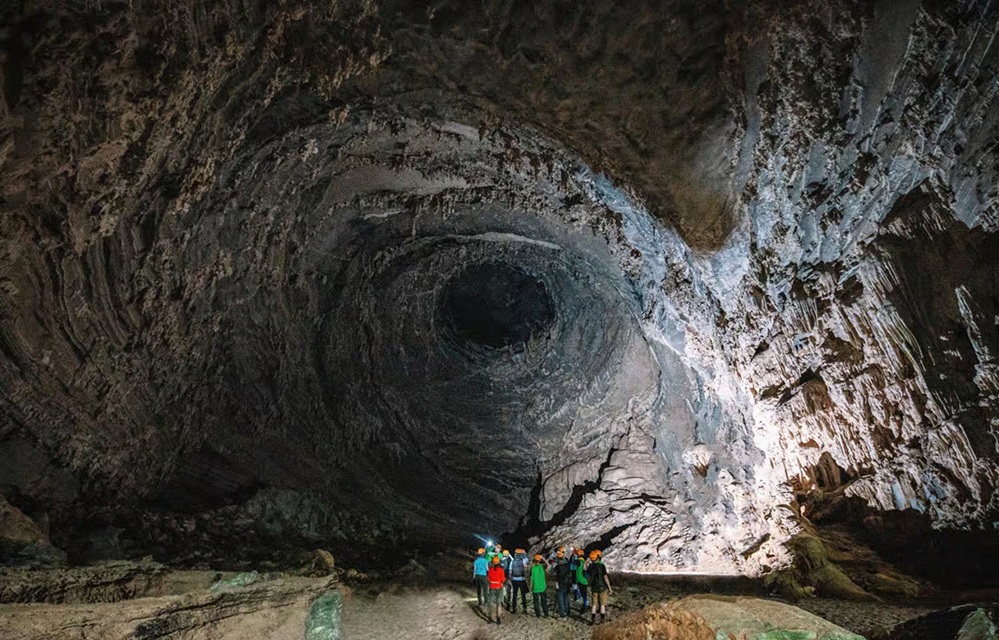
The Tu Lan Cave expedition is a perfect option for an unplugged vacation (Source: Collected)
Check out more things to do in Phong Nha!
4. Popular Tu Lan Cave tours
Since 2011, with the official roll out in 2014, there have been many small-group, camp-style expeditions into the Tu Lan Cave system. Below is a quick rundown of the duration and price, for each of the tour options:
- Tham hiem Tu Lan (TL4): 6 days 5 nights, 18 million/pax
- Tham hiem Hang Tien (HT3): 4 days 3 nights, 9.9 million/pax
- Kham pha Tu Lan (TL3): 4 days 3 nights, 9.5 million/pax
- Chinh phuc Hang Tien (HT2): 3 days 2 nights, 7.2 million/pax
- Kham pha Hang Tien – Tu Lan (HTL): 2 days 1 night, 5.2 million/pax
- Thu suc Tu Lan (TL2): 3 days 2 nights, 7 million/pax
- Kham pha Hang Tien trong ngay (HT1): 1 day, 2 million/pax
- Trai nghiem Tu Lan (TL1): 1 day, 1.8 million/pax
- Gia dinh trai nghiem Tu Lan (TF1): 1 day, 2.3 million/pax
- Gia dinh kham pha Tu Lan (TF2): 2 days, 6.5 million/pax
In these adventures, the possibilities are endless. Trekking in valleys, swimming along underground rivers, and climbing limestone boulders will surely test your limits. By day, you can marvel at cascading waterfalls surging into emerald basins. When night comes, you can gather around the campfire on soft, sandy riverbanks or share a home-cooked meal with a local family.
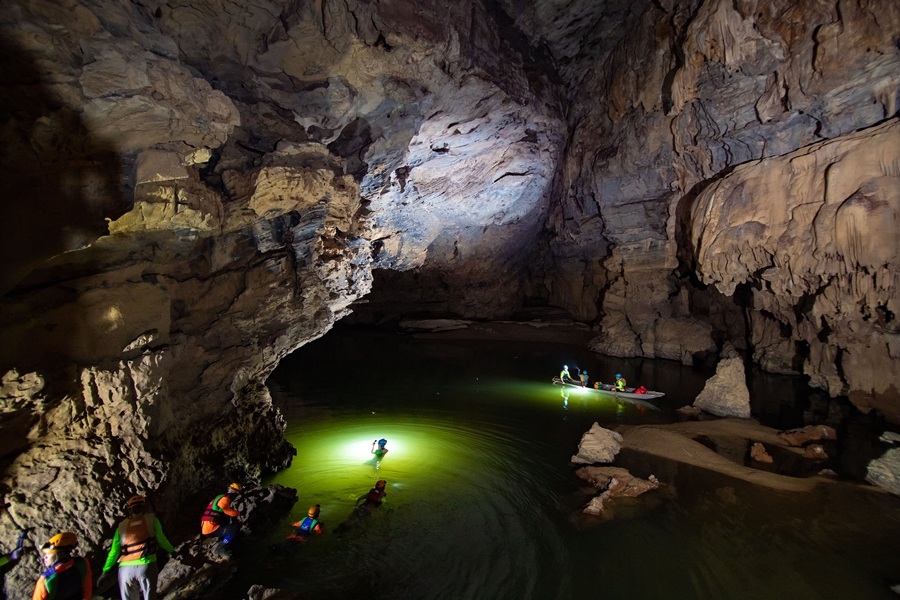
There are many Tu Lan Cave tour options (Source: Collected)
*Note: The information in this article is for reference only and may change over time.
5. Essential information before taking Tu Lan Cave tours
5.1. When to go?
Generally, the tour season runs from mid-November through mid-September. From mid-September through mid-November is when it rains a lot and water caves are closed for safety reasons.
Tu Lan’s ever-changing climate means every season has its own charm. From Mid-November to March, there are cool days for trekking and caving. From April to May, it gets warmer, which brings flowers and butterflies in the area out to play. From June to August is the hottest period, yet most of your journey is under canopy or underground, so it will not be a problem.
5.2. What to prepare?
Packing for the Tu Lan Cave tour is all about balancing protection, comfort, and lightness:
- Clothing and footwear like quick-dry, long-sleeve trekking shirts and trousers, lightweight windbreakers, camp clothes, sturdy, quick-drain hiking shoes, socks, swimwear, and more.
- Personal items with sunglasses, a brimmed hat, sunscreen, and mosquito repellent. Towels, eco-friendly toiletries, medications, a power bank, an ID/passport, and a first-aid kit should also be included.
- A camera and tripod will be the trusty friend that helps you document your amazing trip.
Technical and camp gear like helmets, headlamps, tents, sleeping bags, life jackets, water filters, satellite phones, and more will be provided in the tour.
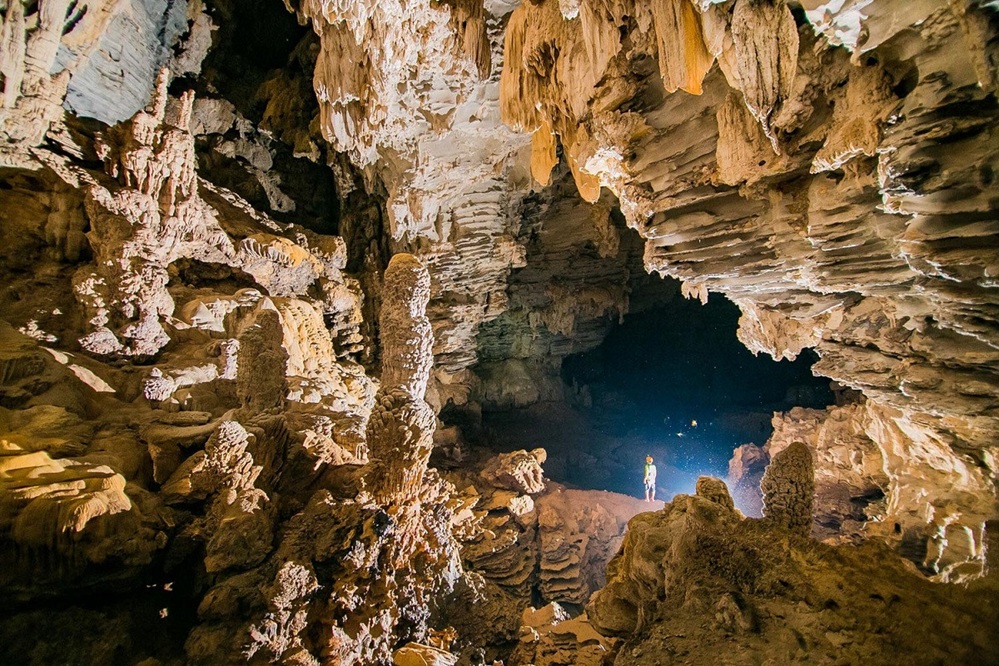
Packing for Tu Lan is all about balancing protection, comfort, and lightness (Source: Collected)
5.3. What to note?
The Tu Lan Cave system is not your average walk in the park. It is a remote, rugged arena of challenges, so a bit of prep goes a long way.
- Keep your satellite phone for emergencies only.
- Rescue response from outside medical teams can take from 30 minutes to 2 hours, so strict safety protocols and on-site first-aid are in place.
- Be honest with self-assessment of your fitness and health when booking tours. Also, you should update your health condition 45 days with the tour provider before the tour date.
- The terrains include steep climbs, river crossings, ladder climbs, and dark swims.
6. FAQs about the Tu Lan Cave system and its tours
6.1. Does Tu Lan’s weather change during the year?
Yes. Above ground, you will see seasonal swings, from cool, dry weather during November – March to heavy rain and rising water during September – November. Inside the caves, temperatures stay cool year-round.
6.2. Are Tu Lan Cave tours suitable for beginners?
Absolutely. While many tours include swimming in dark underground rivers, basic swimming skills plus a life jacket are enough. No prior rope-work or climbing experience is required. Other than that, there are plenty of other activities that are more on the relaxing side of things.
6.3. Where can I book a tour?
You can book any Tu Lan cave tour on the website of Oxalis Adventure.
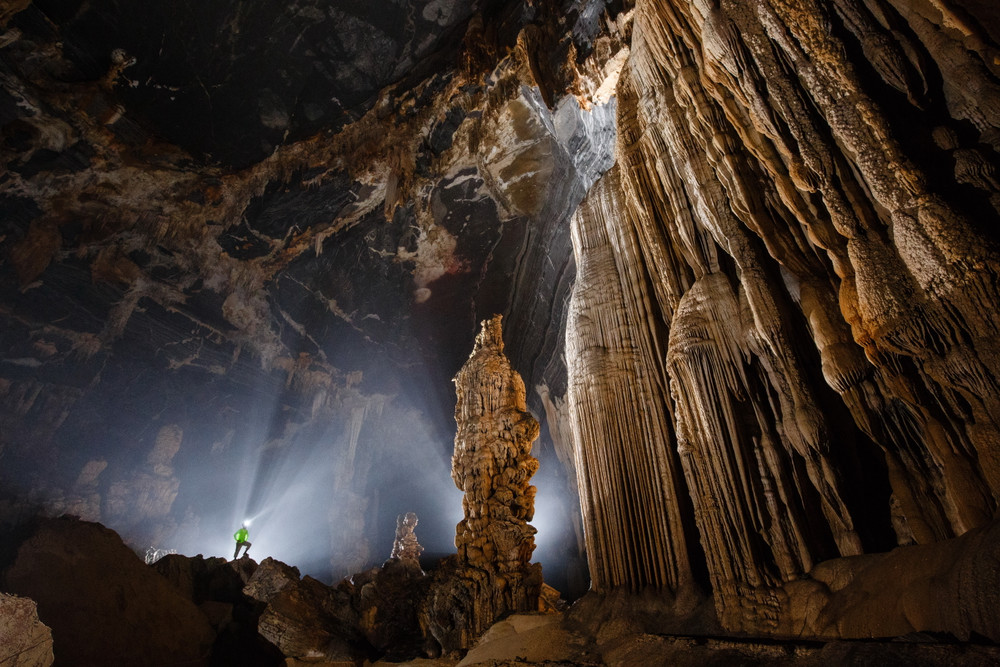
Oxalis Adventure is the tour operator of Tu Lan (Source: Collected)
6.4. Should I bring food and drinks?
Meals and drinking water are provided throughout the tour. If you have special dietary needs, let the tour provider know in advance. Packing snacks like energy bars, nuts, or dried fruit can keep your energy up between campsites.
6.5. Should I bring a GPS device?
No GPS is needed. All navigation and safety gear will be provided, and the experienced guides will lead every step of the way. All you need to do is listen to their instructions and follow them closely.
Read more: Phong Nha’s weather: Must-know information before your trip
The Tu Lan Cave system is true evidence of how beautiful Vietnamese nature can be, weaving together soaring limestone walls, hidden rivers, and lush valleys into one epic adventure. Each moment here will spark awe and ignite your sense of wonder.
On the topic of Vietnam’s natural beauty, don’t forget to explore Vietnam’s other gems, from the sun-kissed beaches of Phu Quoc to the vibrant bay of Nha Trang and the lantern-lit streets of Hoi An. Along the way, you can indulge in endless thrills at the entertainment complexes of VinWonders and unwind in style at a hotel or resort of Vinpearl.

VinWonders Phu Quoc will give you a slice of paradise
Book VinWonders Phu Quoc ticket now
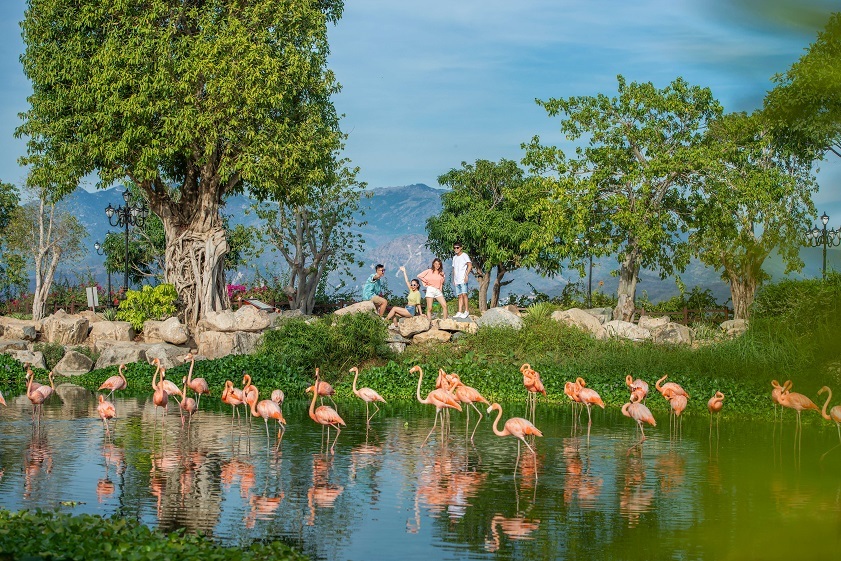
Enjoy Nha Trang to the fullest at VinWonders Nha Trang
Book VinWonders Nha Trang ticket now

VinWonders Nam Hoi An embraces the cultural identity of the ancient town
Book VinWonders Nam Hoi An ticket now
Best-selling products