en
en


 Tiếng Việt
  中文 (中国)
  한국어
한국어  Русский


 13/11/2023
 1.922 views
- 1. Significance of pickled vegetables in Vietnamese cuisine
- 2. How are Vietnamese pickled vegetables made?
- 3. Top 6 Vietnamese pickled vegetable recipes to enhance your meal
- 3.1. Vietnamese pickled mustard greens (dua cai muoi)
- 3.2. Vietnamese pickled carrots and daikon (dua chua)
- 3.3. Vietnamese pickled onions (cu kieu muoi)
- 3.4. Vietnamese pickled cabbage (cai bap muoi)
- 3.5. Vietnamese pickled eggplants (ca muoi)
- 3.6. Vietnamese pickled bean sprouts with garlic chives (dua gia he muoi)
- 4. Where to buy Vietnamese pickled vegetables?

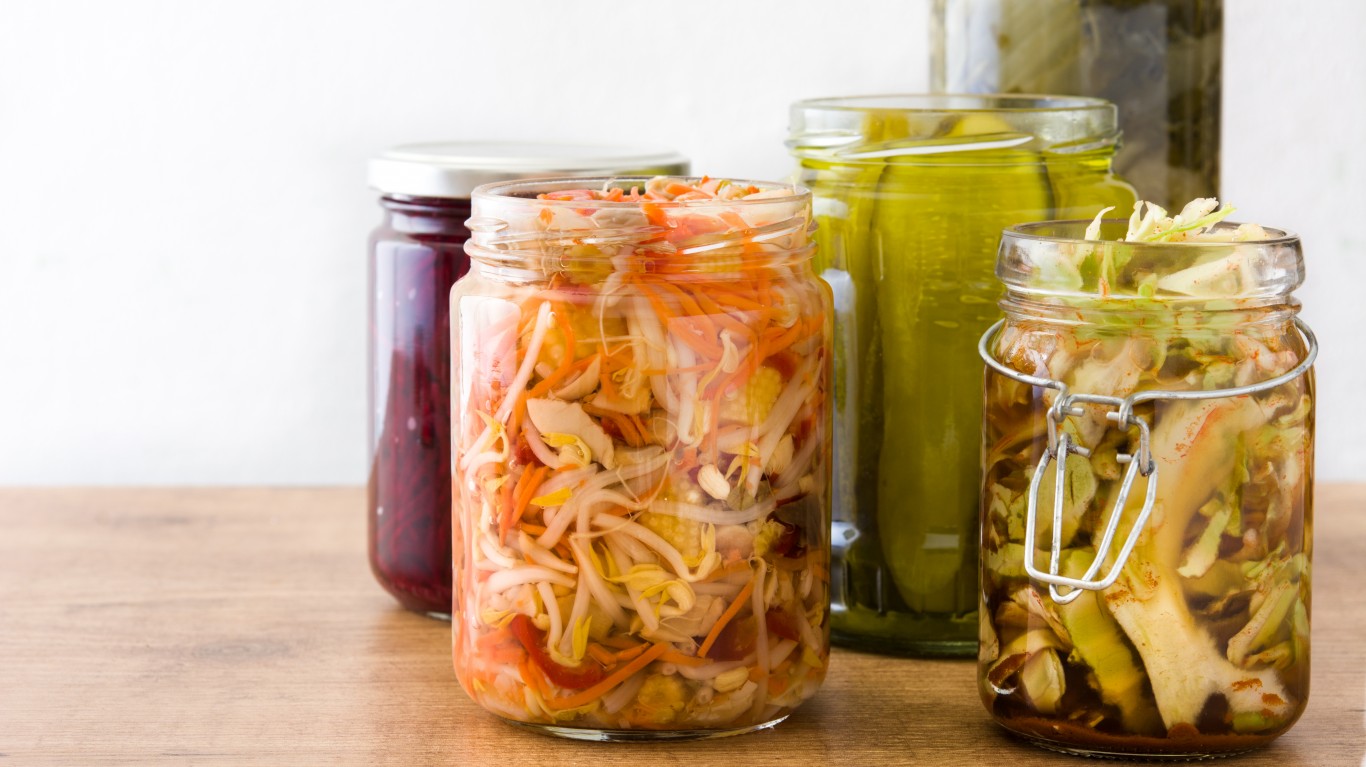
Vietnamese pickled vegetables – A refreshing side dish for your meal (Source: Collected)
When exploring the world of Vietnamese food, a dish that is often overlooked but plays an essential part is Vietnamese pickled vegetables. Let’s look into the process of making this delightfully tangy dish and explore the most common pickled vegetable recipes that will add a burst of flavor to your delicious meal.
1. Significance of pickled vegetables in Vietnamese cuisine
Vietnamese pickled vegetables are a delightful dish made by fermenting various Vietnamese vegetables, resulting in a refreshing and mildly sweet-and-sour taste. These pickled treats are not only beloved by the locals but also find favor among people in many other countries. They are prepared by allowing the vegetables to undergo lactic acid fermentation, which imparts a distinct tangy flavor.
Some common vegetables used for pickling include daikon radishes, carrots, cucumbers, and green papaya. The options are endless, depending on regional preferences and seasonal availability. Other notable varieties include mustard greens, Chinese onions, cabbage, eggplants, and bean sprouts.
Vietnamese pickled vegetables are usually consumed as a side dish accompanying various main dishes to enhance the overall dining experience. They serve as a palate cleanser, offering contrasting flavors and textures that complement the main course. For example, during the Lunar New Year, banh chung is often served with pickled Chinese onions. A heart-warming bowl of crab soup is often served with pickled eggplants. The list goes on.

A jar of pickles – a familiar sight in many Vietnamese households (Source: Collected)
2. How are Vietnamese pickled vegetables made?
Pickling is a versatile preservation method used to make Vietnamese pickled vegetables. This is an excellent way to keep vegetables and allow them to be enjoyed over an extended period. If you are looking for a way to make your own pickled veggie dish, here are three popular techniques regarding how to make Vietnamese pickled vegetables:
- Salt compression: Vegetables are salted in a container, weighed down with a wooden board, and left to ferment for 15-20 days, producing a tangy final dish of pickled veggies.
- Brine pickling: Boiled water with salt makes this magical brine, with 30-70 grams of salt per liter of water. Vegetables are submerged beneath a snug lid for around 10 days, producing a lovely sourness.
- Quick pickling: Similar to brine pickling, this quick Vietnamese pickled vegetable recipe uses lower salt content and turns veggies sour in 2-3 days. However, due to the shorter brining period and low acidity, harmful bacteria and nitrites can cause health problems when consumed, so we advise that you avoid this pickling method.
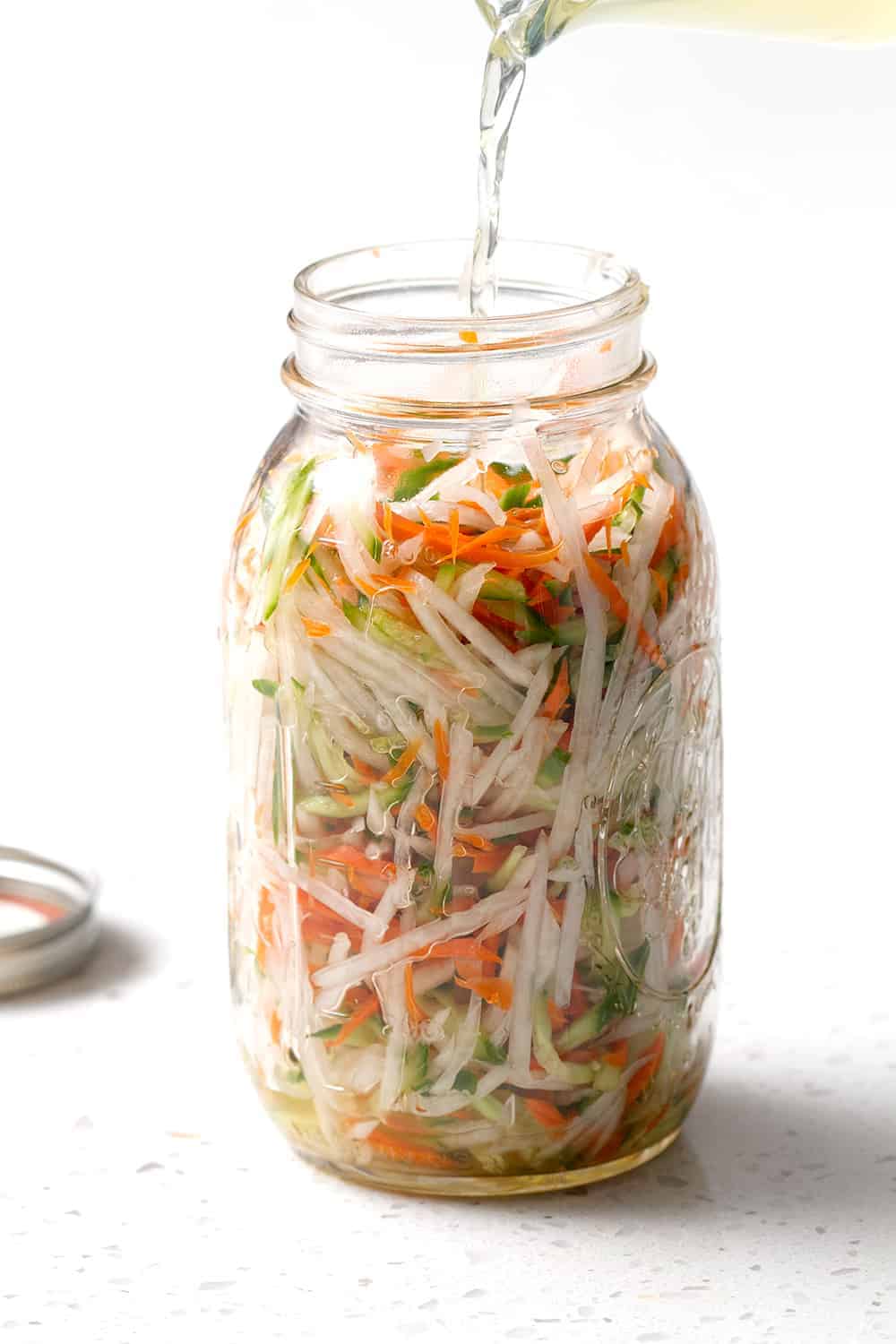
Vietnamese pickled vegetables are a versatile part of the country’s culinary culture (Source: Collected)
>>> Add Vietnamese salad to your diet also!
Best-selling products
![[Nam Hoi An Signature] VinWonders Ticket + VIP Safari Package | FREE Merchandise Gift](http://booking-static.vinpearl.com/tours/6c002e3ea71642f38eda8efa8654e5e4_vwnha0_vinwonders-nam-hoi-an-ve-vao-cua.jpg)
![[VinWonders Vu Yen] - Admission Ticket to Zoo + Games + Buffet](http://booking-static.vinpearl.com/tours/b2cd8cf6b14c48459b21393e14d73163_vwvy%201_vinwonders-nha-trang-ve-vao-cua-2-chieu.jpg)
![[VinWonders Phu Quoc] - Standard Entrance Ticket](http://booking-static.vinpearl.com/tours/0dd25afc61ad45d48486bbd3b9c8a96a_tieu%20chuan%201_vinwonders-phu-quoc-ve-vao-cua.jpg)
![[Aquafield] - [Female] - Round-trip Cable Car + 4-hour Korean Sauna](http://booking-static.vinpearl.com/tours/c3bae84e472b42078ca3ff6f28d55d80_1c5968412aca409fa8571c88cc85a4ba_aqf%205_aquafield-nha-trang.jpg)
![[VinWonders Vu Yen] - [02 Adults + 01 Child] - Admission to Zoo + Games + Free Tote Bag](http://booking-static.vinpearl.com/tours/34488b227a3648e5b73d4aa6d6d36b46_DO__8153_vinwonders-nha-trang-ve-vao-cua-2-chieu.jpg)
![[02 Day Unlimited Access] - VinWonders + Vinpearl Safari Phu Quoc + Teddy Bear Museum](http://booking-static.vinpearl.com/tours/877d8a3289a246d18f95aa5cc414f6d6_27be58d21e244664bf34d11d72e77860_Castle_vinwonders-phu-quoc-ve-vao-cua_vinwonders-phu-quoc-ve-vao-cua.jpg)
![[VinWonders Cua Hoi] - GoKart F1 Racing Car (10:00 AM - 8:00 PM)](http://booking-static.vinpearl.com/tours/aa8379d6db3a4f5c9df6d78d53177c35_11-E-Ticket-Vinwonder-Cua-Hoi_23072024111407_vinwonders-nam-hoi-an-ve-vao-cua.jpg)
![[Aquafield Ocean City] [Male] – Standard Jjimjilbang Sauna Ticket](http://booking-static.vinpearl.com/tours/0be276c684454e8d969c373f35f6be97_DSC_2127_11zon_aquafield-nha-trang.jpg)
![[Grand World Phu Quoc] - Water Taxi Boat + Teddy Bear Museum](http://booking-static.vinpearl.com/tours/add2e0908faa4289b555856472b181be_VENICE%20ALL%20IN%20ONE%20KV%20(1)_ve-bao-tang-gau-teddy-bear.jpg)
![[-30%] The Quintessence of Vietnam Show](http://booking-static.vinpearl.com/tours/6cee2bcb52a447009f64771095d03c9e_Screenshot%202024-10-22%20at%2014.49.18_ve-bao-tang-gau-teddy-bear.png)
![[Hon Tam] - [Zone A] - Standard Mud Bath](http://booking-static.vinpearl.com/tours/9db66a615a7d4f119316b338afff30cb_tam-bun-dao-hon-tam_httpswwwhontammudbathvnwp-contentuploadssites2720190625-3-2200x700jpg.jpg)
![[VinWonders Nha Trang] - 02-day Unlimited Admission Ticket | Free F&B Voucher](http://booking-static.vinpearl.com/tours/d1425f018b3e4d2d833374b5b52d8bb9_Hinh-anh-VinWonders-Nha-Trang-The-World-Garden-Lau-vong-canh-3x2-so-1_vinwonders-nha-trang-ve-vao-cua-sau-16h.jpg)
![[Nam Hoi An Signature] VinWonders Ticket + VIP Safari Package | FREE Merchandise Gift](http://booking-static.vinpearl.com/tours/881ac31c4a2b4687a59f412901e85b2c_VIN2725_-08746%20(2)_vinwonders-nam-hoi-an-ve-vao-cua.jpg)
![[-15%] Combo Admission Tickets for 2 Zones: Aquarium & VinKE + F&B Set](http://booking-static.vinpearl.com/tours/e7fcffc8256546e8bdcfd5ccfbe69783_VINKE2%20(1)_vinke-ve-vao-cua-truc-tiep.jpg)
![[Aquafield] - [Male] - 4-hour Korean Sauna](http://booking-static.vinpearl.com/tours/4ae60d29ea264f8fab17beb6b4415502_aqf-da-muoi_aquafield-nha-trang-xong-hoi-chuan-han.jpg)
![[02-Day Combo] - VinWonders + Vinpearl Safari + Free Grand World Tour](http://booking-static.vinpearl.com/tours/ceb77f9174d845ebb2fd3dfe2b846066_3%20copy_vinwonders-nam-hoi-an-ve-vao-cua.jpg)
![[Buggy Combo] - VinWonders Phu Quoc + Buggy + Free Ice Cream](http://booking-static.vinpearl.com/tours/0fc52a574094489da612d0f36bb4b1e6_buggy%20kem_vinwonders-phu-quoc-ve-vao-cua-tet-vi-vu.jpg)
![[Grand Park] Water Park + Dream Garden Outdoor Games Combo](http://booking-static.vinpearl.com/tours/35566b714d4c4dd9802a6bf4650ac2b1_khu-vui-choi-cua-hoi-9_vinwonders-nam-hoi-an-ve-vao-cua.jpg)
![[Grand World Phu Quoc] [Ultimate Combo] - Water Taxi + Teddy Bear Museum + Grand Show](http://booking-static.vinpearl.com/tours/e31a9e66b5444808bba3e3114d195559_VENICE%20ALL%20IN%20ONE%20KV%20(1)_ve-bao-tang-gau-teddy-bear.jpg)
![[-50%] [VinWonders Wave Park & Water Park] Admission Ticket for 2 Parks](http://booking-static.vinpearl.com/tours/f949b31af919495c9b4e111237642763_358600999_111579731994757_433244877993048710_n_vinwonders-ha-noi.jpg)
![[Aquafield] - Round-trip Cable Car + Korean Sauna + Body Scrub](http://booking-static.vinpearl.com/tours/d00bc95eb402434c8f4a4756c2a3ad3d_Akoya-spa-Villa-Vinpearl-Resort-Spa-Phu-Quoc-12_aquafield-nha-trang.jpg)
![[Grand Park] Fairy Guardian](http://booking-static.vinpearl.com/tours/eeb9a602315342ccbc7965b29cfb0db0_Ảnh%20màn%20hình%202025-03-03%20lúc%2015.00.17_vinwonders-nam-hoi-an-ve-vao-cua.png)
![[Aquafield Ocean City] – VIP Membership (12 Months)](http://booking-static.vinpearl.com/tours/3c2f7ab0ed374cb1bbdb2e54e6d6eb9a_e1f2756dfec346f3bb3b16e296b3b166_Screenshot_5_aquafield-nha-trang_aquafield-nha-trang.png)
![[Vinpearl Aquarium Times City] Entrance Ticket](http://booking-static.vinpearl.com/tours/8702a10bf2934d6299df65669a290679_aquarium%20times%20city%203_thuy-cung-vinpearl-aquarium-times-city.jpg)
![[VinWonders Nha Trang] - 01-day Unlimited Admission Ticket | Free F&B Voucher](http://booking-static.vinpearl.com/tours/ccf23087ea0f419980c411d0e79c10fb_88c594a8352d49e7b031b9fbd5c5d27f_tro-choi-mao-hiem-o-vinpearl-nha-trang-thumb-1_vinwonders-nha-trang-khong-gioi-han-2-ngay_vinwonders-nam-hoi-an-ve-vao-cua.jpg)

![[-30% Grand Opening] [Aquafield Ocean City] – Standard Jjimjilbang Sauna Ticket for Male](http://booking-static.vinpearl.com/tours/94abeb55e3d54efbac23f7a862445389_0d72b531dd6749bbac2874b915ab0512_Screenshot_8_aquafield-nha-trang_aquafield-nha-trang.png)
![[Grand World] Carousel Ride](http://booking-static.vinpearl.com/tours/0d6a4bcfc2a54fd4aa9df0b38ae8c7b6_A2-4-jpeg-2640-1687438608_grandworld.jpg)
![[50% Student Discount] – VinWonders Admission Ticket](http://booking-static.vinpearl.com/tours/43126c168bb04853bf7c93e197db724a_Banner%201200x628_vinwonders-nha-trang-ve-vao-cua-2-chieu.jpg)
![[VinWonders Nha Trang] - Admission to VinWonders after 4:00 PM](http://booking-static.vinpearl.com/tours/de2da6d471b34297ab13cb26ef2da9a0_Hinh-anh-VinWonders-Nha-Trang-The-World-Garden-Lau-vong-canh-3x2-so-1_vinwonders-nha-trang-ve-vao-cua-sau-16h.jpg)
![[VinWonders Cua Hoi] - Indoor Games Zone](http://booking-static.vinpearl.com/tours/b952de18058e4a67a8ffa52f2039e7d2_1920-x-1080-double%20day%20sale%2077%20no%20text_vinwonders-nam-hoi-an-ve-vao-cua.jpg)
![[VinWonders Phu Quoc] - Entrance Ticket + Gate Fastpass + Buggy](http://booking-static.vinpearl.com/tours/de2a24896b0e49469fa1e89e93aa5314_1920x1080%20VWPQ%20KV_vinwonders-phu-quoc-standard-entrance-ticket.jpg)
![[Onsite service] - Premium VIP Zoo Tour Vinpearl Safari Phu Quoc](http://booking-static.vinpearl.com/tours/ff1e4b66ec1b46edad0c0460144e70ad_VINPEARL%20SAFARI%20PHU%20QUOC%20%20(51)_vinwonders-nam-hoi-an-ve-vao-cua.jpg)
![[Hon Tam] - [Zone A&B] - Full island entertainment + Mud Bath Zone A + Lunch](http://booking-static.vinpearl.com/tours/af991883d63f4133b62b76551ba2444d_tam-bun-dao-hon-tam_httpswwwhontammudbathvnwp-contentuploadssites2720190625-3-2200x700jpg.jpg)
![[Vinpearl Harbour] - Admission to VinWonders (after 4:00PM) & Round trip cable car](http://booking-static.vinpearl.com/tours/4b2d76bbde1f4c54a43370680d311928_Hinh-anh-VinWonders-Nha-Trang-The-World-Garden-Lau-vong-canh-3x2-so-1_vinwonders-nha-trang-ve-vao-cua-sau-16h.jpg)
![[Aquafield] - [Male] - Round-trip Cable Car + 4-hour Korean Sauna](http://booking-static.vinpearl.com/tours/625529980f3249e6b0491cddfc30db43_297be2477c5847748ef3bc08603ebf90_aqf%204_aquafield-nha-trang.jpg)
![[Vinpearl Harbour] - Tata Show Ticket & Round-trip Cable Car](http://booking-static.vinpearl.com/tours/3cbd16b8edc74f6abc7f7cfa0e91caec_VPHB_Photos15_vinwonders-nha-trang-ve-vao-cua-2-chieu.jpg)
![[-10%] - VIP River Safari Ticket*](http://booking-static.vinpearl.com/tours/5d3ee19e977446be8917a34697bb9443_ece6e58a02fd48de9eba9d3f4689f77a_Hinh-anh-VinWonders-Nam-Hoi-An-River-Safari-3x2-so-1%20(1)_vinwonders-nam-hoi-an-ve-vao-cua_vinwonders-nam-hoi-an-ve-vao-cua.jpg)
![[Aquafield Ocean City] [Male] – VIP Membership (12 Months)](http://booking-static.vinpearl.com/tours/6ab10678fcbd4822a8fddb0590d3bcbf_0d72b531dd6749bbac2874b915ab0512_Screenshot_8_aquafield-nha-trang_aquafield-nha-trang.png)
![[Nha Trang Passport] – [01 day] – Snorkeling Tour + Lunch & Mud Bath at Hon Tam + Vinpearl Harbour + Tata Show](http://booking-static.vinpearl.com/tours/f6b1826759674c9c9d3f074e03fa04ba_snorkeling%201_vinwonders-nha-trang-ve-vao-cua-2-chieu.jpg)
![[VinWonders Vu Yen] - Admission Ticket to Games zone (after 5:00 PM)](http://booking-static.vinpearl.com/tours/edbd3eb4bc9848aead9940e0f5aa050d_fa21c62dfa9644ada0c3fce89b3e79ff_DO__8711_vinwonders-vu-yen-vuon-thu-khu-tro-choi-sau-17h.jpg)
![[Aquafield] - [Female] - 4-hour Korean Sauna](http://booking-static.vinpearl.com/tours/0e6fe24c37b84cb799b94dae70578054_aqf-suong-may-2048x1365_aquafield-nha-trang-xong-hoi-chuan-han.jpg)
![[VinWonders Nam Hoi An] - Standard Admission Ticket](http://booking-static.vinpearl.com/tours/81813f8ced2c466e82ad53f1c29c1904_tour-kham-pha-van-hoa-viet-vinwonders-nam-hoi-an-668ca102bcc29_vinwonders-nam-hoi-an-ve-vao-cua.jpg)
![[Vinpearl Harbour] - Round-trip Cable Car Ticket | Free Wishing Coin Voucher](http://booking-static.vinpearl.com/tours/e584c2f486d246c5820a19f519d184a4_VPHB_Photos15_vinwonders-nha-trang-ve-vao-cua-2-chieu.jpg)
![[VinWonders Cua Hoi] - Cable Car + Games on the Island](http://booking-static.vinpearl.com/tours/63c924f8521a4af981666076c5c3b0fe_VinWonders%20Cua%20Hoi%20Summer%20Say%20Hi%20Banner%201920x920px_vinwonders-nam-hoi-an-ve-vao-cua.jpg)
![[VinWonders Nam Hoi An] [Sunset Premium] Admission Ticket & Buggy Ride & VIP Safari Package & Afternoon Tea Set](http://booking-static.vinpearl.com/tours/3a1e510945b4421d861fede29a1b3e58_xE3mXzIVwTdZRf7M8zZfHqHIPqV17uyEOzL8PaUQ_vinwonders-nam-hoi-an-ve-vao-cua.jpg)
![[VinWonders Phu Quoc] - Game Fastpass - Top 04 Rides](http://booking-static.vinpearl.com/tours/574c2b7798524c17a08f28feb80d45b5_fastpass%204%20games%20vwpq_vinwonders-phu-quoc-fastpass.jpg)
![[Grand World Phu Quoc] - The Quintessence of Vietnam Show](http://booking-static.vinpearl.com/tours/f88e2be1139b4eada4043eb7f0e39362_THVN1_show-tinh-hoa-viet-nam.jpg)
![[Aquafield] - 2-hour Aquafield Sauna + 30-min Spa](http://booking-static.vinpearl.com/tours/b0bf65880af449f39ea19fa0acbb94d5_34d71a9c3e6b4b7484f9d7cbbc935c26_200dd4dda03e45e0a1add52e4acc11fa_NHT_1796_ve-xem-tata-show-vinwonders-nha-trang_ve-xem-tata-show-vinwonders-nha-trang.jpg)
![[Nha Trang Passport] - [Half-Day] - Cable Car + Aquafield Sauna (2 hours) + Tata Show](http://booking-static.vinpearl.com/tours/ef49c187eadf4177b425d2bb85a18b30_200dd4dda03e45e0a1add52e4acc11fa_NHT_1796_ve-xem-tata-show-vinwonders-nha-trang.jpg)
![[Hon Tam] - [Zone A] - Mud Bath + Lunch Combo](http://booking-static.vinpearl.com/tours/5debd1efb6d34e42a88efa65354c8c72_ebdde60fd9a44539afe75c9338ec8a3d_ảnh%205_tam-bun-hon-tam.jpg)
3. Top 6 Vietnamese pickled vegetable recipes to enhance your meal
Vietnamese pickled vegetables are known for their bold and zesty flavor that complements many dishes. This side dish is very versatile. Depending on your ingredients of choice, your final product will be very different. You can absolutely let your creativity flow and create your own pickled dish. If you want some reference, feel free to follow these 6 popular Vietnamese pickled vegetable recipes.
3.1. Vietnamese pickled mustard greens (dua cai muoi)
Vietnamese pickled mustard greens, more commonly known as “dua cai muoi,” are the most famous type of Vietnamese pickled vegetables. To make this dish, you need mustard greens, salt, sugar cane, shallots, garlic chives, and sugar.
Begin the process by withering the greens in the sun for 1-2 days, then wash and drain them. Next, combine the shallots and garlic chives with the mustard greens to enhance the aroma and flavor. To create the pickling solution, alternately layer the mustard greens and sugar cane with salt. After the layering process is completed, weigh them down. Enjoy the dish after waiting 12 to 15 days.
These pickles can be eaten as a side dish or used in other dishes to add a delightful tanginess. Dishes such as fried rice with beef, stir-fried beef, sour soup, and braised fish can all be combined with pickled mustard greens to create a balanced flavor.

Pickled mustard greens are paired with stir-fried rice and beef to create a mouth-watering meal (Source: Collected)
3.2. Vietnamese pickled carrots and daikon (dua chua)
This variation of Vietnamese pickled vegetables is often used in Vietnamese sandwich and Vietnamese rice dishes. For this dish, prepare white radish, carrots, white vinegar, sugar, salt, and a clean container. Start by mixing the white vinegar, sugar, and 1/3 tablespoon of salt together in a saucepan. Heat until dissolved then let it cool.
Prepare the veggies by slicing the radish and carrots into rounds and strips. Place them in a bowl with 2/3 tablespoons of salt for 30 minutes to draw out the moisture, enhance the crispiness, and prolong the preservation period. After that, rinse, drain, and gently squeeze out excess moisture using a towel or mesh bag.
Transfer the vegetables to the clean container and pour the cooled vinegar-sugar mixture over them. After 3 hours, enjoy this pickled delight. For longer storage, use sterilized glass jars and refrigerate for up to a month. Vietnamese pickled vegetables for banh mi offer a delightful sweet-sour balance with a satisfying crunch.
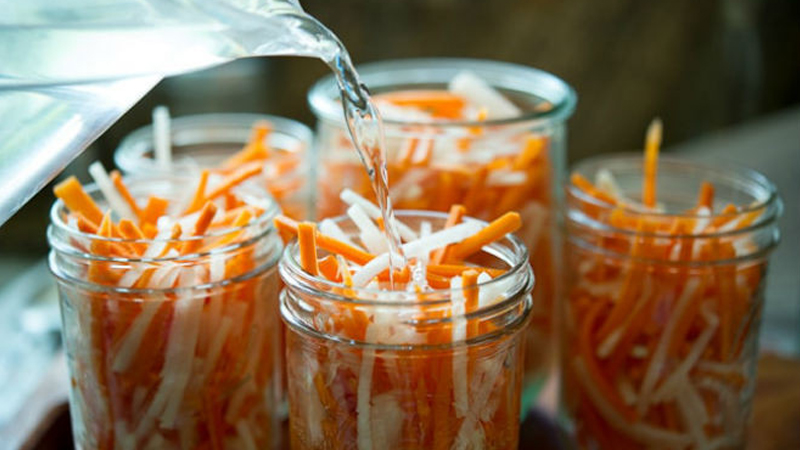
Pickled carrots and daikon are used for banh mi to create a flavorful sandwich (Source: Collected)
3.3. Vietnamese pickled onions (cu kieu muoi)
Another type of Vietnamese pickled vegetables is pickled Chinese onions, otherwise known as “cu kieu muoi.” It is cherished as one of the notable Vietnamese New Year’s foods. Famously paired with the iconic banh chung, this tangy side dish provides a delightful crunch.
To achieve the desired crispness, you need to follow a meticulous process. Firstly, pre-soak Chinese onions with the roots and outer layers intact in water with alum for two days to remove their pungency. Afterward, trim, peel, and sun-dry them for 2-3 days before rinsing and draining.
To make the brine, you will need the onions, salt, sugar, water and a sterilized glass jar. Boil the water with salt and sugar, let it cool, then pour it over the dried onions. You can add chili peppers to your preference. Finally, weigh them down until the onions are fully submerged, seal the jar, and store them in a cool, dry place. These pickled onions make a delightful treat for the Tet Holiday, offering a unique sweet, salty, and spicy flavor combination.

This recipe for Vietnamese pickled vegetables is a staple during the Vietnamese Lunar New Year (Source: Collected)
3.4. Vietnamese pickled cabbage (cai bap muoi)
This is another popular variation of Vietnamese pickled vegetables, made with cabbage and an assortment of ingredients like water spinach stems, carrots, scallions, coriander, sugar, and salt. Preparations start by thoroughly washing all the ingredients. Thinly slice the cabbage and carrots, cut the water spinach stems and scallions, and chop the coriander to 1-cm length, and crush the dried scallions. Mix these ingredients thoroughly.
After washing all the ingredients with boiling water and letting them cool, prepare a slightly salty brine with water. Combine the vegetables and brine in a sterilized container, making sure they are fully submerged beneath a plate. You should avoid using plastic containers as they may react with the pickles’ acidity, which is not ideal for health. For a faster pickling process, you can place the jar of Vietnamese pickled vegetables with cabbage in a spot with mild sunlight.
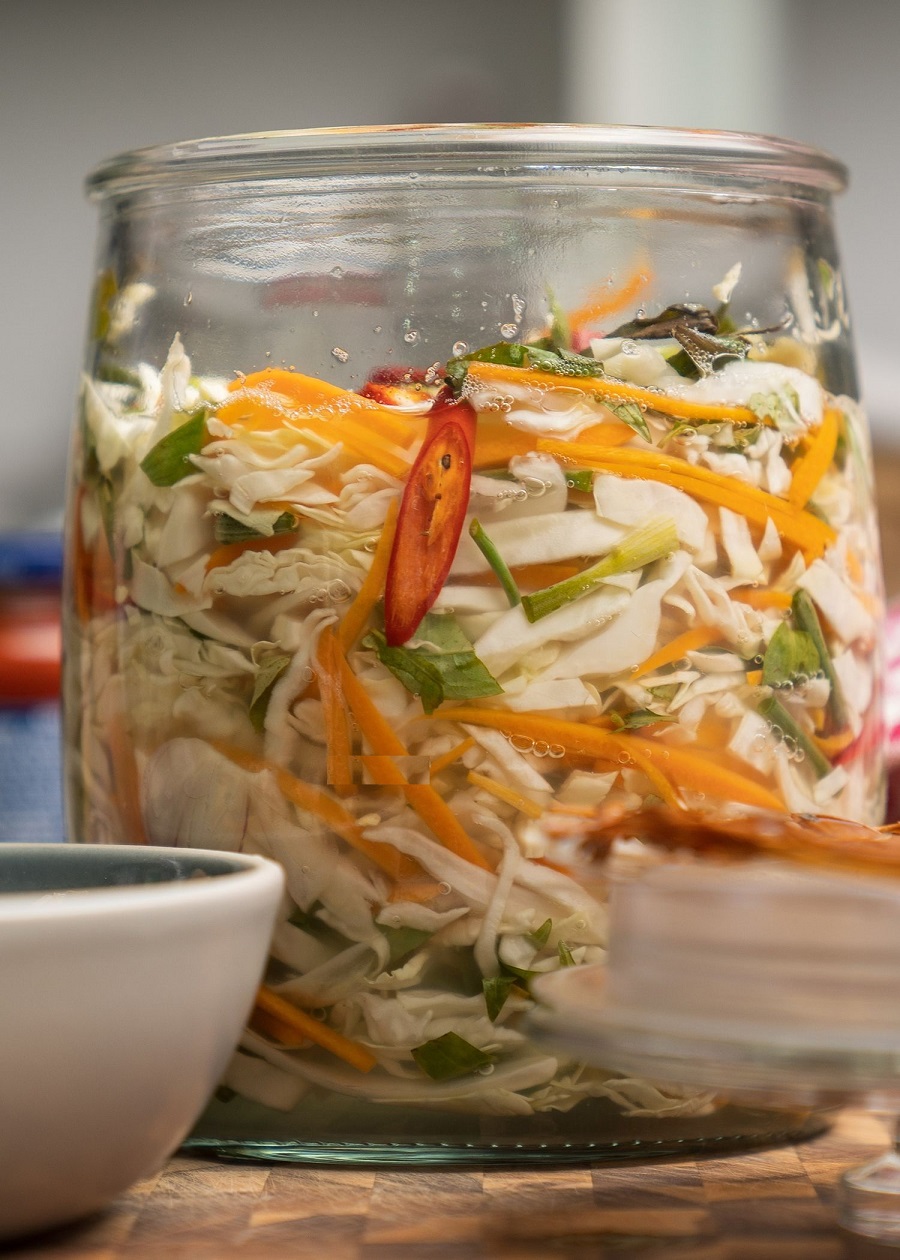
Pickled cabbage is a famous side dish in Vietnamese meals (Source: Collected)
3.5. Vietnamese pickled eggplants (ca muoi)
Vietnamese pickled vegetables with eggplants, or “ca muoi,” is a popular homemade treat with a delightful balance of sweet and sour flavors. To make these pickles, sun-dry eggplants until they are slightly withered for a pleasant crunch, ensuring they have a greenish, turmeric-like skin. Carefully cut the eggplants, avoiding contact with the flesh as this may result in sogginess. Soak the cut eggplants in diluted saltwater for an hour to remove toxins and prevent discoloration.
To prepare the brine, dissolve 50 grams of salt in boiling water and pour it over the vegetables, making sure they are entirely submerged. You should not use a plastic container for pickling as this material may react with the acidic pickle. Seal the jar and weigh the pickle down with a stone. In hot weather, the pickles will be ready within 2-3 days, when the eggplants turn a golden hue and have a satisfying crunch.
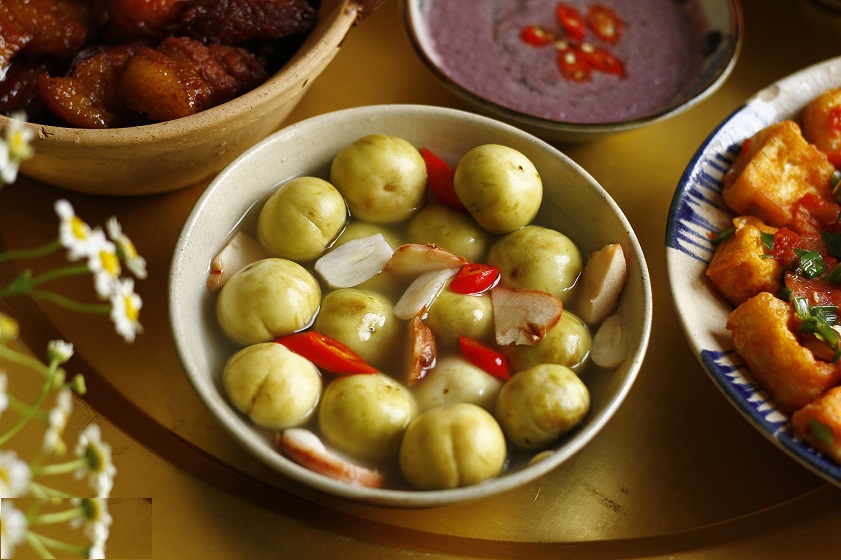
Pickled eggplants add a tangy twist to a heart-warming bowl of crab soup (Source: Collected)
3.6. Vietnamese pickled bean sprouts with garlic chives (dua gia he muoi)
Vietnamese pickled bean sprouts with garlic chives are a delightful pickled vegetable dish. To make this, you will need bean sprouts, julienned carrots, chopped garlic chives, salt, sugar, and hot water.
Begin by dissolving 1 tablespoon of salt and 2 tablespoons of sugar in 1 liter of hot water. Taste the mixture and ensure it has a salty flavor. Mix the bean sprouts, carrots, and garlic chives together and place them in a glass or pickling jar. Pour the salt-sugar mixture over them, then press a plate or lid to keep the vegetables submerged in the liquid. In just 10 hours, the bean sprouts will acquire a delightful tanginess.
Once pickled, you can store them in the refrigerator if not consumed immediately. Before serving, drain off excess liquid for a crunchier texture. These Vietnamese pickled vegetables offer a zesty and refreshing addition to your meals.
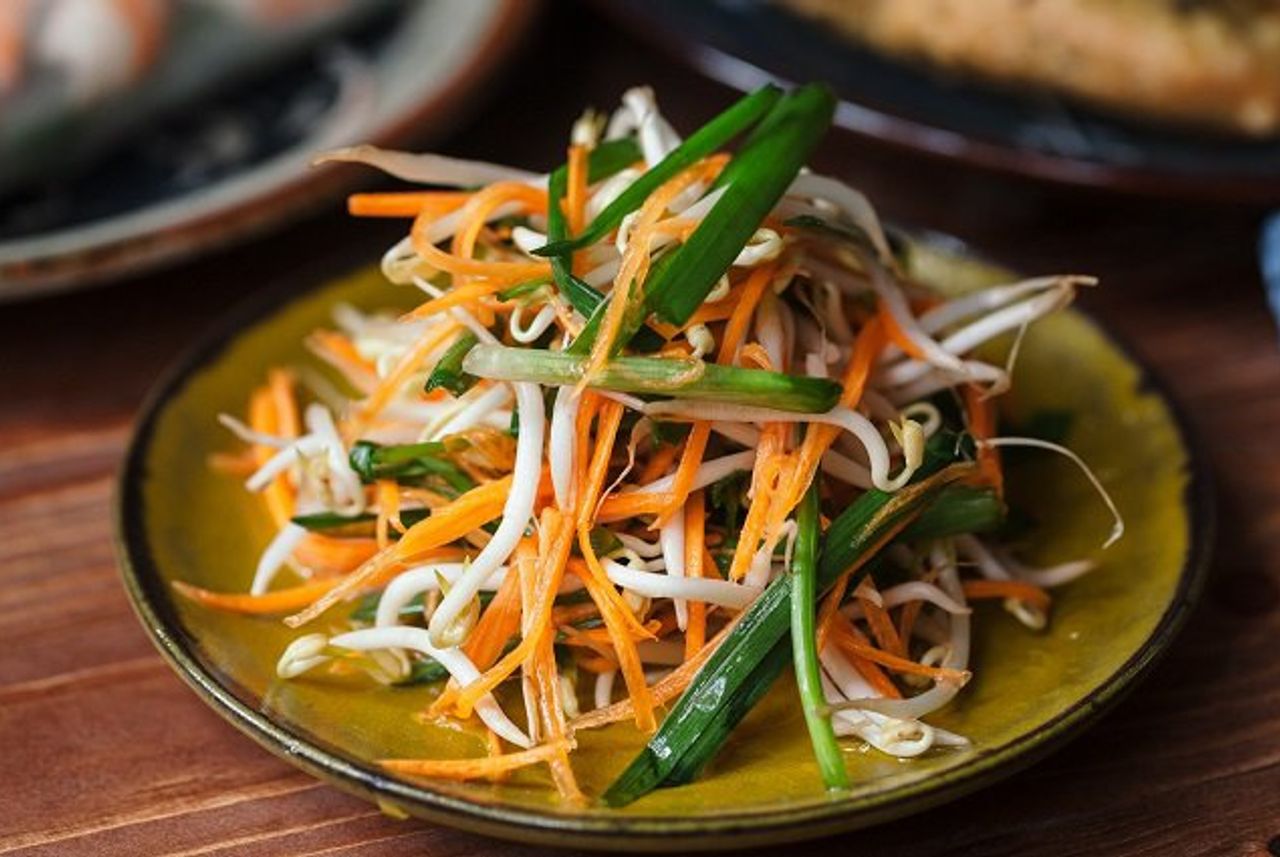
Pickled bean sprouts with garlic chives are a delightful addition to your kitchen (Source: Collected)
4. Where to buy Vietnamese pickled vegetables?
If you are wondering where to buy Vietnamese pickled vegetables, look no further than the bustling Vietnamese markets available all across the country. At almost any local market, you will find several stalls selling Vietnamese pickled vegetable salad and other types of spicy Asian pickled vegetables. The price is very budget-friendly, as customers can buy 10,000 or 20,000 VND’s worth of pickles. The vendors will carefully measure out the desired amount of Vietnamese pickled vegetables and pack them up for you. These markets are a treasure trove for those seeking the authentic taste of Vietnam’s culinary tradition.
If you are planning for your Vietnam travel experience, consider visiting the capital city of Hanoi. For old souls who want a taste of the past, Hoi An is the ideal destination for you. Nha Trang and Phu Quoc are perfect if you seek a relaxing vacation on the mesmerizing beaches of Vietnam. And if you are looking for fun activities, you will love a trip to the top-rated entertainment complexes of VinWonders, namely VinWonders Wave Park & Water Park, VinWonders Nam Hoi An, VinWonders Nha Trang, VinWonders Phu Quoc, and VinKE & Vinpearl Aquarium.
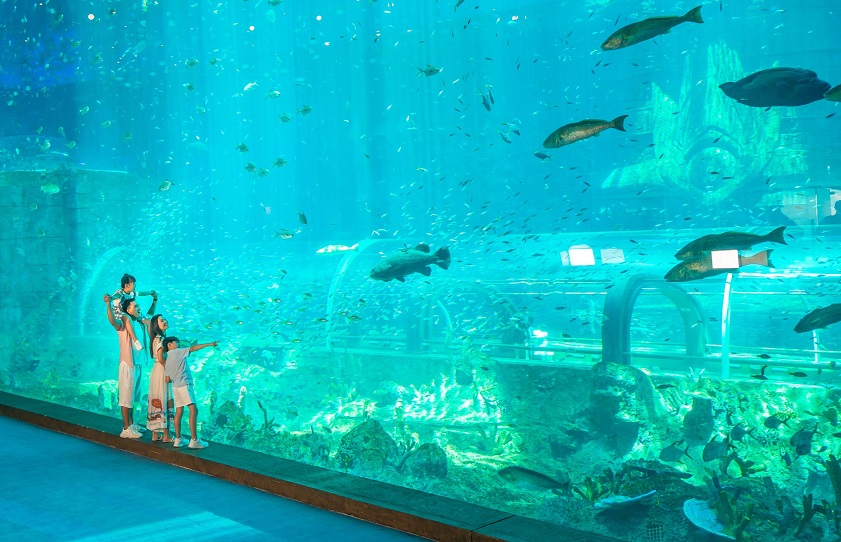
Enjoy a relaxing trip with VinWonders
>>> Book tickets to VinWonders Phu Quoc, Nha Trang, Nam Hoi An, VinKE & Vinpearl Aquarium and VinWonders Wave Park & Water Park and have the most wonderful experiences!
Vietnamese pickled vegetables are an indispensable part of the country’s rich culinary heritage. Their vibrant flavors and textures not only add depth to countless dishes but also provide a unique taste experience. Whether you are a seasoned cook or a beginner looking to expand your horizons, don’t hesitate to explore the world of Vietnamese dishes. With a dash of creativity and a willingness to experiment, you’ll discover how these humble yet delightful pickled vegetables can transform your dishes into something truly exceptional, embodying the heart and soul of Vietnamese cuisine.
Best-selling products