en
en


 Tiếng Việt
  中文 (中国)
  한국어
한국어  Русский


 04/12/2025
 2.123 views
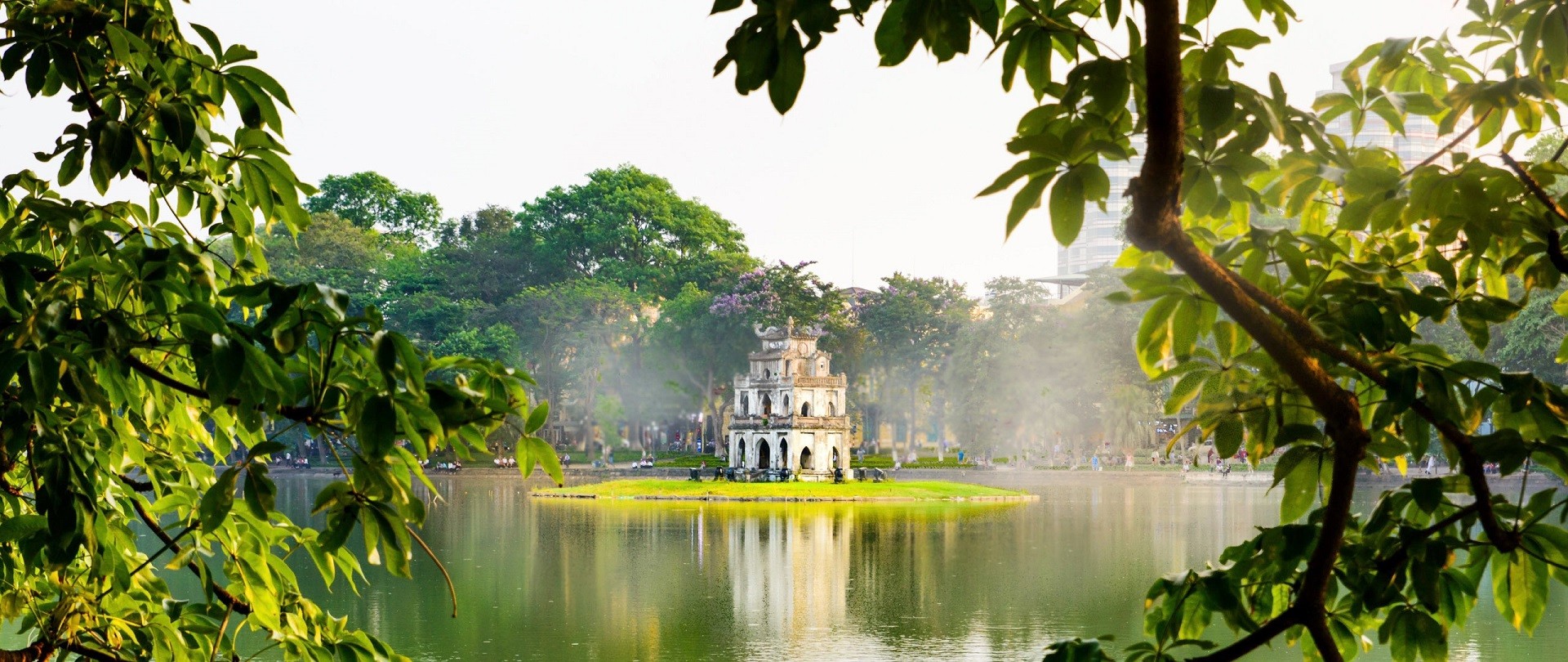
The meaning of Hanoi is defined across various periods (Source: Collected)
1. The meaning of Hanoi – The capital of Vietnam
Hanoi is renowned for its timeless charm. With over 1,000 years of historical development, Hanoi has evolved into a modern metropolis while retaining its traditional values.
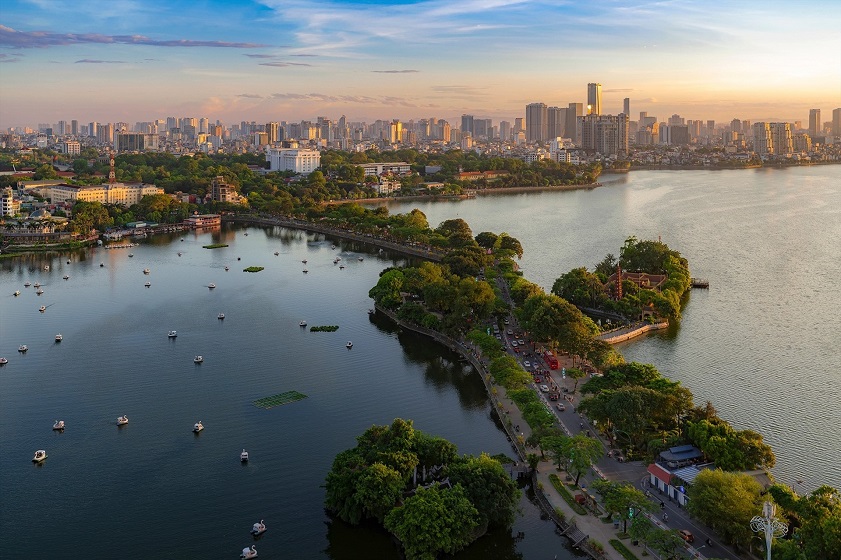
The name “Hanoi” was officially adopted in 1831. What does Hanoi mean? Hanoi means “inside the river,” reflecting the city’s geographical location. At the time, Hanoi was situated within three major rivers: the Red River, the Nhue River, and the Day River. These rivers have not only shaped Hanoi’s physical landscape but have also played a vital role in its cultural and economic activities, further enhancing the meaning of Hanoi.
The meaning of Hanoi is a reflection of the city’s enduring relationship with its surrounding rivers (Source: Collected)
Hanoi attractions: Unveil 18 MOST captivating destinations to visit
What is Hanoi famous for? TOP 5 things that put the capital on the map
Hanoi itinerary: Top attractions, fun activities and delicious food
2. Historical names before “Hanoi”
Before adopting the name “Hanoi,” the city was known by several other names, both official and literary. These historical names contribute to the meaning of Hanoi, offering insights into its evolving identity.
2.1. Official names
The official names are those documented in historical records by various dynasties and the Vietnamese government. Here are the official names of Hanoi throughout its history:
- Tong Binh: During the Sui (581-618) and Tang (618-907) dynasties, the northern invaders made Tong Binh their administrative center.
- Long Do: Legend says the Long Do spirit appeared when Cao Bien built Dai La Citadel in 866, leading to Thang Long (Hanoi) being called the land of Long Do.
- Dai La: Name of the outer ring of Thang Long Citadel, fortified by Cao Bien in 866; mentioned in Emperor Ly Thai To’s 1010 edict as the old capital.
- Thang Long (Rising Dragon): In the autumn of the year Canh Tuat (1010), Emperor Ly Thai To relocated the capital from Hoa Lu to Dai La Citadel. While temporarily docking his boat under the citadel, he saw a golden dragon rise, prompting him to rename the city Thang Long (Rising Dragon).
- Dong Do: In 1397, Dong Do replaced Thang Long when Ho Quy Ly moved the capital to Tay Do (Thanh Hoa).
- Dong Quan: In December of the year Mau Ty (1408), the Ming forces defeated Ho Quy Ly’s army at Dong Do and renamed it Dong Quan.
- Dong Kinh: Emperor Le Loi renamed Thang Long to Dong Kinh in 1427 when moving the capital and adopting the era name Thuan Thien.
- Bac Thanh: During the Tay Son dynasty (1787-1802), with the capital at Phu Xuan (Hue), Thang Long was called Bac Thanh. In the early Gia Long era, the “Governor of Bac Thanh” was established, incorporating Phung Thien prefecture.
- Thang Long (Prosperous Dragon): In 1802, Emperor Gia Long renamed the capital from Thang Long (Rising Dragon) to Thang Long (Prosperous Dragon) to reflect prosperity instead of the royal dragon symbol, as the emperor did not reside there.
- Hanoi: Emperor Minh Mang merged Thang Long with nearby areas to form Hanoi province, making it the new capital.

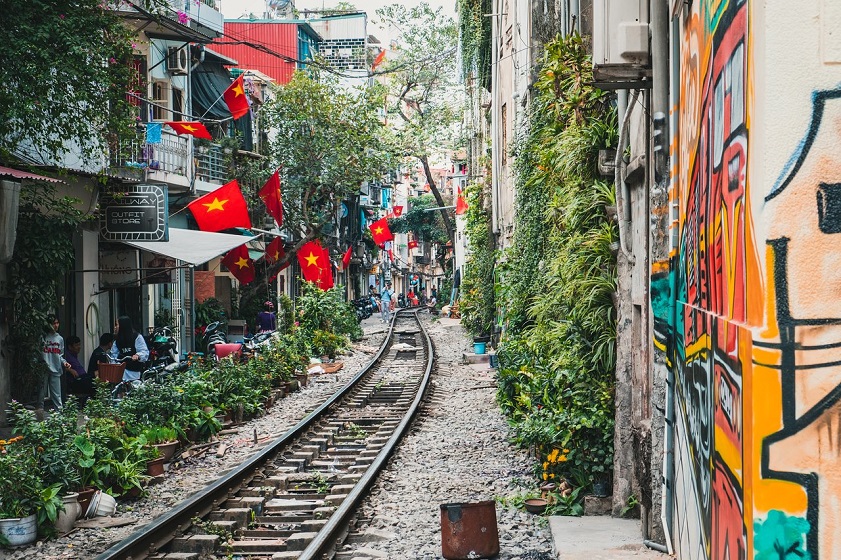
The meaning of Hanoi, signifying “inside the rivers,” has been in use since 1831 (Source: Collected)
Hanoi things to do: TOP activities to put on your bucket list right away
Hanoi free local tours: The BEST choices for authentic adventures
Hanoi 36 streets: Discover traces of the once bustling commercial area
2.2. Literary names
The literary names were used in literature, folklore, and colloquial speech. The meaning of Hanoi is enriched by its literary names:
- Truong An: Originally the name of the capital city of two prosperous Chinese dynasties, the Former Han and the Tang. Vietnamese scholars used “Truong An” as a generic term for the capital, and it was commonly adopted by the people in proverbs and folk songs to refer to Thang Long (Hanoi).
- Phuong Thanh (Phung Thanh): In the early 16th century, scholar Nguyen Gian Thanh used “Phuong Thanh” in his poem “Phuong Thanh Xuan Sac Phu” to depict Thang Long’s spring scenery.
- Long Bien: Originally the seat of Han, Wei, Jin, and Northern and Southern Dynasties’ officials in Giao Chau (an ancient name for Vietnam) in the 3rd to 6th centuries. Later, it was sometimes used in poetry to refer to Thang Long – Hanoi.
- Long Thanh: Shorthand for Thang Long Citadel, this name appears in poet Ngo Ngoc Du’s work “Long Thanh Quang Phuc Ky Thuc,” commemorating Emperor Quang Trung’s victory over Qing invaders in 1789.
- Ha Thanh: A shorthand for Hanoi, commonly used in poetry to refer to the city. Examples include “Ha Thanh Chinh Khi Ca” by Nguyen Van Giai, “Ha Thanh That Thu,” and “Tong Vinh” (anonymous).
- Hoang Dieu: After the August Revolution in 1945, this name was occasionally used in Vietnamese newspapers to refer to Hanoi.
In addition to these literary names, various colloquial terms have been used to refer to Thang Long – Hanoi, such as:
- Ke Cho: Reflecting Hanoi’s bustling market life.
- Thuong Kinh: Denoting the capital city superior to all other places in the country.
- Kinh Ky: Referring to the capital city.
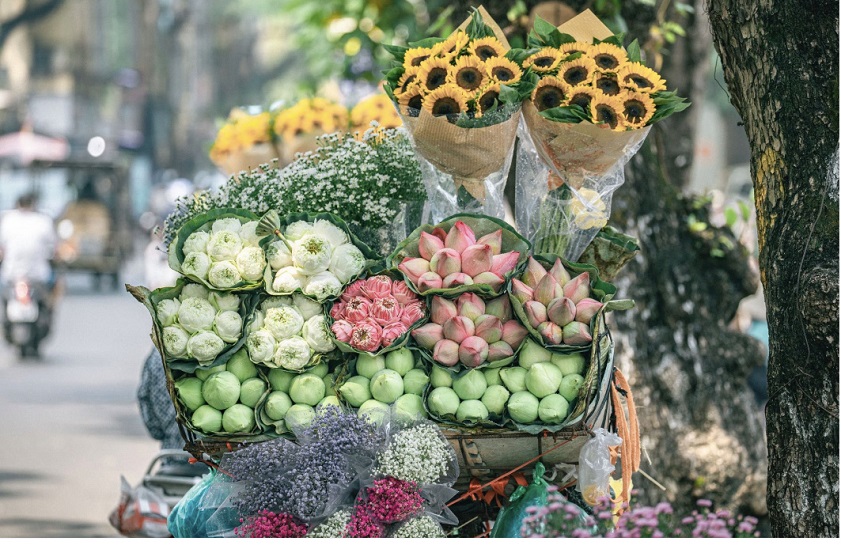
The meaning of Hanoi is brought to life through the literary names found in folklore (Source: Collected)
Best-selling products
![[Grand World] Skydrop ticket](http://booking-static.vinpearl.com/tours/ed7c962747be42458f35c7b18340b901_A2-4-jpeg-2640-1687438608_grandworld.jpg)
![[Body Pampering Combo] [Female] – Korean Jjimjilbang Sauna & Vincharm Spa Body Massage](http://booking-static.vinpearl.com/tours/70151cf03d8549d88b48b432f2082dda_Screenshot_2_aquafield-nha-trang.png)
![[Romantic Couple Combo] – Standard Jjimjilbang Ticket & Premium Spa Treatment + Complimentary Bingsu](http://booking-static.vinpearl.com/tours/94abeb55e3d54efbac23f7a862445389_0d72b531dd6749bbac2874b915ab0512_Screenshot_8_aquafield-nha-trang_aquafield-nha-trang.png)
![[Grand World] Carousel Ride](http://booking-static.vinpearl.com/tours/0d6a4bcfc2a54fd4aa9df0b38ae8c7b6_A2-4-jpeg-2640-1687438608_grandworld.jpg)
![[-15%] Combo Admission Tickets for 2 Zones: Aquarium & VinKE + F&B Set](http://booking-static.vinpearl.com/tours/e7fcffc8256546e8bdcfd5ccfbe69783_VINKE2%20(1)_vinke-ve-vao-cua-truc-tiep.jpg)
![[Deep Relaxation Combo] [Female] – Jjimjilbang Sauna & Korean Sesin Body Scrub](http://booking-static.vinpearl.com/tours/0be276c684454e8d969c373f35f6be97_DSC_2127_11zon_aquafield-nha-trang.jpg)
![[-50%] [VinWonders Wave Park & Water Park] Admission Ticket for 2 Parks](http://booking-static.vinpearl.com/tours/f949b31af919495c9b4e111237642763_358600999_111579731994757_433244877993048710_n_vinwonders-ha-noi.jpg)
![[Times City Hanoi] VinKE Entrance Ticket](http://booking-static.vinpearl.com/tours/d6296ca1d3714503b01f24603b85b8cf_vinke1_vinke-ve-vao-cua-truc-tiep.jpg)
![[Aquafield Ocean City] [Female] – Standard Jjimjilbang Sauna Ticket](http://booking-static.vinpearl.com/tours/4aec5fed6be54fe8a736aca12893384b_40fc72547fe242f8b6bbbbc428885848_065A8735_aquafield-nha-trang_aquafield-nha-trang.jpg)
![[Vinpearl Aquarium Times City] Entrance Ticket](http://booking-static.vinpearl.com/tours/8702a10bf2934d6299df65669a290679_aquarium%20times%20city%203_thuy-cung-vinpearl-aquarium-times-city.jpg)
![[Aquafield Ocean City] [Male] – VIP Membership (12 Months)](http://booking-static.vinpearl.com/tours/6ab10678fcbd4822a8fddb0590d3bcbf_0d72b531dd6749bbac2874b915ab0512_Screenshot_8_aquafield-nha-trang_aquafield-nha-trang.png)
![[Aquafield Ocean City] – VIP Membership (12 Months)](http://booking-static.vinpearl.com/tours/3c2f7ab0ed374cb1bbdb2e54e6d6eb9a_e1f2756dfec346f3bb3b16e296b3b166_Screenshot_5_aquafield-nha-trang_aquafield-nha-trang.png)
![[Aquafield Ocean City] - Body Exfoliation Session](http://booking-static.vinpearl.com/tours/0e8ee4024e1f4378ba932eb06d945636_Screenshot_14_aquafield-nha-trang.png)
3. The meaning of Hanoi’s attractions
3.1. Hoan Kiem Lake and Turtle Tower
Hoan Kiem Lake is often referred to as the jewel of Hanoi. The lake has had various names over the centuries, such as Ta Vong Lake, Luc Thuy Lake (Green Water Lake), and Thuy Quan Lake (Naval Lake, as it was once used for training naval soldiers). In the 15th century, the lake was renamed Hoan Kiem (Restored Sword Lake) after the legend of Emperor Le Thai To returning a magical sword to a golden turtle.
The lake’s most striking feature is Turtle Tower, located on a small island in the middle of the lake. Built in 1884, the tower blends French and ancient Vietnamese architectural styles and creates a stunning reflection at night.
Hang Ma Street: A sparkling place in Hanoi to explore
Ta Hien Street Hanoi: Feel a great vibe with cool beer and tasty food
Ta Hien Street Hanoi: Feel a great vibe with cool beer and tasty food
3.2. The Huc Bridge
The Huc Bridge or “The Morning Sunlight Bridge,” is a charming wooden bridge painted in red. This bridge connects the eastern shore of Hoan Kiem Lake to Jade Island, where the Ngoc Son Temple is located. The name “The Huc” translates to “welcoming morning sunlight,” symbolizing the hope and positive energy that the dawn brings. Walking across The Huc Pagoda, visitors can feel a sense of connection to Hanoi’s rich cultural heritage.
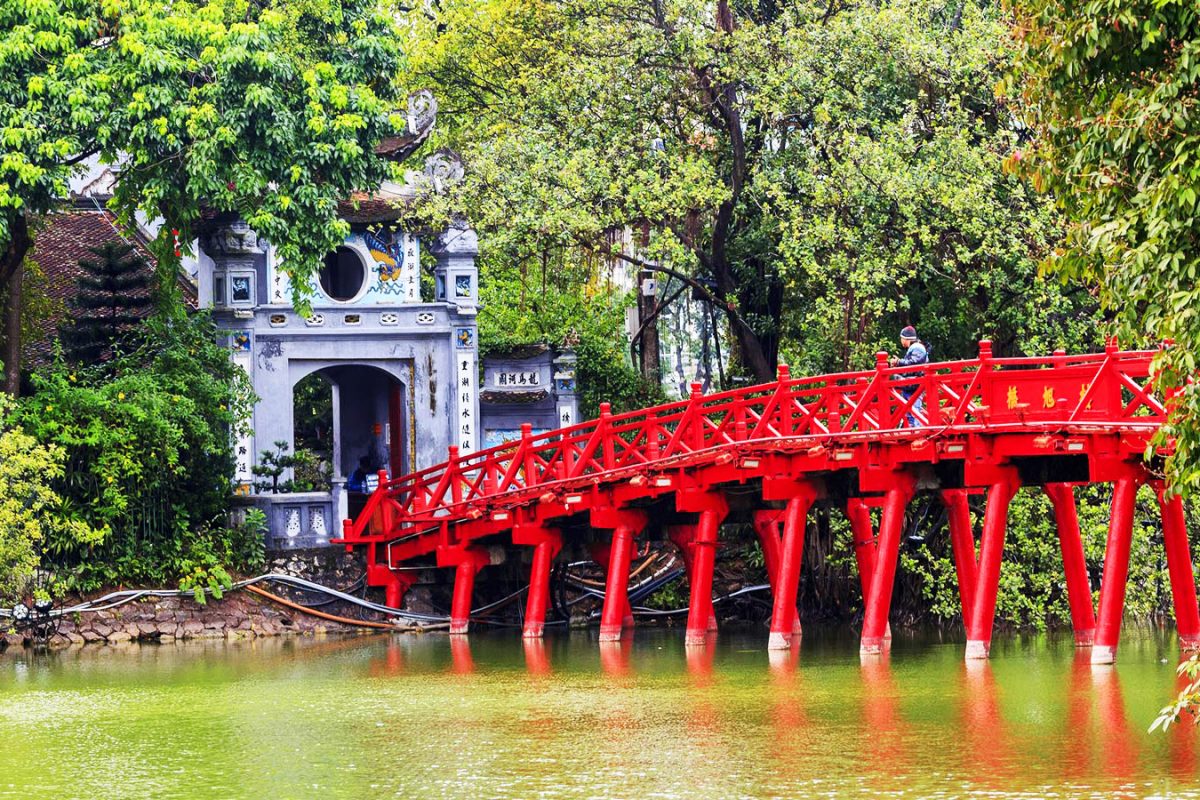
Hanoi’s landmarks, such as The Huc Bridge, reflect the meaning of Hanoi through its cultural legacy (Source: Collected)
3.3. Tran Quoc Pagoda
Located on a small island in the West Lake, Tran Quoc Pagoda is the oldest Buddhist temple in Hanoi, dating back to the 6th century during the reign of Emperor Ly Nam De. Originally named “Khai Quoc,” meaning “Founding the Nation,” it was later renamed “Tran Quoc” during the reign of Emperor Le Hy Tong in the 17th century.
The name “Tran Quoc” translates to “Protecting the Nation,” symbolizing the hope that the pagoda would help ward off natural disasters and bring peace and prosperity to the people. This name has been used ever since.
Quan Su Pagoda: A must-visit spiritual site in Hanoi
Quan Thanh Temple: An ideal place to experience spiritual tourism in Hanoi
Bach Ma Temple: Explore an important cultural relic of Hanoi Capital
3.4. Temple of Literature
The Temple of Literature, or “Van Mieu – Quoc Tu Giam,” is one of Hanoi’s most iconic historical and cultural landmarks. It features two main areas: Van Mieu, dedicated to Confucius and Chu Van An, and Quoc Tu Giam, Vietnam’s first national university.
Van Mieu was established in 1070 during the reign of King Ly Thanh Tong (1054-1072). In 1076, King Ly Nhan Tong built Quoc Tu Giam behind Van Mieu. The name “Van Mieu – Quoc Tu Giam” reflects its purpose as a center of learning and intellectual pursuit.
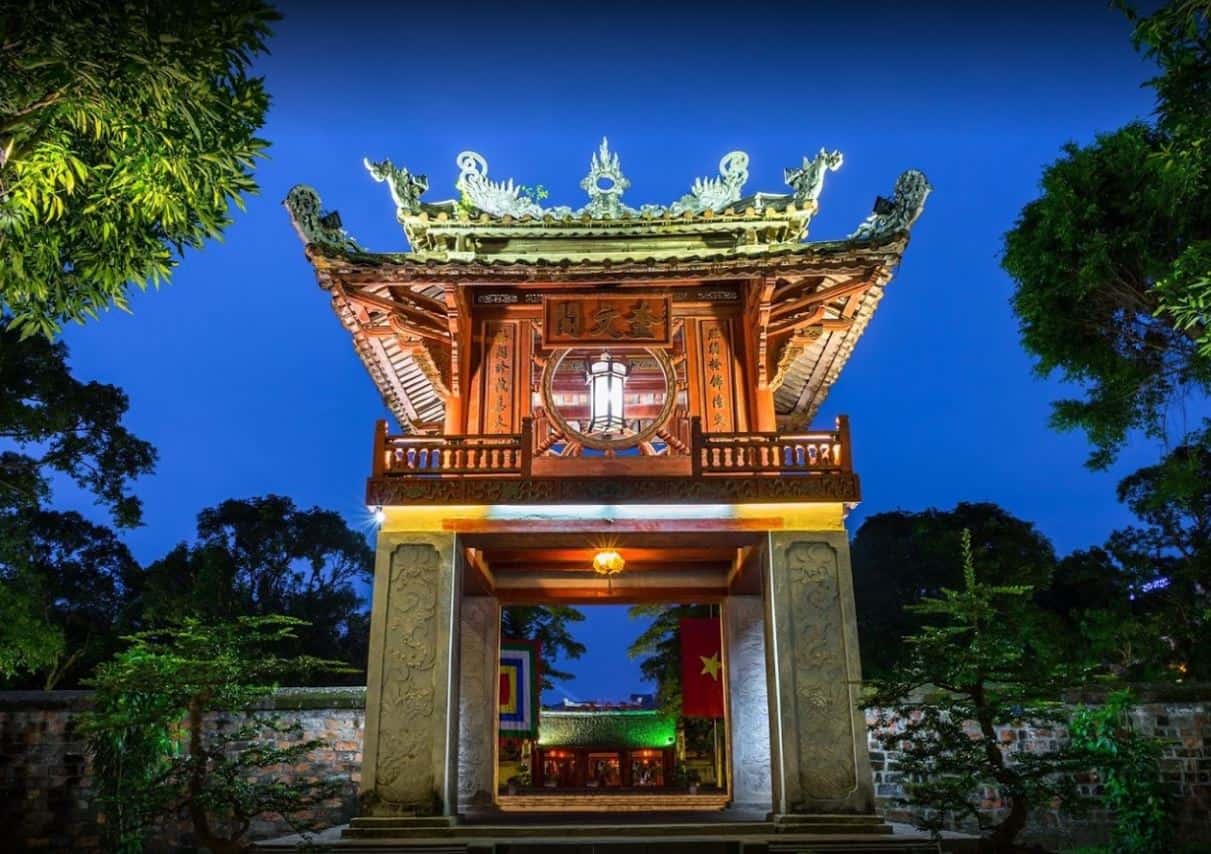
The meaning of Hanoi is showcased through the profound heritage of the Temple of Literature (Source: Collected)
Imperial Citadel of Thang Long: A full guide for visitors
Ba Dinh Square: A place marking the history of the Vietnamese nation
Ho Chi Minh Mausoleum: Pay a visit to the most solemn place in Hanoi
The meaning of Hanoi reflects its rich historical journey. From its ancient origins to its present-day vibrancy, each name narrates a tale of resilience, transformation, and identity. By exploring the definition of Hanoi and its various names, we gain a deeper appreciation for this city and its significance in Vietnam’s history.
During your visit to Hanoi, make sure to explore Ocean City, situated to the east of the city. This destination is ideal for both relaxation and entertainment, with a blend of green spaces and top-tier attractions. In particular, Grand World stands out with its wide variety of culinary delights and shopping options, catering to all tastes. Moreover, VinWonders Wave Park & Water Park offer an unforgettable beachside experience, featuring exciting water activities suitable for all ages.
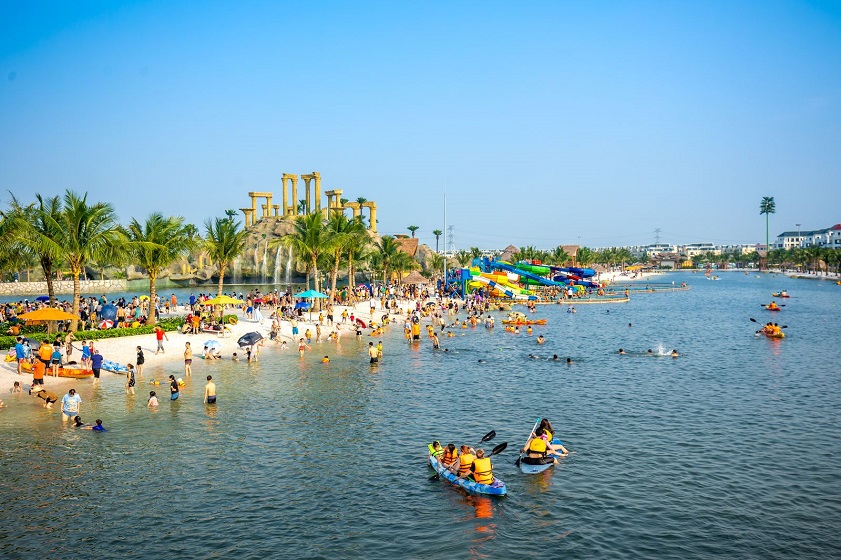
Enjoy a variety of fascinating water sports at VinWonders Wave Park & Water Park