en
en


 Tiếng Việt
  中文 (中国)
  한국어
한국어  Русский


 22/09/2024
 1.937 views
- 1. An overview of Son Doong Cave
- 2. The discovery and the origin of the name of Son Doong Cave
- 3. Amazing features and highlights of Son Doong Cave
- 4. How famous is Son Doong Cave worldwide?
- 5. Things to know about Son Doong Cave tours
1. An overview of Son Doong Cave
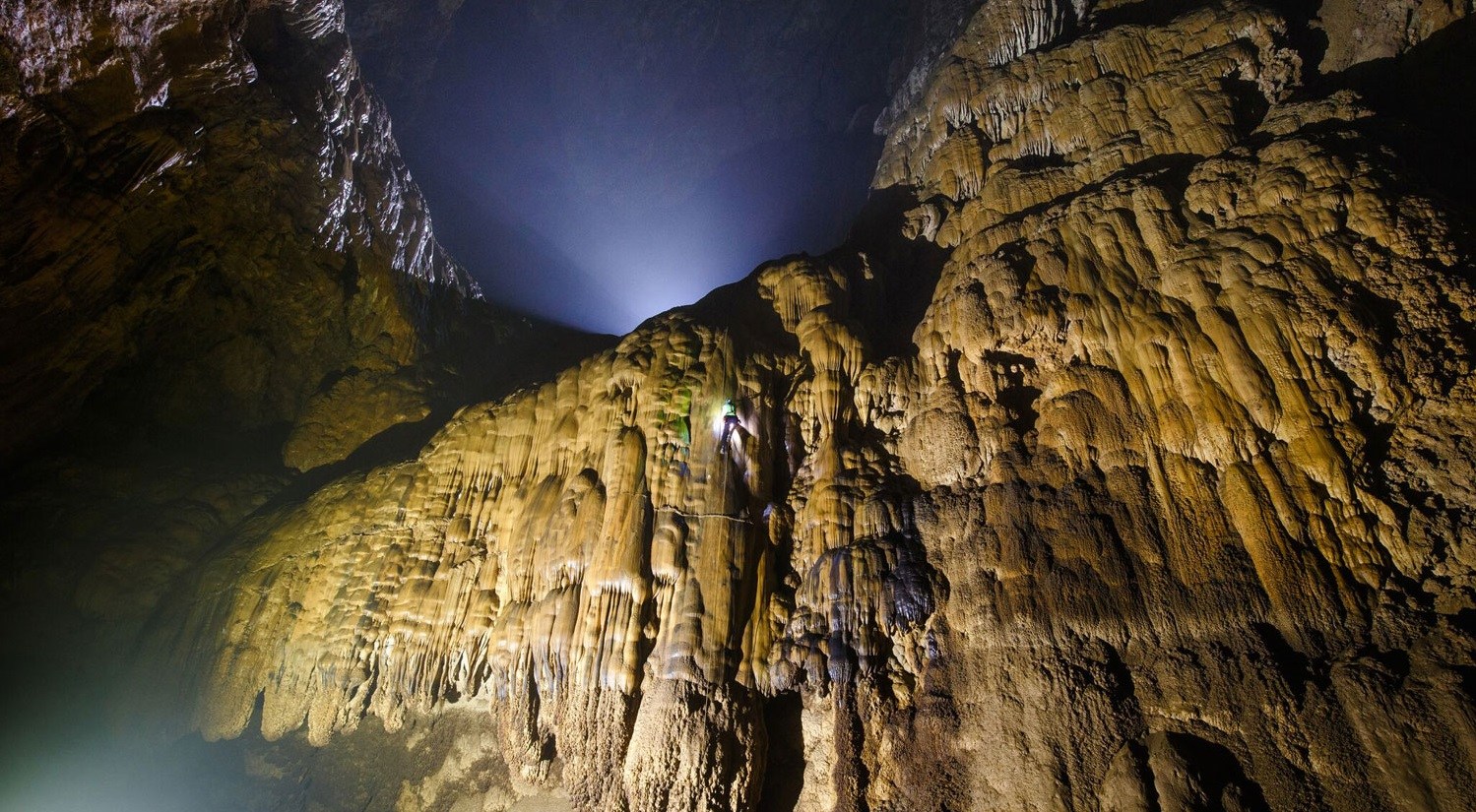
Son Doong Cave, located in Phong Nha – Ke Bang National Park in Quang Binh Province, Vietnam, is a geological wonder of immense proportions. Estimated to be 3 million years old, this cave stretches nearly 9 kilometers in length, with dimensions reaching up to 200 meters in height and 160 meters in width. Its size is so vast that it could easily accommodate a 40-storey skyscraper. Certain sections are big enough for a Boeing plane to fly through.
With a measured volume of approximately 38.5 million cubic meters, Son Doong Cave surpasses the previous record-holder, Deer Cave in Malaysia, to become the largest cave in the world. It also boasts remarkable geological features, including stalagmites that soar up to 80 meters high.

The majestic beauty of Son Doong Vietnam Cave (Source: Collected)
Since its discovery, Son Doong Cave has captivated experts, caving enthusiasts, and adventurous travelers with its awe-inspiring beauty. Beyond its sheer size, the cave is celebrated for its unique formations, making it an unparalleled attraction for those seeking to explore the planet’s most magnificent natural wonders.
2. The discovery and the origin of the name of Son Doong Cave
Son Doong Cave was first sighted in 1990 when a local man named Ho Khanh stumbled upon its entrance. However, it wasn’t until 2009 that the cave was officially discovered and thoroughly explored. British caving expert Howard Limbert, along with Ho Khanh, descended into the cave’s entrance, unveiling its vastness and geological features. Following this exploration, the National Geographic magazine announced in 2010 that Son Doong was the largest cave in the world, solidifying its place as a global natural wonder.
According to the tradition among cave explorers, the right to name a newly discovered cave typically goes to the person who finds it. After the expedition in 2009, Ho Khanh was given the honor of naming the cave. Although many suggested naming the cave after him to recognize his role in the discovery, he and the expedition team chose a more descriptive name. The name “Son Doong” is derived from two Vietnamese words. “Son” means “mountain,” while “Doong” is the name of a valley which the nearby Rao Thuong Stream flows by. “Doong” also refers to “a cave within a limestone mountain with an underground river.”
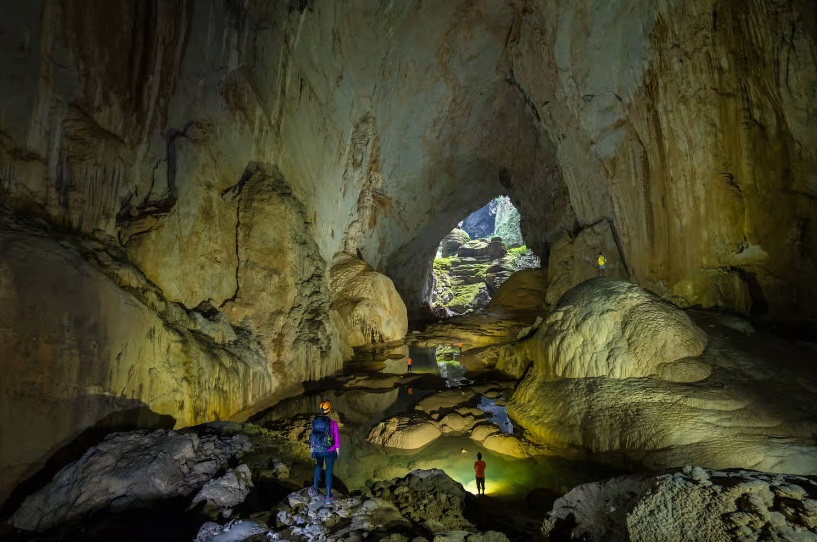
The massive Son Doong Cave length allows for the development of unique environments (Source: Collected)
Don’t forget to check out the Son Doong Cave map!
Best-selling products
![[Grand Park] Water Park + Dream Garden Outdoor Games Combo](http://booking-static.vinpearl.com/tours/35566b714d4c4dd9802a6bf4650ac2b1_khu-vui-choi-cua-hoi-9_vinwonders-nam-hoi-an-ve-vao-cua.jpg)
![[Nha Trang Passport] - [Half-Day] - Cable Car + Aquafield Sauna (2 hours) + Tata Show](http://booking-static.vinpearl.com/tours/c3bae84e472b42078ca3ff6f28d55d80_1c5968412aca409fa8571c88cc85a4ba_aqf%205_aquafield-nha-trang.jpg)
![[-50%] [VinWonders Wave Park] Standard Admission Ticket to Wave Park](http://booking-static.vinpearl.com/tours/f949b31af919495c9b4e111237642763_358600999_111579731994757_433244877993048710_n_vinwonders-ha-noi.jpg)
![[Aquafield] - 2-hour Aquafield Sauna + 30-min Spa](http://booking-static.vinpearl.com/tours/b0bf65880af449f39ea19fa0acbb94d5_34d71a9c3e6b4b7484f9d7cbbc935c26_200dd4dda03e45e0a1add52e4acc11fa_NHT_1796_ve-xem-tata-show-vinwonders-nha-trang_ve-xem-tata-show-vinwonders-nha-trang.jpg)
![[-30% Grand Opening] [Aquafield Ocean City] – Standard Jjimjilbang Sauna Ticket for Male](http://booking-static.vinpearl.com/tours/94abeb55e3d54efbac23f7a862445389_0d72b531dd6749bbac2874b915ab0512_Screenshot_8_aquafield-nha-trang_aquafield-nha-trang.png)
![[VinWonders Nha Trang] - VinWonders Admission Ticket & Buffet service](http://booking-static.vinpearl.com/tours/d1425f018b3e4d2d833374b5b52d8bb9_Hinh-anh-VinWonders-Nha-Trang-The-World-Garden-Lau-vong-canh-3x2-so-1_vinwonders-nha-trang-ve-vao-cua-sau-16h.jpg)
![[VinWonders Cua Hoi] - Tropical Paradise Water Park (9:00AM - 6:00PM)](http://booking-static.vinpearl.com/tours/aa8379d6db3a4f5c9df6d78d53177c35_11-E-Ticket-Vinwonder-Cua-Hoi_23072024111407_vinwonders-nam-hoi-an-ve-vao-cua.jpg)
![[Nam Hoi An Signature] VinWonders Ticket + VIP Safari Package | FREE Merchandise Gift](http://booking-static.vinpearl.com/tours/6c002e3ea71642f38eda8efa8654e5e4_vwnha0_vinwonders-nam-hoi-an-ve-vao-cua.jpg)
![[-30%] The Quintessence of Vietnam Show](http://booking-static.vinpearl.com/tours/6cee2bcb52a447009f64771095d03c9e_Screenshot%202024-10-22%20at%2014.49.18_ve-bao-tang-gau-teddy-bear.png)
![[02 Day Unlimited Access] - VinWonders + Vinpearl Safari Phu Quoc + Teddy Bear Museum](http://booking-static.vinpearl.com/tours/877d8a3289a246d18f95aa5cc414f6d6_27be58d21e244664bf34d11d72e77860_Castle_vinwonders-phu-quoc-ve-vao-cua_vinwonders-phu-quoc-ve-vao-cua.jpg)
![[Hon Tam] - [Zone A&B] - Full island entertainment + Mud Bath Zone A + Lunch](http://booking-static.vinpearl.com/tours/af991883d63f4133b62b76551ba2444d_tam-bun-dao-hon-tam_httpswwwhontammudbathvnwp-contentuploadssites2720190625-3-2200x700jpg.jpg)
![[Vinpearl Aquarium Times City] Entrance Ticket](http://booking-static.vinpearl.com/tours/8702a10bf2934d6299df65669a290679_aquarium%20times%20city%203_thuy-cung-vinpearl-aquarium-times-city.jpg)
![[Grand World Phu Quoc] - The Quintessence of Vietnam Show](http://booking-static.vinpearl.com/tours/f88e2be1139b4eada4043eb7f0e39362_THVN1_show-tinh-hoa-viet-nam.jpg)
![[Zoo Tram Combo] - Admission to Vinpearl Safari Phu Quoc + Zoo Tram](http://booking-static.vinpearl.com/tours/ceb77f9174d845ebb2fd3dfe2b846066_3%20copy_vinwonders-nam-hoi-an-ve-vao-cua.jpg)
![[Grand Park] Tropical Island Water Park Entrance Ticket](http://booking-static.vinpearl.com/tours/eeb9a602315342ccbc7965b29cfb0db0_Ảnh%20màn%20hình%202025-03-03%20lúc%2015.00.17_vinwonders-nam-hoi-an-ve-vao-cua.png)
![[VinWonders Phu Quoc] - Game Fastpass - Top 04 Rides](http://booking-static.vinpearl.com/tours/574c2b7798524c17a08f28feb80d45b5_fastpass%204%20games%20vwpq_vinwonders-phu-quoc-fastpass.jpg)
![[VinWonders Cua Hoi] - Cable Car + Games on the Island](http://booking-static.vinpearl.com/tours/63c924f8521a4af981666076c5c3b0fe_VinWonders%20Cua%20Hoi%20Summer%20Say%20Hi%20Banner%201920x920px_vinwonders-nam-hoi-an-ve-vao-cua.jpg)
![[Grand World Phu Quoc] [Ultimate Combo] - Water Taxi + Teddy Bear Museum + Grand Show](http://booking-static.vinpearl.com/tours/e31a9e66b5444808bba3e3114d195559_VENICE%20ALL%20IN%20ONE%20KV%20(1)_ve-bao-tang-gau-teddy-bear.jpg)
![[VinWonders Vu Yen] - [02 Adults + 01 Child] - Admission to Zoo + Games + Free Tote Bag](http://booking-static.vinpearl.com/tours/34488b227a3648e5b73d4aa6d6d36b46_DO__8153_vinwonders-nha-trang-ve-vao-cua-2-chieu.jpg)
![[Nha Trang Passport] - [Half-Day] - Cable Car + Aquafield Sauna (2 hours) + Tata Show](http://booking-static.vinpearl.com/tours/ef49c187eadf4177b425d2bb85a18b30_200dd4dda03e45e0a1add52e4acc11fa_NHT_1796_ve-xem-tata-show-vinwonders-nha-trang.jpg)
![[Vinpearl Aquarium Times City] Entrance Ticket](http://booking-static.vinpearl.com/tours/e7fcffc8256546e8bdcfd5ccfbe69783_VINKE2%20(1)_vinke-ve-vao-cua-truc-tiep.jpg)
![[Grand World] Carousel Ride](http://booking-static.vinpearl.com/tours/0d6a4bcfc2a54fd4aa9df0b38ae8c7b6_A2-4-jpeg-2640-1687438608_grandworld.jpg)
![[Vinpearl Harbour] - Tata Show Ticket & Round-trip Cable Car](http://booking-static.vinpearl.com/tours/3cbd16b8edc74f6abc7f7cfa0e91caec_VPHB_Photos15_vinwonders-nha-trang-ve-vao-cua-2-chieu.jpg)
![[VinWonders Phu Quoc] - Entrance Ticket + Gate Fastpass + Buggy](http://booking-static.vinpearl.com/tours/de2a24896b0e49469fa1e89e93aa5314_1920x1080%20VWPQ%20KV_vinwonders-phu-quoc-standard-entrance-ticket.jpg)

![[VinWonders Nha Trang] - Admission to VinWonders after 4:00 PM](http://booking-static.vinpearl.com/tours/de2da6d471b34297ab13cb26ef2da9a0_Hinh-anh-VinWonders-Nha-Trang-The-World-Garden-Lau-vong-canh-3x2-so-1_vinwonders-nha-trang-ve-vao-cua-sau-16h.jpg)
![[Buggy Combo] - VinWonders Phu Quoc + Buggy + Free Ice Cream](http://booking-static.vinpearl.com/tours/0fc52a574094489da612d0f36bb4b1e6_buggy%20kem_vinwonders-phu-quoc-ve-vao-cua-tet-vi-vu.jpg)
![[Aquafield] - [Male] - Round-trip Cable Car + 4-hour Korean Sauna](http://booking-static.vinpearl.com/tours/625529980f3249e6b0491cddfc30db43_297be2477c5847748ef3bc08603ebf90_aqf%204_aquafield-nha-trang.jpg)
![[VinWonders Vu Yen] - Admission Ticket to Zoo + Games + Water Park](http://booking-static.vinpearl.com/tours/b2cd8cf6b14c48459b21393e14d73163_vwvy%201_vinwonders-nha-trang-ve-vao-cua-2-chieu.jpg)
![[VinWonders Nha Trang] - 01-day Unlimited Admission Ticket | Free F&B Voucher](http://booking-static.vinpearl.com/tours/ccf23087ea0f419980c411d0e79c10fb_88c594a8352d49e7b031b9fbd5c5d27f_tro-choi-mao-hiem-o-vinpearl-nha-trang-thumb-1_vinwonders-nha-trang-khong-gioi-han-2-ngay_vinwonders-nam-hoi-an-ve-vao-cua.jpg)
![[VinWonders Cua Hoi] - Indoor Games Zone](http://booking-static.vinpearl.com/tours/b952de18058e4a67a8ffa52f2039e7d2_1920-x-1080-double%20day%20sale%2077%20no%20text_vinwonders-nam-hoi-an-ve-vao-cua.jpg)
![[Vinpearl Harbour] - Admission to VinWonders (after 4:00PM) & Round trip cable car](http://booking-static.vinpearl.com/tours/4b2d76bbde1f4c54a43370680d311928_Hinh-anh-VinWonders-Nha-Trang-The-World-Garden-Lau-vong-canh-3x2-so-1_vinwonders-nha-trang-ve-vao-cua-sau-16h.jpg)
![[Aquafield] - [Female] - 4-hour Korean Sauna](http://booking-static.vinpearl.com/tours/0e6fe24c37b84cb799b94dae70578054_aqf-suong-may-2048x1365_aquafield-nha-trang-xong-hoi-chuan-han.jpg)
![[Aquafield Ocean City] – VIP Membership (12 Months)](http://booking-static.vinpearl.com/tours/3c2f7ab0ed374cb1bbdb2e54e6d6eb9a_e1f2756dfec346f3bb3b16e296b3b166_Screenshot_5_aquafield-nha-trang_aquafield-nha-trang.png)
![[Hon Tam] - [Zone A] - Mud Bath + Lunch Combo](http://booking-static.vinpearl.com/tours/5debd1efb6d34e42a88efa65354c8c72_ebdde60fd9a44539afe75c9338ec8a3d_ảnh%205_tam-bun-hon-tam.jpg)
![[50% Student Discount] – VinWonders Admission Ticket](http://booking-static.vinpearl.com/tours/43126c168bb04853bf7c93e197db724a_Banner%201200x628_vinwonders-nha-trang-ve-vao-cua-2-chieu.jpg)
![[VinWonders Nam Hoi An] [Sunset Premium] Admission Ticket & Buggy Ride & VIP Safari Package & Afternoon Tea Set](http://booking-static.vinpearl.com/tours/3a1e510945b4421d861fede29a1b3e58_xE3mXzIVwTdZRf7M8zZfHqHIPqV17uyEOzL8PaUQ_vinwonders-nam-hoi-an-ve-vao-cua.jpg)
![[Grand World Phu Quoc] - Water Taxi Boat + Teddy Bear Museum](http://booking-static.vinpearl.com/tours/add2e0908faa4289b555856472b181be_VENICE%20ALL%20IN%20ONE%20KV%20(1)_ve-bao-tang-gau-teddy-bear.jpg)
![[VinWonders Vu Yen] - Admission Ticket to Games zone (after 5:00 PM)](http://booking-static.vinpearl.com/tours/edbd3eb4bc9848aead9940e0f5aa050d_fa21c62dfa9644ada0c3fce89b3e79ff_DO__8711_vinwonders-vu-yen-vuon-thu-khu-tro-choi-sau-17h.jpg)
![[Hon Tam] - [Zone A] - Standard Mud Bath](http://booking-static.vinpearl.com/tours/9db66a615a7d4f119316b338afff30cb_tam-bun-dao-hon-tam_httpswwwhontammudbathvnwp-contentuploadssites2720190625-3-2200x700jpg.jpg)
![[Vinpearl Harbour] - Round-trip Cable Car Ticket | Free Wishing Coin Voucher](http://booking-static.vinpearl.com/tours/e584c2f486d246c5820a19f519d184a4_VPHB_Photos15_vinwonders-nha-trang-ve-vao-cua-2-chieu.jpg)
![[VinWonders Phu Quoc] - Standard Entrance Ticket](http://booking-static.vinpearl.com/tours/0dd25afc61ad45d48486bbd3b9c8a96a_tieu%20chuan%201_vinwonders-phu-quoc-ve-vao-cua.jpg)
![[Nha Trang Passport] – [01 day] – Snorkeling Tour + Lunch & Mud Bath at Hon Tam + Vinpearl Harbour + Tata Show](http://booking-static.vinpearl.com/tours/f6b1826759674c9c9d3f074e03fa04ba_snorkeling%201_vinwonders-nha-trang-ve-vao-cua-2-chieu.jpg)
![[Aquafield] - [Male] - 4-hour Korean Sauna](http://booking-static.vinpearl.com/tours/4ae60d29ea264f8fab17beb6b4415502_aqf-da-muoi_aquafield-nha-trang-xong-hoi-chuan-han.jpg)
![[Aquafield Ocean City] [Male] – Standard Jjimjilbang Sauna Ticket](http://booking-static.vinpearl.com/tours/0be276c684454e8d969c373f35f6be97_DSC_2127_11zon_aquafield-nha-trang.jpg)
![[Aquafield] - Round-trip Cable Car + Korean Sauna + Body Scrub](http://booking-static.vinpearl.com/tours/d00bc95eb402434c8f4a4756c2a3ad3d_Akoya-spa-Villa-Vinpearl-Resort-Spa-Phu-Quoc-12_aquafield-nha-trang.jpg)
![[Onsite service] - Premium VIP Zoo Tour Vinpearl Safari Phu Quoc](http://booking-static.vinpearl.com/tours/ff1e4b66ec1b46edad0c0460144e70ad_VINPEARL%20SAFARI%20PHU%20QUOC%20%20(51)_vinwonders-nam-hoi-an-ve-vao-cua.jpg)
![[VinWonders Nam Hoi An] - Standard Admission Ticket](http://booking-static.vinpearl.com/tours/81813f8ced2c466e82ad53f1c29c1904_tour-kham-pha-van-hoa-viet-vinwonders-nam-hoi-an-668ca102bcc29_vinwonders-nam-hoi-an-ve-vao-cua.jpg)
![[Nam Hoi An Signature] VinWonders Ticket + VIP Safari Package | FREE Merchandise Gift](http://booking-static.vinpearl.com/tours/881ac31c4a2b4687a59f412901e85b2c_VIN2725_-08746%20(2)_vinwonders-nam-hoi-an-ve-vao-cua.jpg)
![[Aquafield Ocean City] [Male] – VIP Membership (12 Months)](http://booking-static.vinpearl.com/tours/6ab10678fcbd4822a8fddb0590d3bcbf_0d72b531dd6749bbac2874b915ab0512_Screenshot_8_aquafield-nha-trang_aquafield-nha-trang.png)
![[-10%] - VIP River Safari Ticket*](http://booking-static.vinpearl.com/tours/5d3ee19e977446be8917a34697bb9443_ece6e58a02fd48de9eba9d3f4689f77a_Hinh-anh-VinWonders-Nam-Hoi-An-River-Safari-3x2-so-1%20(1)_vinwonders-nam-hoi-an-ve-vao-cua_vinwonders-nam-hoi-an-ve-vao-cua.jpg)
3. Amazing features and highlights of Son Doong Cave
3.1. The impressive passages
Son Doong Cave houses an impressive ecosystem within its vast passages. Formed by an underground river and adorned with formations created by water filtering down from a rainforest above, it is home to many stunning sections.
- The “Hope and Vision” passage: This is one of the largest sections of Son Doong Cave. From the beginning of the passage, visitors can see light from Doline 1, an area located 1.5 kilometers away. Cave experts estimate that a 40-storey skyscraper could easily fit within this passage, and it is spacious enough for a Boeing 747 to fly through. This passage also features the world’s tallest stalagmite, which stands approximately 80 meters tall.
- The fossil passage: Situated next to the underground river at a depth of 40 meters below the campsite at Doline 1, the fossil passage is marked by corals that have been fossilized over hundreds of millions of years. It also contains an underground lake, providing a refreshing spot for visitors to swim and relax after a day of trekking. For safety, life jackets and headlamps are required here. Many visitors consider swimming in this underground lake a highlight of the Son Doong expedition.
- The “Passchendaele” passage: Located below the “Great Wall of Vietnam,” this passage features a 600-meter-long lake. When the expedition team first discovered the area, the lake had drained, leaving behind a muddy path that reminded them of the Battle of Passchendaele from World War I, hence the name. During certain times of the year or after heavy rains, the lake is filled, transforming into a beautiful jade-green body of water.
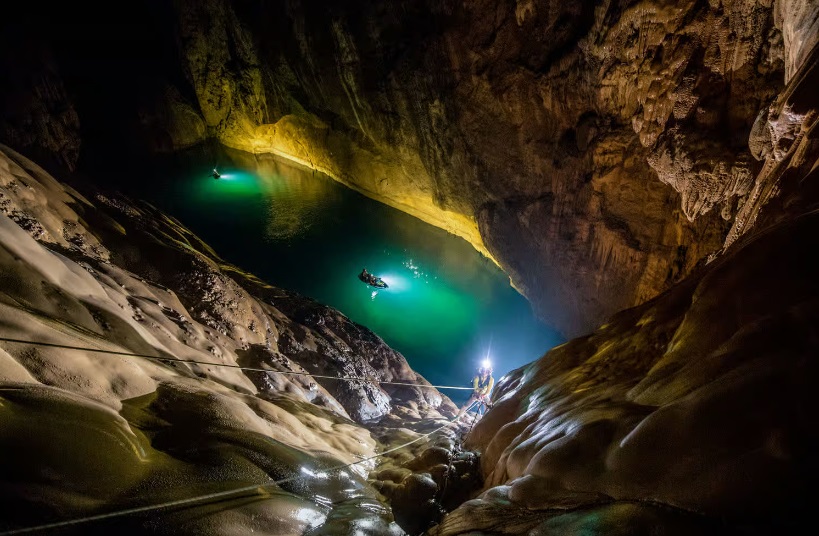
Son Doong travel offers a unique adventure experience (Source: Collected)
3.2. The two sinkholes and the forest
Son Doong Cave is unique for being the only cave on Earth with its own primeval forest, a fact highlighted by the National Geographic. About 500,000 years ago, two sinkholes were formed, allowing light to reach parts of the cave and creating the conditions for flora to flourish.
- Sinkhole 1 – Dinosaur Watch: This area has steep terrain with a rocky floor and little soil. The narrow opening means not much light gets in, so only small plants like ferns, moss, and algae grow here.
- Sinkhole 2 – Garden of Edam: In contrast, this sinkhole is home to a large primeval forest, with trees reaching over 40 meters in height. Walking through this lush forest feels like being in a regular forest, though it is actually located more than 200 meters underground. This area, known as the Garden of Eden, is filled with a variety of plants thanks to the unique conditions of the cave.
3.3. The underground river
Inside Son Doong Cave, an underground river flows, formed by water from En Cave and Khe Ry Cave. Khe Ry Cave is the longest river cave in Vietnam, with water originating from the Vietnam-Laos border. To reach the “Hope and Vision” passage from the entrance of Son Doong Cave, you must cross the knee-deep river twice. There are emergency bridges available if the water level rises too high.
The journey along this underground river is marked by the sound of small waterfalls, which create a loud rumble as the water cascades down. At times, the cave can fill with mist, adding to the mysterious atmosphere. This underground river continues for about 4.5 kilometers from the cave entrance before it disappears near Doline 1, contributing to the dynamic environment within Son Doong Cave.

Witness the incredible sight of the Son Doong Vietnam Cave forest (Source: Collected)
3.4. The unique cave pearls
Son Doong Cave is home to unique cave pearls, which are formed by dripping water carrying calcite carbonate from the ceiling down to the gour pools on the cave floor. These pearls come in various sizes and shapes, ranging from as small as peas to as large as baseballs. They look especially stunning under headlamps, particularly on rainy days when water flows over them.
These cave pearls are simply deposits of calcium carbonate and do not hold any significant value. If exposed to direct sunlight, they quickly lose their luster as they dry out. The cave pearls’ beauty is best appreciated in their original environment within Son Doong Cave.
3.5. The Great Wall of Vietnam
The “Great Wall of Vietnam” is one of the most awe-inspiring features of Son Doong Cave. This imposing flowstone formation, which blocked the path of explorers during the expedition in 2009, was aptly named for its impressive size and the challenge it presented. At that time, no one knew what lay beyond this massive stalagmite barrier.
The name “Great Wall of Vietnam” reflects both the grandeur of the structure and the adventurous spirit required to explore Son Doong Cave. Today, it continues to captivate visitors with its sheer scale, symbolizing the cave’s untamed nature. As one of the highlights of the Son Doong trip, the “Great Wall of Vietnam” offers tourists a breathtaking glimpse into the wonders hidden underground.
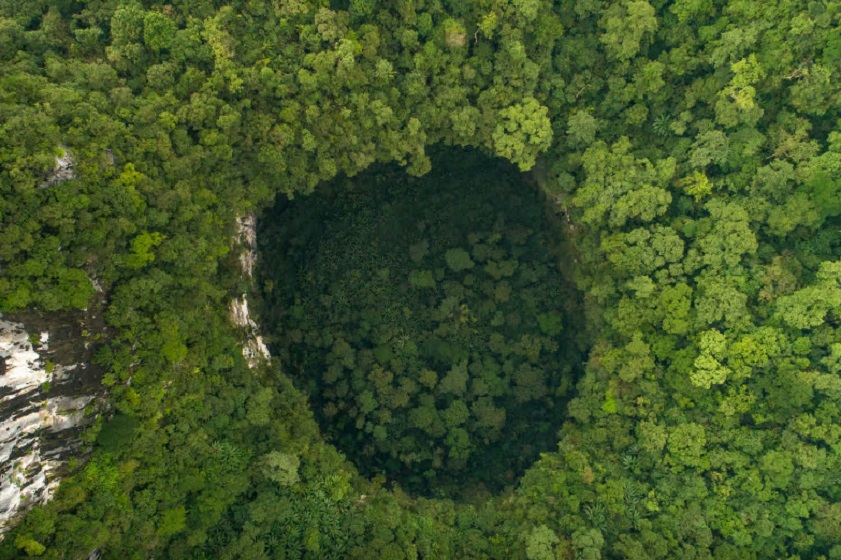
The Son Doong Cave ecosystem is unique and delicate (Source: Collected)
3.6. The diverse flora and fauna
Son Doong Cave hosts a unique ecosystem, which was created by the convergence of ideal weather, sunlight, and humidity. This environment supports a complete ecosystem with characteristics similar to tropical forests.
The food chain within the cave includes various components: inanimate elements like rocks, water, and hard soil, flora, and fauna. Herbivores such as squirrels, beetles, crickets, and aphids thrive in this environment. Predatory species like snakes, bats, and weasels feed on these herbivores. Decomposers, including bacteria and fungi, play a crucial role in breaking down organic matter.
Biologists have recently identified over seven new Son Doong cave animals, including fish, aphids, millipedes, spiders, and scorpions. These species share common traits like a lack of eyes and transparent bodies, which are adaptations to the cave’s unique conditions. These discoveries have been recognized by German and Vietnamese biologists, highlighting the cave’s biodiversity and the importance of preserving this unique natural habitat.
3.7. The weather system
Due to its immense size, Son Doong Cave in Phong Nha has developed its own unique weather system. Inside the cave, temperatures range from 22 to 25°C in summer (which are generally 8-12°C cooler than the outside) and from 18 to 22°C in winter. This cooler climate is partly due to the waterfall inside the cave and the difference in air pressure between the cave’s interior and exterior. These factors combine to create layers of fog within the cave, adding to its otherworldly atmosphere.
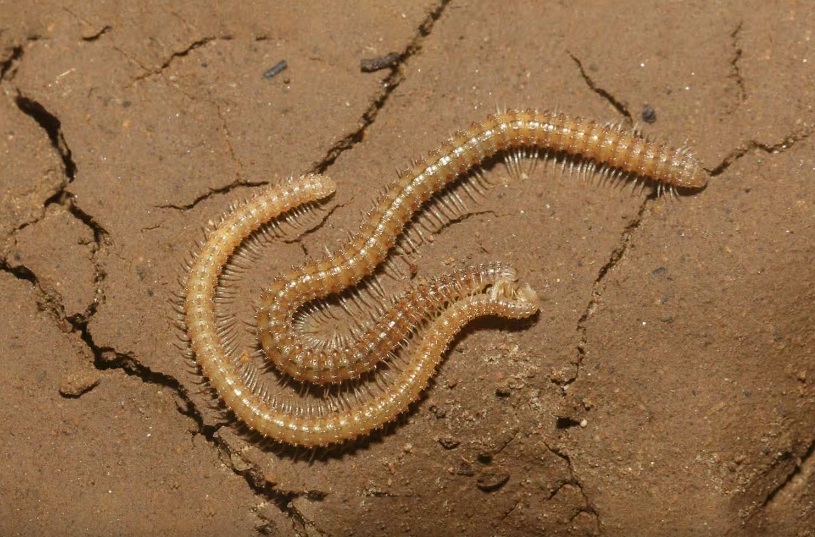
The presence of Son Doong animals adds to the cave’s intrigue (Source: Collected)
Don’t forget to check Phong Nha weather in advance!
4. How famous is Son Doong Cave worldwide?
Son Doong Cave gained worldwide fame through several recognitions:
- In 2009, the British Vietnam Cave Expedition Team, led by Howard Limbert, surveyed Son Doong Cave and declared it the world’s largest cave. This discovery was confirmed by senior karst geologists, including Dr. Tony Waltham.
- The findings were widely covered by the National Geographic magazine and TV channel, bringing international attention to the cave.
- On April 30, 2013, Son Doong was officially recognized as the largest cave in the world by the Guinness Book of World Records.
- In 2014, the New York Times listed Son Doong as one of the “52 Most Attractive Tourist Destinations” in the world.
- In 2015, the cave was featured in a live broadcast on the ABC News’ “Good Morning America”, a 360-degree photo series and interactive website by the National Geographic.
- In 2019, DJ Alan Walker filmed a music video titled “Alone Pt. II” inside the cave, which became a viral hit on YouTube.
- In 2020, the Business Insider included Son Doong Cave in its list of “20 Outstanding Natural Wonders.”
- During the COVID-19 pandemic in 2021, the National Geographic 360 photo series became a popular virtual reality tour.
- On April 14, 2022, Google Doodle honored Son Doong Cave, featuring it on its search page in 18 countries.
- In November 2023, the cave was featured in the BBC nature documentary series “Planet Earth III – Extreme.”
- In March 2024, the Time Out magazine ranked Son Doong as the 6th most beautiful cave in the world.
These recognitions have helped establish Son Doong Cave as a global natural wonder, attracting attention from explorers, scientists, and tourists alike.

The Son Doong Cave system is renowned for its enormous size (Source: Collected)
5. Things to know about Son Doong Cave tours
Currently, only Chua Me Dat Company Limited (OXalis) holds the exclusive license to operate adventure tours for exploring Son Doong Cave.
5.1. Itinerary and things to do
Embarking on a Son Doong Cave tour is one of the most exhilarating things to do in Phong Nha. The journey through its vast chambers, towering stalagmites, and lush forests promises a blend of awe-inspiring beauty and thrilling exploration.
- Day 1: Phong Nha – Safety briefing
This briefing session is mandatory for participating in the Son Doong tour, and missing it will result in being unable to join the expedition with no refund provided. During the briefing, you will sign the necessary documents and receive your gear, including trekking shoes and a backpack, which will be inspected by safety experts. The evening concludes with a welcome dinner at Oxalis Home, offering a chance for the group to get acquainted. After dinner, you will return to your hotel to prepare for the trek and rest up for the adventure ahead.
- Day 2: Doong Village – En Cave
The expedition kicks off with a steep 350-meter descent into the national park, followed by a 30-minute forest trek to Doong Village. After lunch break, a three-hour walk leads to En Cave, where you will camp for the night. This leg of the journey offers stunning views of nature. Upon arrival at Hang En, you will find your tent set up with your name. The cave also features a lake perfect for swimming. Dinner will be served, setting the stage for a restful night in preparation for the next day’s adventure into Son Doong Cave.
- Day 3: Son Doong Cave entrance – Doline 1 campsite
The day begins with further exploration of En Cave, including a visit to the exit featured in a Peter Pan movie. You will cross a river and ascend a steep hill to reach the entrance of Son Doong Cave. After having lunch at the entrance, you will gear up for a safe descent into the cave, guided by a safety briefing. As you navigate the slopes and cross more rivers, you will encounter the impressive “Hand of Dog” stalagmite. By around 4 pm, you will arrive at the first campsite in Son Doong, known as the “Level Playing Fields,” just before Doline 1. The campsite includes facilities like bathrooms and changing areas.
- Day 4: The Garden Of Edam – Doline 2 campsite
This day involves exploring the cave’s steep climbs, tight passages, and rope sections to reach the “Watch out for Dinosaurs,”, or Doline 1. Descending from there, you will arrive at the “Green Gours,” which is especially breathtaking when the light streams in on sunny days. After having lunch here, you will continue along calcite pathways to the “Garden of Edam” at Doline 2. A slippery descent leads to a campsite where you can rest, take photos, and soak in the scenery.
- Day 5: The Great Wall Of Vietnam – Son Doong Cave exit – Chay Lap Farmstay
You will start the day with breakfast and a safety briefing, which prepares you to tackle the Great Wall of Vietnam, one of the most exciting and challenging parts of the Son Doong Cave experience. After having lunch atop the Wall, you will exit the cave, navigate a final rocky stretch, and trek through the forest to reach Ho Chi Minh Trail. Here, the Son Doong expedition tour concludes, and you can celebrate with beer and soft drinks. The guide will escort you back to Chay Lap Farmstay, arriving around 3 pm.
- Day 6: Chay Lap Farmstay – Dong Hoi
Depending on your schedule, you can either depart after breakfast or spend additional time exploring more attractions in Phong Nha. Notable sites include Phong Nha Cave, Chay Lap Water Sport Center, Paradise Cave, Mooc Spring, and Bong Lai Valley.
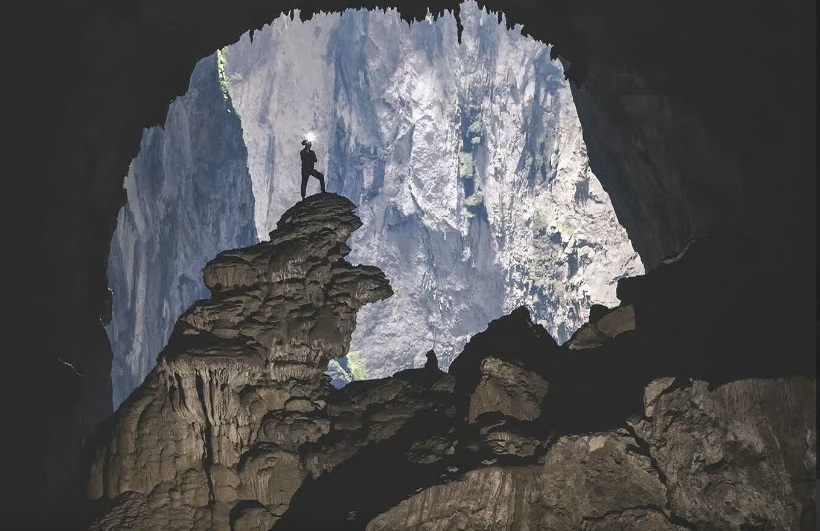
The Son Doong discovery has significantly impacted the field of speleology (Source: Collected)
5.2. Tour package and price
The Son Doong expedition is priced at US$3,000 per person. This cost has included VAT, entrance fees, and various service fees, of which US$600 is for the environmental service fee and US$20 is for the national park management and supervision fees.
The tour package also encompasses:
- Transport: Pick-up and drop-off at Dong Hoi airport/train station
- Staff: 1 cave expert, 1 tour guide, 6 safety assistants, 2 chefs, 17 porters
- Food and beverages: Meals, tea, and coffee (vegetarian options available upon request)
- Accommodation: 1 night at Son Doong Bungalow, 3 nights camping in the cave, 1 night at Chay Lap Farmstay
- Safety equipment: Helmets, belts, headlamps, gloves, and other gear
- Travel insurance: Coverage of up to 50 million VND
5.3. Important notes
Here are some other crucial information that you should know before embarking on a Son Doong Cave tour:
- The tour has six difficulty levels. Level 1 is the easiest, suitable for most people. Level 6 is the most challenging, ideal for those who regularly exercise or participate in mountain climbing and trekking.
- To join the Son Doong expedition, you must have completed at least 1 overnight trek and 1 or 2 day treks in the past 12 months. These treks should involve forests, mountains, rocks, or slopes, covering a minimum of 8 km per day (5 miles) with an altitude difference of 300 meters.
- Physical training should include engaging in vigorous sports such as soccer, cycling, or skiing. Alternatively, regular outdoor exercise, such as walking or jogging (3-4 sessions per week, each 4-5 km), is required.
- You should be able to run 5 km continuously within 50 minutes and climb 5 floors continuously without experiencing shortness of breath or dizziness.
- Participants must be between 18 and 70 years old.
5.4. FAQs about the Son Doong Cave tour
5.4.1. Is Son Doong Cave open for tours year-round?
Son Doong Cave is open for tours from January to the end of August each year. The tours are not available during the rest of the year due to the Son Doong weather conditions and to allow for ecosystem regeneration. This schedule ensures the safety of tourists and the preservation of the cave’s environment.
5.4.2. How do I book a tour to Son Doong Cave?
Booking a tour to Son Doong Cave involves careful preparation. Follow these steps to ensure a smooth booking process:
- Check the tour program and make sure you are fit enough for the adventure.
- Make sure you are interested in the activities included in the tour.
- Complete the booking form online with honest information about your fitness.
- Oxalis will contact you within 48 hours to review your details and guide you on the next steps. If you do not hear from them, check your spam folder or call them directly.
- Pay the full tour price to confirm your booking.
- Oxalis will help you prepare for the tour and answer any questions you might have.
- Update your health details with Oxalis 45 days before your tour date.

The best time to visit Son Doong Cave is during the dry season (Source: Collected)
5.4.3. What should I bring for the Son Doong tour?
The Son Doong expedition is an extensive trek through varied terrains. Here is what you should bring:
- Clothes
-
- Trekking clothes
-
-
- 3-4 long-sleeved, quick-drying, light-colored shirts
-
-
-
- 2-3 pairs of long, quick-drying trekking pants
-
-
-
- 1 windbreaker for winter (January – March)
-
-
- Camp clothes
-
-
- Long pants and thermal shirts for winter (January – March)
- Shorts and t-shirts for summer (April – August)
-
-
- Footwear
-
-
- 1 pair of mountain climbing shoes with good grip and water drainage
-
-
- Additional gear
-
-
- 1 trekking backpack for essential items (helmet, water bottle, camera, phone)
-
-
-
- 4 pairs of thick, calf-length socks
-
-
-
- 1 pair of cross-strap sandals or camp sandals
-
-
-
- 1 dry bag for electronic devices
-
-
-
- 1 set of swimsuits
-
- Personal items
-
- Sunglasses, hat, sunscreen, and a hand fan (for summer)
-
- Mosquito spray
-
- 1-2 medium-sized towels
-
- Personal hygiene items (toothpaste, toothbrush, eco-friendly shampoo, shower gel)
-
- Underwear
-
- Spare batteries
-
- ID/passport
-
- Personal medication
-
- Foot powder for moisture control
5.4.4. How do I get to Son Doong Cave?
Access to Son Doong Cave is only possible through an organized tour. Once you book your tour, it will include transport from Dong Hoi to Phong Nha. To get to Dong Hoi, you can take the plane, train, or coach.
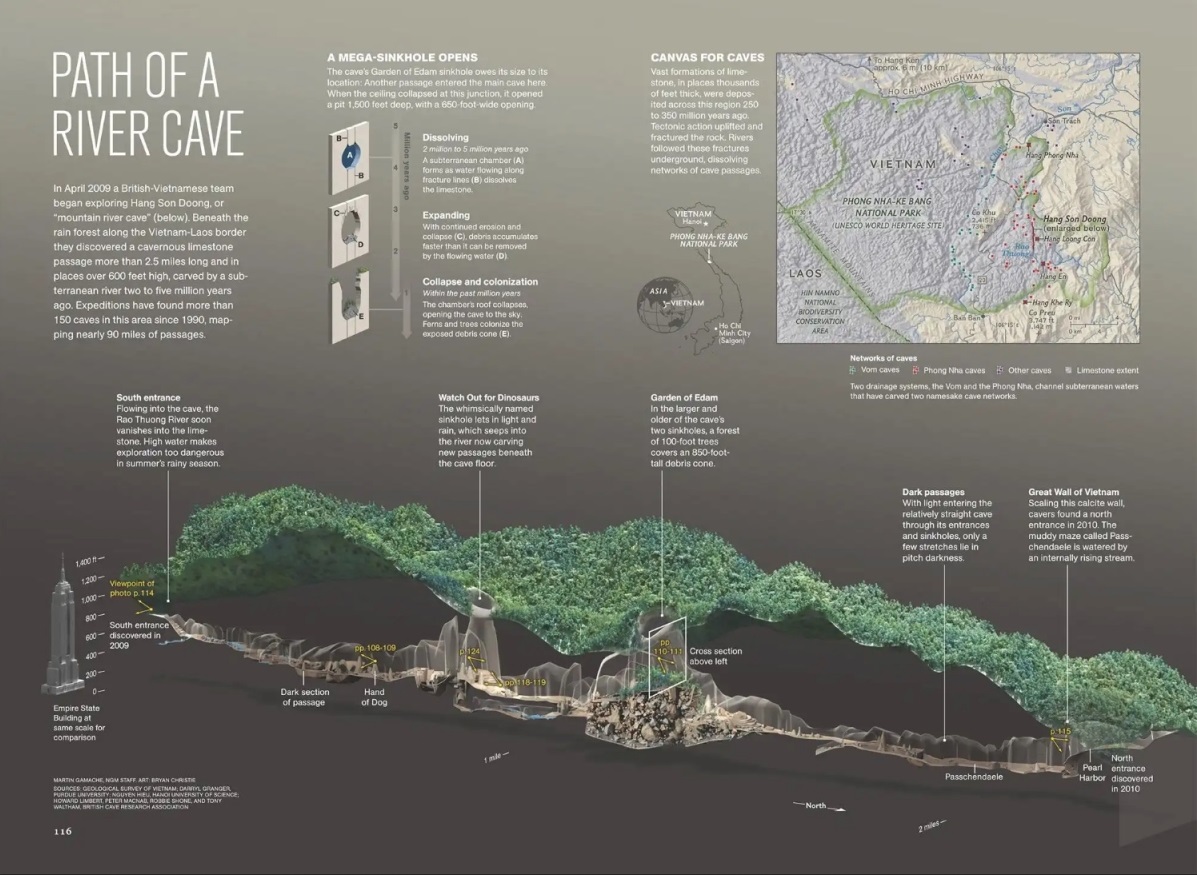
Study a Son Doong map to understand the cave’s layout (Source: Collected)
Explore how to go from Hanoi to Phong Nha!
Son Doong Cave, a natural wonder of immense scale and beauty, offers an unparalleled adventure for those seeking to explore the world’s largest cave. Embarking on a Son Doong Cave tour is not just about witnessing natural splendor but also about embracing the spirit of adventure in one of the most remarkable places on Earth.
In addition to the awe-inspiring Son Doong Cave, Quang Binh Province offers a wealth of other must-see attractions such as The Duck Stop, Eight Ladies Cave, Nhat Le Beach, and Quang Phu Sand Dunes.
Beyond Quang Binh, you can extend your Vietnam travel to discover the vibrant culture of Hanoi, marvel at the natural beauty of Ha Long, immerse yourself in the charming streets of Hoi An, or unwind on the beautiful beaches of Nha Trang and Phu Quoc.
While you are in Vietnam, it is highly recommended that you take the time to unwind at the entertainment complexes of VinWonders. VinWonders offers both thrilling and family-friendly fun with diverse attractions, from exhilarating rides and water slides to immersive activities and spectacular shows.
When it comes to accommodation, Vinpearl stands out with its luxurious hotels and resorts. Located in stunning destinations across Vietnam, Vinpearl provides a blend of sophistication and comfort. Each property is designed to offer unparalleled services, modern amenities, and breathtaking views, ensuring a premium stay.
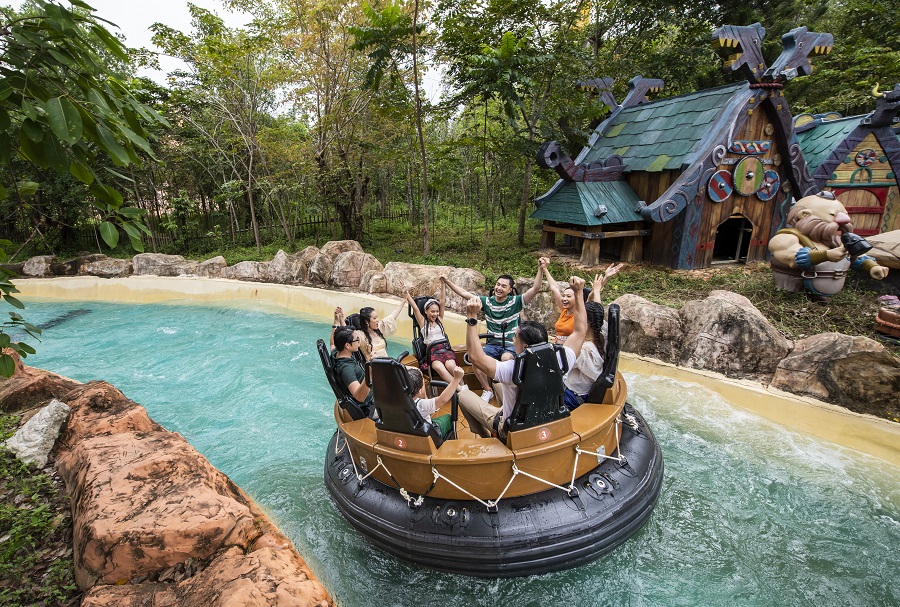
Experience thrilling rides at VinWonders
Book VinWonders Phu Quoc ticket now
Book VinWonders Nha Trang ticket now
Book VinWonders Nam Hoi An ticket now
Best-selling products