 en
en


 Tiếng Việt
  中文 (中国)
  한국어
한국어  Русский


 31/10/2025
 238 views
- 1. Natural landmarks in Southeast Asia
- 1.1. Ha Long Bay, Vietnam
- 1.2. Son Doong Cave, Vietnam
- 1.3. Phu Quoc Island, Vietnam
- 1.4. Khao Yai National Park, Thailand
- 1.5. Chocolate Hills, Philippines
- 1.6. Banaue Rice Terraces, Philippines
- 1.7. Bali, Indonesia
- 1.8. Komodo National Park, Indonesia
- 1.9. Pink Beach, Indonesia
- 1.10. Mount Kinabalu, Malaysia
- 2. Cultural and historical landmarks in Southeast Asia
- 2.1. Angkor Wat, Cambodia
- 2.2. Hoi An Ancient Town, Vietnam
- 2.3. Cu Chi Tunnels, Vietnam
- 2.4. Hue Imperial City, Vietnam
- 2.5. My Son Sanctuary, Vietnam
- 2.6. Borobudur Temple, Indonesia
- 2.7. Grand Palace, Thailand
- 2.8. Wat Rong Khun, Thailand
- 2.9. Batu Caves, Malaysia
- 2.10. Bagan, Myanmar
- 2.11. Plain of Jars, Laos
- 3. Modern architectural landmarks in Southeast Asia
1. Natural landmarks in Southeast Asia
1.1. Ha Long Bay, Vietnam
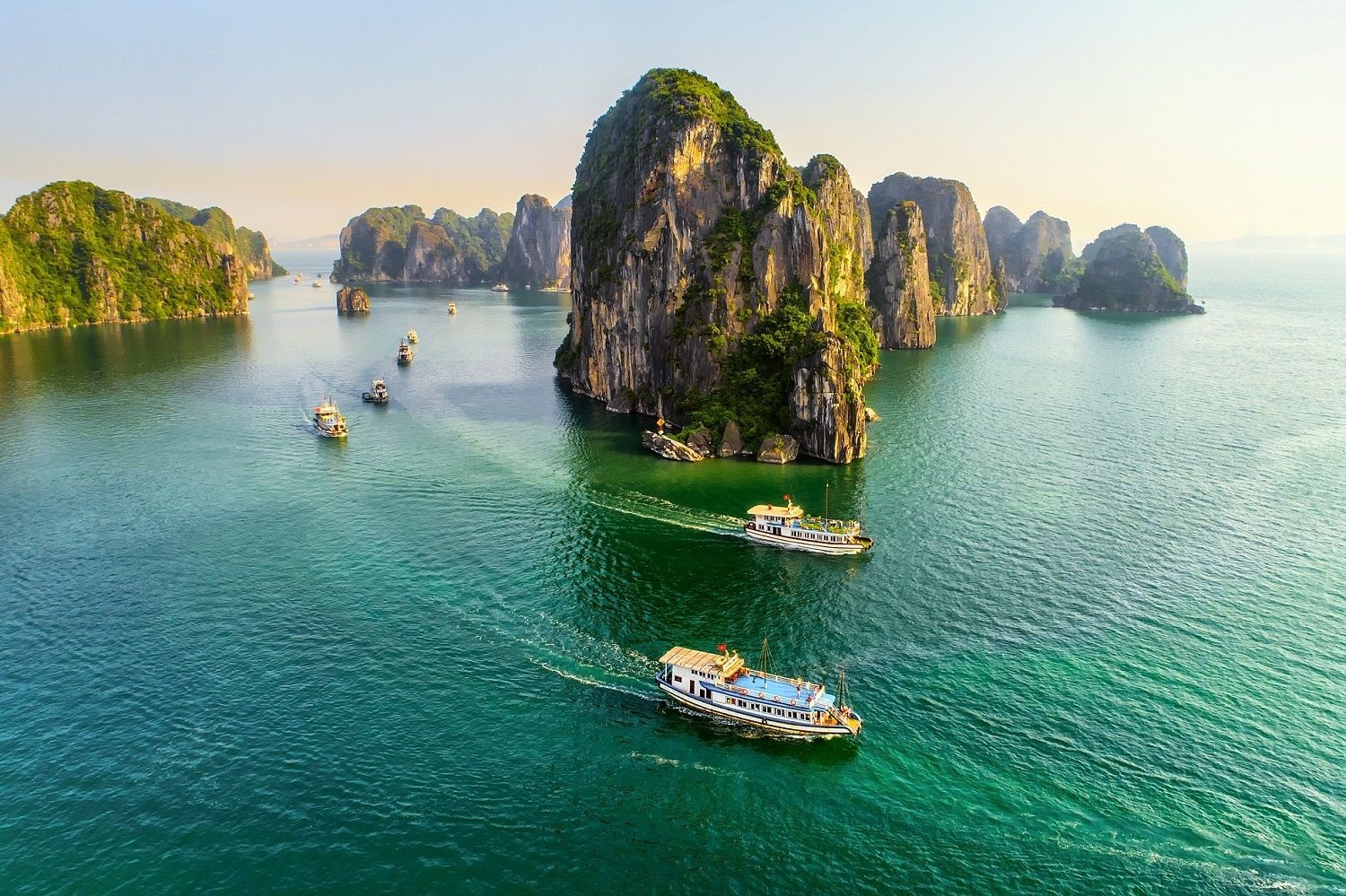
Ha Long Bay is one of the most iconic Southeast Asian landmarks and a UNESCO World Heritage Site. Located in Quang Ninh Province, this bay features thousands of limestone islets rising from emerald waters. The Insider magazine named it among the 50 most breathtaking natural wonders on the planet.
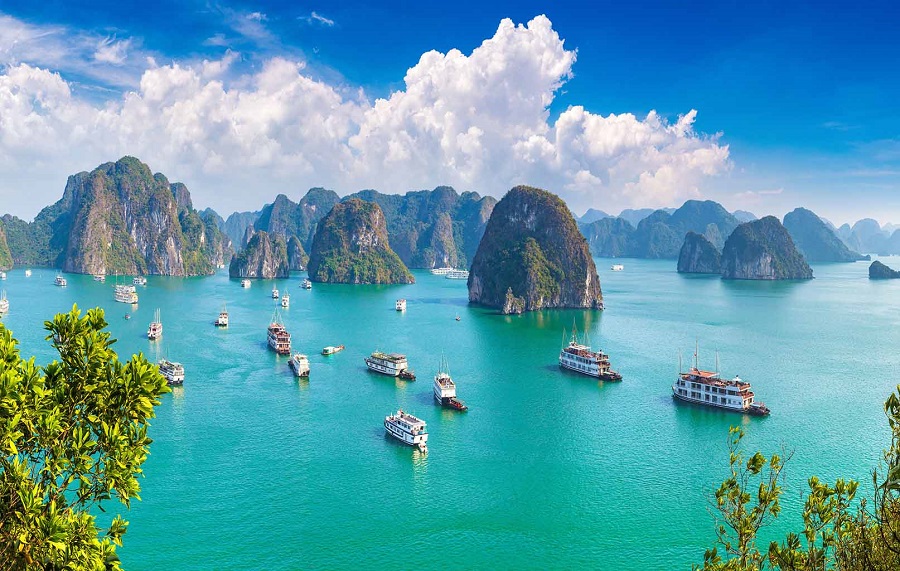
Few landmarks in Southeast Asia surpass the beauty of Ha Long Bay (Source: Collected)
A cruise will take you past Fighting Cocks Islet and Ti Top Island. Sung Sot Cave, Thien Cung Cave, and Luon Cave are also essential stops, known for their impressive stalactites and vast chambers. For a glimpse of local life, you should not miss out on Cua Van Floating Village, where homes rest on the water. A day cruise is enough for these highlights, but an overnight trip will let you enjoy the sunrise and sunset on the bay.
1.2. Son Doong Cave, Vietnam
Deep within Phong Nha – Ke Bang National Park in Quang Binh Province (now part of Quang Tri Province) lies Son Doong Cave, one of the most remarkable Southeast Asian landmarks. At nearly 9 kilometers long with a volume of 38.5 million cubic meters, it is the largest natural cave on Earth. Some passages reach over 200 meters high and 150 meters wide.
Inside, collapsed ceilings create natural skylights. This supports the growth of trees up to 30 meters tall and more than 200 plant species. An underground river winds through the cave, home to rare blind fish and newly recorded species. Massive stalactites and hidden rainforests add to its otherworldly scale. The untouched ecosystem makes Son Doong Cave one of the most extraordinary Southeast Asian landmarks.

Son Doong Cave is a natural wonder that defines Southeast Asian landmarks (Source: Collected)
1.3. Phu Quoc Island, Vietnam
Located in Kien Giang Province (now part of An Giang Province), Phu Quoc Island is among Vietnam’s most beloved escapes. Travel Off Path ranks it among the five fastest-growing destinations in the region. Its allure lies in white-sand beaches, coconut groves, and lush hills.
You can relax at Sao Beach, Bai Khem Beach, or Bai Dai Beach, all known for their calm settings. For island hopping, head to Fingernail Island and Gam Ghi Island, both offering great snorkeling spots. Phu Quoc National Park gives you access to hiking trails and rich biodiversity.
For a fulfilling day out, VinWonders Phu Quoc, Vietnam’s largest theme park, awaits with roller coasters, water slides, and cultural shows. Vinpearl Safari Phu Quoc brings you close to rare animals in a semi-wild environment and includes both zoo and safari areas.
Staying at the hotels and resorts of Vinpearl Phu Quoc makes it easier to explore all the island’s attractions. With its variety of landscapes and activities, Phu Quoc deserves a spot on your list of go-to Southeast Asian landmarks.
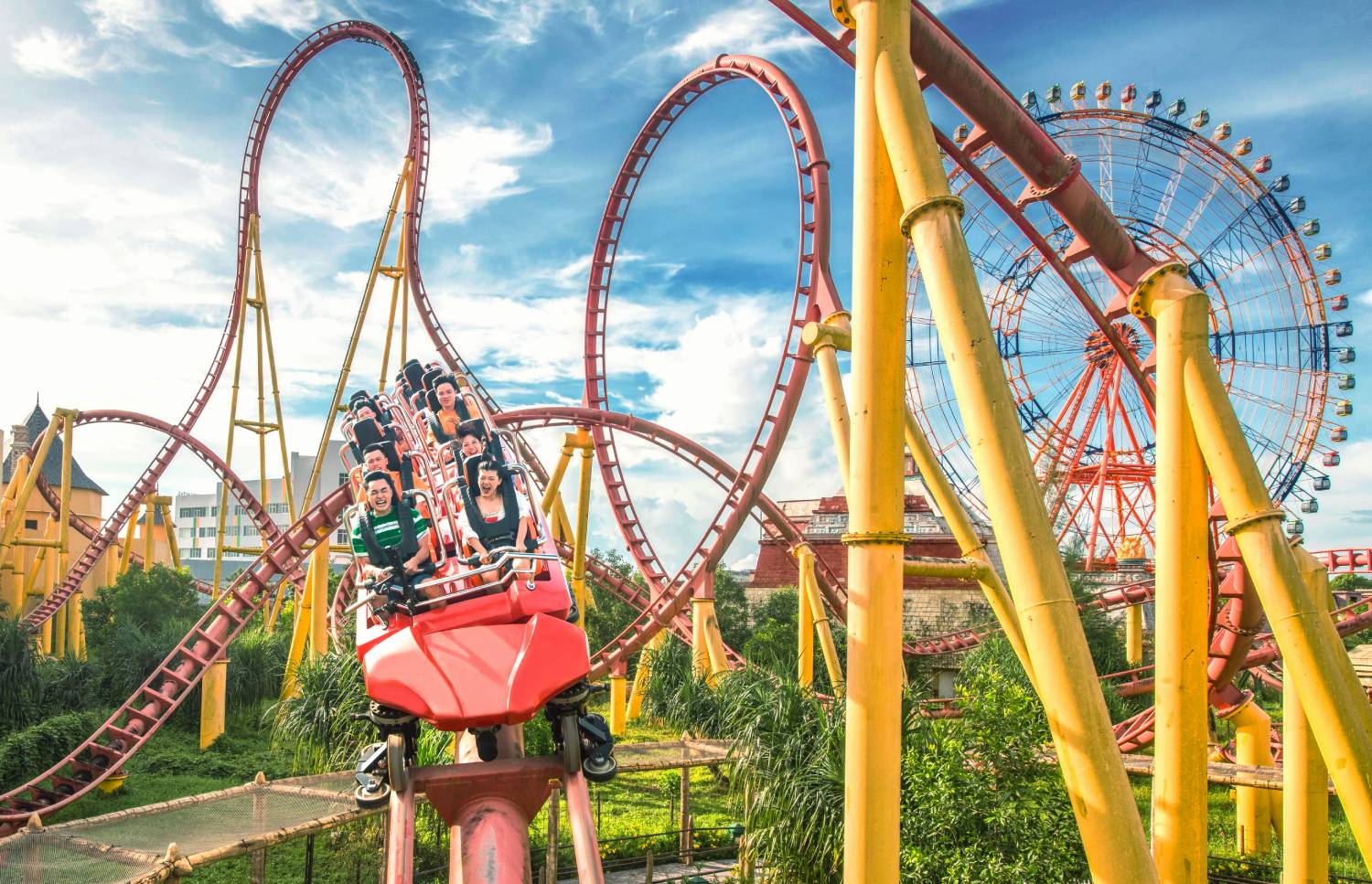
VinWonders Phu Quoc promises endless fun for all visitors
Book VinWonders Phu Quoc ticket now
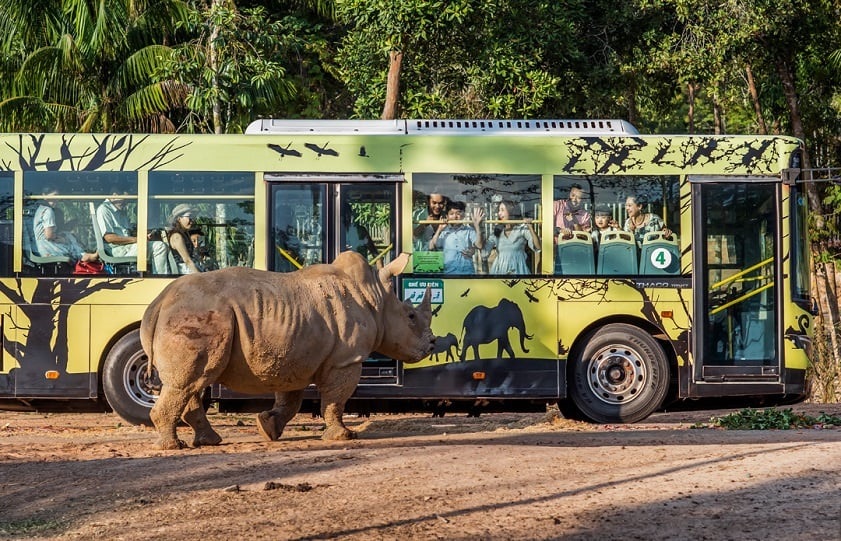
Vinpearl Safari Phu Quoc offers an immersive safari adventure
Book Vinpearl Safari Phu Quoc ticket now
1.4. Khao Yai National Park, Thailand
Spanning more than 2,200 square kilometers across four provinces, Khao Yai National Park is a sanctuary of waterfalls, forest trails, and sweeping grasslands. As part of the Dong Phayayen-Khao Yai Forest Complex, a UNESCO World Heritage Site and an ASEAN Heritage Park, it shelters vital watersheds and a wealth of biodiversity.
You will find over 350 rare and endangered species here, from wild elephants to giant stag beetles. Bird watchers can spot tropical species under a canopy rich with rattan, orchids, and resin trees. Just 200 kilometers away from Bangkok, it offers a convenient retreat into the wild. Hiking, camping, cycling, and whitewater rafting are popular ways to explore the park. Its rich wildlife makes it one of the most treasured Southeast Asian landmarks.
1.5. Chocolate Hills, Philippines
The Chocolate Hills are among the most iconic Southeast Asian landmarks and a symbol of Bohol Island’s natural beauty. This geological formation boasts over 1,200 cone-shaped hills spread across several towns. Recognized as the Philippines’ third National Geological Monument, the site draws thousands of visitors each year.
For the best view, you can visit the Chocolate Hills Complex in Carmen. From the main deck, you will see the hills turn green during the rainy season and chocolate-brown in the dry months. The climb up more than 200 steps is rewarded with a 360-degree view of this stunning landscape.
If you want a quieter experience, head to Sagbayan Peak, another viewpoint with open spaces and fewer crowds. It also offers a butterfly dome, tarsier sanctuary, and scenic views of the sea beyond the hills.
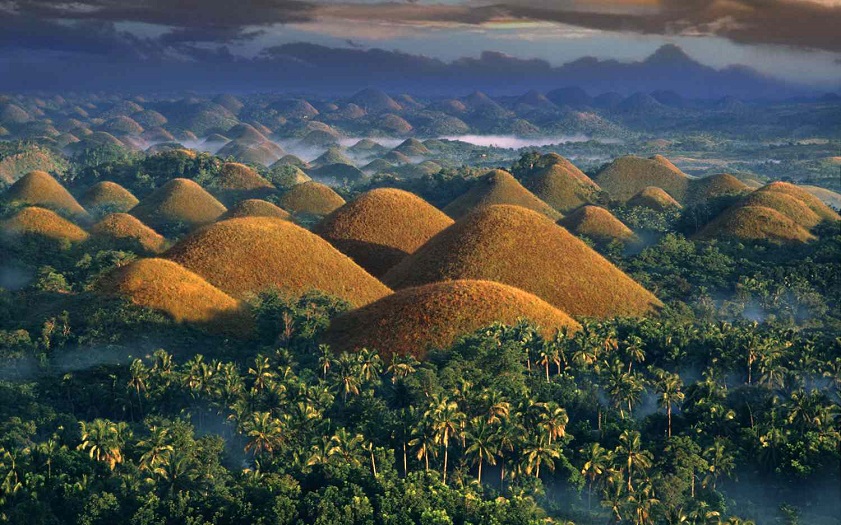
The Chocolate Hills are a must-see when exploring Southeast Asian landmarks (Source: Collected)
1.6. Banaue Rice Terraces, Philippines
The Banaue Rice Terraces stand among Southeast Asia’s most remarkable landmarks. Carved into the Cordillera mountains over two millennia ago, these terraces reflect the ingenuity and resilience of the Ifugao people. They built and maintained this stair-like system to grow rice on steep mountain slopes, using an ancient irrigation method that still functions today.
Locals often refer to the terraces as the Eighth Wonder of the World. You can visit several viewpoints across the municipality to fully appreciate their scale and beauty. The best time to go is during the planting season (April and May) or harvest season (around October), when the terraces turn either green or golden.
Check out the top 25 Southeast Asia travel destinations to visit this year!
1.7. Bali, Indonesia
It is no surprise Bali holds a permanent place among Southeast Asian landmarks, drawing travelers with its harmonious blend of adventure and tranquility. In Ubud, you can explore traditional arts, yoga retreats, and scenic walks in rice fields. Seminyak offers a different energy with surf-friendly beaches, stylish boutiques, and a vibrant food scene. Uluwatu amazes with cliff-top temples and sweeping ocean views.
For quiet charm, Sanur is ideal for families, offering calm waters and a laid-back pace. Divers will find Amed unforgettable, especially with the USAT Liberty wreck and access to the Gates of Heaven at Lempuyang Temple. Beyond the main island, Nusa Penida rewards travelers with dramatic cliffs and turquoise coves, while the highlands of Bedugul provide serene lakes.
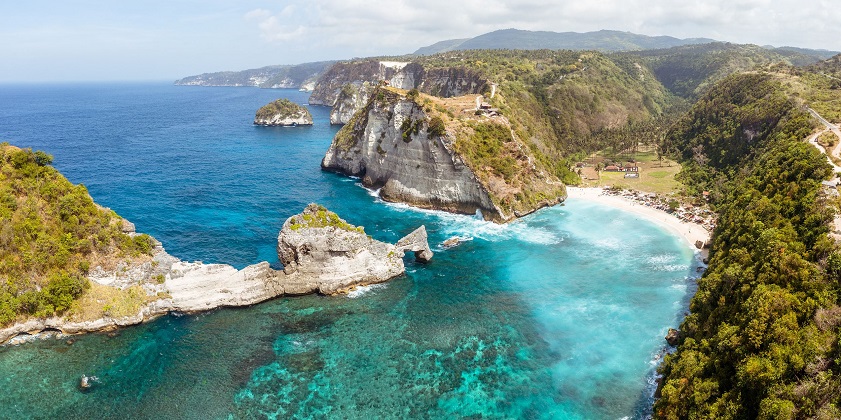
Bali is a jewel among the landmarks of Southeast Asia (Source: Collected)
1.8. Komodo National Park, Indonesia
Home to the legendary Komodo dragon, Komodo National Park spans several islands, including Komodo, Rinca, and Padar. This UNESCO World Heritage Site is one of the most remarkable Southeast Asian landmarks for its mix of savannah landscapes and marine life. Guided hikes let you safely watch the dragons in their natural habitat.
Underwater, manta rays, sea turtles, and vibrant coral gardens await divers and snorkelers. Manta Point and Pink Beach are favored for their marine beauty and diversity. A hike to Padar Island’s viewpoint rewards you with panoramic views of turquoise bays and rugged hills. Island-hopping here combines wildlife spotting, trekking, and diving.
1.9. Pink Beach, Indonesia
Pink Beach, located within Komodo National Park, is among the most distinctive coastal Southeast Asian landmarks. Its pink sand comes from a mix of white sand and crushed red coral, creating a striking contrast with the blue sea. The calm, crystal-clear water makes it an excellent spot for snorkeling, with coral reefs teeming with marine life.
The surrounding scenery of rugged hills adds to the beach’s sense of seclusion. Here, you can relax on the sand, swim in gentle waves, or take a short hike to nearby viewpoints for panoramic photos. A stop at Pink Beach often fits naturally into a broader itinerary at Komodo National Park, alongside visits to Padar Island and Manta Point. Its rare beauty makes it one of the best beaches in Southeast Asia.
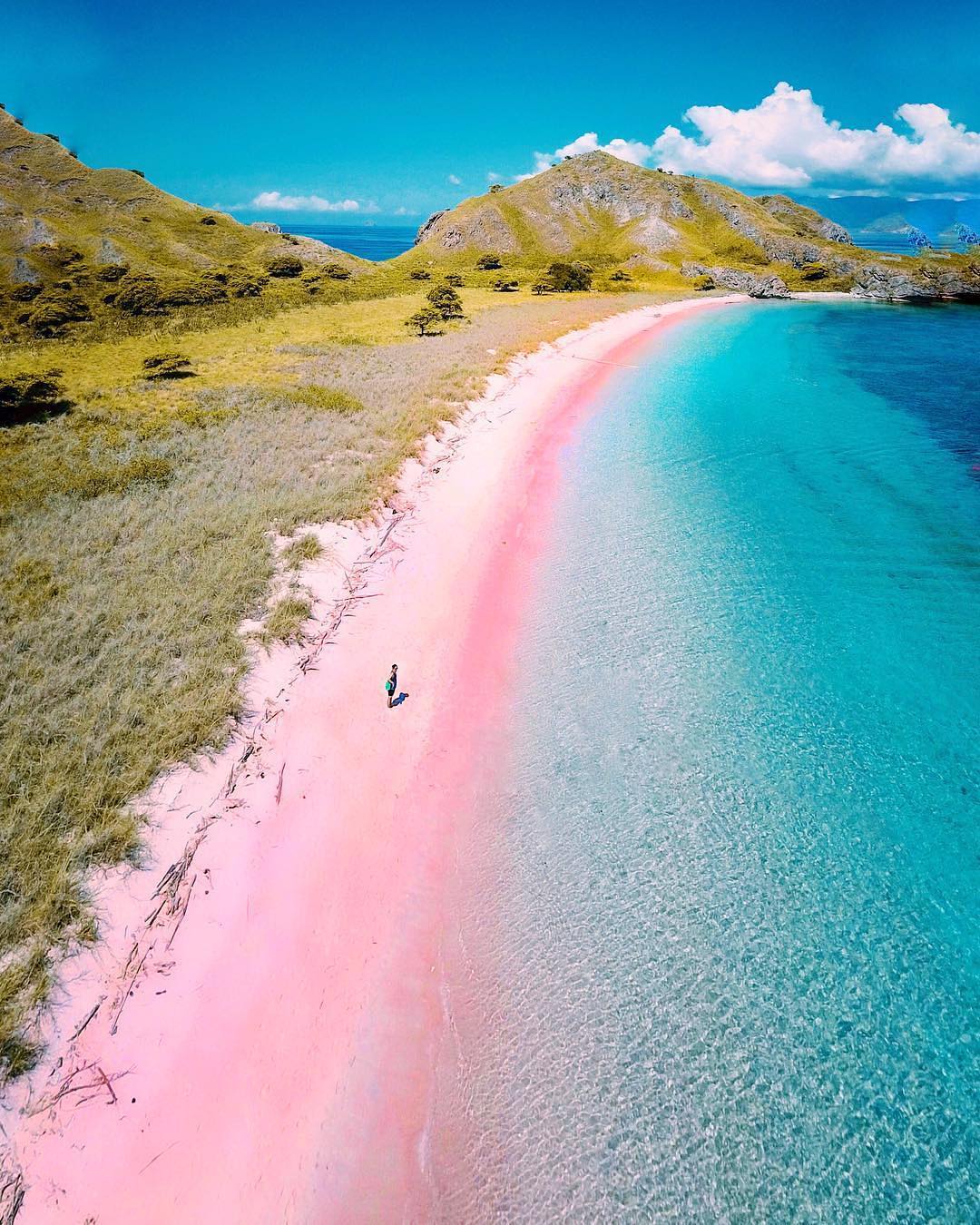
Among Southeast Asian landmarks, Pink Beach shines for its pink sand (Source: Collected)
1.10. Mount Kinabalu, Malaysia
Rising 4,095 metres above Sabah’s lush landscapes, Mount Kinabalu stands as Malaysia’s highest peak and one of the tallest island mountains in the world. This UNESCO World Heritage Site rewards climbers with both breathtaking views and an incredible diversity of ecosystems, from tropical rainforest to alpine meadows.
A typical climb unfolds over two days. The first leads hikers from Timpohon Gate to Panalaban Base Camp for an overnight stay. The second begins before dawn, culminating at the summit in time for the sunrise over Borneo. All hikers must secure a permit and be accompanied by a licensed guide, with limited daily slots requiring early booking.
2. Cultural and historical landmarks in Southeast Asia
2.1. Angkor Wat, Cambodia
In Siem Reap, Angkor Wat is a masterpiece that should be included in any Southeast Asia travel. Built in the 12th century as the state temple of the Khmer Empire, this UNESCO World Heritage Site reflects both Hindu and later Buddhist influences. The vast complex covers over 400 acres, with its central tower symbolizing Mount Meru and the surrounding moat representing the cosmic ocean.
Visitors often begin with Angkor Wat’s grand causeway before continuing to the enigmatic faces of Bayon, the root-wrapped ruins of Ta Prohm, and the gates of Angkor Thom. Detailed bas-reliefs depict Hindu myths and historic battles. For a quieter experience, you can visit the outer temples or enter from the east before sunrise. Multi-day passes allow you to see more of the 70-plus temples here.
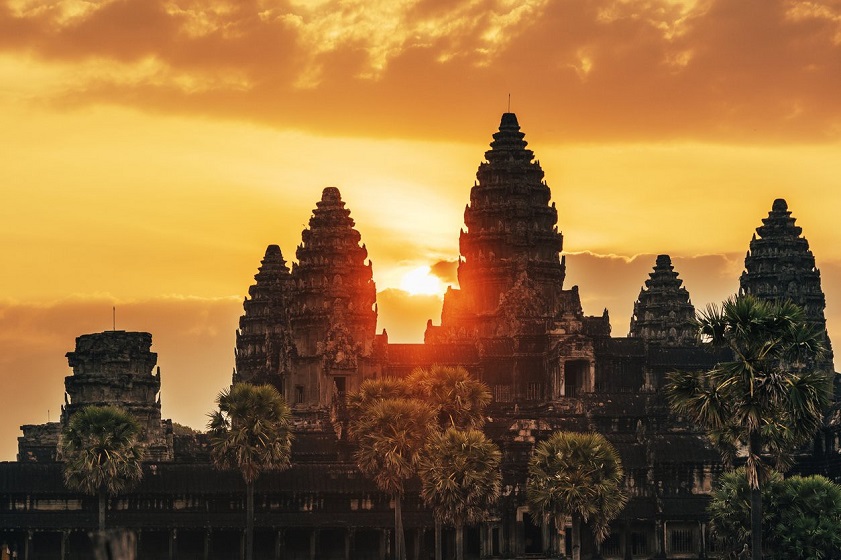
Angkor Wat tops the list of Southeast Asian landmarks for many travelers (Source: Collected)
2.2. Hoi An Ancient Town, Vietnam
Hoi An Ancient Town, a UNESCO World Heritage Site, is one of the most celebrated cultural destinations in Southeast Asia. In 2024, it was named “Asia’s Leading Cultural City Destination” by the World Travel Awards for the fifth consecutive year.
Established in the 16th century along the Hoai River, Hoi An was once a thriving international trading port connecting merchants from China, Japan, India, and Europe. This cultural exchange shaped its unique architecture, blending Eastern and Western influences. You can wander through yellow-walled streets, visit landmarks like the Japanese Bridge, Tan Ky Old House, and Fujian Assembly Hall, or enjoy local specialties such as cao lau and banh mi.
Beyond the Ancient Town, An Bang Beach, the Cham Islands, and Tra Que Vegetable Village offer scenic escapes. For a modern twist, VinWonders Nam Hoi An is famous for family-friendly attractions, making your journey in Hoi An both culturally rich and full of fun.
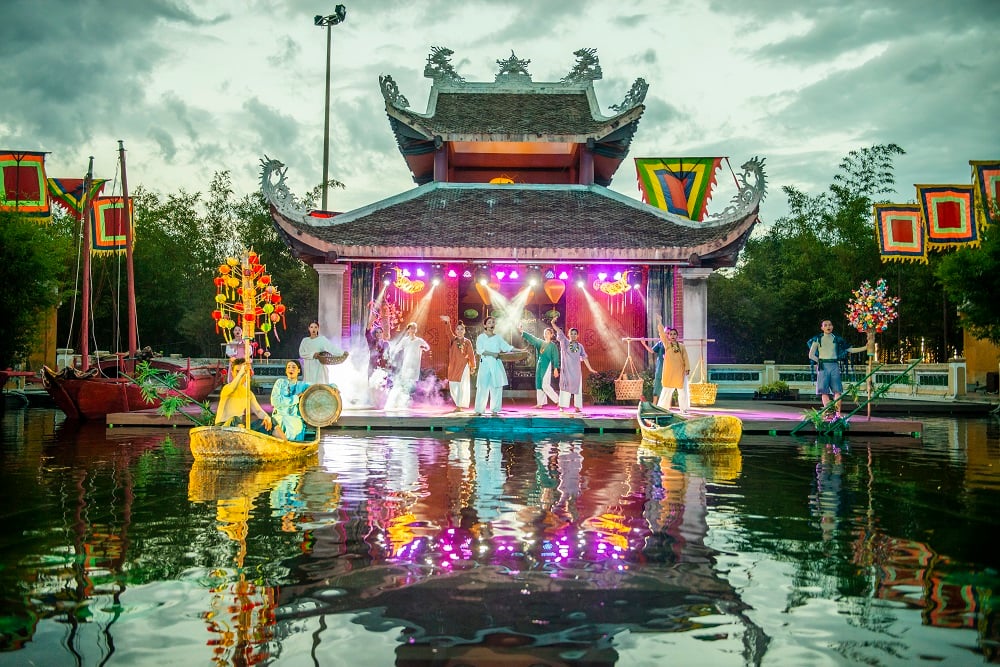
Dive into a vibrant mix of culture and entertainment at VinWonders Nam Hoi An
Book VinWonders Nam Hoi An ticket now
2.3. Cu Chi Tunnels, Vietnam
Northwest of Ho Chi Minh City lies Cu Chi Tunnels, one of the most remarkable Southeast Asian landmarks. Built during the resistance against the French in 1948, these tunnels began as short, simple shelters for storing documents and hiding people. They expanded during the Second Indochina War into a 200-kilometer network with three levels, strong enough to withstand bombs.
Today, you can step inside preserved sections of the tunnels and hear stories of the people who once lived here. Exhibits reveal hidden kitchens, trap systems, and underground meeting rooms. In the recreated liberation zone, you can join activities such as rice planting, fish catching, and rice paper making. Snacks like boiled cassava with sesame salt offer a taste of wartime life, while outdoor activities like shooting round out the experience.
2.4. Hue Imperial City, Vietnam
On the banks of the Perfume River, Hue Imperial City stands as both a UNESCO World Heritage Site and one of the most historically significant Southeast Asian landmarks. Built by King Gia Long in 1805, this complex required tens of thousands of workers to construct its walls, moats, and palaces. Later, the king reinforced its defenses with cannons and additional fortifications.
Stepping through the grand Ngo Mon Gate, you will enter the Imperial Citadel, once home to the royal court of Hue. Inside, the Forbidden Purple City reveals residences, theaters, and gardens. Nearby, the Nguyen kings’ tombs showcase masterful feng shui design. Experiences here include court music performances, festivals, and exhibitions at Hue Museum of Royal Antiquities.
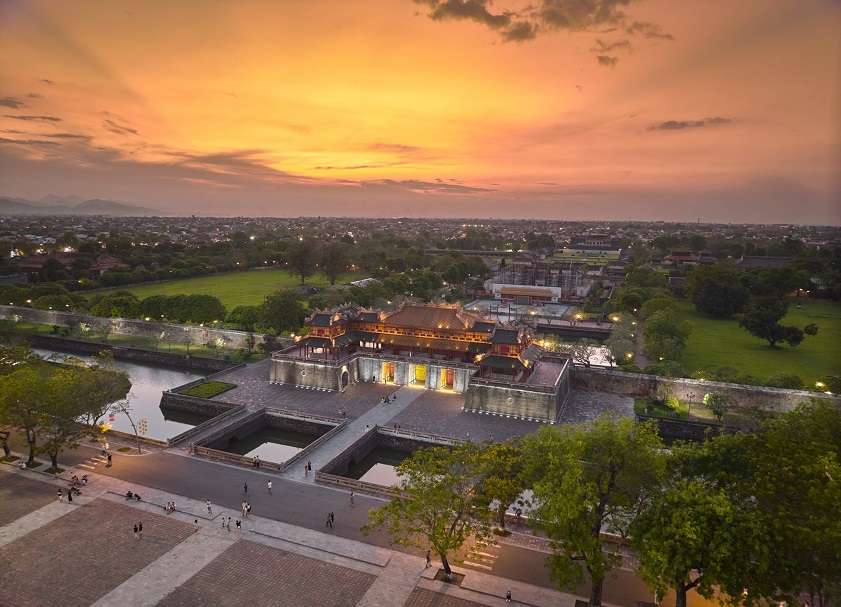
A tour of Southeast Asian landmarks is incomplete without a visit to Hue Imperial City (Source: Collected)
2.5. My Son Sanctuary, Vietnam
Hidden in a valley in Quang Nam Province (now part of Da Nang), My Son Sanctuary is among the most remarkable Southeast Asian landmarks. Recognized as a UNESCO World Heritage Site, it was the spiritual heart of the Champa Kingdom between the 4th and 13th centuries. Over 20 brick temple towers remain, many dedicated to Hindu deities. Their tall, tapered shapes symbolize Mount Meru, the mythical home of the gods.
Walking among the ruins, you can admire intricate sandstone carvings of gods and animals. Most of the main towers face east, with smaller ones arranged around them. Traditional Cham music and dance performances help revive the site’s once-sacred atmosphere, making My SonSanctuary an archaeological and cultural treasure unique to central Vietnam.
2.6. Borobudur Temple, Indonesia
Borobudur Temple is the world’s largest Buddhist monument, a crown jewel among Southeast Asian landmarks. Built in the 9th century under the Sailendra dynasty, this UNESCO World Heritage Site takes the form of a vast stone mandala, guiding visitors from the earthly realm toward spiritual enlightenment. The ten levels ascend to a massive central stupa, symbolizing the highest state of awakening.
You can wander through its six lower terraces, where over 2,600 bas-reliefs narrate scenes from the Buddha’s life, ancient Javanese society, and Buddhist philosophy. The three upper tiers reveal 72 lattice stupas, each sheltering a Buddha statue. Sunrise visits reveal mist-covered mountains in every direction, which enhances the temple’s serene atmosphere. The pilgrimage is completed by visiting the nearby Candi Pawon and Candi Mendut.
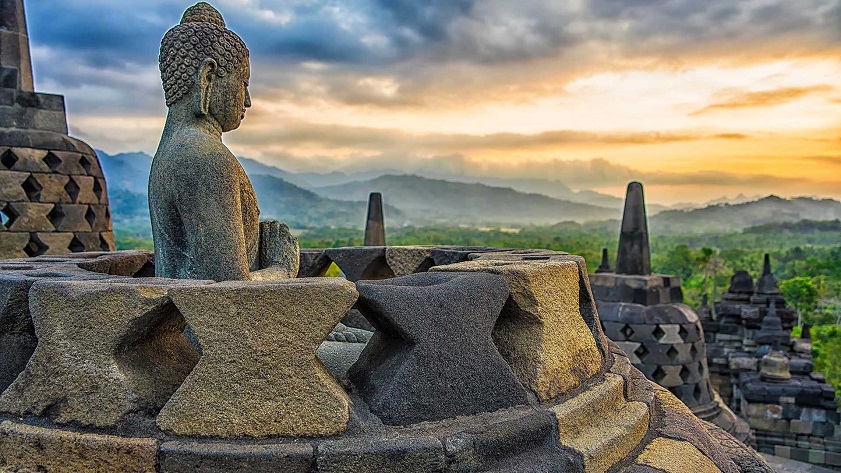
Borobudur Temple holds a special place among UNESCO-listed Southeast Asian landmarks (Source: Collected)
2.7. Grand Palace, Thailand
One of the most famous Southeast Asian landmarks, the Grand Palace in Bangkok was built in 1782 when King Rama I established his new capital on the left bank of the Chao Phraya River. Spanning 218,000 square meters, this complex houses residences, halls, administrative offices, and Wat Phra Kaew – the Chapel Royal.
Visitors often begin with the Temple of the Emerald Buddha. Phra Mondop, a library containing sacred scriptures in a Mother of Pearl Inlay bookshelf, offers a glimpse into centuries-old craftsmanship. The Model of Angkor Wat reflects historical ties between Thailand and the Khmer Empire, while the Queen Sirikit Museum of Textiles preserves traditional weaving arts. The day ends with a Khon masked dance performance, which vividly brings Thai legends to life.
2.8. Wat Rong Khun, Thailand
A journey through Thailand would be incomplete without visiting the striking Wat Rong Khun. This temple, one of the most distinctive Southeast Asian landmarks, was designed in 1997 by Thai artist Chalermchai Kositpipat as an offering to Buddhism and a tribute to traditional art. Unlike historic temples in Bangkok or Ayutthaya, its modern design blends intricate craftsmanship with symbolic storytelling. The stark white exterior, decorated with mirrors, represents purity and the Buddha’s wisdom.
You will begin at the Bridge of the Rebirth Cycle, crossing a sea of outstretched hands that symbolize human desire. Inside the ubosot, murals combine Buddhist teachings with modern cultural icons. The nearby Golden Building contrasts with the white temple, symbolizing materialism. As a work in progress, Wat Rong Khun’s ongoing additions constantly enrich its spiritual and artistic significance.
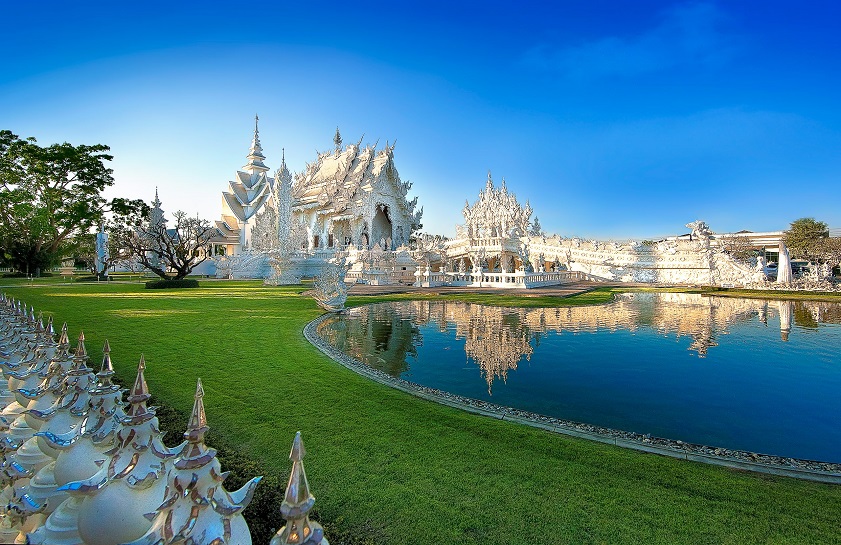
No list of Southeast Asian landmarks is complete without Wat Rong Khun (Source: Collected)
Check out: Southeast Asia travel itinerary: Top ideal routes
2.9. Batu Caves, Malaysia
Just outside Kuala Lumpur, Batu Caves stands as one of the most visited Southeast Asian landmarks and a sacred Hindu pilgrimage site. This limestone hill, over 400 million years old, houses a series of caves and temples. Its most iconic feature is the gold statue of Lord Murugan at the entrance.
You can climb 272 colorful steps to reach the Temple Cave, where a Hindu shrine sits beneath a vast limestone vault. Nearby, Ramayana Cave offers vivid storytelling through large statues and quiet surroundings. Nature lovers can spot monkeys and bats, while climbers can explore over 100 rock climbing routes. Batu Caves is both a place of worship and an active cultural site, blending spiritual significance with natural beauty.
2.10. Bagan, Myanmar
Bagan is one of Southeast Asia’s most profound cultural landmarks. It is a sacred landscape of Buddhist devotion, once the capital of the Pagan Kingdom from the 9th to the 13th centuries. This vast archaeological area covers over 100 km² and holds more than 2,000 monuments, including stupas, temples, monasteries, and frescoed shrines.
Among its most significant structures are the Ananda Temple, known for its cruciform layout and golden Buddha statues; Thatbyinnyu, the tallest temple in Bagan; and Sulamani, celebrated for its detailed plasterwork. Best viewed at sunrise or from a hot-air balloon, Bagan’s temple-studded plain is both visually stunning and spiritually moving.
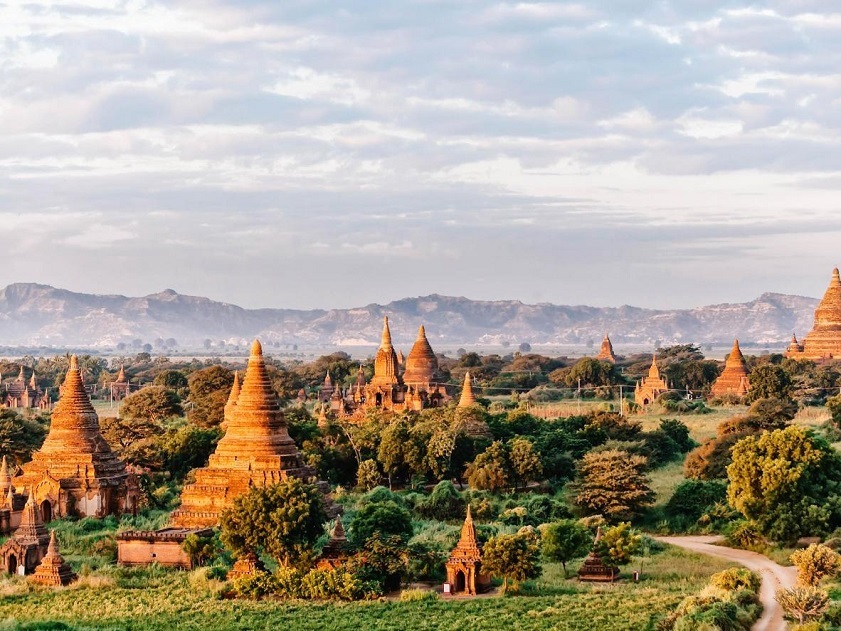
The golden temples of Bagan are a highlight among Southeast Asian landmarks (Source: Collected)
2.11. Plain of Jars, Laos
The Plain of Jars in northern Laos is one of the most mysterious Southeast Asian landmarks. Scattered across the Xiangkhouang Plateau, thousands of stone jars lie in clusters on hillsides and valleys. Archaeologists date them to over 2,000 years ago, which were carved mainly from sandstone and weighing up to several tons. Their exact purpose remains unknown, although evidence suggests they were linked to ancient burial practices.
You can explore safe sites such as Site 1, home to the only decorated jar, and the quieter Site 2 and Site 3, connected by a short hike. Site 52, the largest with nearly 400 jars, requires a trek and sees few visitors. Always stay on marked paths, as unexploded ordnance still exists in surrounding areas.
Explore: Southeast Asian foods: Top 33 iconic dishes from every country
Best-selling products
![[02 Day Combo] - Admission to VinWonders + Vinpearl Safari Phu Quoc | Gifts: Meal Voucher + Teddy Bear Museum](http://booking-static.vinpearl.com/tours/877d8a3289a246d18f95aa5cc414f6d6_27be58d21e244664bf34d11d72e77860_Castle_vinwonders-phu-quoc-ve-vao-cua_vinwonders-phu-quoc-ve-vao-cua.jpg)
![[Hoi An Passport] VinWonders Ticket + Buggy + Hoi An Coconut Forest Boat](http://booking-static.vinpearl.com/tours/9a5a9b25d51e4308be89afd9a4ce0e4a_1%20(2)_vinwonders-nam-hoi-an-ve-vao-cua.jpg)
![[Nha Trang Passport] - [Half-Day] - Cable Car + Aquafield Sauna (2 hours) + Tata Show](http://booking-static.vinpearl.com/tours/91c34711df754e76b66d3ff6d3436e26_34d71a9c3e6b4b7484f9d7cbbc935c26_200dd4dda03e45e0a1add52e4acc11fa_NHT_1796_ve-xem-tata-show-vinwonders-nha-trang_ve-xem-tata-show-vinwonders-nha-trang.jpg)
![[VinWonders Cua Hoi] - Indoor Games Area](http://booking-static.vinpearl.com/tours/aa8379d6db3a4f5c9df6d78d53177c35_11-E-Ticket-Vinwonder-Cua-Hoi_23072024111407_vinwonders-nam-hoi-an-ve-vao-cua.jpg)
![[VinWonders Nha Trang] - Standard Admission Ticket to VinWonders | Free F&B Voucher](http://booking-static.vinpearl.com/tours/ef49c187eadf4177b425d2bb85a18b30_200dd4dda03e45e0a1add52e4acc11fa_NHT_1796_ve-xem-tata-show-vinwonders-nha-trang.jpg)
![[Vinpearl Harbour] - Happy Hour Combo: Round-trip Cable Car + Dinner Buffet + Tata Show](http://booking-static.vinpearl.com/tours/a869acdae59e4137855742de1cbbb1af__KAH2165_vinpearl-harbour-combo-happy-hour.jpg)
![[Grand World Phu Quoc] [Ultimate Combo] - Water Taxi + Teddy Bear Museum + Grand Show](http://booking-static.vinpearl.com/tours/6cee2bcb52a447009f64771095d03c9e_Screenshot%202024-10-22%20at%2014.49.18_ve-bao-tang-gau-teddy-bear.png)
![[VinWonders Nha Trang] - 01-day Unlimited Admission Ticket | Free F&B Voucher](http://booking-static.vinpearl.com/tours/ccf23087ea0f419980c411d0e79c10fb_88c594a8352d49e7b031b9fbd5c5d27f_tro-choi-mao-hiem-o-vinpearl-nha-trang-thumb-1_vinwonders-nha-trang-khong-gioi-han-2-ngay_vinwonders-nam-hoi-an-ve-vao-cua.jpg)
![[VinWonders Nha Trang] - Admission to VinWonders after 4:00 PM](http://booking-static.vinpearl.com/tours/de2da6d471b34297ab13cb26ef2da9a0_Hinh-anh-VinWonders-Nha-Trang-The-World-Garden-Lau-vong-canh-3x2-so-1_vinwonders-nha-trang-ve-vao-cua-sau-16h.jpg)
![[Vinpearl Aquarium Times City] Entrance Ticket](http://booking-static.vinpearl.com/tours/8702a10bf2934d6299df65669a290679_aquarium%20times%20city%203_thuy-cung-vinpearl-aquarium-times-city.jpg)
![[VinWonders Cua Hoi] Combo Entrance Ticket | Includes Cable Car + Games Area (excluding Gokart and Indoor Games)](http://booking-static.vinpearl.com/tours/d5af0cb7759d48a7a2b991c8de1e19a0_Hinh-anh-VinWonders-Nam-Hoi-An-Noi-bat-3x2-so-3%20(1)_vinwonders-nam-hoi-an-ve-vao-cua.jpg)
![[Zoo Tram Combo] - Admission to Vinpearl Safari Phu Quoc + Zoo Tram](http://booking-static.vinpearl.com/tours/91af11bafaf549649cb13be8151df18e_uu-dai-vinpearl-safari-phu-quoc-1_1711097070_ve-combo-tinh-hoa-viet-nam-va-bao-tang-gau.jpg)
![[VinWonders Vu Yen] - Admission Ticket to Games after 5 PM](http://booking-static.vinpearl.com/tours/edbd3eb4bc9848aead9940e0f5aa050d_fa21c62dfa9644ada0c3fce89b3e79ff_DO__8711_vinwonders-vu-yen-vuon-thu-khu-tro-choi-sau-17h.jpg)
![[Aquafield] - [Female] - 4-hour Korean Sauna](http://booking-static.vinpearl.com/tours/0e6fe24c37b84cb799b94dae70578054_aqf-suong-may-2048x1365_aquafield-nha-trang-xong-hoi-chuan-han.jpg)
![[VinWonders Nam Hoi An] - Standard Admission Ticket](http://booking-static.vinpearl.com/tours/81813f8ced2c466e82ad53f1c29c1904_tour-kham-pha-van-hoa-viet-vinwonders-nam-hoi-an-668ca102bcc29_vinwonders-nam-hoi-an-ve-vao-cua.jpg)
![[VinWonders Phu Quoc] - Standard Entrance Ticket](http://booking-static.vinpearl.com/tours/0dd25afc61ad45d48486bbd3b9c8a96a_tieu%20chuan%201_vinwonders-phu-quoc-ve-vao-cua.jpg)
![[VinGroup Employees] Standard Admission Ticket to Ocean Park 3 Water Park](http://booking-static.vinpearl.com/tours/f949b31af919495c9b4e111237642763_358600999_111579731994757_433244877993048710_n_vinwonders-ha-noi.jpg)
![[Buy 2 Get 1] – Combo of 2 Entrance Tickets & Buggy + FREE Kids Combo](http://booking-static.vinpearl.com/tours/5d3ee19e977446be8917a34697bb9443_ece6e58a02fd48de9eba9d3f4689f77a_Hinh-anh-VinWonders-Nam-Hoi-An-River-Safari-3x2-so-1%20(1)_vinwonders-nam-hoi-an-ve-vao-cua_vinwonders-nam-hoi-an-ve-vao-cua.jpg)
![[Vinpearl Safari Phu Quoc] - Standard Entrance Ticket + Meal voucher gift](http://booking-static.vinpearl.com/tours/ceb77f9174d845ebb2fd3dfe2b846066_3%20copy_vinwonders-nam-hoi-an-ve-vao-cua.jpg)
![[50% Student Discount] – VinWonders Admission Ticket](http://booking-static.vinpearl.com/tours/43126c168bb04853bf7c93e197db724a_Banner%201200x628_vinwonders-nha-trang-ve-vao-cua-2-chieu.jpg)
![[Grand World] Skydrop ticket](http://booking-static.vinpearl.com/tours/ed7c962747be42458f35c7b18340b901_A2-4-jpeg-2640-1687438608_grandworld.jpg)
![[01 Day Combo] - Admission to VinWonders + Vinpearl Safari Phu Quoc](http://booking-static.vinpearl.com/tours/65ba6f5d4c5d423791dc1b90555959d9_CB1D%200_Combo-ve-vao-cua-vinwonders-safari.jpg)
![[Grand Park] Tropical Island Water Park Entrance Ticket](http://booking-static.vinpearl.com/tours/eeb9a602315342ccbc7965b29cfb0db0_Ảnh%20màn%20hình%202025-03-03%20lúc%2015.00.17_vinwonders-nam-hoi-an-ve-vao-cua.png)
![[Grand World Phu Quoc] - Water Taxi Boat + Teddy Bear Museum](http://booking-static.vinpearl.com/tours/add2e0908faa4289b555856472b181be_VENICE%20ALL%20IN%20ONE%20KV%20(1)_ve-bao-tang-gau-teddy-bear.jpg)
![[VinWonders Vu Yen] - Admission Ticket to Zoo + Games + Buffet](http://booking-static.vinpearl.com/tours/b2cd8cf6b14c48459b21393e14d73163_vwvy%201_vinwonders-nha-trang-ve-vao-cua-2-chieu.jpg)
![[Hon Tam] - [Zone A&B] - Full island entertainment + Mud Bath Zone A + Lunch](http://booking-static.vinpearl.com/tours/af991883d63f4133b62b76551ba2444d_tam-bun-dao-hon-tam_httpswwwhontammudbathvnwp-contentuploadssites2720190625-3-2200x700jpg.jpg)
![[VinWonders Vu Yen] - [04 Adults] - Admission to Zoo + Games | FREE 01 Limited Tote Bag](http://booking-static.vinpearl.com/tours/34488b227a3648e5b73d4aa6d6d36b46_DO__8153_vinwonders-nha-trang-ve-vao-cua-2-chieu.jpg)
![[Grand World] Carousel Ride](http://booking-static.vinpearl.com/tours/0d6a4bcfc2a54fd4aa9df0b38ae8c7b6_A2-4-jpeg-2640-1687438608_grandworld.jpg)
![[Vinpearl Aquarium Times City] Entrance Ticket](http://booking-static.vinpearl.com/tours/a8f34fa1704a4063b07ee322b81b9aaf_VINKE%20(1)_vinke-ve-vao-cua-truc-tiep.jpg)
![[Aquafield] - [Male] - 4-hour Korean Sauna](http://booking-static.vinpearl.com/tours/94abeb55e3d54efbac23f7a862445389_0d72b531dd6749bbac2874b915ab0512_Screenshot_8_aquafield-nha-trang_aquafield-nha-trang.png)
![[Buggy Combo] - VinWonders Phu Quoc + Buggy + Free Ice Cream](http://booking-static.vinpearl.com/tours/0fc52a574094489da612d0f36bb4b1e6_buggy%20kem_vinwonders-phu-quoc-ve-vao-cua-tet-vi-vu.jpg)
![[Aquafield] - [Male] - 4-hour Korean Sauna](http://booking-static.vinpearl.com/tours/4ae60d29ea264f8fab17beb6b4415502_aqf-da-muoi_aquafield-nha-trang-xong-hoi-chuan-han.jpg)
![[Aquafield] - 2-hour Aquafield Sauna + 30-min Spa](http://booking-static.vinpearl.com/tours/91265fa8abae49cba05dfe912492c85f_c0c6160fbeb345a68fd211aa23a2a43b_VWNT_Tropical%20Paradise5_ve-xem-tata-show-vinwonders-nha-trang_ve-xem-tata-show-vinwonders-nha-trang.jpg)
![[Aquafield Ocean City] [Male] – Standard Jjimjilbang Sauna Ticket](http://booking-static.vinpearl.com/tours/0be276c684454e8d969c373f35f6be97_DSC_2127_11zon_aquafield-nha-trang.jpg)
![[Nam Hoi An Signature] VinWonders Ticket + VIP Safari Package | FREE Merchandise Gift](http://booking-static.vinpearl.com/tours/881ac31c4a2b4687a59f412901e85b2c_VIN2725_-08746%20(2)_vinwonders-nam-hoi-an-ve-vao-cua.jpg)
![[Hon Tam] - [Zone A] - Mud Bath + Lunch Combo](http://booking-static.vinpearl.com/tours/5debd1efb6d34e42a88efa65354c8c72_ebdde60fd9a44539afe75c9338ec8a3d_ảnh%205_tam-bun-hon-tam.jpg)
![[Vinpearl Harbour] - Round-trip Cable Car Ticket](http://booking-static.vinpearl.com/tours/e584c2f486d246c5820a19f519d184a4_VPHB_Photos15_vinwonders-nha-trang-ve-vao-cua-2-chieu.jpg)
![[Romantic Couple Combo] – Standard Jjimjilbang Ticket & Premium Spa Treatment + Complimentary Bingsu](http://booking-static.vinpearl.com/tours/9f599f374c484303bcfce0a220d48d71_065A8403_aquafield-nha-trang.jpg)
![[Aquafield] - [Male] - Round-trip Cable Car + 4-hour Korean Sauna](http://booking-static.vinpearl.com/tours/625529980f3249e6b0491cddfc30db43_297be2477c5847748ef3bc08603ebf90_aqf%204_aquafield-nha-trang.jpg)
![[02 Day Unlimited Access] - VinWonders + Vinpearl Safari Phu Quoc + Teddy Bear Museum](http://booking-static.vinpearl.com/tours/0a8c0679cffa437a8a7fe90deb639382_cb2d%20unlimited%202_Combo-ve-vao-cua-vinwonders-safari.jpg)
![[Vinpearl Harbour] - Tata Show Ticket & Round-trip Cable Car](http://booking-static.vinpearl.com/tours/18dc9f798082474ba26cf00121da6180_Hinh-anh-VinWonders-Nha-Trang-The-World-Garden-Lau-vong-canh-3x2-so-1_ve-xem-tata-show-vinwonders-nha-trang.jpg)
![[Hon Tam] - [Zone A] - Standard Mud Bath](http://booking-static.vinpearl.com/tours/9db66a615a7d4f119316b338afff30cb_tam-bun-dao-hon-tam_httpswwwhontammudbathvnwp-contentuploadssites2720190625-3-2200x700jpg.jpg)
![[Aquafield] - [Female] - Round-trip Cable Car + 4-hour Korean Sauna](http://booking-static.vinpearl.com/tours/c3bae84e472b42078ca3ff6f28d55d80_1c5968412aca409fa8571c88cc85a4ba_aqf%205_aquafield-nha-trang.jpg)
![[Grand Park] Water Park + Dream Garden Outdoor Games Combo](http://booking-static.vinpearl.com/tours/35566b714d4c4dd9802a6bf4650ac2b1_khu-vui-choi-cua-hoi-9_vinwonders-nam-hoi-an-ve-vao-cua.jpg)
![[Nha Trang Passport] – [01 day] – Snorkeling Tour + Lunch & Mud Bath at Hon Tam + Vinpearl Harbour + Tata Show](http://booking-static.vinpearl.com/tours/f6b1826759674c9c9d3f074e03fa04ba_snorkeling%201_vinwonders-nha-trang-ve-vao-cua-2-chieu.jpg)
![[Onsite service] - Premium VIP Zoo Tour Vinpearl Safari Phu Quoc](http://booking-static.vinpearl.com/tours/ff1e4b66ec1b46edad0c0460144e70ad_VINPEARL%20SAFARI%20PHU%20QUOC%20%20(51)_vinwonders-nam-hoi-an-ve-vao-cua.jpg)
![[Aquafield Ocean City] - Body Exfoliation Session](http://booking-static.vinpearl.com/tours/0e8ee4024e1f4378ba932eb06d945636_Screenshot_14_aquafield-nha-trang.png)
![[Grand World Phu Quoc] - Teddy Bear Museum](http://booking-static.vinpearl.com/tours/30da03237e2f42fe818e6686fb350481_teddy%20bear%201_ve-bao-tang-gau-teddy-bear.jpg)
![[Vinpearl Harbour] - Combo for 02 pax: Round-trip cable car + Two-seater Go Kart ride](http://booking-static.vinpearl.com/tours/ab277ed82445448aad2f6b1a0c249e40_Gokart-1_vinpearl-harbour-go-kart-xe-doi.jpeg)
![[Aquafield Ocean City] [Female] – Standard Jjimjilbang Sauna Ticket](http://booking-static.vinpearl.com/tours/4aec5fed6be54fe8a736aca12893384b_40fc72547fe242f8b6bbbbc428885848_065A8735_aquafield-nha-trang_aquafield-nha-trang.jpg)
![[02 Day Combo] - VinWonders + Vinpearl Safari Phu Quoc + Free Teddy Bear Museum](http://booking-static.vinpearl.com/tours/47fc9cc92af24516a32cbfe52e80b977_s52MIKya-SpikeDay-8824_1920x1080_no-text-1_Combo-ve-vao-cua-vinwonders-safari.jpg)
![[Hon Tam] - 15-Minute Snorkeling](http://booking-static.vinpearl.com/tours/56618ea554304747b54636a31d59f9f4_Untitled-design-1_httpswwwhontammudbathvnwp-contentuploadssites2720190625-3-2200x700jpg.jpg)
3. Modern architectural landmarks in Southeast Asia
3.1. Gardens by the Bay, Singapore
In Singapore, Gardens by the Bay transforms the waterfront into a futuristic landscape of glass, steel, and greenery. Opened in 2012, this 101-hectare park is home to the Flower Dome – the world’s largest glass greenhouse, and the misty Cloud Forest, which houses a 35-meter indoor waterfall.
At the Supertree Grove, vertical gardens soar up to 50 metres and glow each night during the Garden Rhapsody light show. You can wander around floral displays, explore tropical highland vegetation, or cross the OCBC Skyway for sweeping city views. For quieter moments, the World of Plants and Sun Pavilion offer a slower pace. This blend of design and biodiversity has made Gardens by the Bay one of the most celebrated Southeast Asian landmarks of the modern era.
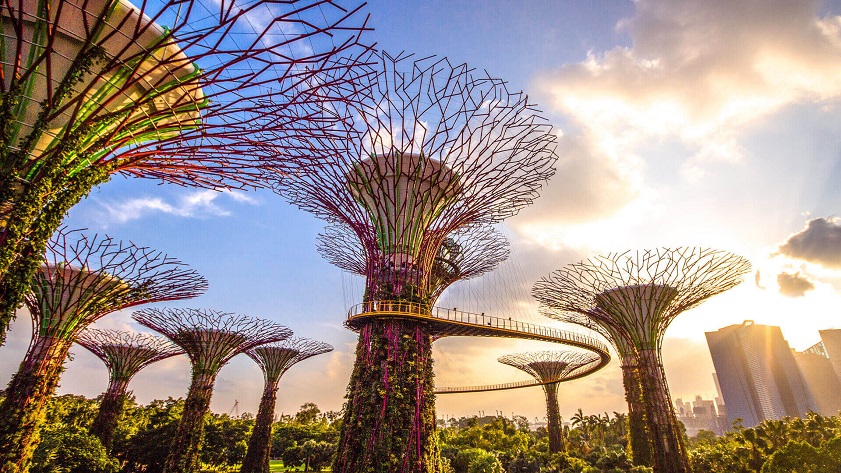
Gardens by the Bay remains a favorite in the collection of Southeast Asian landmarks (Source: Collected)
3.2. Merlion Park, Singapore
Merlion Park is home to Singapore’s most famous statue, the Merlion, a half-lion-half-fish figure symbolizing the city’s origin and growth. Designed in 1964, this statue reflects the legend of Prince Sang Nila Utama, who named the island Singapura after seeing a lion. Its fish tail honors Singapore’s past as a fishing village.
The original 8.6-meter statue and its smaller “Merlion Cub” were moved in 2002 to their current location by Marina Bay. From here, you can enjoy views of Marina Bay Sands, the ArtScience Museum, and the Helix Bridge. Many visitors stay until evening for the Spectra light and water show. Whether photographed at sunrise or lit against the skyline, Merlion Park remains one of the most recognizable Southeast Asian landmarks.
3.3. Bamboo Legend, Vietnam
Located in Grand World Phu Quoc, Bamboo Legend is a showcase of Vietnamese craftsmanship. Completed with 42,000 bamboo poles, it won the 2024 International Architecture Awards and the “Best of Best” at the 2023 Architecture MasterPrize. Covering 1,460 square meters, the structure rises nearly 15 meters and connects to the nearby Quintessence of Vietnam, an imperial-style complex.
The entire framework uses no nails or steel; instead, bamboo poles are joined with 30- or 40-cm wooden pegs. Inside, you will see intricate carvings of the bronze drum, lotus, and bamboo – three enduring symbols of Vietnamese heritage. The combination of scale, precision, and traditional techniques makes Bamboo Legend one of Southeast Asia’s most admired modern structures.
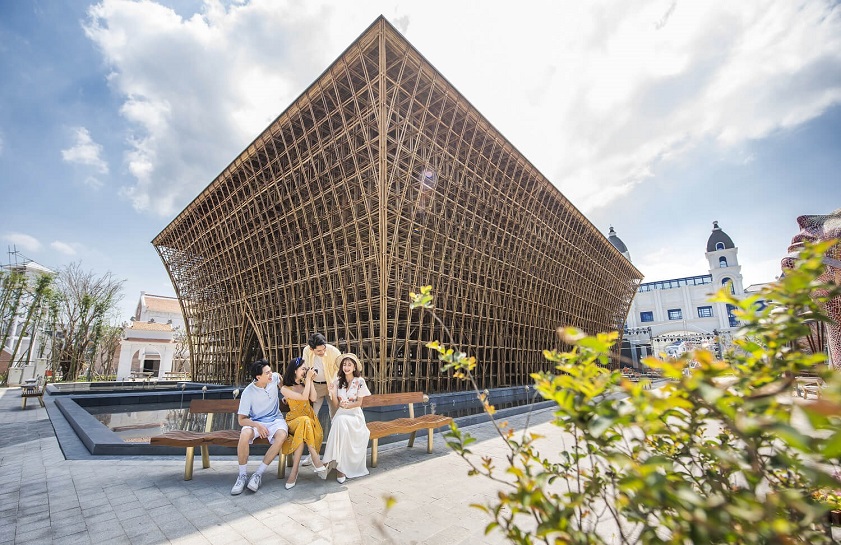
Bamboo Legend adds a fresh twist to classic Southeast Asian landmarks
3.4. Petronas Towers, Malaysia
The Petronas Towers in Kuala Lumpur rise 452 meters, making them the tallest twin buildings in the world. Designed by César Pelli and completed in 1996, they symbolize Malaysia’s ambition and modern identity. The towers’ eight-pointed star floor plan reflects Islamic principles of unity and harmony, while the stainless steel and glass façades draw from traditional weaving patterns.
Visitors can walk the Skybridge on level 41, the highest two-story bridge in the world, and take in sweeping views from the observation deck on level 86. Interactive exhibits reveal the record-breaking construction process, from massive concrete pours to advanced wind tunnel tests. As one of the most celebrated Southeast Asian landmarks, the Petronas Towers blend heritage with cutting-edge engineering in a way few skyscrapers can match.
3.5. Putra Mosque, Malaysia
The pink-domed Putra Mosque is one of the most striking Southeast Asian landmarks in Putrajaya. Completed in 1999 and named after Malaysia’s first Prime Minister, it can accommodate up to 15,000 worshippers. Built from rose-tinted granite, the mosque blends Arab-Islamic design with local craftsmanship inspired by Persian and Moroccan styles. Its 116-meter minaret, among the tallest in the region, has five tiers symbolizing the Five Pillars of Islam.
Inside, the 36-meter main dome rests on 12 columns, surrounded by 8 smaller domes. Beyond its religious role, the mosque functions as a community hub for cultural events, exhibitions, and gatherings. It is a serene yet grand presence among Southeast Asian landmarks.
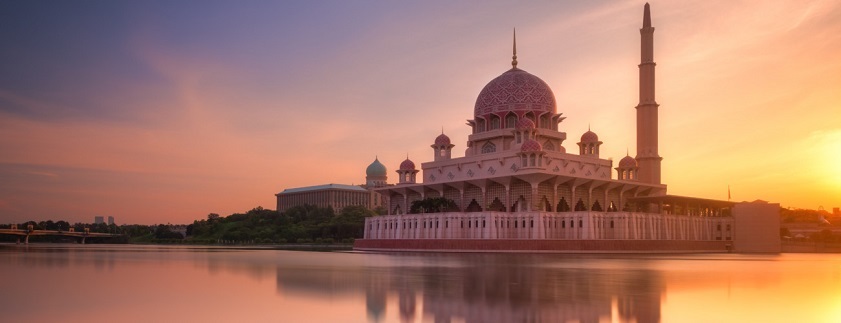
Putra Mosque is a timeless highlight on any itinerary of Southeast Asian landmarks (Source: Collected)
Uncover the 15 best honeymoon destinations in Southeast Asia!
Exploring Southeast Asian landmarks is a journey through vibrant culture, breathtaking nature, and centuries-old history. From the mysterious Son Doong Cave to the soaring Petronas Towers, each site tells a story that lingers long after your visit. Choose a site that speaks to you and get ready for an amazing trip ahead!
Best-selling products






![[Mega Sale 12.12] Get up to 50% off VinWonders on Double Day](https://static.vinwonders.com/production/2025/11/DD-111125-1920-x-920-336x161.jpg)


