en
en


 Tiếng Việt
  中文 (中国)
  한국어
한국어  Русский


 07/11/2023
 2.327 views

Vietnamese coconut jelly is a beloved dessert (Source: Collected)
Vietnamese coconut jelly is a popular dessert that embodies the tropical essence of coconuts. It is a sweet cherished Vietnamese food, especially on hot summer days when its cooling properties are most appreciated. Vietnamese coconut jelly is made from a few simple ingredients, resulting in a jelly-like dessert with a unique blend of flavors and textures.
1. Popular types of Vietnamese coconut jelly
1.1. Vietnamese nata de coco
Nata de coco is a Vietnamese coconut jelly made from coconut water and is known for its translucent, jelly-like texture. It is commonly added to desserts, fruit salads, and drinks for its chewiness and sweetness. In Vietnamese cuisine, you can find nata de coco in sweet soup and boba tea. Here’s how nata de coco is typically made:
- Fresh coconut water is extracted and strained to remove any impurities.
- The coconut water is mixed with sugar and acetic acid bacteria are added. As the bacteria ferment and multiply, they form a jelly-like substance, which is nata de coco. The fermentation process can take from several days to a couple of weeks, depending on factors like the temperature and sugar concentration.
- Once the nata de coco has reached the desired consistency and thickness, it is harvested. It is then cut into cubes or other shapes.

Nata de coco is a type of Vietnamese coconut jelly dessert (Source: Collected)
1.2. Vietnamese coconut jelly pudding
Coconut jelly pudding is a popular snack prized for its ability to help cool the body and provide relief from the heat. Made primarily from fresh coconut water, coconut milk, and jelly powder, it offers a light and sweet flavor. The preparation of Vietnamese coconut jelly is a straightforward process:
- Purchase raw or unshelled coconuts and request the vendor to remove the shells and extract the coconut pulp for you.
- In a cooking pot, combine 40 grams of sugar, 70 grams of jelly powder, and 140 milliliters of fresh coconut water.
- Stir the mixture to create a consistent blend. Heat the mixture until it comes to a boil, then promptly remove it from the stove.
- Divide the prepared jelly mixture into two portions: 70 milliliters is poured into one of the coconut shells, while the remaining 70 milliliters are poured into a bowl. For the bowl, add 30 milliliters of coconut milk, stirring diligently to create 70 milliliters of coconut milk jelly.
- The coconut milk jelly is gently poured into the other coconut shell and both parts are refrigerated for approximately an hour. This waiting period allows the jelly to solidify, transforming the mixture into a delectable treat.
- Upon completion, you will have two distinct parts within the coconut: one filled with clear coconut water jelly and the other with luscious white coconut milk jelly. Simply cut both parts into bite-sized pieces for a refreshing dessert experience.

The cool Vietnamese coconut jelly pudding is perfect for hot days (Source: Collected)
2. Must-try Vietnamese coconut jelly drinks and desserts
2.1. Classic Vietnamese coconut jelly pudding
The classic Vietnamese coconut jelly pudding is a delicious treat to beat the heat on scorching summer days. Here is how to make it:
- Select moderately mature coconuts. They tend to have a good amount of water and flesh.
- Peel the coconuts, remove the hard outer shells, and separate the coconut water and flesh. You can keep the coconut shells to use as jelly cups.
- Pour the coconut water into a pot and mix with about half of the jelly powder. Stir the mixture well and place it on the stove to boil.
- Prepare 15-20 small plastic cups. Once the coconut water has cooled a bit, pour approximately half of it into each cup and allow it to cool and solidify.
- Grate the coconut flesh and blend it to extract the coconut milk. Squeeze out the juice and pour it into another pot.
- Mix this coconut milk with the remaining half of the jelly powder. Then, add clean water at a 1:5 ratio. Place this mixture on the stove and bring it to a boil.
- Remove the coconut milk from the heat and allow it to cool.
- Carefully scoop the boiled coconut milk and slowly pour it into the remaining half of each cup. Let it cool and place the cups in the refrigerator.
- After a short time in the refrigerator, the coconut water will solidify, resulting in a two-layered jelly with distinct parts: the clear coconut water layer at the bottom and the ivory-white coconut milk layer on top.
The top layer made from coconut milk has a rich, fragrant, and creamy taste, while the bottom layer made from coconut water is clear, crunchy, and sweet. The jelly is often placed directly inside a coconut or in transparent cups, where you can clearly see the two layers. Additionally, you can add coconut jelly to desserts, enjoy it with caramel, or use various toppings such as tapioca pearls, jellies, and syrup.

Vietnamese coconut jelly, or Vietnamese coconut jello (Source: Collected)
2.2. Vietnamese pandan coconut jelly pudding
Vietnamese pandan coconut jelly pudding is a delightful and visually striking dessert that combines the fragrant essence of pandan leaves with the rich creaminess of coconut milk. Here’s a step-by-step guide to creating this delectable treat:
- Take five pandan leaves, fold them on top of each other, and chop them into two-centimeter pieces.
- Blend the chopped pandan leaves with water to extract the pandan leaf juice.
- Pour the juice through a sieve to strain out any solids.
- Boil water, add agar powder, then stir the mixture until it is completely dissolved.
- Add sugar and the pandan leaf juice. Stir thoroughly again.
- Pour the mixture into glasses about halfway, then place them in the fridge to let the jelly set.
- Boil another batch of water and stir in agar powder to create the jelly layer. Then, add sugar, salt, and coconut milk.
- Take the glasses out of the fridge and pour the jelly layer on top. Return these glasses back to the fridge to allow the jelly to harden.
- Once the jelly has completely set, add a small branch of pandan leaves as a garnish.
- Cut the jelly into bite-sized cubes to enjoy.
Vietnamese pandan coconut jelly pudding is not only a tasty treat but also a feast for the eyes. The combination of the earthy aroma of pandan leaves and the creamy richness of coconut milk creates a harmonious blend of flavors and textures.
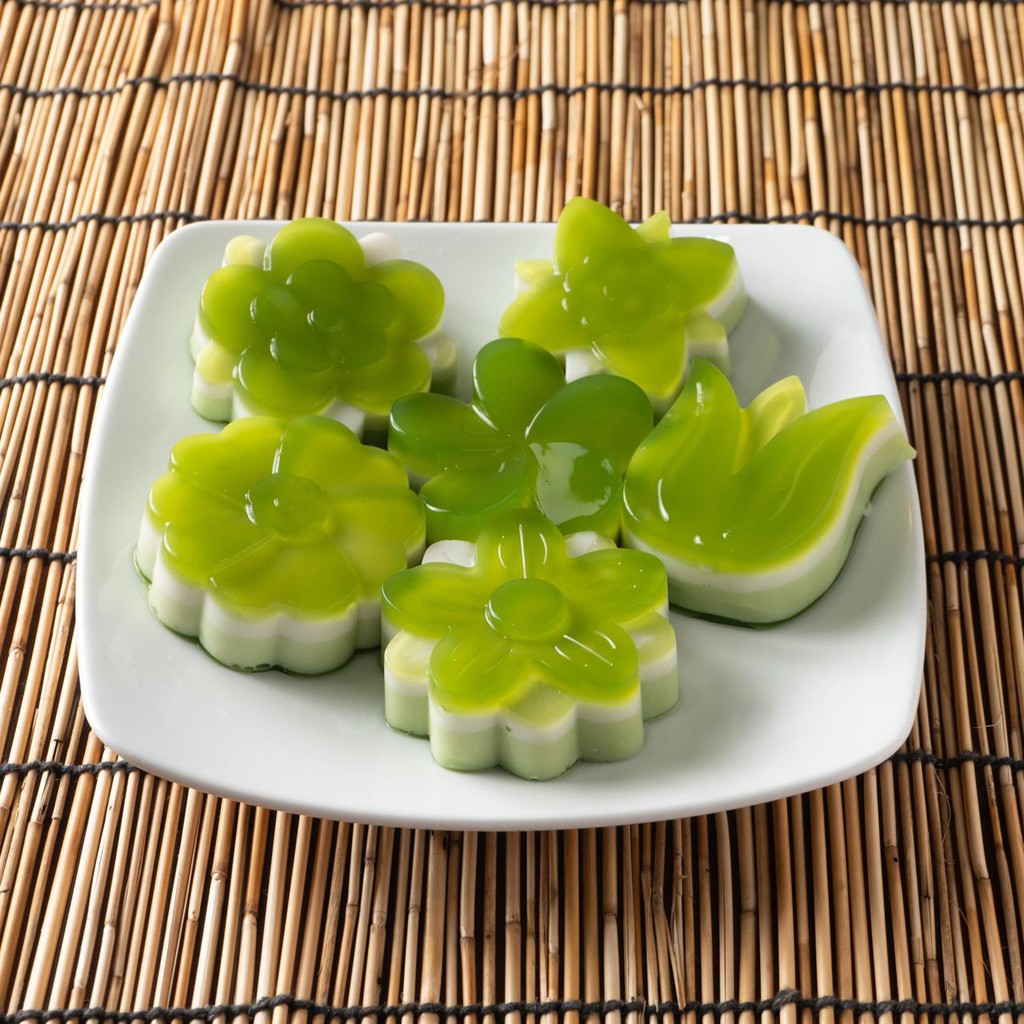
Vietnamese coconut jelly with pandan leaves (Source: Collected)
2.3. Vietnamese coffee coconut jelly
Vietnamese coffee coconut jelly is a visually appealing dessert that combines the rich, bold flavor of coffee with the creamy, tropical sweetness of coconut.
- In a small bowl, mix jelly powder, sugar, and coffee together. This step is crucial for ensuring that the jelly powder dissolves evenly and without clumping when it is added to hot water.
- Stir the mixture in 1 liter of boiling water and cook until it dissolves completely. Turn the heat off after 5-8 minutes, but still stir for a while to guarantee that the consistency is smooth.
- In a different pot, bring 800 milliliters of water to a boil. Add the mixture above and stir vigorously.
- Pour fresh milk and coconut milk in. Stir until everything is integrated.
To create a visually appealing dessert, the two jellies are poured alternately in thin layers into a mold or container. The juxtaposition of coffee and coconut jellies not only provides an attractive appearance and delightful contrast in flavor. Vietnamese coffee coconut jelly can be enjoyed as a satisfying conclusion to a meal or as a stand-alone dessert that is sure to impress.

Vietnamese coconut jelly for coffee lovers (Source: Collected)
2.4. Vietnamese drinks and desserts with nata de coco
Coconut jelly cubes, with their delightful texture and subtle sweetness, are a versatile addition to various drinks and desserts in Vietnamese cuisine. Here are some popular ways in which coconut jelly can be incorporated:
For drinks:
- Boba tea and fruit tea: Coconut jelly cubes make a fantastic addition to boba tea and fruit tea. They provide a delightful contrast to the creamy or fruity elements, adding a chewy and refreshing dimension to the drink.
- Sugarcane juice: When combined with sugarcane juice, coconut jelly enhances the drink with a tropical twist. The contrasting textures of the jelly and the juice create a satisfyingly cooling experience.
- Coconut water: For an extra layer of coconut goodness, coconut jelly can be added to fresh coconut water. The chewy jelly complements the natural sweetness of coconut water, making it a refreshing Vietnamese drink.

Some Vietnamese coconut jelly drinks (Source: Collected)
For desserts:
- Chè (sweet soup): Coconut jelly is a common topping in chè, a traditional Vietnamese sweet soup. It adds a chewy texture and coconut flavor to the dish, making it a favorite choice among dessert enthusiasts.
- Yogurt: You can also mix coconut jelly with yogurt to create a wholesome dessert. The combination of creamy yogurt and soft jelly offers a pleasing contrast in both taste and texture.
- Ice cream: Coconut jelly can be used as a garnish for ice cream, especially coconut-flavored varieties. It adds a chewy element to this creamy dessert.
Vietnamese coconut jelly is just one of the many delicious desserts in the country. You should also try Vietnamese honeycomb cake, Vietnamese banana cake, Vietnamese mung bean cake, Vietnamese mooncakes, etc. Travel to places such as Hanoi, Hoi An, Nha Trang, Phu Quoc, Ha Long, Danang to give them a try. They will add satisfying notes to your Vietnam travel experience.
For extra fun in these destinations, you should also check out attractions like VinWonders Wave Park & Water Park, VinKE & Vinpearl Aquarium, VinWonders Nam Hoi An, and VinWonders Nha Trang, VinWonders Phu Quoc. These complexes offer a wide range of entertainment options for visitors of all ages, from thrilling rides and water parks to immersive activities and cultural displays. With VinWonders’ diverse offerings, you are sure to find something to suit every member of your travel party.

Beat the heat with Vietnamese coconut jelly and VinWonders
>>> Book tickets to VinWonders Phu Quoc, Nha Trang, Nam Hoi An, VinKE & Vinpearl Aquarium and VinWonders Wave Park & Water Park for entertainment while you are in Vietnam!
Vietnamese coconut jelly captivates both locals and visitors alike with its refreshing taste and delightful texture. Its versatility, whether as a stand-alone dessert, an accompaniment to drinks, or an ingredient in various sweet treats, showcases the creativity of Vietnamese cuisine. With each bite, one can savor the tropical essence of coconut, making it not just a dessert but a delightful experience that reflects the spirit of Vietnamese hospitality!
Best-selling products
![[VinWonders Nam Hoi An] - Standard Admission Ticket](http://booking-static.vinpearl.com/tours/6c002e3ea71642f38eda8efa8654e5e4_vwnha0_vinwonders-nam-hoi-an-ve-vao-cua.jpg)
![[Vinpearl Safari Phu Quoc] - Standard Entrance Ticket + Meal voucher gift](http://booking-static.vinpearl.com/tours/ceb77f9174d845ebb2fd3dfe2b846066_3%20copy_vinwonders-nam-hoi-an-ve-vao-cua.jpg)
![[VinWonders Vu Yen] - [02 Adults + 01 Child] - Admission to Zoo + Games + Free Tote Bag](http://booking-static.vinpearl.com/tours/34488b227a3648e5b73d4aa6d6d36b46_DO__8153_vinwonders-nha-trang-ve-vao-cua-2-chieu.jpg)
![[VinWonders Nha Trang] – VIP Tour Experience](http://booking-static.vinpearl.com/tours/d1425f018b3e4d2d833374b5b52d8bb9_Hinh-anh-VinWonders-Nha-Trang-The-World-Garden-Lau-vong-canh-3x2-so-1_vinwonders-nha-trang-ve-vao-cua-sau-16h.jpg)
![[Vinpearl Aquarium Times City] Entrance Ticket](http://booking-static.vinpearl.com/tours/e7fcffc8256546e8bdcfd5ccfbe69783_VINKE2%20(1)_vinke-ve-vao-cua-truc-tiep.jpg)
![[Phu Quoc Passport] - Top Experiences Across 3 Zones + Buffet voucher (2-Day Unlimited Access)](http://booking-static.vinpearl.com/tours/877d8a3289a246d18f95aa5cc414f6d6_27be58d21e244664bf34d11d72e77860_Castle_vinwonders-phu-quoc-ve-vao-cua_vinwonders-phu-quoc-ve-vao-cua.jpg)
![[Vinpearl Harbour] - Happy Hour Combo: Round-trip Cable Car + Dinner Buffet + Tata Show](http://booking-static.vinpearl.com/tours/3cbd16b8edc74f6abc7f7cfa0e91caec_VPHB_Photos15_vinwonders-nha-trang-ve-vao-cua-2-chieu.jpg)
![[Aquafield] - [Female] - 4-hour Korean Sauna](http://booking-static.vinpearl.com/tours/0e6fe24c37b84cb799b94dae70578054_aqf-suong-may-2048x1365_aquafield-nha-trang-xong-hoi-chuan-han.jpg)
![[VinWonders Vu Yen] - Admission Ticket to Zoo + Games + Buffet](http://booking-static.vinpearl.com/tours/b2cd8cf6b14c48459b21393e14d73163_vwvy%201_vinwonders-nha-trang-ve-vao-cua-2-chieu.jpg)
![[VinGroup Employees] Standard Admission Ticket to Ocean Park 3 Water Park](http://booking-static.vinpearl.com/tours/f949b31af919495c9b4e111237642763_358600999_111579731994757_433244877993048710_n_vinwonders-ha-noi.jpg)
![[Nha Trang Passport] - [Half-Day] - Cable Car + Aquafield Sauna (2 hours) + Tata Show](http://booking-static.vinpearl.com/tours/ef49c187eadf4177b425d2bb85a18b30_200dd4dda03e45e0a1add52e4acc11fa_NHT_1796_ve-xem-tata-show-vinwonders-nha-trang.jpg)
![[Grand Park] Adventure Express](http://booking-static.vinpearl.com/tours/eeb9a602315342ccbc7965b29cfb0db0_Ảnh%20màn%20hình%202025-03-03%20lúc%2015.00.17_vinwonders-nam-hoi-an-ve-vao-cua.png)

![[Aquafield Ocean City] [Male] – VIP Membership (12 Months)](http://booking-static.vinpearl.com/tours/6ab10678fcbd4822a8fddb0590d3bcbf_0d72b531dd6749bbac2874b915ab0512_Screenshot_8_aquafield-nha-trang_aquafield-nha-trang.png)
![[Buggy Combo] - VinWonders Phu Quoc + Buggy + Free Ice Cream](http://booking-static.vinpearl.com/tours/0fc52a574094489da612d0f36bb4b1e6_buggy%20kem_vinwonders-phu-quoc-ve-vao-cua-tet-vi-vu.jpg)
![[50% Student Discount] – VinWonders Admission Ticket](http://booking-static.vinpearl.com/tours/43126c168bb04853bf7c93e197db724a_Banner%201200x628_vinwonders-nha-trang-ve-vao-cua-2-chieu.jpg)
![[Aquafield] - [Female] - Round-trip Cable Car + 4-hour Korean Sauna](http://booking-static.vinpearl.com/tours/c3bae84e472b42078ca3ff6f28d55d80_1c5968412aca409fa8571c88cc85a4ba_aqf%205_aquafield-nha-trang.jpg)
![[VinWonders Cua Hoi] - GoKart F1 Racing Car (10:00 AM - 8:00 PM)](http://booking-static.vinpearl.com/tours/aa8379d6db3a4f5c9df6d78d53177c35_11-E-Ticket-Vinwonder-Cua-Hoi_23072024111407_vinwonders-nam-hoi-an-ve-vao-cua.jpg)
![[VinWonders Phu Quoc] - Entrance Ticket + Gate Fastpass + Buggy](http://booking-static.vinpearl.com/tours/de2a24896b0e49469fa1e89e93aa5314_1920x1080%20VWPQ%20KV_vinwonders-phu-quoc-standard-entrance-ticket.jpg)
![[Hon Tam] - [Zone A] - Standard Mud Bath](http://booking-static.vinpearl.com/tours/9db66a615a7d4f119316b338afff30cb_tam-bun-dao-hon-tam_httpswwwhontammudbathvnwp-contentuploadssites2720190625-3-2200x700jpg.jpg)
![[VinWonders Vu Yen] - Admission Ticket to Games zone (after 5:00 PM)](http://booking-static.vinpearl.com/tours/edbd3eb4bc9848aead9940e0f5aa050d_fa21c62dfa9644ada0c3fce89b3e79ff_DO__8711_vinwonders-vu-yen-vuon-thu-khu-tro-choi-sau-17h.jpg)
![[Grand World] Carousel Ride](http://booking-static.vinpearl.com/tours/0d6a4bcfc2a54fd4aa9df0b38ae8c7b6_A2-4-jpeg-2640-1687438608_grandworld.jpg)
![[Grand World Phu Quoc] - The Quintessence of Vietnam Show](http://booking-static.vinpearl.com/tours/f88e2be1139b4eada4043eb7f0e39362_THVN1_show-tinh-hoa-viet-nam.jpg)
![[Nha Trang Passport] – [01 day] – Snorkeling Tour + Lunch & Mud Bath at Hon Tam + Vinpearl Harbour + Tata Show](http://booking-static.vinpearl.com/tours/f6b1826759674c9c9d3f074e03fa04ba_snorkeling%201_vinwonders-nha-trang-ve-vao-cua-2-chieu.jpg)
![[VinWonders Phu Quoc] - Standard Entrance Ticket](http://booking-static.vinpearl.com/tours/0dd25afc61ad45d48486bbd3b9c8a96a_tieu%20chuan%201_vinwonders-phu-quoc-ve-vao-cua.jpg)
![[VinWonders Phu Quoc] - Game Fastpass - Top 04 Rides](http://booking-static.vinpearl.com/tours/574c2b7798524c17a08f28feb80d45b5_fastpass%204%20games%20vwpq_vinwonders-phu-quoc-fastpass.jpg)
![[VinWonders Cua Hoi] - Cable Car + Games on the Island](http://booking-static.vinpearl.com/tours/63c924f8521a4af981666076c5c3b0fe_VinWonders%20Cua%20Hoi%20Summer%20Say%20Hi%20Banner%201920x920px_vinwonders-nam-hoi-an-ve-vao-cua.jpg)
![[-30% Grand Opening] [Aquafield Ocean City] – Standard Jjimjilbang Sauna Ticket for Male](http://booking-static.vinpearl.com/tours/94abeb55e3d54efbac23f7a862445389_0d72b531dd6749bbac2874b915ab0512_Screenshot_8_aquafield-nha-trang_aquafield-nha-trang.png)
![[Grand World Phu Quoc] [Ultimate Combo] - Water Taxi + Teddy Bear Museum + Grand Show](http://booking-static.vinpearl.com/tours/e31a9e66b5444808bba3e3114d195559_VENICE%20ALL%20IN%20ONE%20KV%20(1)_ve-bao-tang-gau-teddy-bear.jpg)
![[Aquafield] - Round-trip Cable Car + Korean Sauna + Body Scrub](http://booking-static.vinpearl.com/tours/d00bc95eb402434c8f4a4756c2a3ad3d_Akoya-spa-Villa-Vinpearl-Resort-Spa-Phu-Quoc-12_aquafield-nha-trang.jpg)
![[Aquafield] - [Male] - Round-trip Cable Car + 4-hour Korean Sauna](http://booking-static.vinpearl.com/tours/625529980f3249e6b0491cddfc30db43_297be2477c5847748ef3bc08603ebf90_aqf%204_aquafield-nha-trang.jpg)
![[VinWonders Cua Hoi] - Indoor Games Zone](http://booking-static.vinpearl.com/tours/b952de18058e4a67a8ffa52f2039e7d2_1920-x-1080-double%20day%20sale%2077%20no%20text_vinwonders-nam-hoi-an-ve-vao-cua.jpg)
![[Vinpearl Harbour] - Round-trip Cable Car Ticket | Free Wishing Coin Voucher](http://booking-static.vinpearl.com/tours/e584c2f486d246c5820a19f519d184a4_VPHB_Photos15_vinwonders-nha-trang-ve-vao-cua-2-chieu.jpg)
![[Grand Park] Dream Garden Outdoor Games Pass](http://booking-static.vinpearl.com/tours/35566b714d4c4dd9802a6bf4650ac2b1_khu-vui-choi-cua-hoi-9_vinwonders-nam-hoi-an-ve-vao-cua.jpg)
![[Vinpearl Harbour] - Admission to VinWonders (after 4:00PM) & Round trip cable car](http://booking-static.vinpearl.com/tours/4b2d76bbde1f4c54a43370680d311928_Hinh-anh-VinWonders-Nha-Trang-The-World-Garden-Lau-vong-canh-3x2-so-1_vinwonders-nha-trang-ve-vao-cua-sau-16h.jpg)
![[Hon Tam] - [Zone A] - Mud Bath + Lunch Combo](http://booking-static.vinpearl.com/tours/5debd1efb6d34e42a88efa65354c8c72_ebdde60fd9a44539afe75c9338ec8a3d_ảnh%205_tam-bun-hon-tam.jpg)
![[VinWonders Nam Hoi An] - Standard Admission Ticket](http://booking-static.vinpearl.com/tours/81813f8ced2c466e82ad53f1c29c1904_tour-kham-pha-van-hoa-viet-vinwonders-nam-hoi-an-668ca102bcc29_vinwonders-nam-hoi-an-ve-vao-cua.jpg)
![[Aquafield Ocean City] [Male] – Standard Jjimjilbang Sauna Ticket](http://booking-static.vinpearl.com/tours/0be276c684454e8d969c373f35f6be97_DSC_2127_11zon_aquafield-nha-trang.jpg)
![[Aquafield] - [Male] - 4-hour Korean Sauna](http://booking-static.vinpearl.com/tours/4ae60d29ea264f8fab17beb6b4415502_aqf-da-muoi_aquafield-nha-trang-xong-hoi-chuan-han.jpg)
![[Vinpearl Aquarium Times City] Entrance Ticket](http://booking-static.vinpearl.com/tours/8702a10bf2934d6299df65669a290679_aquarium%20times%20city%203_thuy-cung-vinpearl-aquarium-times-city.jpg)
![[Aquafield] - 2-hour Aquafield Sauna + 30-min Spa](http://booking-static.vinpearl.com/tours/b0bf65880af449f39ea19fa0acbb94d5_34d71a9c3e6b4b7484f9d7cbbc935c26_200dd4dda03e45e0a1add52e4acc11fa_NHT_1796_ve-xem-tata-show-vinwonders-nha-trang_ve-xem-tata-show-vinwonders-nha-trang.jpg)
![[Aquafield Ocean City] – VIP Membership (12 Months)](http://booking-static.vinpearl.com/tours/3c2f7ab0ed374cb1bbdb2e54e6d6eb9a_e1f2756dfec346f3bb3b16e296b3b166_Screenshot_5_aquafield-nha-trang_aquafield-nha-trang.png)
![[-10%] - VIP River Safari Ticket*](http://booking-static.vinpearl.com/tours/5d3ee19e977446be8917a34697bb9443_ece6e58a02fd48de9eba9d3f4689f77a_Hinh-anh-VinWonders-Nam-Hoi-An-River-Safari-3x2-so-1%20(1)_vinwonders-nam-hoi-an-ve-vao-cua_vinwonders-nam-hoi-an-ve-vao-cua.jpg)
![[Nam Hoi An Signature] VinWonders Ticket + VIP Safari Package | FREE Merchandise Gift](http://booking-static.vinpearl.com/tours/881ac31c4a2b4687a59f412901e85b2c_VIN2725_-08746%20(2)_vinwonders-nam-hoi-an-ve-vao-cua.jpg)
![[Grand World Phu Quoc] - Water Taxi Boat + Teddy Bear Museum](http://booking-static.vinpearl.com/tours/add2e0908faa4289b555856472b181be_VENICE%20ALL%20IN%20ONE%20KV%20(1)_ve-bao-tang-gau-teddy-bear.jpg)
![[Hon Tam] - [Zone A&B] - Full island entertainment + Mud Bath Zone A + Lunch](http://booking-static.vinpearl.com/tours/af991883d63f4133b62b76551ba2444d_tam-bun-dao-hon-tam_httpswwwhontammudbathvnwp-contentuploadssites2720190625-3-2200x700jpg.jpg)
![[VinWonders Nha Trang] - Admission to VinWonders after 4:00 PM](http://booking-static.vinpearl.com/tours/de2da6d471b34297ab13cb26ef2da9a0_Hinh-anh-VinWonders-Nha-Trang-The-World-Garden-Lau-vong-canh-3x2-so-1_vinwonders-nha-trang-ve-vao-cua-sau-16h.jpg)
![[-30%] The Quintessence of Vietnam Show](http://booking-static.vinpearl.com/tours/6cee2bcb52a447009f64771095d03c9e_Screenshot%202024-10-22%20at%2014.49.18_ve-bao-tang-gau-teddy-bear.png)
![[Onsite service] - Premium VIP Zoo Tour Vinpearl Safari Phu Quoc](http://booking-static.vinpearl.com/tours/ff1e4b66ec1b46edad0c0460144e70ad_VINPEARL%20SAFARI%20PHU%20QUOC%20%20(51)_vinwonders-nam-hoi-an-ve-vao-cua.jpg)
![[VinWonders Nha Trang] - 01-day Unlimited Admission Ticket | Free F&B Voucher](http://booking-static.vinpearl.com/tours/ccf23087ea0f419980c411d0e79c10fb_88c594a8352d49e7b031b9fbd5c5d27f_tro-choi-mao-hiem-o-vinpearl-nha-trang-thumb-1_vinwonders-nha-trang-khong-gioi-han-2-ngay_vinwonders-nam-hoi-an-ve-vao-cua.jpg)
![[VinWonders Nam Hoi An] [Sunset Premium] Admission Ticket & Buggy Ride & VIP Safari Package & Afternoon Tea Set](http://booking-static.vinpearl.com/tours/3a1e510945b4421d861fede29a1b3e58_xE3mXzIVwTdZRf7M8zZfHqHIPqV17uyEOzL8PaUQ_vinwonders-nam-hoi-an-ve-vao-cua.jpg)